Complete Guide to Guppy and Platy Compatibility | Water Quality, Breeding Management, and Fry Protection Tips
A thorough examination of guppy and platy compatibility. From overlapping optimal water quality ranges and solutions to fin-nipping and food competition issues, fry protection methods, and recommended tank setups—this guide explains practical cohabitation and breeding management techniques.
Key Takeaways
A thorough examination of guppy and platy compatibility. From overlapping optimal water quality ranges and solutions to fin-nipping and food competition issues, fry protection methods, and recommended tank setups—this guide explains practical cohabitation and breeding management techniques.
Related Species
Basic Profiles of Guppies and Platies
Both guppies and platies are tropical fish belonging to the livebearing family (Poeciliidae) and are popular among beginners due to their low care difficulty. However, simply keeping them together without consideration can lead to unexpected problems. This article compares the characteristics of both species and explains the keys to successful cohabitation and important breeding management considerations in detail.
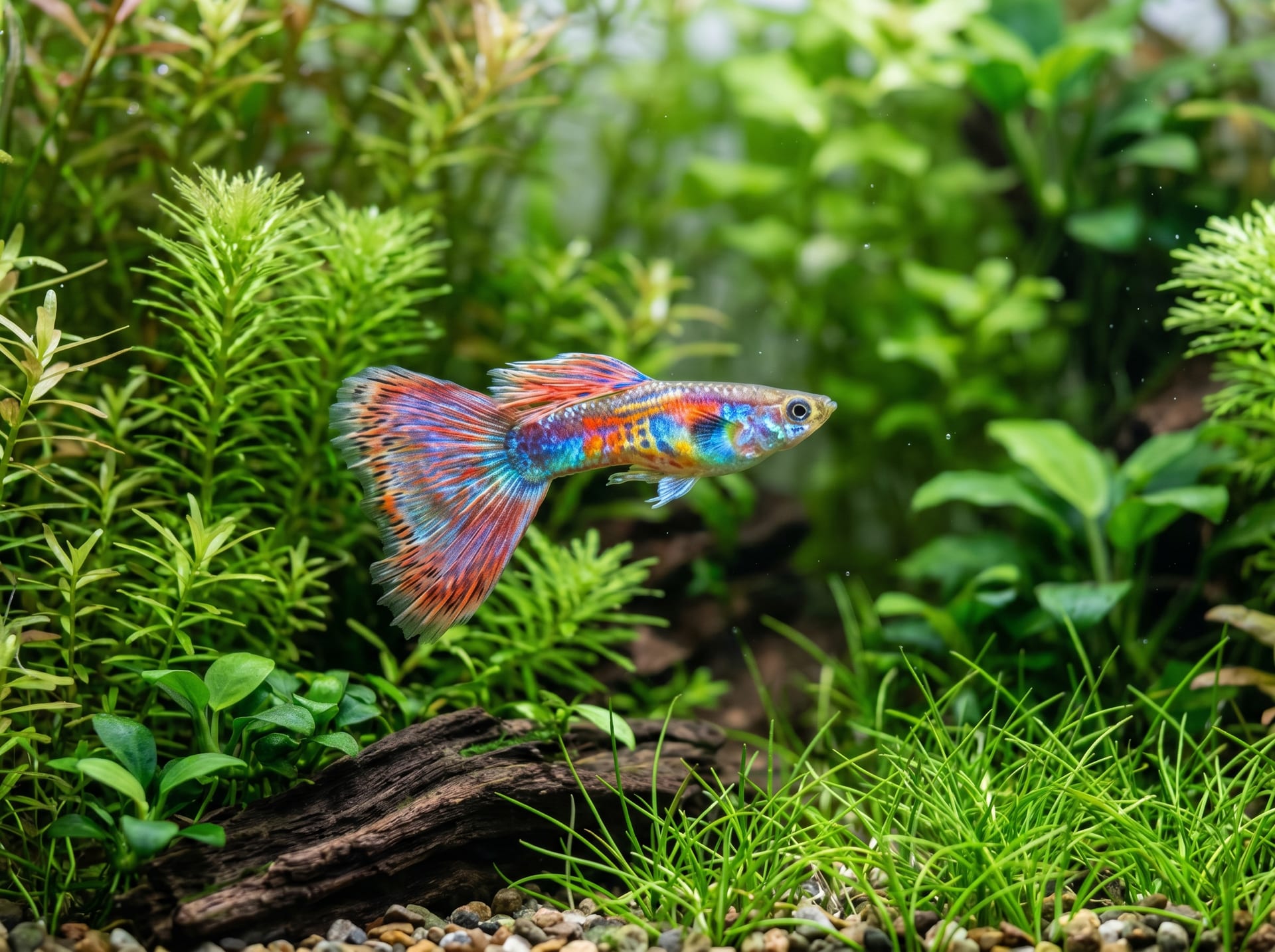
Guppy Characteristics
- Scientific name: Poecilia reticulata
- Origin: Venezuela, Guyana, Trinidad and Tobago region
- Size: Males 3-4 cm, females 5-6 cm
- Optimal temperature: 22-28°C (ideal 25-26°C)
- Optimal pH: 6.8-7.8 (slightly acidic to slightly alkaline)
- Temperament: Peaceful, though males may display aggressive fin-spreading behavior toward each other
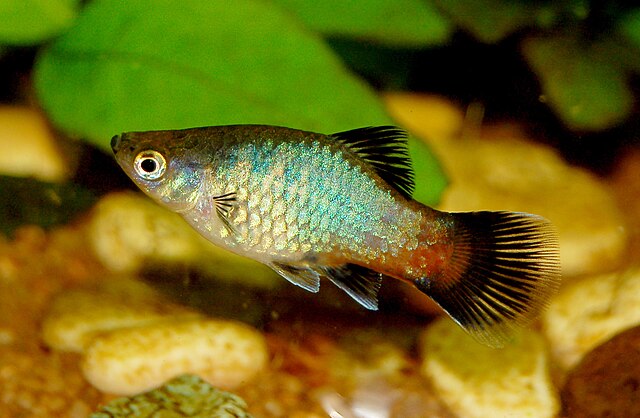
Platy Characteristics
- Scientific name: Xiphophorus maculatus / variatus
- Origin: Mexico to Guatemala
- Size: 4-6 cm (varies by variety)
- Optimal temperature: 20-28°C (ideal 22-26°C)
- Optimal pH: 7.0-8.0 (neutral to slightly alkaline)
- Temperament: Peaceful but active. Voracious appetite and quick movements
Water Quality and Temperature Compatibility
The greatest barrier to keeping guppies and platies together is a mismatch in optimal water quality requirements.
pH and Hardness
While guppies can be kept in slightly acidic conditions, platies prefer neutral to slightly alkaline water. The ideal overlap range is pH 7.0-7.5 and hardness 8-15 dGH. Maintaining this range allows both species to thrive.
Water Quality Management Tips:
- Using a small amount of coral sand or oyster shell filter media helps stabilize hardness and pH
- Perform 20-30% water changes once per week consistently
- Overusing RO water or soft water will compromise the health of both species
Water Temperature
Both species thrive comfortably at 25-26°C. Below 22°C, guppies' immune systems become compromised, and above 28°C, platies gradually lose vigor. Setting the tank to 25°C is ideal.
Compatibility Assessment for Cohabitation
The direct compatibility between guppies and platies is ★★★★☆ (good). However, the following points require careful attention.
Common Problem Scenarios
Fin-Nipping by Platies
While platies vary by individual, some have a tendency to nip fins. Since male guppies have long, beautiful tails, they are susceptible to fin-nipping. This is especially concerning when keeping multiple platies.
Solution: Provide plenty of aquatic plants (Amazon sword, moss) to create visual barriers. Alternatively, limit the number of platies to 2-3 individuals.
Food Competition
Since platies are larger and faster swimmers than guppies, guppies often lose out in food competition. Insufficient food quantity can lead to malnutrition in guppies.
Solution: Distribute food to 2-3 different areas of the tank. Alternatively, use a combination of sinking food (tablets) and floating food (flakes).
Male Mating Behavior
Male guppies may indiscriminately attempt to mate with females of other species. While guppies and platies are closely related, they cannot produce viable offspring, which can stress the females.
Solution: Reduce the male ratio (1 male to 3 females).
Important Breeding Management Considerations
Both guppies and platies are livebearers—fish in which females give birth to live young. Breeding management is crucial in a mixed tank.
Possibility of Hybridization
Guppies and platies do not hybridize, so this is not a concern. However, breeding occurs readily within each species—between guppies and between platies.
If you wish to maintain pure breeds in a mixed tank, the best practice is to breed each species separately in dedicated tanks.
Fry Protection
Both species may eat their own fry. Platies in particular actively prey on fry.
Methods for Protecting Fry:
- Breeding box (floating type): Place a gravid female in the box, where newborn fry fall to the bottom and are separated from the parent
- Dense aquatic plants: High-density plants like willow moss and riccia serve as refuge for fry
- Separate tank: Transfer fry to a separate tank upon birth for rearing (most reliable)
Population Management
Both species have high reproductive rates, and the tank can become overcrowded if left unmanaged. If there are too many females, large numbers of fry will be born each month. Plan ahead by limiting numbers from the start or arranging homes for excess fry.
Tank Size and Recommended Setup
Here are recommended tank sizes and setup examples for guppy and platy cohabitation.
60cm Tank (Basic Setup)
- Guppies: 5 males and 10 females
- Platies: 2 males and 4 females
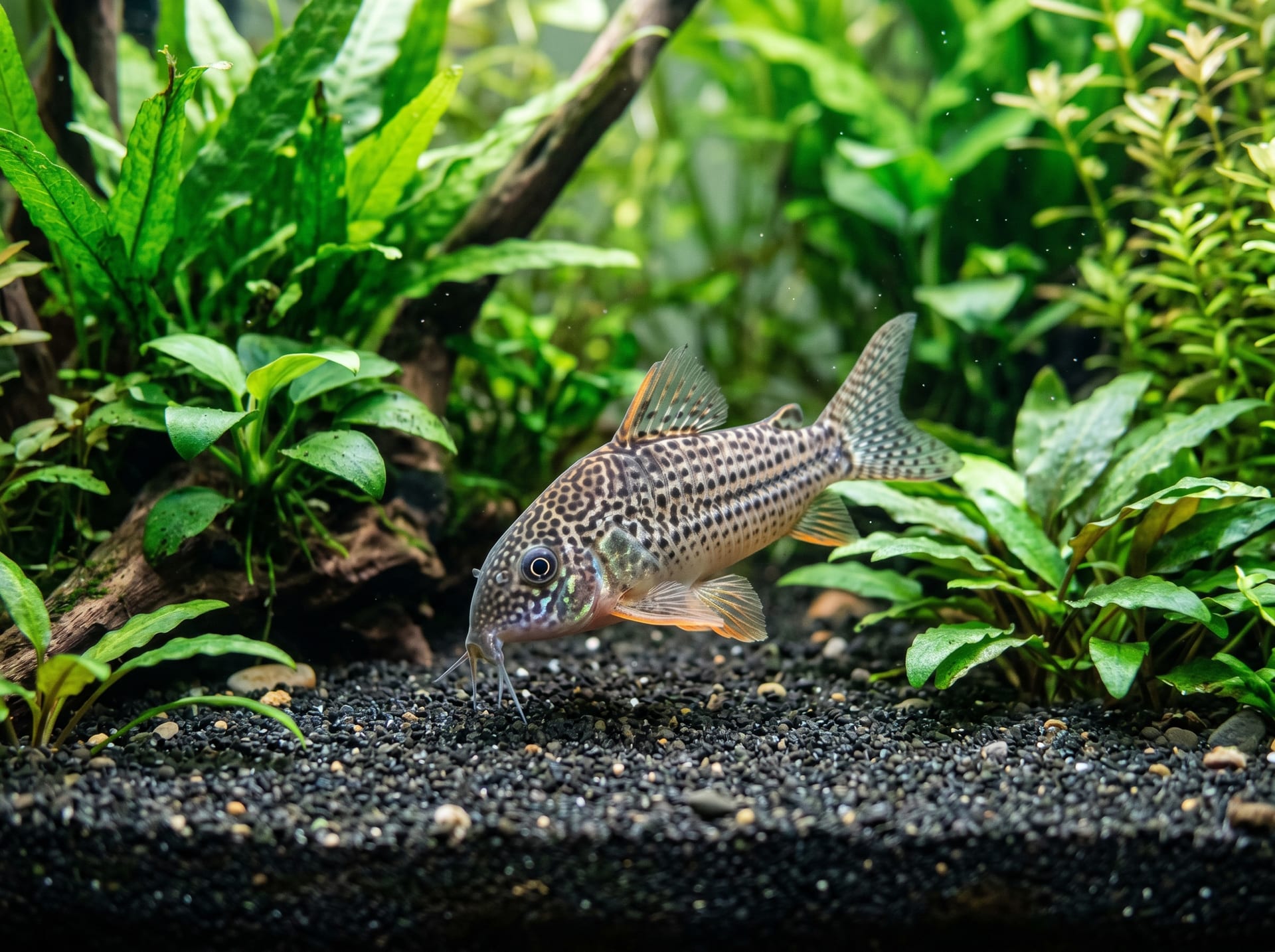
- Corydoras (bottom cleaners): 2-3 individuals
- Plants: Amazon sword, willow moss, and stem plants
With this setup, water quality remains stable and you achieve a good balance between breeding and observation.
45cm Tank (Compact Setup)
- Guppies: 3 males and 5 females
- Platies: 1 male and 2 females
- Otocinclus: 1-2 individuals
- Plants: Moss balls and Microsorum
Summary
Keeping guppies and platies together is entirely feasible with proper water quality management and balanced population control. By paying attention to three key points—fin-nipping, food competition, and fry protection—you can maintain a stable mixed tank long-term. Since both species have high reproductive rates, planning from the start to prevent overpopulation is the key to long-term success.