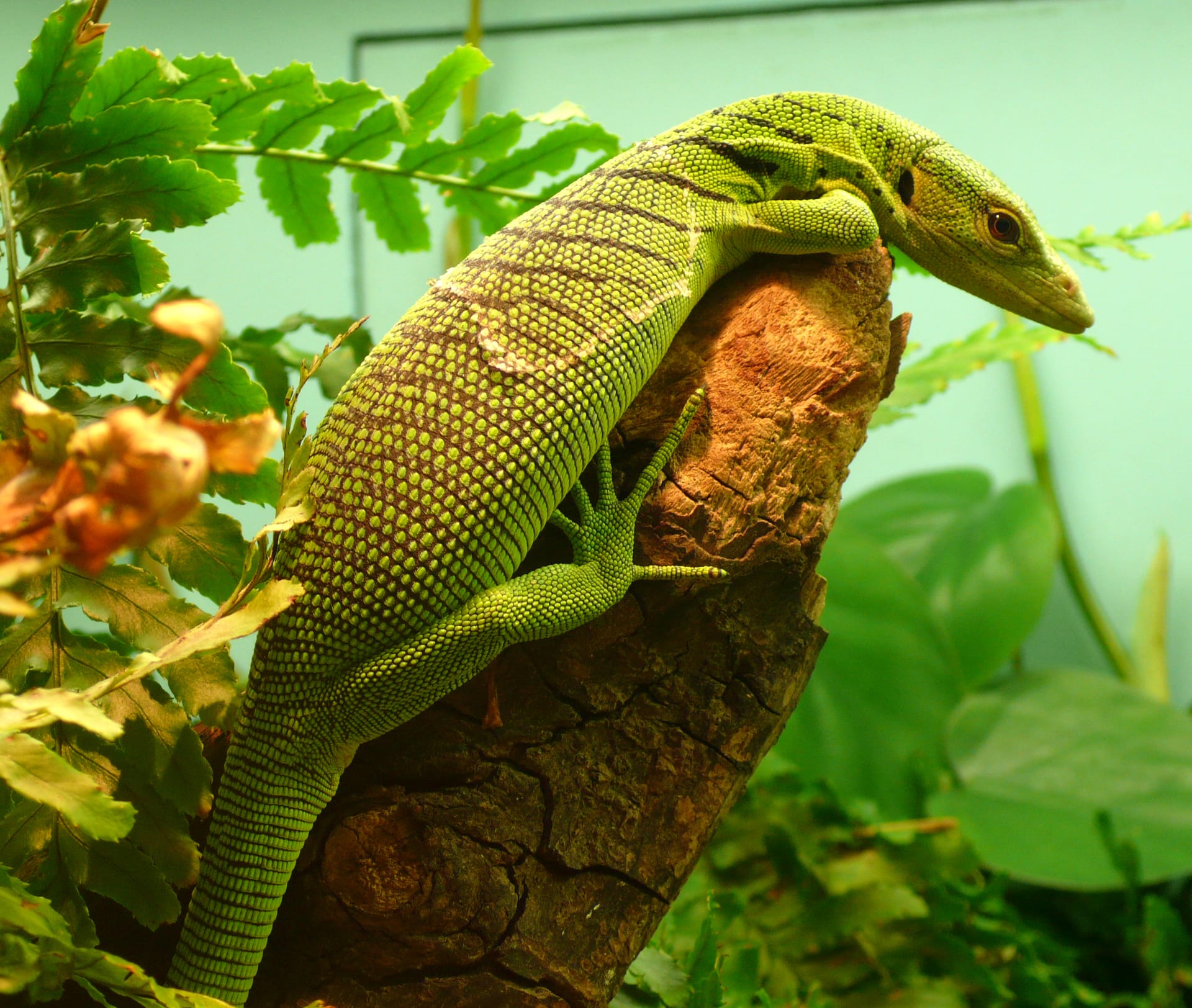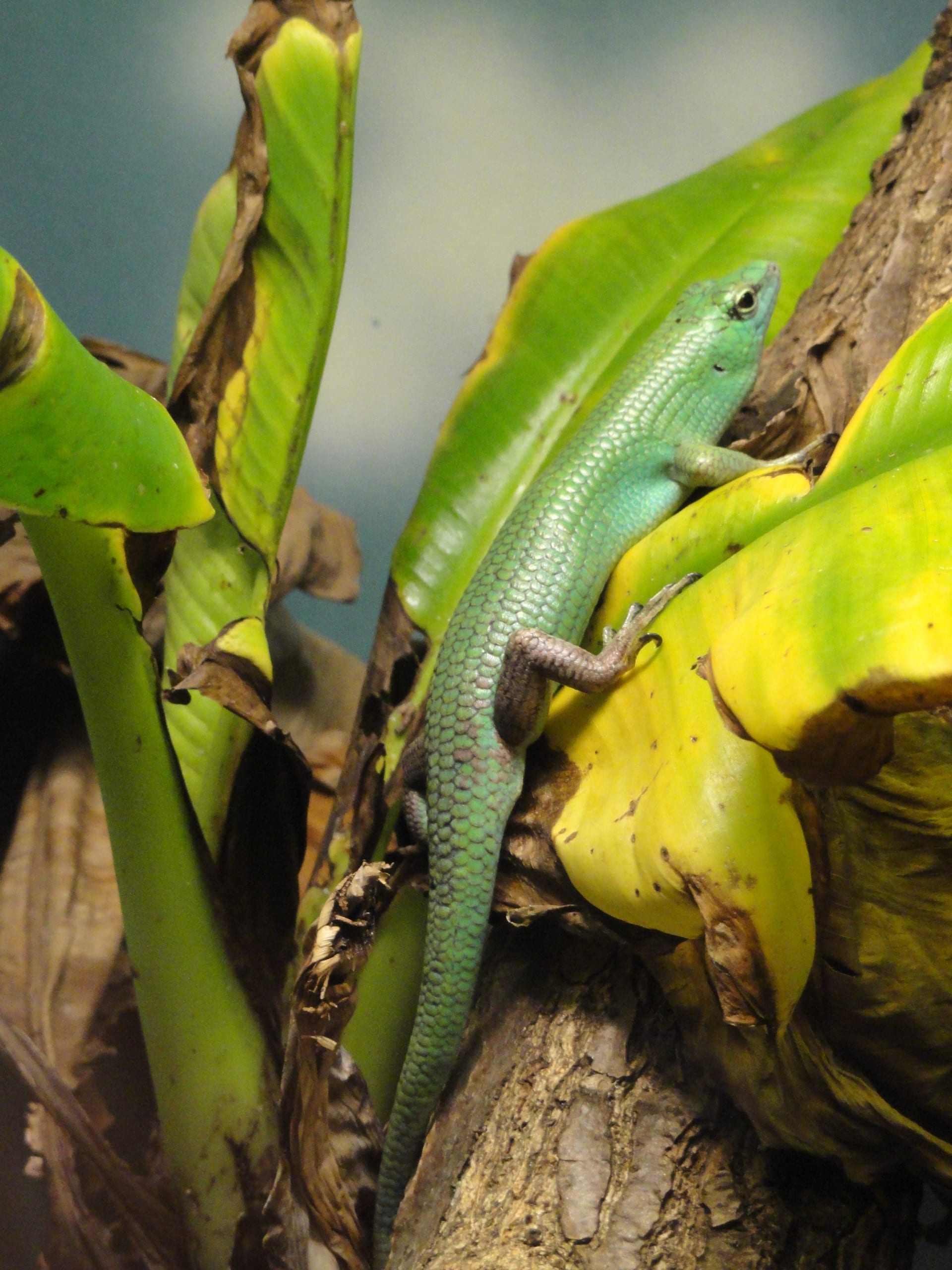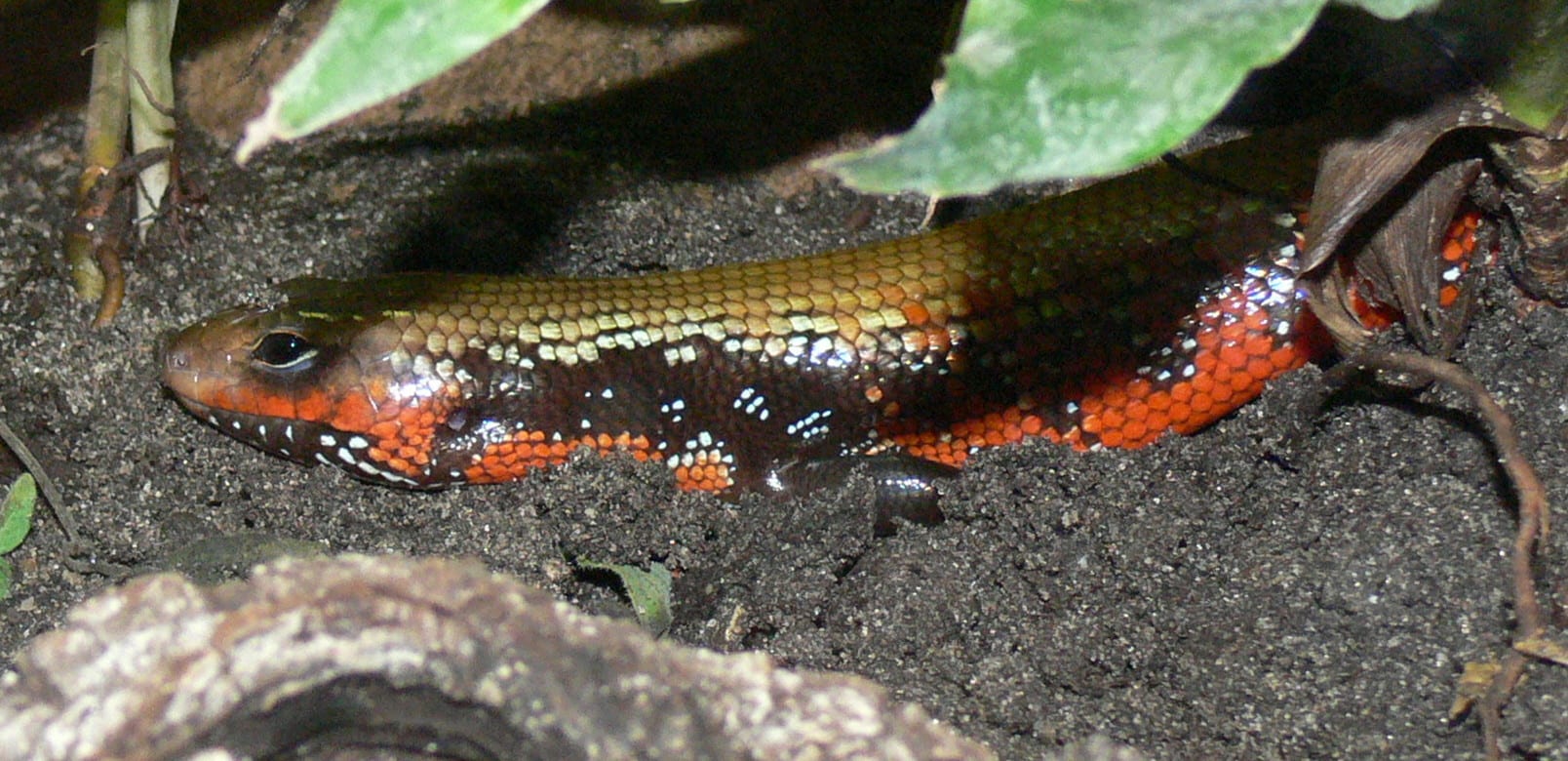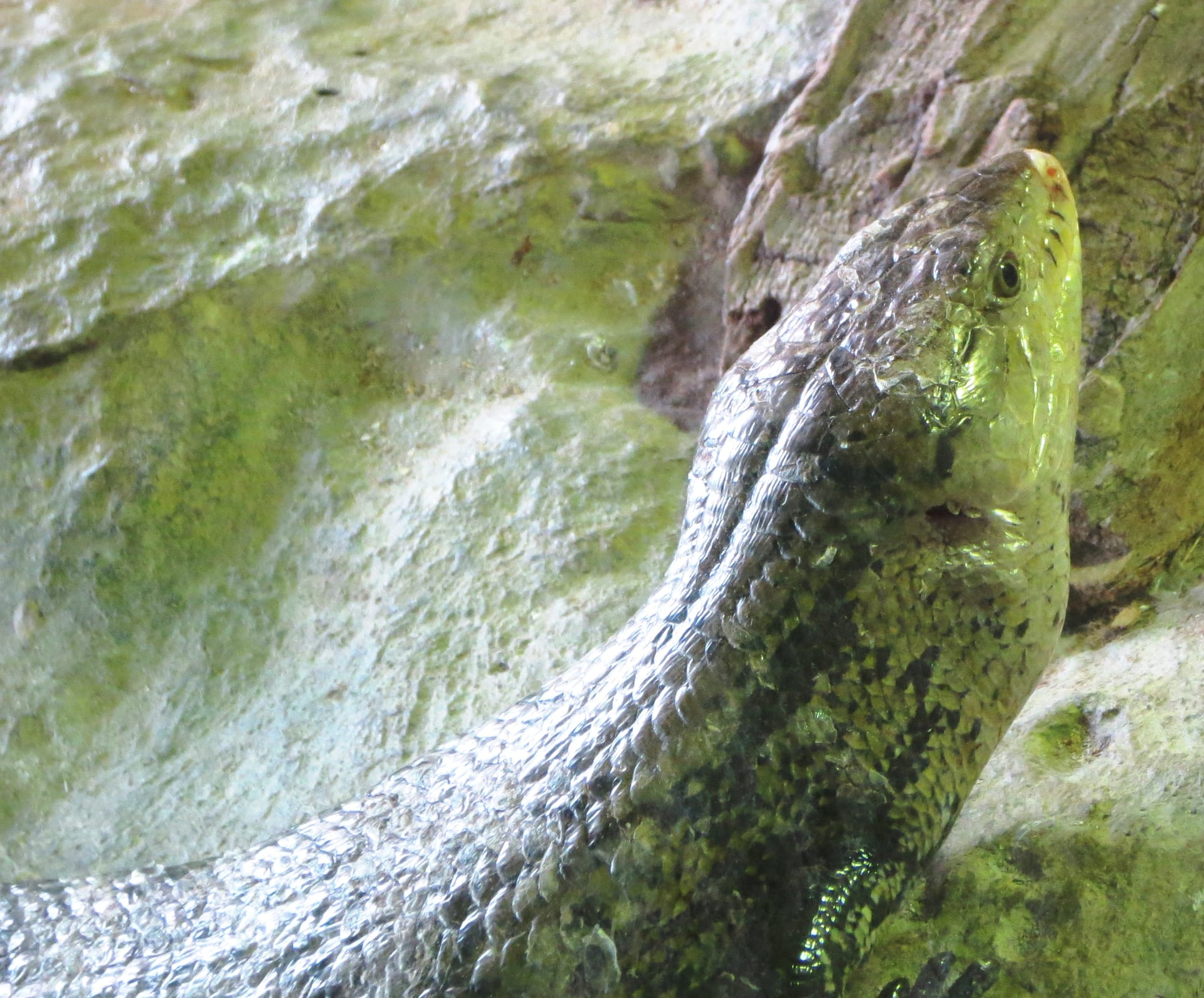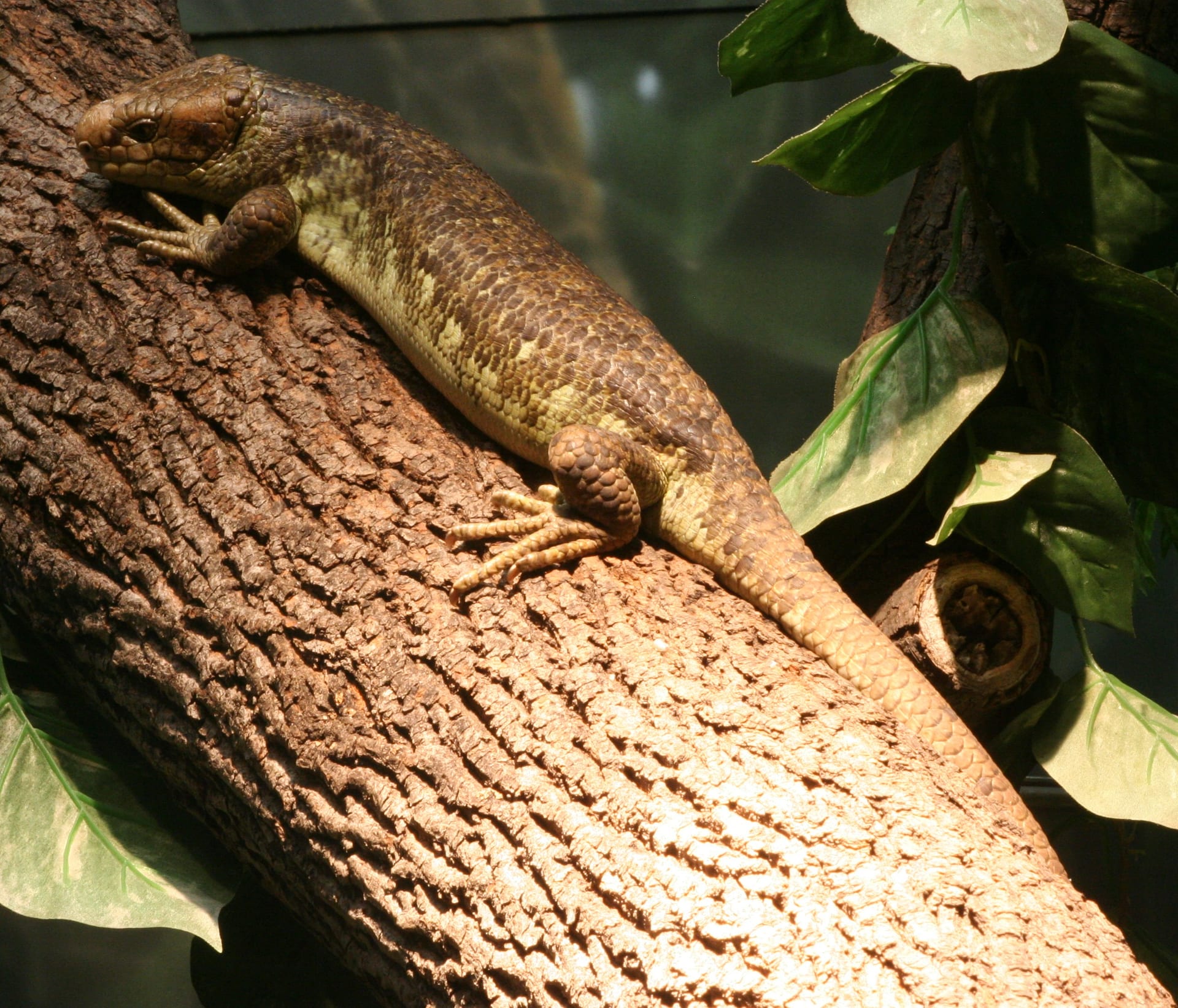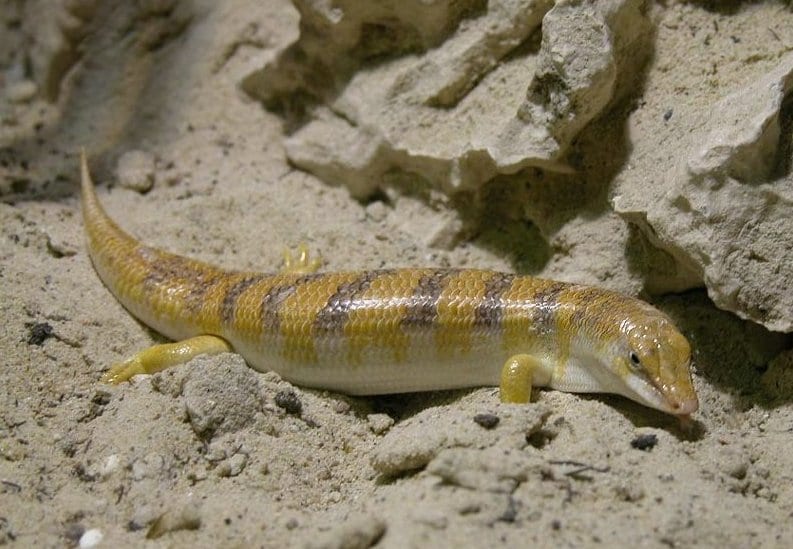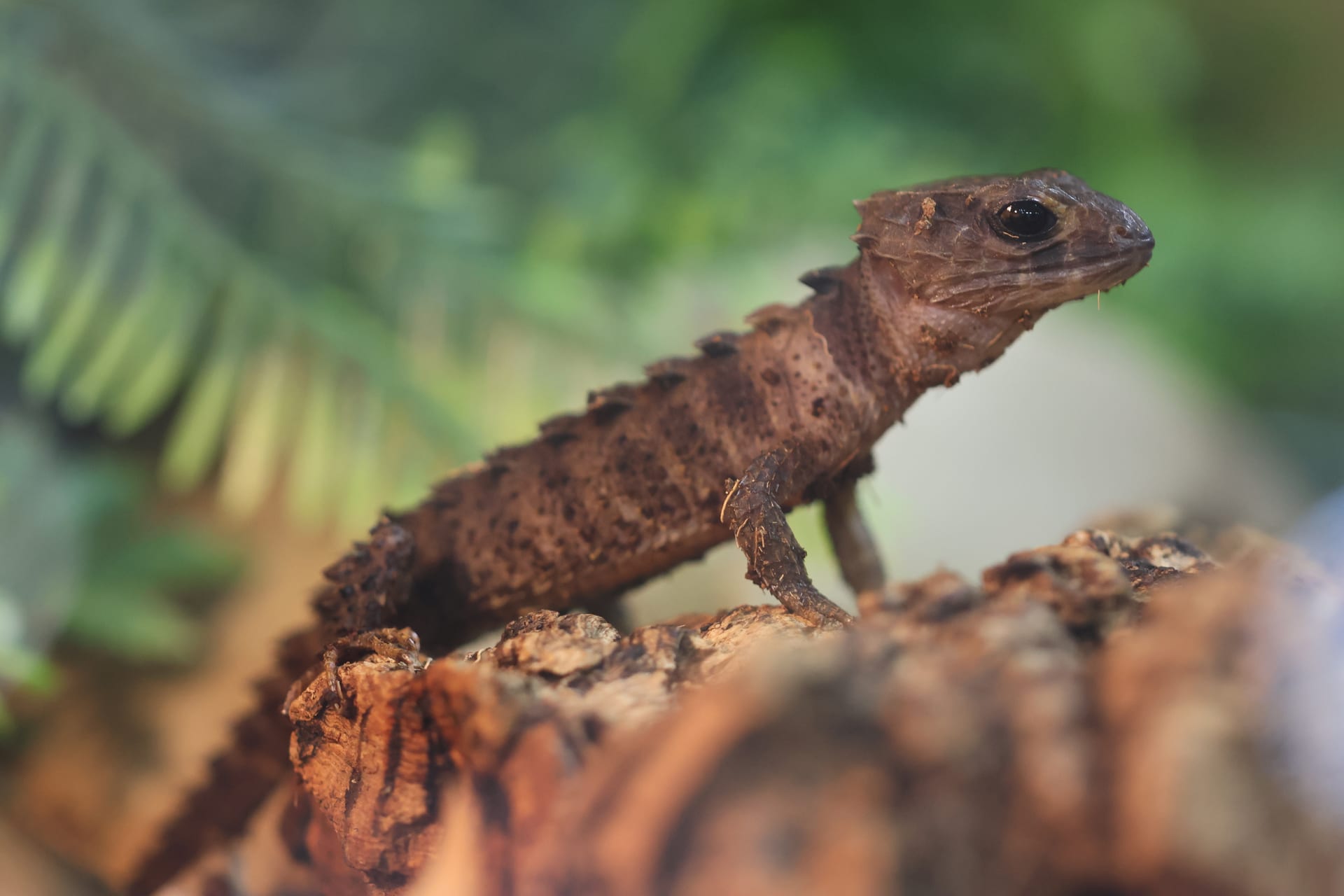
Source: Wikimedia Commons
White-Eyed Crocodile Skink
IntermediateTribolonotus novaeguineae
A New Guinea skink with rows of strongly keeled, spiny scales along the back. The pale ring around the eye gives it its English name, and Tribolonotus is one of the very few skink genera able to vocalise.
Difficulty
Intermediate
Lifespan
Over 10 years in captivity
Diet
Insectivorous: crickets, worms and other insects and arthropods
About
The white-eyed crocodile skink (Tribolonotus novaeguineae) is a semi-fossorial skink of New Guinea. Tribolonotus stands out among skinks for its strongly keeled to spinose scales, and at least two species can vocalise, a trait otherwise recorded in only one other skink species, in the genus Nannoscincus. The genus is further defined by two synapomorphies, abdominal glands and palmar and plantar pores. The pale ring around the eye gives this species its English name, and the back of the head is developed into a casque. Schlegel described it in 1834 as Zonurus novaeguineae, and it is the type species of the genus. The generic name comes from Greek words for caltrop and back, referring to the spiky dorsum. It is told from the similar red-eyed crocodile skink by eye colour. Published husbandry experience relates mainly to that congener.
Source: Wikipedia (CC BY-SA 4.0)
Lifespan of the White-Eyed Crocodile Skink
The White-Eyed Crocodile Skink lives Over 10 years in captivity.
Basic Info
Origin
Indonesia (Papua, formerly Irian Jaya) and Papua New Guinea, on the floor of tropical rainforest
Lifespan
Over 10 years in captivity
Diet
Insectivorous: crickets, worms and other insects and arthropods
Care Guide
Temperature & Humidity
Care Specifications
PeacefulSolitaryBreeding: Hard
Sources: Reptile Database: Tribolonotus novaeguineae / ReptiFiles: Red-Eyed Crocodile Skink Care Sheet (congeneric husbandry) / Reptiles Magazine: Red-Eyed Crocodile Skink Care And Information
References & Sources
Edited & verified by: BreederDirect editorial team
The taxonomic, regulatory, and husbandry data on this page are compiled and verified against the authoritative primary sources below.
Taxonomy & Authority
Accepted name: Tribolonotus novaeguineae (Schlegel, 1834)
Synonyms: Zonurus novaeguineae Schlegel, 1834
Authority databases: GBIF · Reptile Database
Nomenclature follows global taxonomic authority databases.
Regulations & Conservation Status
Not CITES-listedIUCN LC · Least Concern
Not listed in the CITES Appendices (no current listing in Species+). The IUCN Red List assessment is Least Concern (LC). The species is not included in the designated animals listed in the supplementary table of the Law for the Protection and Management of Animals, nor is it listed as a designated invasive alien species under the Invasive Alien Species Act Enforcement Ordinance.
Sources: CITES Species+ (species not listed) / IUCN Red List
Regulations may change. Always verify the latest information with the relevant authorities.
White-Eyed Crocodile Skink Listings
Loading latest listingsFind listings for this species