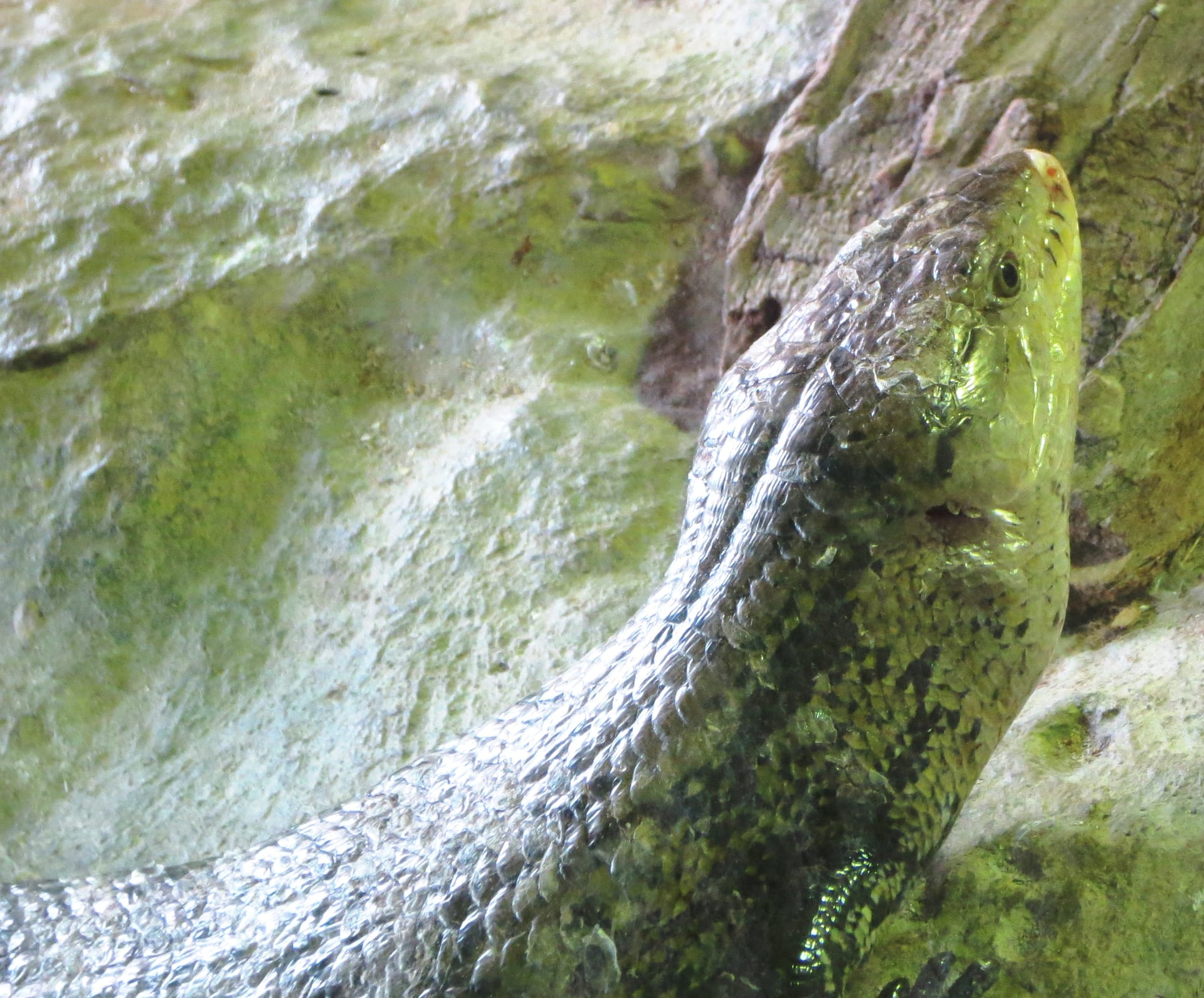
Image: Bjoertvedt / CC BY-SA 4.0 / Wikimedia Commons
Indonesian Blue-Tongued Skink
IntermediateTiliqua gigas
A blue-tongued skink of New Guinea and surrounding islands. It is leaner and longer-tailed than its Australian relatives, and because it lives in rainforest it needs high humidity in captivity.
Difficulty
Intermediate
Temperature
24〜29℃
Lifespan
15-20 years, with records over 35 years
Size
50-70cm
Humidity
60〜80%
Diet
Insects, snails, small mammals, carrion, flowers and fruit (omnivorous)
About
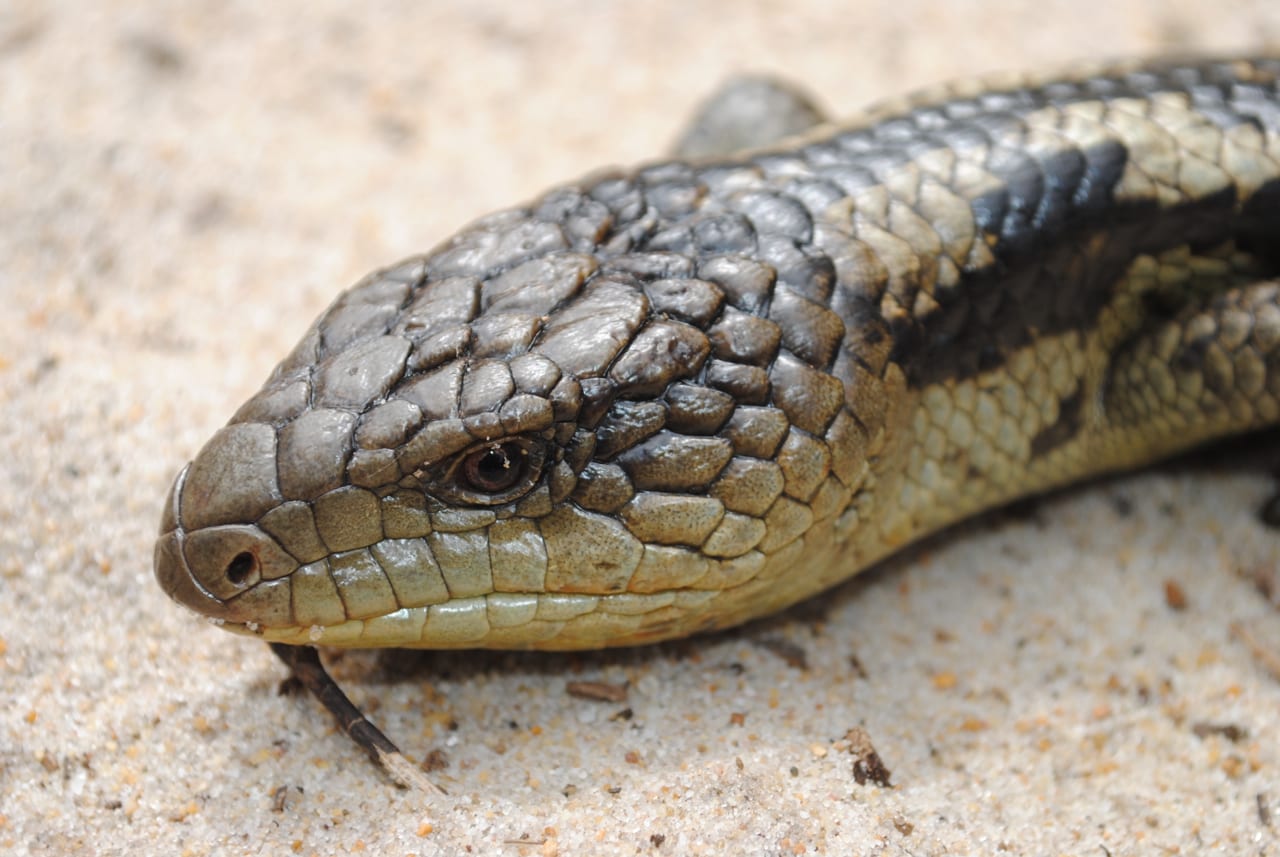
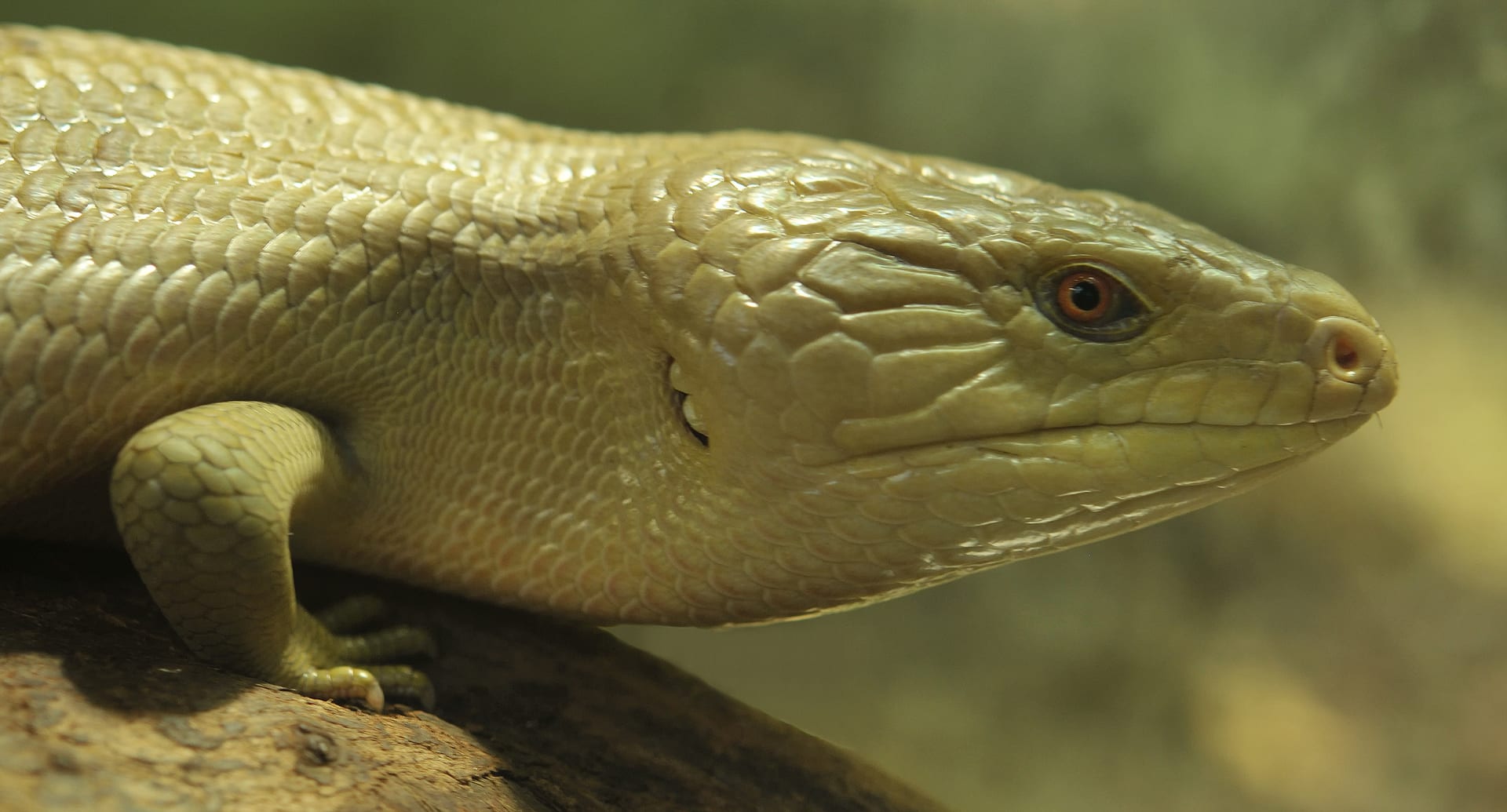
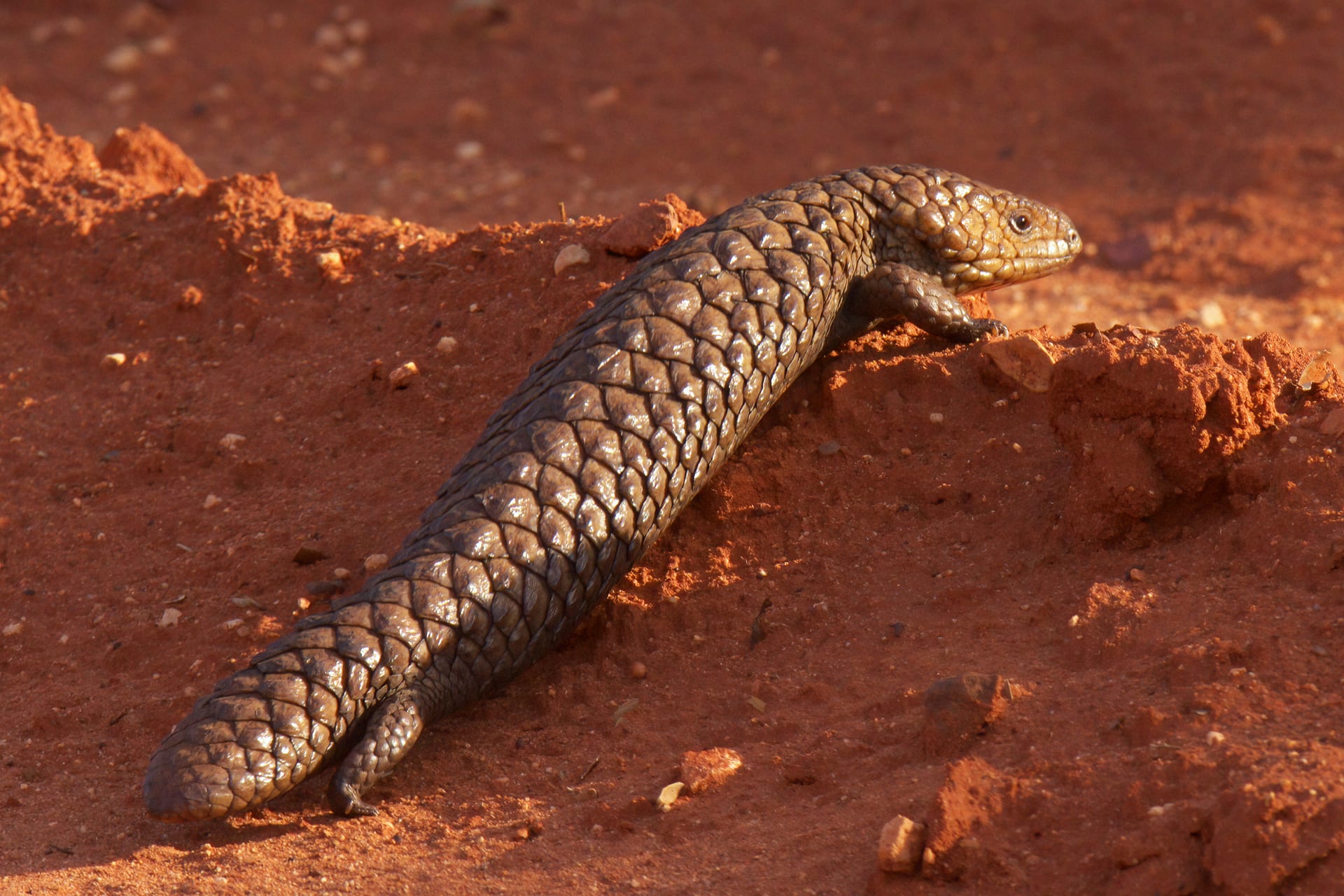
Tiliqua gigas occurs on New Guinea and the surrounding islands. It reaches 50-60 cm and up to 70 cm. The specific name gigas means giant, yet within the genus it is the lean one, and its tail, at 60-90% of snout-vent length, is notably long compared with its Australian relatives. The ground colour is grey-brown to light brown with narrow black bands, and the limbs are dark. Subspecies differ: the nominate T. g. gigas has the thinnest tail and near-solid dark limbs, T. g. evanescens has speckled limbs, a single stripe behind the neck and the longest tail of any blue tongue, and T. g. keiensis is speckled all over including the face. It does not brumate, timing its breeding to the wet and dry seasons instead. It is ovoviviparous, producing 5-25 live young at a time.
Source: Wikipedia (CC BY-SA 4.0)
Lifespan of the Indonesian Blue-Tongued Skink
Indonesian Blue-Tongued Skink lifespan: 15-20 years, with records over 35 years
Size of the Indonesian Blue-Tongued Skink
Indonesian Blue-Tongued Skink adult size: 50-70cm
Temperature & humidity for the Indonesian Blue-Tongued Skink
The ideal temperature for the Indonesian Blue-Tongued Skink is 24〜29℃. Ideal humidity is 60〜80%.
As a rainforest animal it needs 60-80% humidity, a very different requirement from the drier Australian species.
Basic Info
Origin
Indonesia (Ambon, Seram, Ternate, Halmahera, Kei and Aru Islands, and Papua in western New Guinea), Papua New Guinea and the Bismarck Archipelago
Care Specifications
Semi-aggressiveSolitaryBreeding: Moderate
Sources: ReptiFiles: Blue Tongue Skink Care / ReptiFiles: Blue Tongue Skink Temperatures, UVB & Humidity / ReptiFiles: Blue Tongue Skink Subspecies / Wikipedia (English) / Reptile Database
References & Sources
Edited & verified by: BreederDirect editorial team
The taxonomic, regulatory, and husbandry data on this page are compiled and verified against the authoritative primary sources below.
Primary sources
Taxonomy & Authority
Accepted name: Tiliqua gigas (Schneider, 1801)
Synonyms: Scincus gigas Schneider, 1801, Tiliqua gigas var. keyensis Oudemans, 1894, Cyclodus petersii Strauch, 1866
Authority databases: GBIF · Reptile Database
Nomenclature follows global taxonomic authority databases.
Regulations & Conservation Status
Not CITES-listedIUCN LC · Least Concern
This species does not have a CITES Appendix listing in Species+ (unlike four Tiliqua species from Australia (multifasciata, nigrolutea, occipitalis and rugosa) and two subspecies of T. scincoides, which were listed in Appendix III in 2022). It does not fall under Japan's specified animals.
Sources: CITES Appendices (species not listed) / IUCN Red List / Order for Enforcement of the Act on Welfare and Management of Animals, Appended Table
Regulations may change. Always verify the latest information with the relevant authorities.
Indonesian Blue-Tongued Skink Listings
Loading latest listingsFind listings for this species