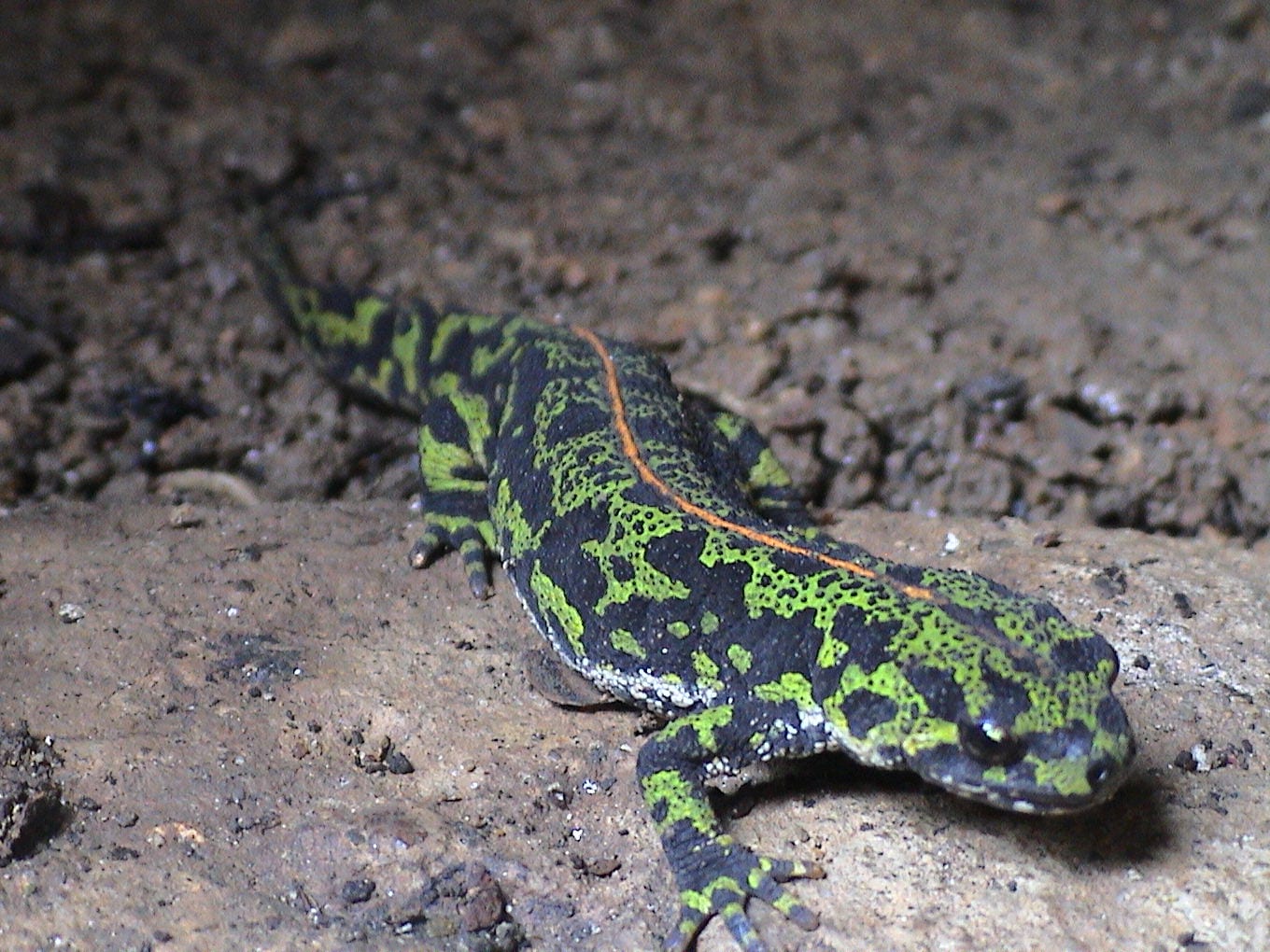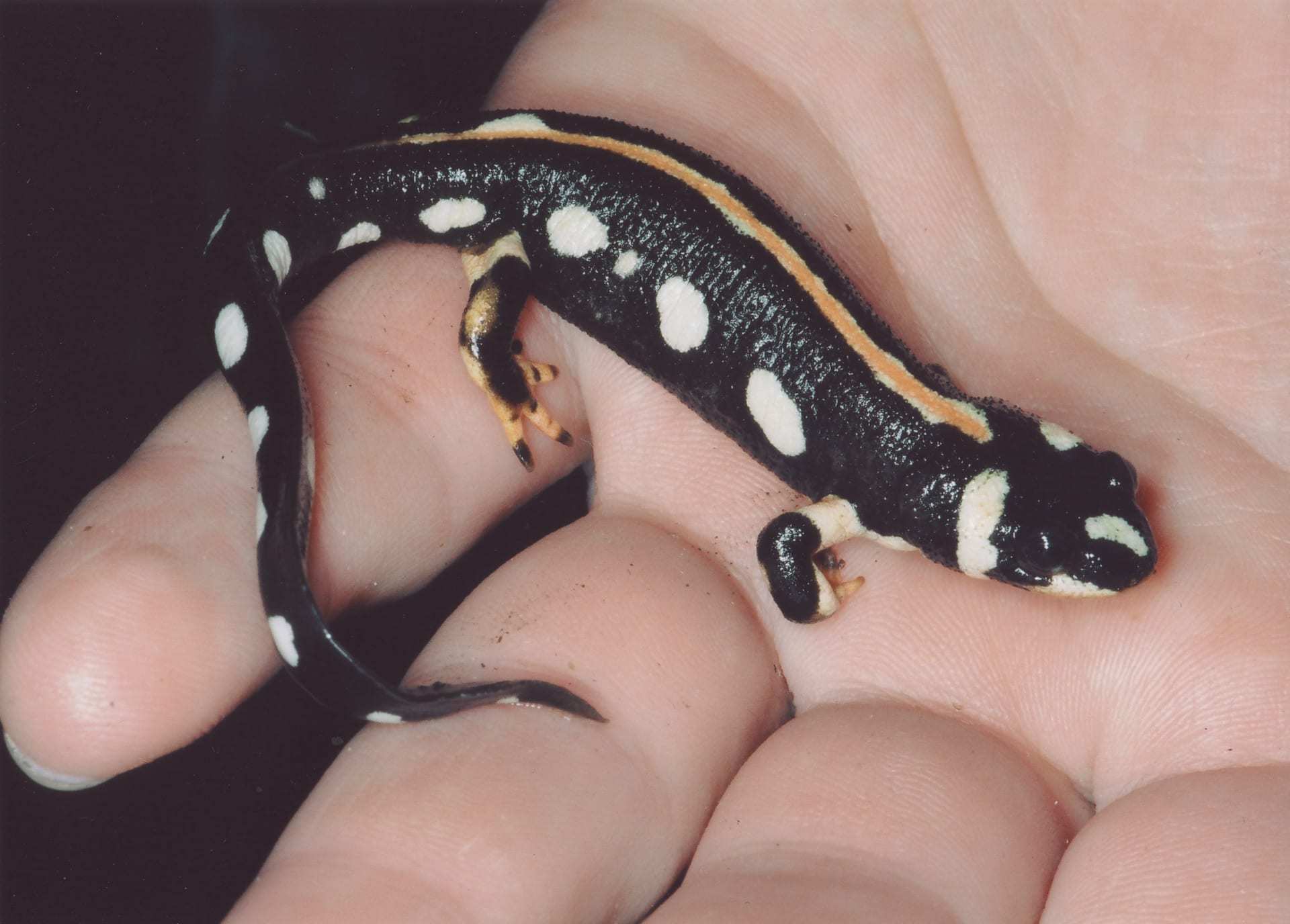
Source: Wikimedia Commons
Kaiser's Spotted Newt
AdvancedNeurergus kaiseri
A newt endemic to just four streams in the southern Zagros Mountains of Iran. It has a striking pattern of black spots on white with orange along the middorsal line and tail. Listed on CITES Appendix I, so it requires a registration certificate in Japan.
Difficulty
Advanced
Temperature
15〜25℃
Lifespan
10-15 years
Size
10-14cm
Humidity
40〜70%
Diet
Small earthworms, waxworms, large fruit flies, woodlice and crickets
About
Neurergus kaiseri is endemic to four streams within a single catchment in the southern Zagros Mountains of Iran, and is the smallest species in its genus. Adults measure 10-14 cm and carry a high-contrast pattern of black spots on white with orange along the middorsal line and tail. It lives in highland streams surrounded by arid scrub, and because water is absent for a significant part of the year it moves into the surrounding oak and pistachio woodland and aestivates. Its range is tiny, and habitat loss together with illegal collection for the pet trade has reduced numbers, leading to its listing on CITES Appendix I in 2010. Captive breeding programmes run at several zoos. Husbandry follows that of other newts that migrate seasonally between land and water: a large semi-aquatic setup with plenty of rocks and hides, a water depth of 20-30 cm and gentle flow. It does well at 15-25 C and tolerates up to 30 C when kept on land.
Source: Wikipedia (CC BY-SA 4.0)
Lifespan of the Kaiser's Spotted Newt
The Kaiser's Spotted Newt lives 10-15 years.
Size of the Kaiser's Spotted Newt
The Kaiser's Spotted Newt grows to 10-14cm.
Temperature & humidity for the Kaiser's Spotted Newt
The ideal temperature for the Kaiser's Spotted Newt is 15〜25℃.
Basic Info
Origin
Southern Iran (only four streams in the southern Zagros Mountains)
Lifespan
Care Specifications
PeacefulGroupBreeding: Hard
Sources: Caudata Culture: Neurergus kaiseri / Wikipedia (English)
References & Sources
Edited & verified by: BreederDirect editorial team
The taxonomic, regulatory, and husbandry data on this page are compiled and verified against the authoritative primary sources below.
Taxonomy & Authority
Accepted name: Neurergus kaiseri Schmidt, 1952
Synonyms: Neurergus crocatus kaiseri Schmidt, 1952
Authority databases: GBIF
Nomenclature follows global taxonomic authority databases.
Regulations & Conservation Status
CITES Appendix IIUCN VU · Vulnerable
Listed on Appendix I effective 23 June 2010 and remains on Appendix I (Species+ and Caudata Culture also list it on Appendix I effective 22 March 2010). As it qualifies as an internationally rare wild fauna and flora species, a registration certificate based on the Species Conservation Act is required for transfer and sale within Japan.
Sources: CITES Appendices (Neurergus kaiseri 附属書I、2010年6月23日発効) / IUCN Red List
Regulations may change. Always verify the latest information with the relevant authorities.
Kaiser's Spotted Newt Listings
Loading latest listingsFind listings for this species