Source: Wikimedia Commons
Marbled Newt
IntermediateTriturus marmoratus
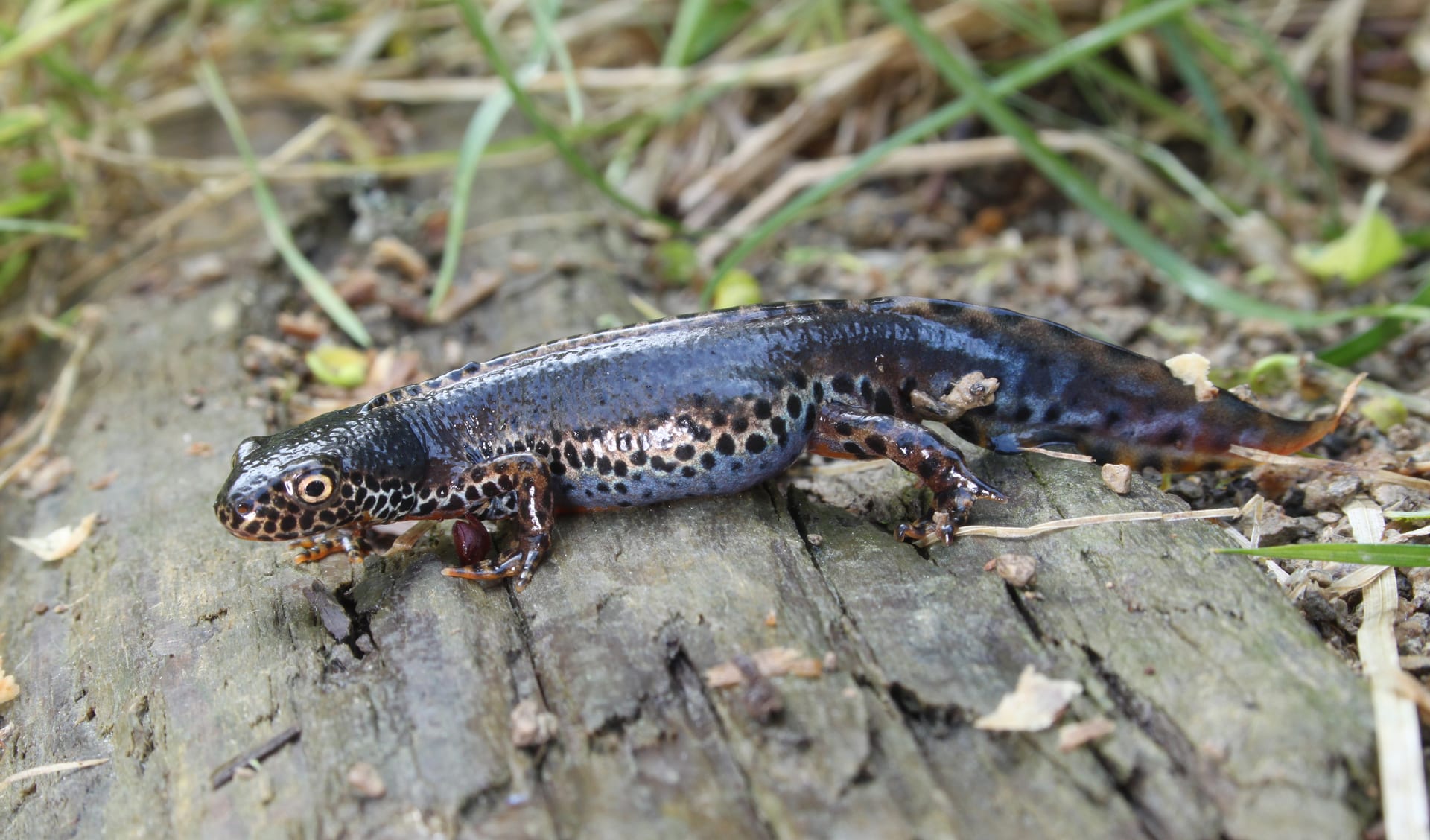
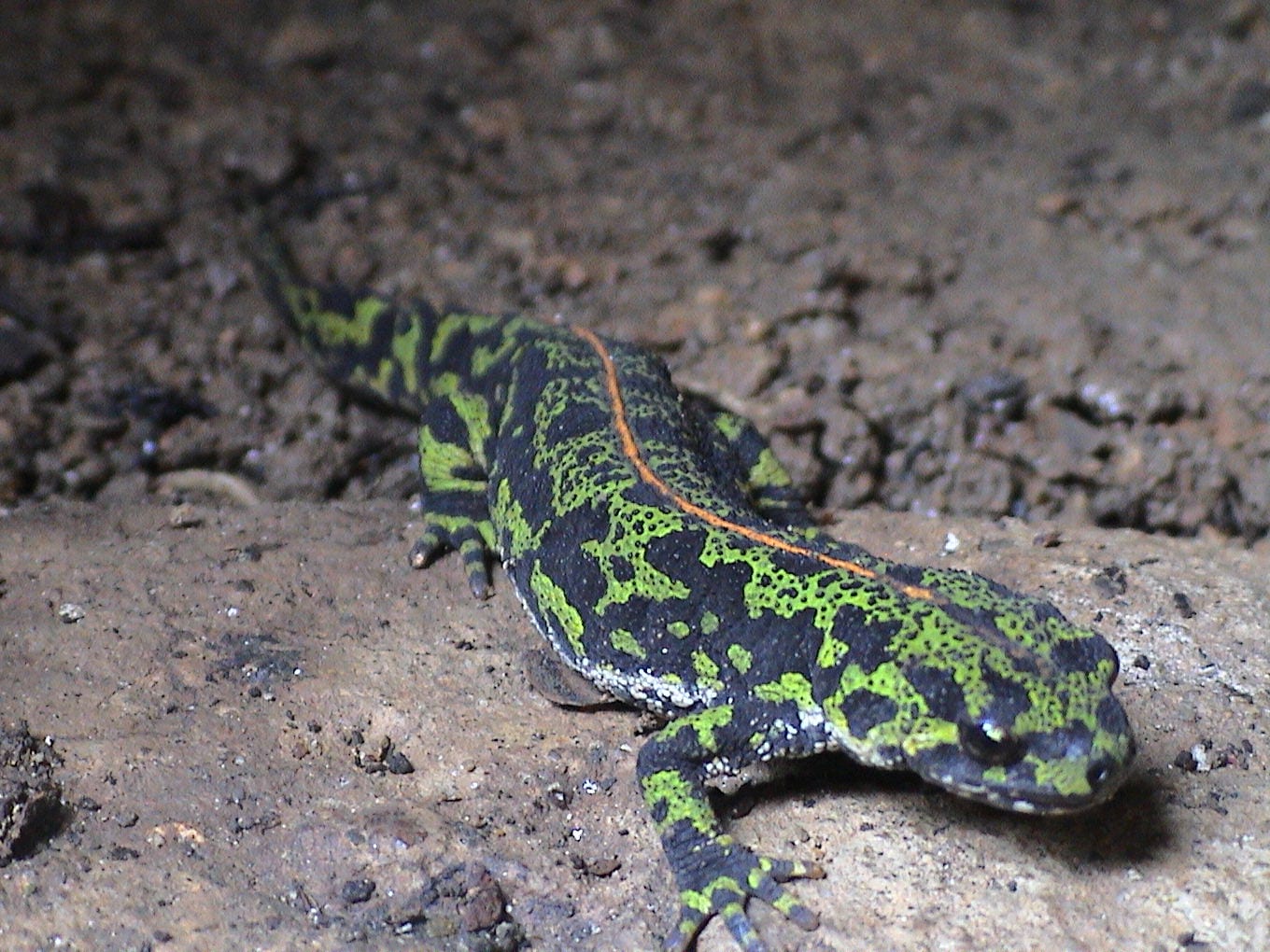
A large Triturus newt of northern Iberia and south-western France. Irregular green blotches on black give the marbled pattern that names it, and breeding males raise a large wavy crest from neck to tail.
Difficulty
Intermediate
Temperature
5〜25℃
Lifespan
10-15 years
Size
13-17cm
Humidity
40〜70%
Diet
Crickets, earthworms, waxworms and frozen bloodworms
About
Triturus marmoratus is a large crested newt of south-western France and northern Iberia, reaching 13-17 cm. The marbled pattern that gives it its name consists of irregular green blotches on black, varying from mostly green to mostly black animals, while the belly is dark with off-white specks. Females and juveniles carry an orange stripe from head to tail tip; in males it fades at about nine months. Breeding males develop a tall wavy crest from neck to tail, banded yellowish-white and black. It occurs in deciduous and mixed woodland below 400 m, entering water only to breed and otherwise living on land under logs and stones. In captivity a half-land, half-water setup works best, with about 120 x 30 x 40 cm for three pairs. Never let it exceed 25 C even in summer, and cool it to around 5 C for a few months in winter to trigger breeding.
Source: Wikipedia (CC BY-SA 4.0)
Lifespan of the Marbled Newt
The Marbled Newt lives 10-15 years.
Size of the Marbled Newt
The Marbled Newt grows to 13-17cm.
Temperature & humidity for the Marbled Newt
The ideal temperature for the Marbled Newt is 5〜25℃.
Basic Info
Origin
South-western France to northern Spain and northern Portugal (woodland waters below 400 m)
Lifespan
10-15 years
Care Specifications
Semi-aggressiveGroupBreeding: Moderate
Sources: Caudata Culture: Triturus marmoratus / Wikipedia (English) / Wikipedia (Japanese)
References & Sources
Edited & verified by: BreederDirect editorial team
The taxonomic, regulatory, and husbandry data on this page are compiled and verified against the authoritative primary sources below.
Taxonomy & Authority
Accepted name: Triturus marmoratus (Latreille, 1800)
Synonyms: Salamandra marmorata Latreille, 1800, Molge marmorata (Latreille, 1800), Hemisalamandra marmorata (Latreille, 1800)
Authority databases: GBIF
Nomenclature follows global taxonomic authority databases.
Regulations & Conservation Status
Not CITES-listedIUCN VU · Vulnerable
It is not listed in CITES appendices, but in Europe it is protected under the Bern Convention, and in Spain it is also protected under domestic law (Caudata Culture). In its native range, collection is permitted only during the breeding season on a limited basis.
Sources: CITES Appendices (species not listed) / IUCN Red List
Regulations may change. Always verify the latest information with the relevant authorities.
Marbled Newt Listings
Loading latest listingsFind listings for this species