Source: Wikimedia Commons
Eastern Newt
BeginnerNotophthalmus viridescens
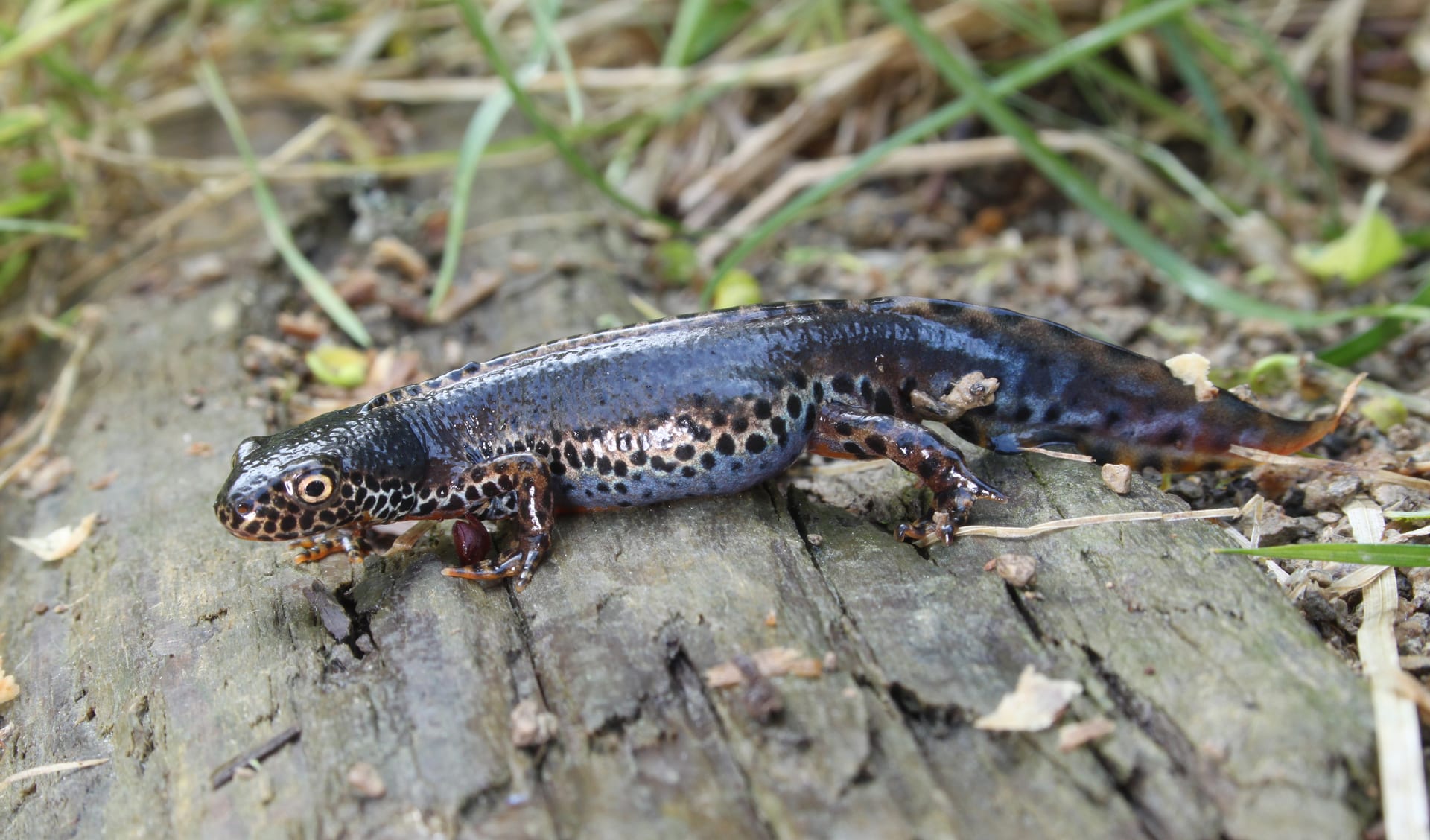
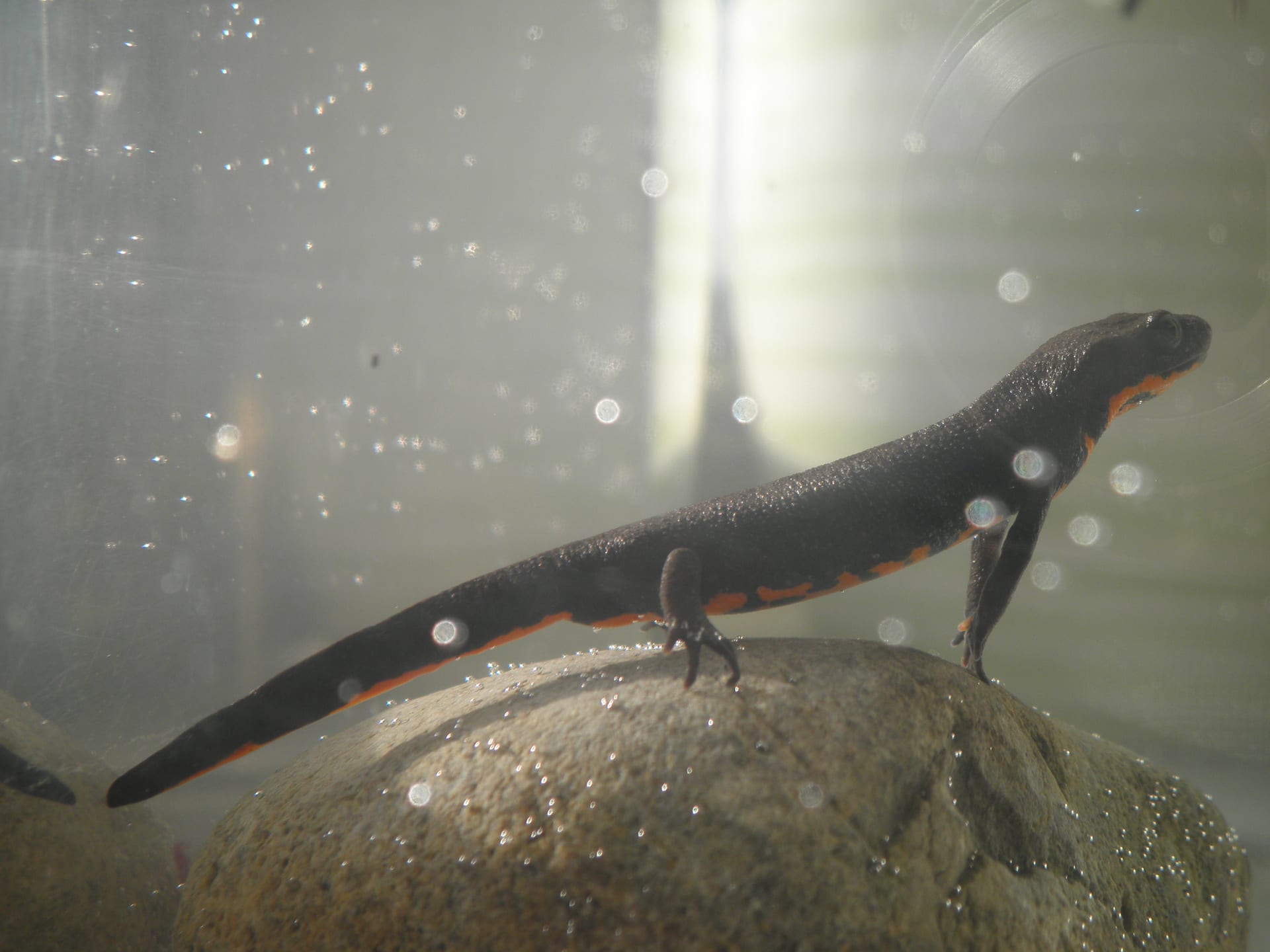
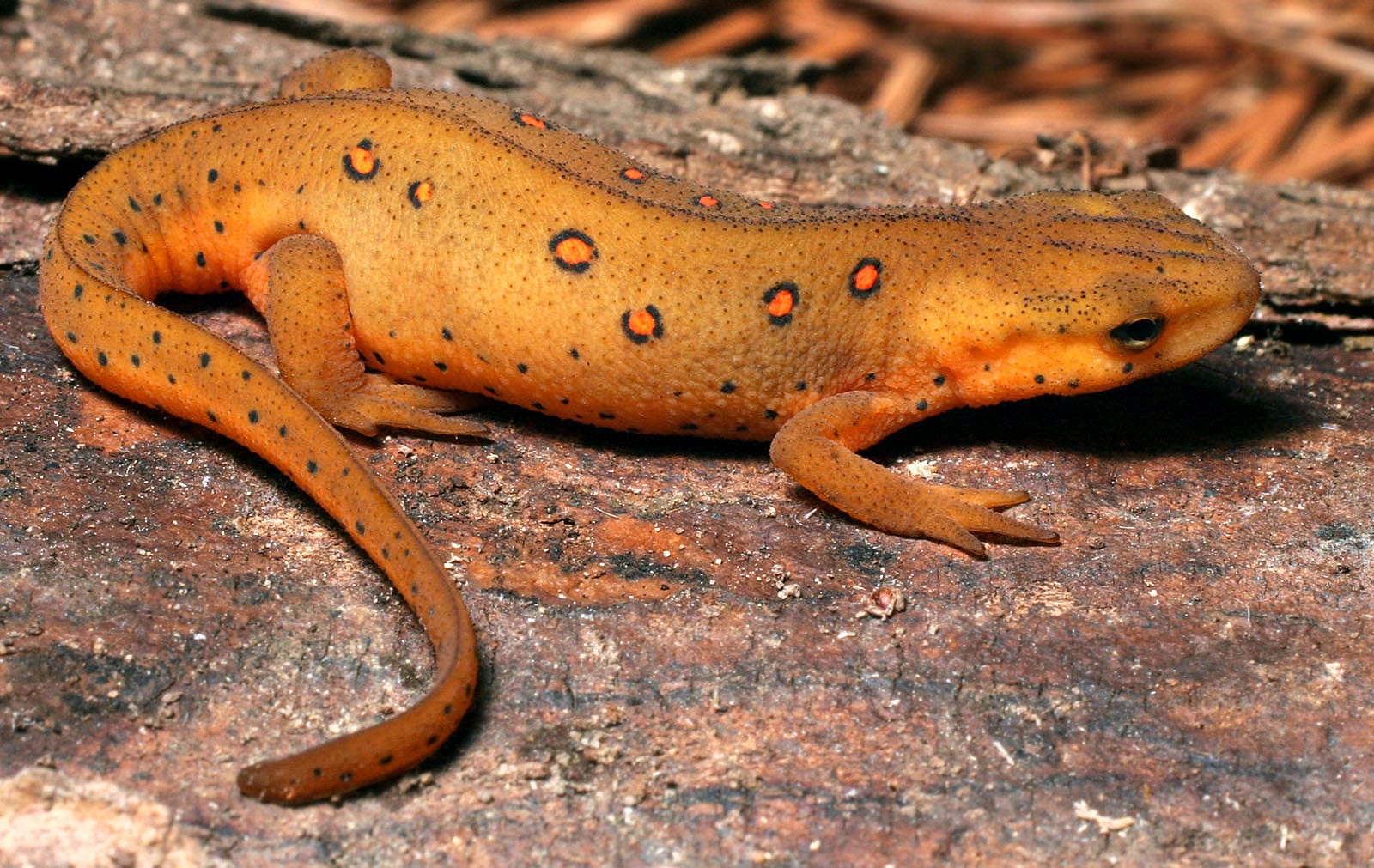
A newt widespread across eastern North America. Red spots ringed with black dot a greenish-brown body. Juveniles pass through a bright orange terrestrial stage known as the red eft before returning to the water as adults.
Difficulty
Beginner
Temperature
18〜23℃
Lifespan
12-15 years
Size
Up to 13cm (efts 2-8cm)
Humidity
40〜70%
Diet
Earthworms, frozen bloodworms, blackworms and small invertebrates
About
Notophthalmus viridescens is a widespread salamandrid of eastern North America reaching up to 13 cm. Adults are greenish to yellowish brown above with rows of red spots ringed in black. Its life history has three distinct stages: a gilled aquatic larva, a bright orange to crimson terrestrial juvenile known as the red eft, and an aquatic adult. The eft stage normally lasts two to three years and in some populations as long as seven. The skin contains tetrodotoxin, which makes it unpalatable to predatory fish and crayfish. Adults live in weedy ponds, marshes and slow streams, and are most abundant where large predatory fish are absent. In captivity three adults suit a 38 L (10-gallon) tank half filled with water, planted and furnished with driftwood for cover, at 18-23 C in spring and summer and 5-10 C in winter. Efts are terrestrial and need a terrarium instead.
Source: Wikipedia (CC BY-SA 4.0)
Lifespan of the Eastern Newt
The Eastern Newt lives 12-15 years.
Size of the Eastern Newt
The Eastern Newt grows to Up to 13cm (efts 2-8cm).
Temperature & humidity for the Eastern Newt
The ideal temperature for the Eastern Newt is 18〜23℃.
Basic Info
Origin
Eastern North America (southern Canada to south Texas and south Florida, west to Oklahoma and Kansas)
Lifespan
12-15 years
Care Specifications
PeacefulGroupBreeding: Moderate
Sources: Caudata Culture: Notophthalmus viridescens / Reptiles Magazine: Eastern Newt Information And Care / Wikipedia (English)
References & Sources
Edited & verified by: BreederDirect editorial team
The taxonomic, regulatory, and husbandry data on this page are compiled and verified against the authoritative primary sources below.
Taxonomy & Authority
Accepted name: Notophthalmus viridescens (Rafinesque, 1820)
Synonyms: Diemictylus viridescens (Rafinesque, 1820), Triturus viridescens (Rafinesque, 1820)
Authority databases: GBIF
Nomenclature follows global taxonomic authority databases.
Regulations & Conservation Status
Not CITES-listedIUCN LC · Least Concern
Sources: CITES Appendices (species not listed) / IUCN Red List
Regulations may change. Always verify the latest information with the relevant authorities.
Eastern Newt Listings
Loading latest listingsFind listings for this species