Source: Wikimedia Commons
Neon damselfish
BeginnerPomacentrus coelestis
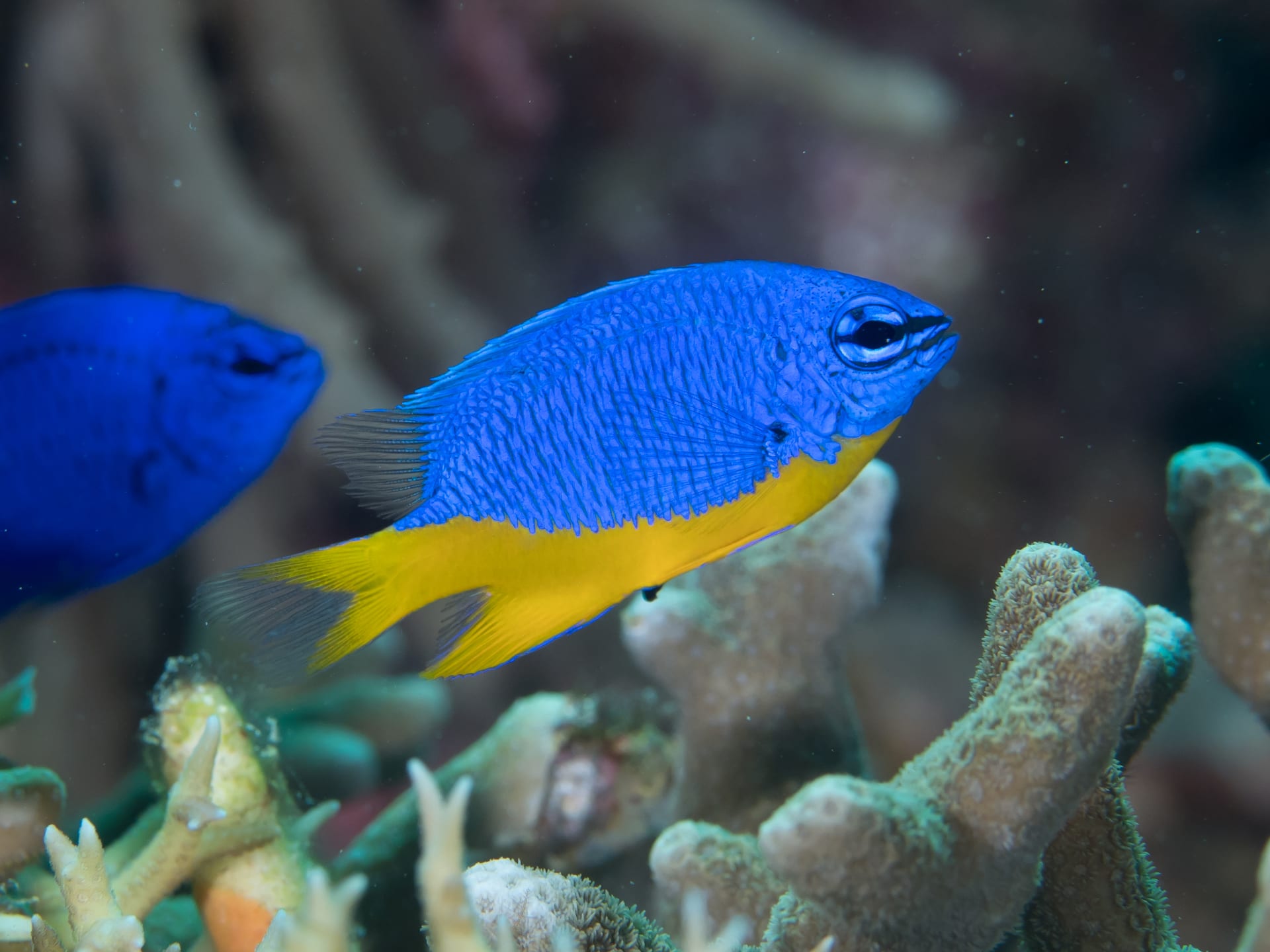
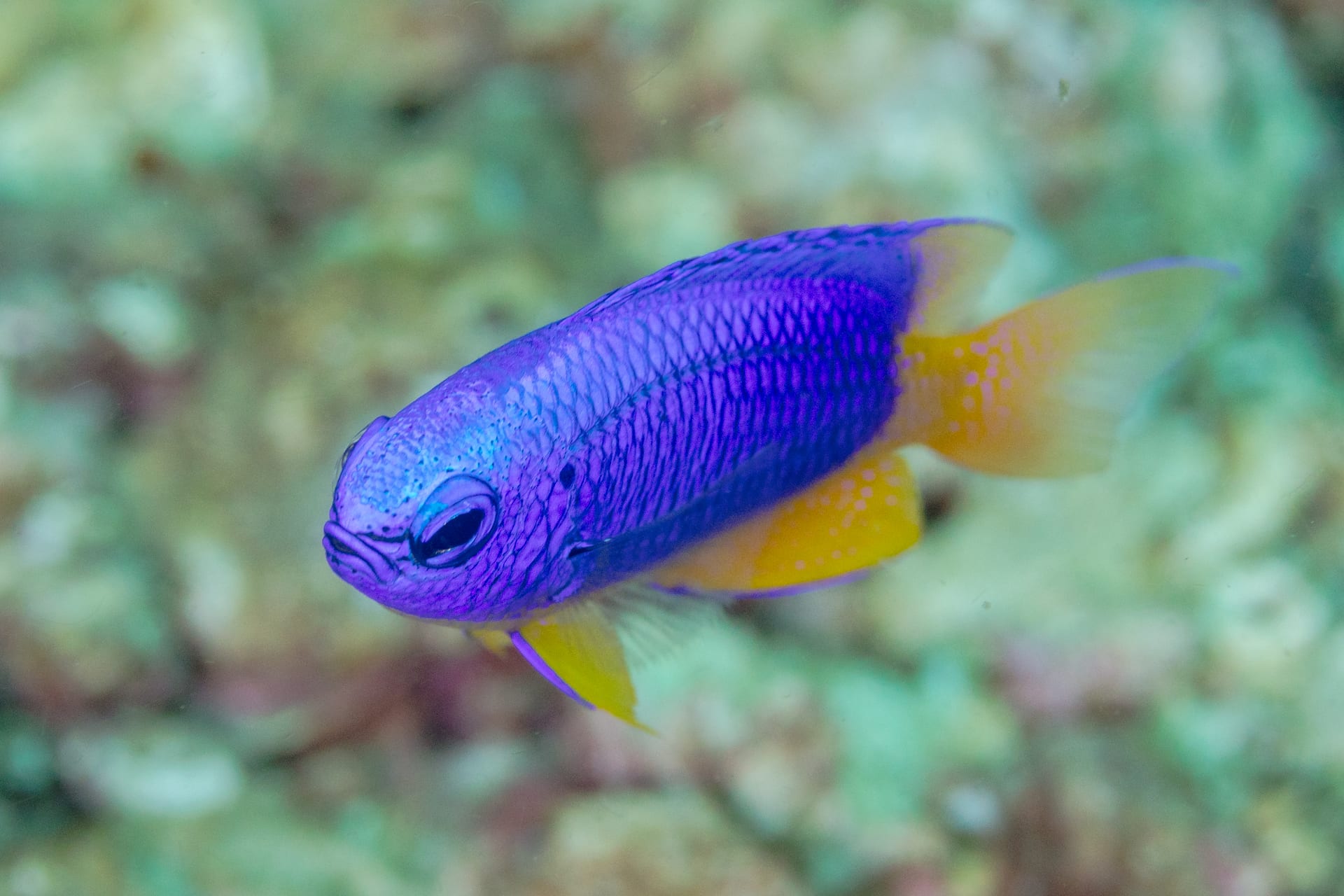
A neon-blue damselfish with yellow on the belly, tail base and tail. It is common on rocky shores in southern Japan, and the amount of yellow varies between individuals.
Difficulty
Beginner
Temperature
23〜28℃
Lifespan
Little data available
Size
Up to 9 cm TL (FishBase)
Diet
Omnivore (zooplankton and algae)
About
The neon damselfish (Pomacentrus coelestis) ranges from Sri Lanka to the Line and Tuamotu islands, north to southern Japan and south to Lord Howe Island (FishBase), reaching 9 cm TL. It is bright neon blue with yellow on the belly, tail base and tail, the extent and intensity of the yellow varying with locality and individual. It lives near rubble on coastal rocky and coral reefs: juveniles school over soft corals, adults form small to large groups. It feeds on zooplankton and benthic algae. Eggs are laid in rock crevices and guarded by the male. Note that a different species, Neoglyphidodon oxyodon, is sold in Japan as "neon damsel", so do not rely on the trade name alone. It is easy to keep and readily takes prepared and frozen foods. It leaves corals alone and is reef-safe. Saltcorner recommends keeping a group of at least five to seven so aggression is spread out. In Japan it is a familiar beginner fish, also collected on local rocky shores.
Source: Wikipedia (CC BY-SA 4.0)
Size of the Neon damselfish
The Neon damselfish grows to Up to 9 cm TL (FishBase).
Temperature & humidity for the Neon damselfish
The ideal temperature for the Neon damselfish is 23〜28℃.
Basic Info
Origin
Eastern Indian Ocean to western Pacific (Sri Lanka to the Tuamotus, north to southern Japan)
Lifespan
Little data available
Size
Up to 9 cm TL (FishBase)
Care Specifications
- Water Temp.
- 23–28℃
- Specific Gravity
- 1.02–1.026
- Min. Tank
- 110 L
Semi-aggressiveReef safe
Sources: FishBase (Pomacentrus coelestis) / Saltcorner Fish Library (Bob Goemans)
References & Sources
Edited & verified by: BreederDirect editorial team
The taxonomic, regulatory, and husbandry data on this page are compiled and verified against the authoritative primary sources below.
Taxonomy & Authority
Regulations & Conservation Status
Not CITES-listedIUCN LC · Least Concern
Not listed in the CITES Appendices (checked on Species+). Not designated as an Invasive Alien Species under Japanese law. It also occurs along the coasts of Japan (southern Japan, the Ryukyu Islands, etc.); collecting in Japan is subject to each prefecture's fisheries adjustment regulations. Never release aquarium animals into the sea.
Sources: Species+ (CITES) / Ministry of the Environment: List of Designated Invasive Alien Species / FishBase
Regulations may change. Always verify the latest information with the relevant authorities.
Neon damselfish Listings
Loading latest listingsFind listings for this species