Source: Wikimedia Commons
Shortfin turkeyfish
IntermediateNeochirus brachyptera
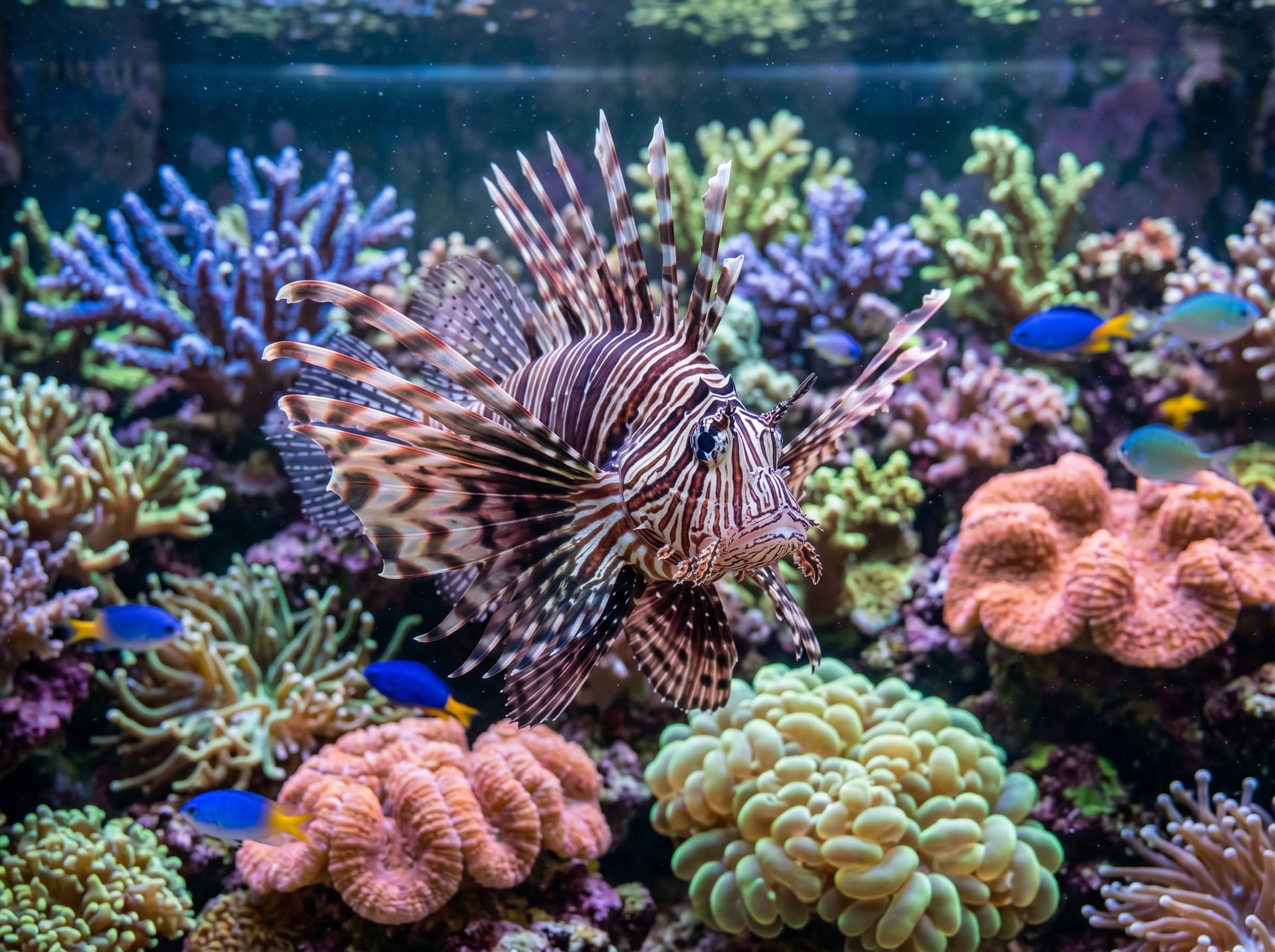
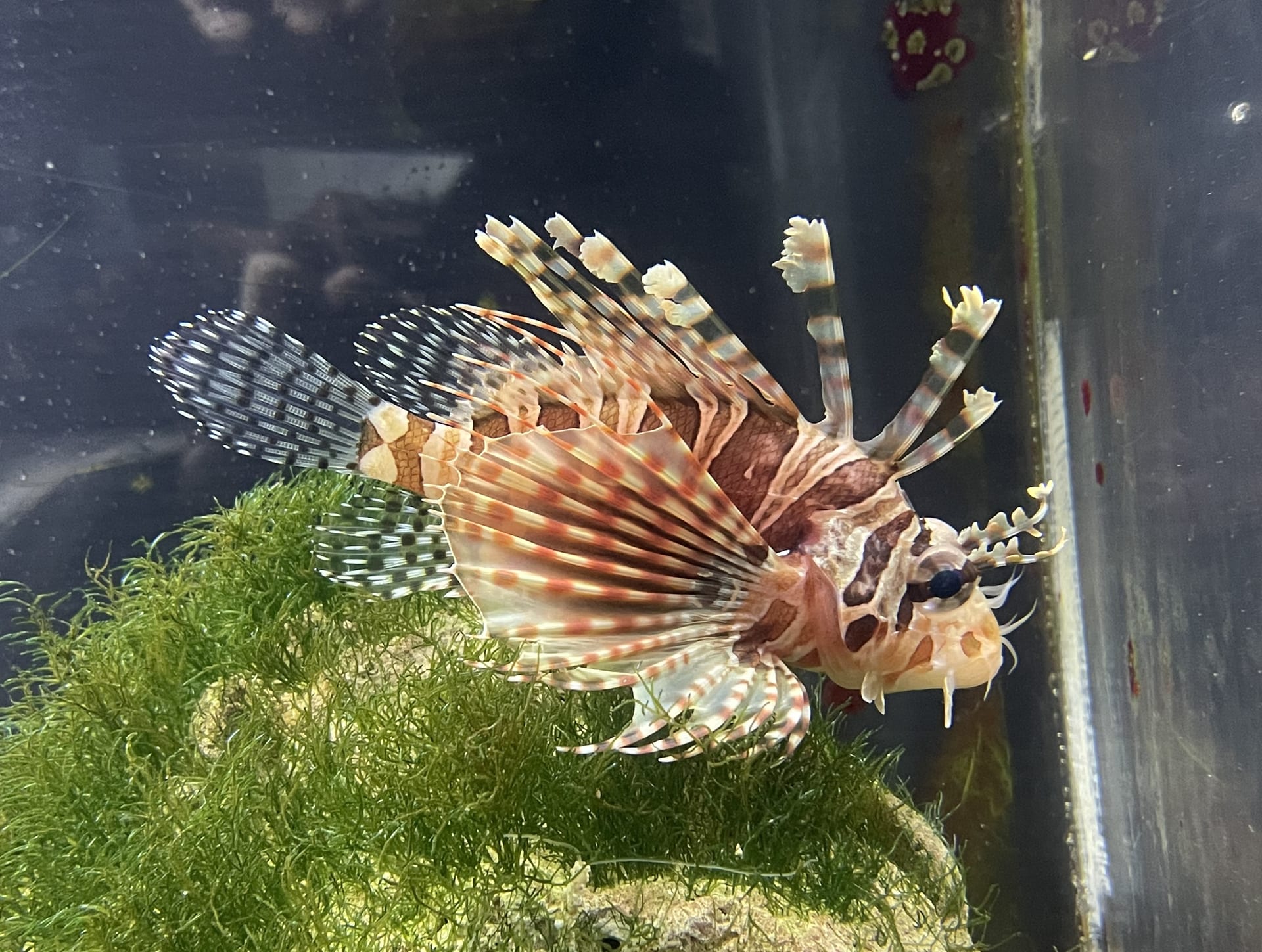
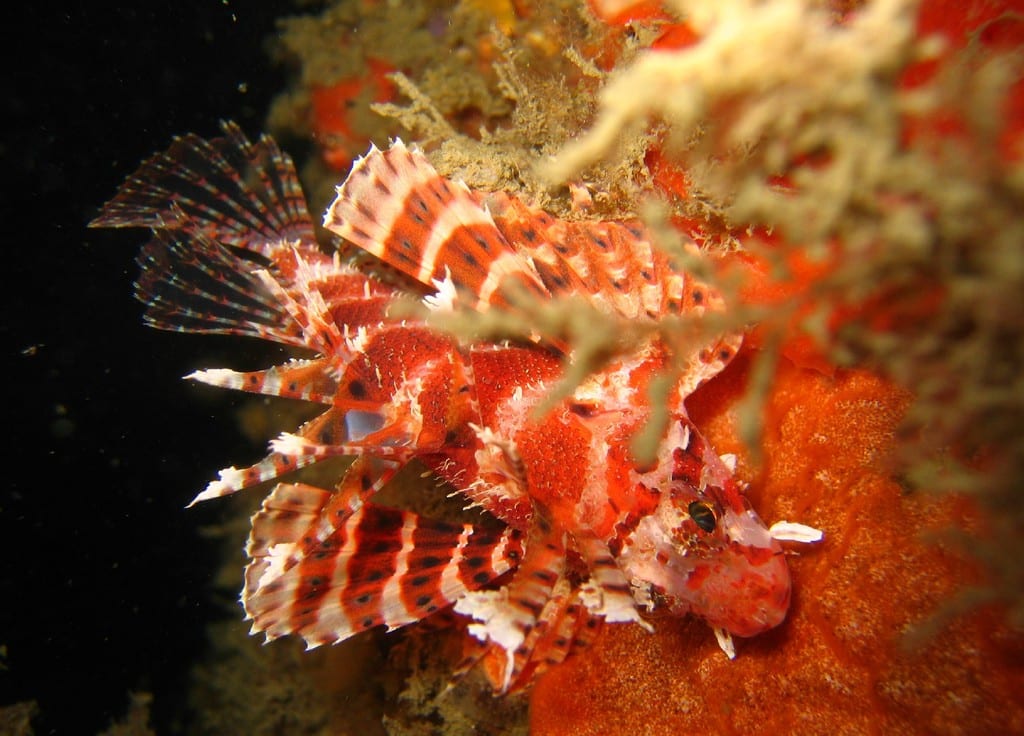
A small lionfish with reddish-brown mottling and large fan-like pectoral fins; the dorsal spines are shorter than the body depth. It hunts crustaceans at night, and its dorsal spines are venomous.
Difficulty
Intermediate
Temperature
21〜27℃
Size
Up to 17 cm TL
Diet
Carnivore (small crustaceans)
About
The shortfin turkeyfish or dwarf lionfish (Neochirus brachyptera) is a small scorpionfish of the Indo-West Pacific, from India and Sri Lanka east to Tonga and north to Japan (FishBase). It was long placed in Dendrochirus as D. brachypterus, and that name is still widely used in the aquarium literature and trade, but WoRMS now places it in Neochirus. It reaches 17 cm TL. The body is reddish with vague broad bars, the large pectoral fins are banded, and the mid-dorsal spines are shorter than the body depth. It lives on shallow reef flats and lagoons among weed-covered rocks on sand, hiding by day and hunting small crustaceans at night. The dorsal spines are venomous and cause a painful sting, so take care during tank maintenance. Provide caves and ledges and keep water flow gentle. Once it accepts meaty frozen foods it is easy to keep and can be housed in a relatively small tank. It does not harm corals but eats small fish and ornamental shrimp. It is a staple small lionfish in Japanese specialist shops.
Source: Wikipedia (CC BY-SA 4.0)
Size of the Shortfin turkeyfish
The Shortfin turkeyfish grows to Up to 17 cm TL.
Temperature & humidity for the Shortfin turkeyfish
The ideal temperature for the Shortfin turkeyfish is 21〜27℃.
Basic Info
Origin
Indo-West Pacific (India and Sri Lanka to Tonga, north to Japan)
Size
Up to 17 cm TL
Temperature
21〜27℃
Care Specifications
- Water Temp.
- 21–27℃
- Specific Gravity
- 1.02–1.026
- Min. Tank
- 110 L
Semi-aggressiveWith caution
Sources: FishBase (Neochirus brachyptera) / Saltcorner Fish Library (Bob Goemans)
References & Sources
Edited & verified by: BreederDirect editorial team
The taxonomic, regulatory, and husbandry data on this page are compiled and verified against the authoritative primary sources below.
Taxonomy & Authority
Regulations & Conservation Status
Not CITES-listedIUCN LC · Least Concern
Not listed in the CITES Appendices (checked on Species+). Not designated as an Invasive Alien Species under Japanese law. It also occurs along the coasts of Japan (southern Japan, the Ryukyu Islands, etc.); collecting in Japan is subject to each prefecture's fisheries adjustment regulations. Never release aquarium animals into the sea.
Sources: Species+ (CITES) / Ministry of the Environment: List of Designated Invasive Alien Species / FishBase
Regulations may change. Always verify the latest information with the relevant authorities.
Shortfin turkeyfish Listings
Loading latest listingsFind listings for this species