Tancho Goldfish Care Guide | Characteristics, Water Quality Management, Feeding, and How to Maintain Their Striking Head
A comprehensive guide to caring for Tancho goldfish, known for their striking contrast of a vibrant red hood on the head and pure white body. We cover tank selection, water quality management, proper feeding, tips for developing the head growth, and important considerations for housing them with other fish.
Key Takeaways
A comprehensive guide to caring for Tancho goldfish, known for their striking contrast of a vibrant red hood on the head and pure white body. We cover tank selection, water quality management, proper feeding, tips for developing the head growth, and important considerations for housing them with other fish.
Related Species
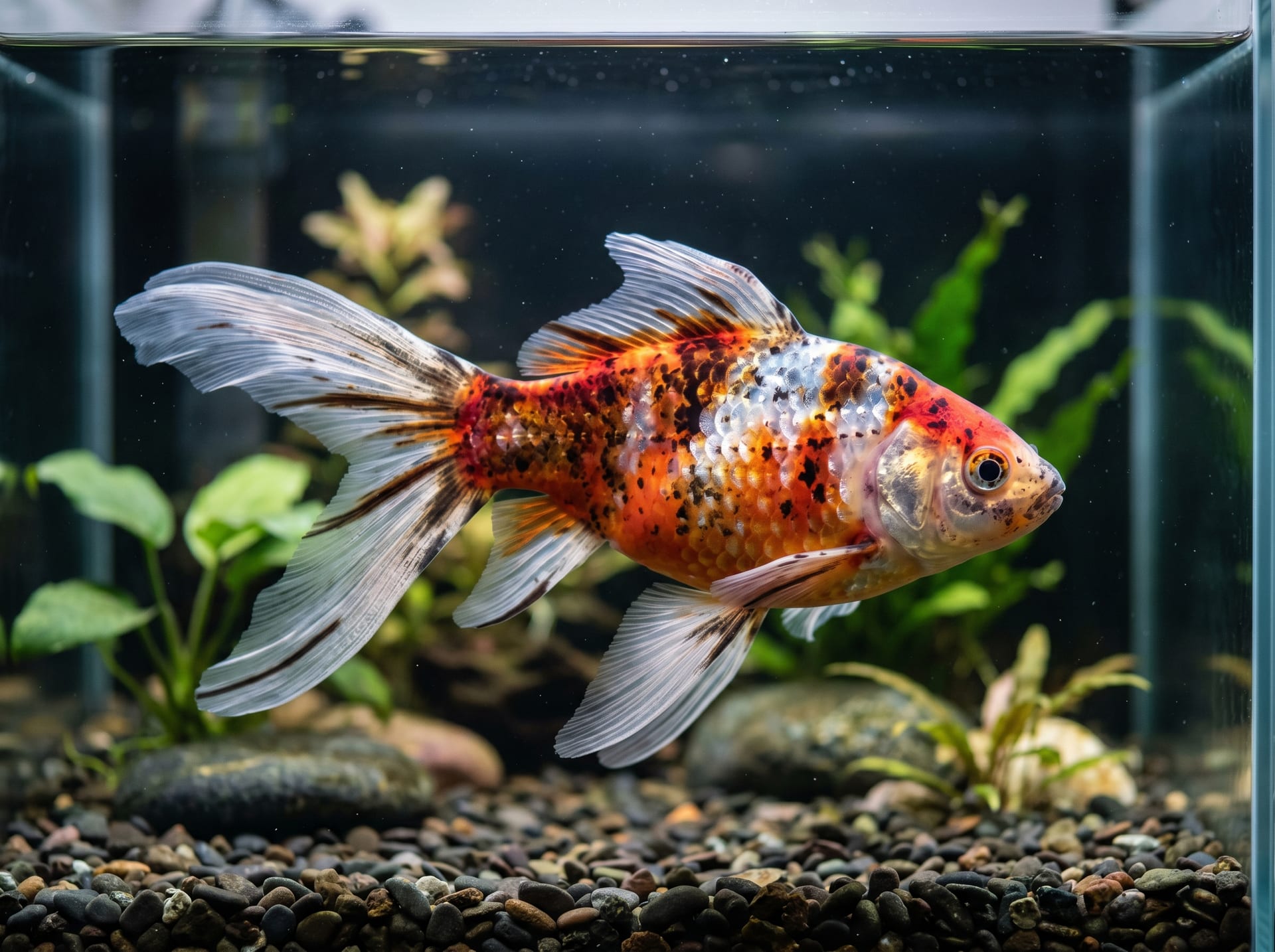
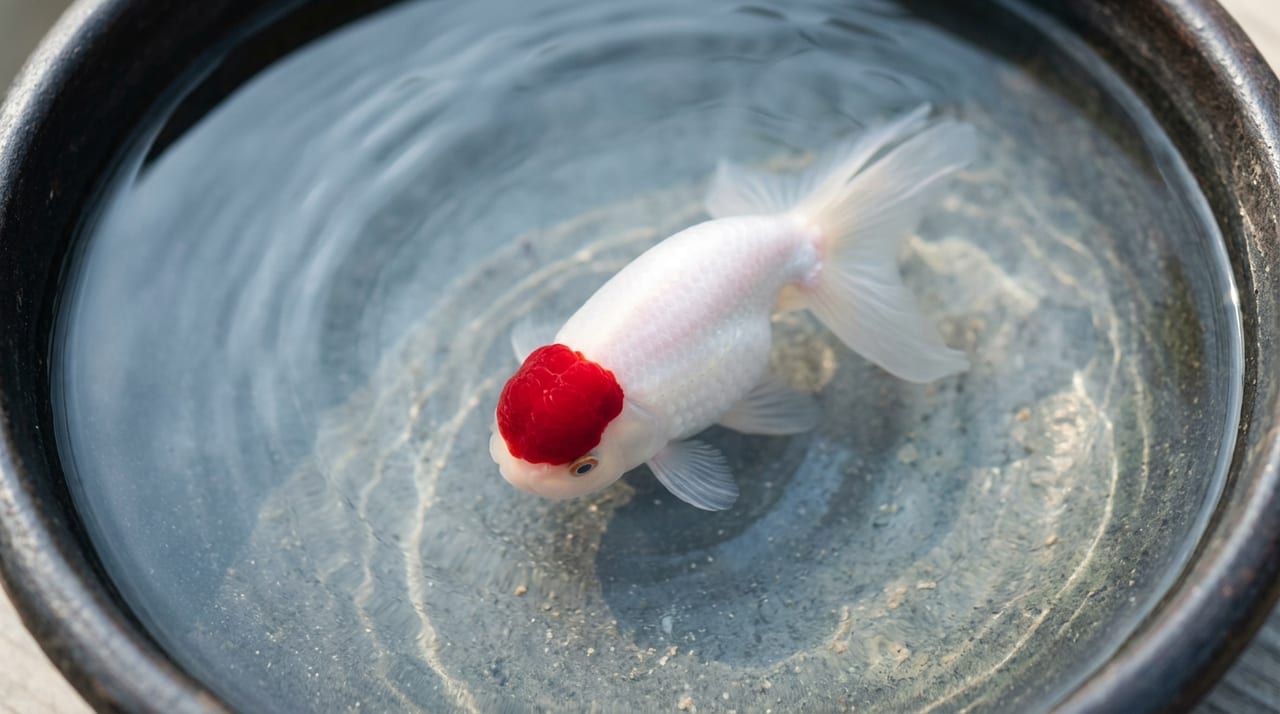
The Tancho goldfish is one of the most visually striking goldfish varieties, featuring a pure white body with a vibrant red growth (hood) only on its head. Named after the red-crowned crane (Tancho crane) for its distinctive two-tone white and red coloring, it is a premium ornamental variety highly valued both domestically and internationally for its aesthetic appeal rooted in Japanese tradition. This article comprehensively covers everything from the basics—what a Tancho goldfish is—to pricing, lifespan, selection tips, tank setup, feeding, disease prevention, and common questions, making it useful for both beginners and dedicated enthusiasts.
Characteristics and Varieties of Tancho Goldfish
Tancho goldfish belong to the "ranchu" type, characterized by the absence of a dorsal fin and a rounded body shape. The main attraction is the striking contrast between the pure white body and the vibrant red hood growth on the head. The hood develops as the fish grows, and in high-quality specimens, the red is vivid and the boundary with the white is sharply defined.
Tancho Body Shape Variations:
- Higoi-type Tancho: Tancho with the body shape of a Higoi. Has a somewhat angular appearance.
- Oranda-type Tancho: Tancho with the body shape of an Oranda Lion Head. Features a plump, rounded body shape. This is the most commonly available type.
- Ranchu-type Tancho: A low-backed, flattened body shape. Best suited for top-down viewing.
Basic Data on Tancho Goldfish
| Item | Details |
|---|---|
| Body Type | Ranchu type (no dorsal fin, rounded shape) is the standard |
| Maximum Size | Approximately 20–25 cm |
| Ideal Water Temperature | 15–25°C |
| Lifespan | 10–15 years (can exceed 15 years with proper care) |
| Price Range | Hundreds of yen (mass-produced) / ¥3,000–¥20,000 (specialty shops) / Tens of thousands of yen and up (show-quality) |
| Head Growth (Hood) | Develops with age. Red coloration and boundary clarity with white are evaluation criteria |
Tancho vs. Oranda: How They Differ
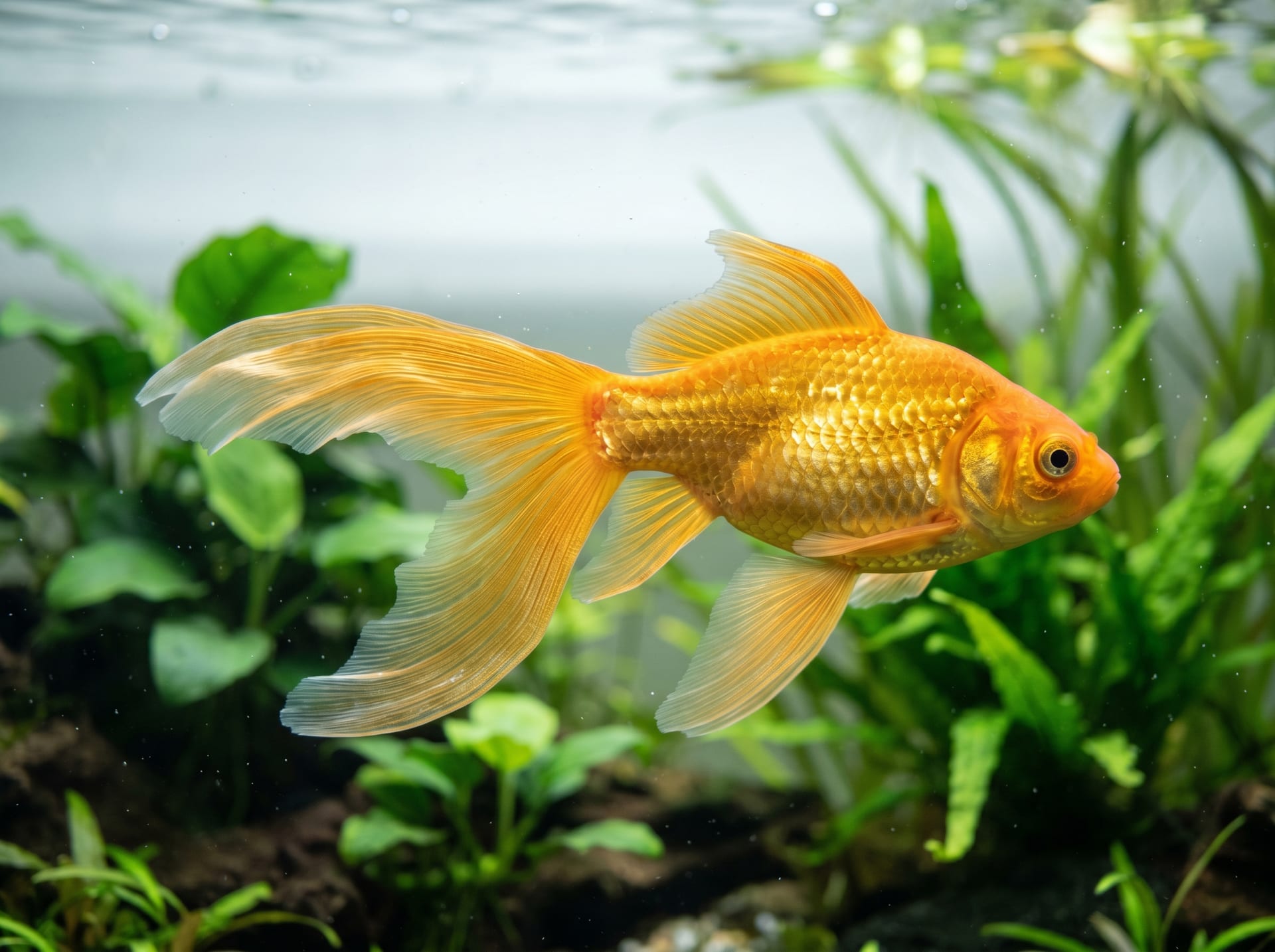
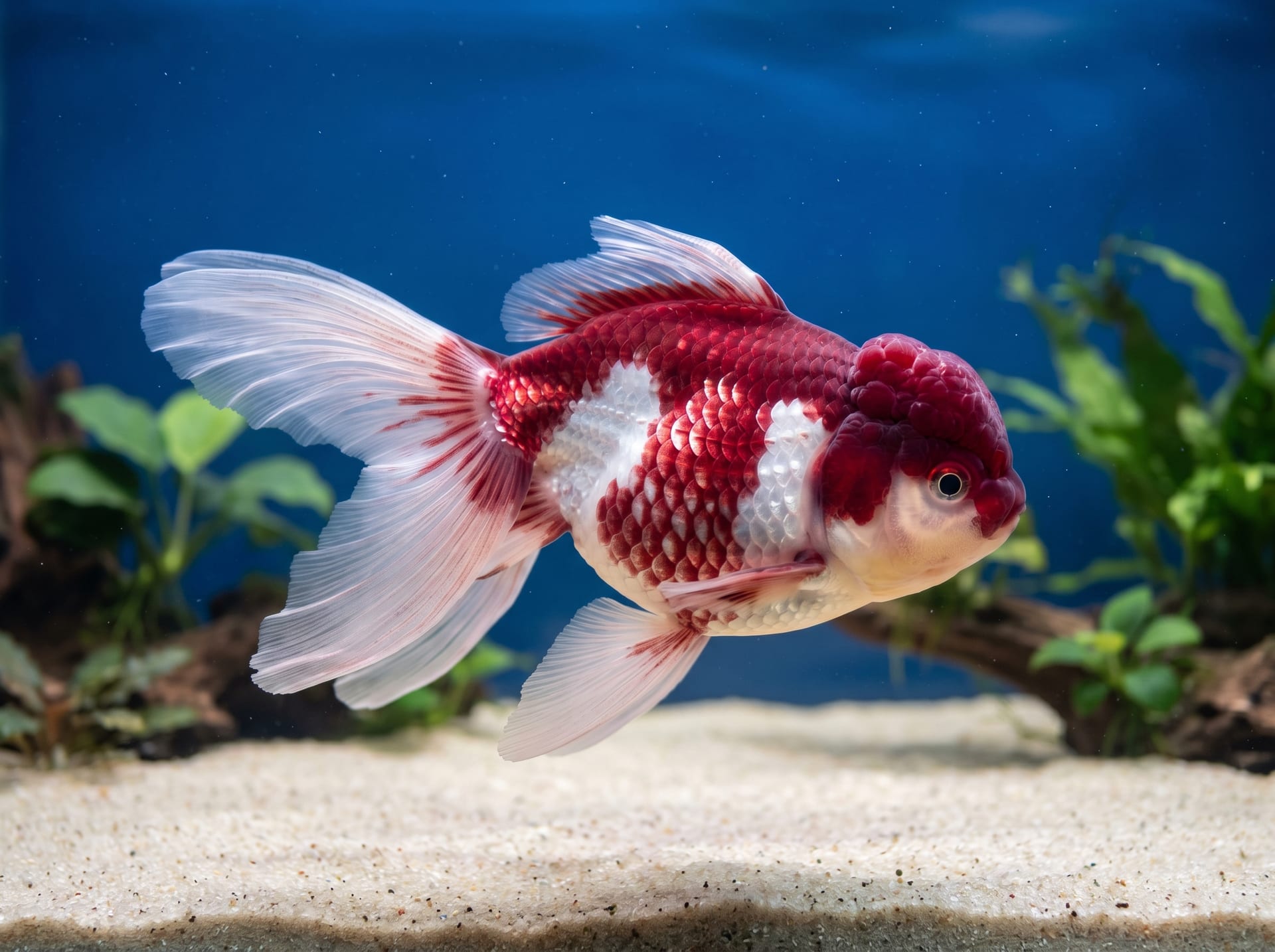
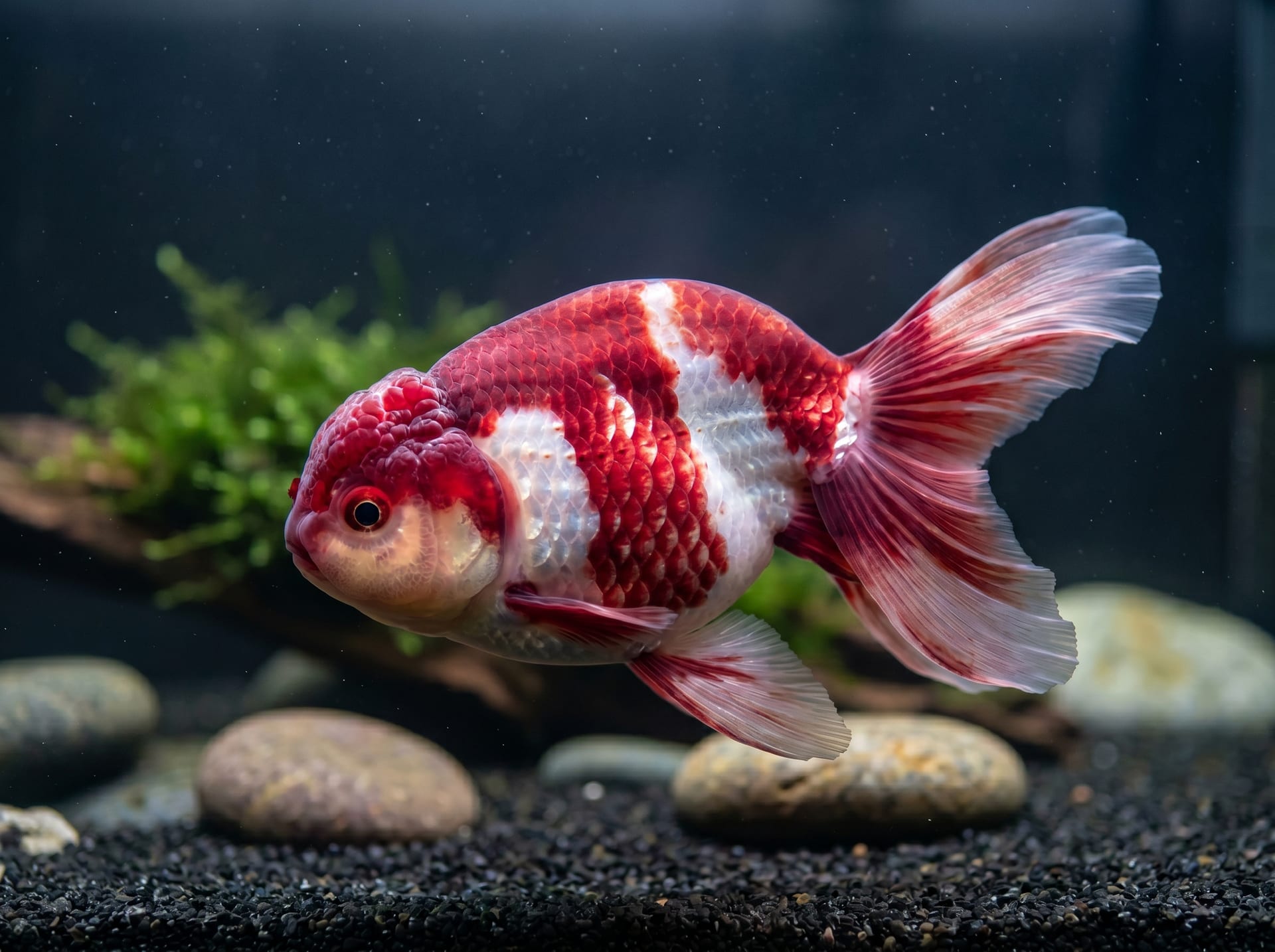
The Tancho was developed from the Oranda, so their body shapes are similar, but you can tell them apart by:
- Hood (wen) coverage: on a Tancho the hood develops only on top of the head; on an Oranda it spreads across the whole face including the cheeks
- Coloration: Tancho are fixed as "white body + red crown," while Orandas come in red, red-white, calico, and more
- Judging criteria: Tancho are valued for red-white contrast and a round crown; Orandas for overall hood volume
Think of the Tancho as a selectively bred "white Oranda whose only red is the crown." Care requirements are essentially the same as for Orandas.
Tancho Goldfish Pricing and Cost
Tancho goldfish prices vary significantly depending on the individual's quality. It's helpful to understand the market before making a purchase.
Pet Store and General Aquarium Shop Stock: Several hundred to several thousand yen These are widely available and easy to obtain, but quality is inconsistent. You may find young fish with underdeveloped hoods or individuals with weak red coloration. This is a good option for those wanting to start with Tancho goldfish on a budget.
Specialty Shops and Breeder Stock: Around ¥3,000–¥20,000 These sources offer individuals with carefully managed hood shape, vibrant red coloration, and pure white. Quality is consistent, and for long-term viewing, they offer excellent value for money.
Show-Quality Grade: Tens of thousands to hundreds of thousands of yen Premium specimens with proven award records at shows. This tier appeals to serious enthusiasts seeking display or breeding specimens. The hood shape, red coloration, white purity, and body balance are all at the highest standards.
Online Breeders (such as BreederDirect): Excellent value through direct purchase Through BreederDirect's goldfish category, you can purchase show-quality Tancho directly from breeders. By eliminating middleman costs, you often get specimens equal to or better than specialty shop stock at reasonable prices. You can also ask breeders directly about topics like "what environment was this fish raised in?" and "can it be kept with other fish?"
Purchase Precautions: Regardless of where you buy, allow new fish 1–2 weeks of quarantine before adding them to your main tank. This is an essential step to prevent introducing infections like Ich. For detailed guidance, see the Goldfish Salt Bath and Quarantine Guide. More detailed purchase tips are explained in the Goldfish Buying Guide.
Lifespan and Tips for Longevity
Average Lifespan: 10–15 years With proper care, Tancho goldfish typically live 10–15 years. Some exceptional individuals have been known to live nearly 20 years. This makes them one of the longer-lived goldfish varieties.
Keys to Long Life
- Rigorous water quality management: Keep ammonia and nitrite at zero, aiming for nitrate levels below 40 ppm
- Proper feeding: Overfeeding causes swim bladder disease and intestinal blockages. Follow the rule of feeding only what the fish can consume in 3–5 minutes
- Early disease detection: Observe daily changes in coloration, swimming behavior, and appetite
- Temperature stability: Sudden temperature fluctuations suppress immunity. Pay special attention during seasonal transitions
Major Factors That Shorten Lifespan
- Chronic water quality deterioration from overstocking
- Neglecting swim bladder disease (chronic cases cause progressive organ damage)
- Temperature extremes (over 30°C or sudden drops)
- Inappropriate tank mates causing malnutrition and stress
The secret to longevity is "keeping a simple tank environment clean." Regular water changes and daily observation habits matter more than complex equipment. For more on goldfish lifespan management, see the Goldfish Lifespan Guide.
Selecting Tancho Goldfish — Points to Check When Buying
You can develop an eye for choosing quality Tancho goldfish as a beginner by learning a few key points. Check the following before purchasing.
1. Evaluating the Hood (Red Head Growth)
- Is the red area broad with vivid coloration?
- Is the boundary with the white sharp and distinct (fewer gradations are better)?
- Is the hood neatly concentrated on the crown of the head without asymmetry?
2. Evaluating Body Shape
- Is the body symmetrical with good proportions?
- Does the back display a beautiful curve?
- Are there no missing or torn fins (especially tail and pectoral fins)?
3. Checking Swimming Behavior
- Does it swim straight and level (tilting or inability to sink back is an early sign of swim bladder problems)?
- Avoid fish that sink to the bottom and remain motionless
4. Assessing Coloration
- Is the white pure white without yellowish tones?
- Does the white contain unnecessary colors like black or orange?
5. Confirming Shop Conditions
- Are the other fish in the tank healthy (infection risk increases if even one diseased fish is present)?
- Is the water crystal clear (avoid tanks with brown or cloudy water)?
- Does the fish show appetite (observe its response when food is offered)?
Preparing the Tank Environment
Tank Size: Tancho goldfish grow to approximately 20–25 cm. A 60 cm tank is the minimum for a single fish, while 90 cm or larger is ideal for multiple fish or generous spacing. A "ranchu tank" (low and wide) is well-suited for top-down viewing of the ranchu type. For detailed information on tank selection and setup, see the Goldfish Tank Setup Guide.
Filtration System: Goldfish produce large amounts of waste and easily foul the water. A powerful filter matched to the Tancho's size and number is essential. While hang-on-back, canister, and sponge filters are all used, hang-on-back filters are most user-friendly for beginners due to easy maintenance and strong biological filtration capacity. Since ranchu types are sensitive to water current, adjust the outlet direction and flow so water doesn't directly hit the fish.
Temperature Management: The ideal temperature range is 15–25°C. Summer temperatures exceeding 28°C reduce vitality and increase disease risk, requiring a chiller or cooling fan. In winter, fish can survive without heating, but at temperatures below 5°C they become nearly dormant—stop feeding and gradually resume as temperatures rise in spring.
Water Quality Management
Water quality management is the most important factor in keeping Tancho and other goldfish.
Ideal Water Quality: pH 6.5–8.0, with moderately hard water (slightly hard). Maintain ammonia and nitrite at 0, aiming for nitrate levels below 40 ppm.
Water Change Frequency: The basic routine is weekly water changes replacing about 1/3 of the water. During changes, be mindful of temperature and chlorine differences, using dechlorinated water adjusted to the same temperature.
Salt Bath Benefits: A temporary 0.3–0.5% salt bath can support goldfish health. It strengthens immunity, aids osmotic regulation, and helps prevent minor bacterial infections. However, long-term use can affect beneficial filter bacteria, so use cautiously. For detailed salt bath procedures, see the Goldfish Salt Bath Guide.
For comprehensive water quality information, the Goldfish Water Quality Management Guide is helpful.
Feeding for Beautiful Hood Development
To develop the Tancho's hood properly, nutritionally balanced feeding and good water quality are essential.
Choose High-Quality Food: While standard commercial goldfish food is adequate for basic care, for optimal hood development and coloration, food containing "color-enhancing ingredients (astaxanthin, carotenoids)" is effective. Regularly offering protein-rich foods like bloodworms, brine shrimp, and dried krill also promotes hood development.
Feeding Method: Feed 2–3 times daily, using the amount the fish can eat within 3–5 minutes as a guideline. Remove uneaten food immediately as it degrades water quality. During cooler months (fall to winter), reduce feeding amount and frequency to minimize digestive strain.
Color Enhancement Notes: Color-enhancing food may cause slight yellowing of the white areas. If you prefer the pure white characteristic of Tancho, you can use color-enhancing food sparingly or not at all. For more on food types and selection, see the Complete Goldfish Food Guide.
When the Hood Won't Turn Red or Develop
A pale or underdeveloped crown is a common concern. Causes and remedies:
- Age: the hood develops in earnest from age 2-3; be patient with young fish
- Genetics: hood size and red intensity depend most on parentage—buying from a breeder who can show you the parents is a real advantage
- Diet: color-enhancing foods with astaxanthin or spirulina help maintain red; pair them with high-protein foods (bloodworms, tubifex) for hood growth
- Don't overdo color food: too much will yellow the white body and ruin the Tancho's signature contrast
- Environment: overcrowding and low temperatures slow hood development—keep generous water volume and temperatures in the 20s °C
If the red fades, insufficient lighting or sunlight can also be a cause—moderate light exposure helps.
Tank Mates and Management Considerations
Tancho goldfish, being the ranchu type with relatively slow swimming, may not get enough food when housed with more competitive varieties.
Compatible Species: Other ranchu types (ranchu, Higoi, Oranda Lion Head) or goldfish of similar size and swimming speed work well. Tancho can be kept together, and mixed ranchu-Tancho setups are common. For more on ranchu care, see the Complete Ranchu Goldfish Care Guide.
Combinations to Avoid: Fast-swimming varieties like Wakin, Comet, and Kohaku are not suitable. Tancho may lose food competition and become malnourished. For detailed information on compatible combinations, check the Goldfish Tank Mate Guide.
Sex Identification: During breeding season (spring), males develop small bumps called "breeding stars" on their pectoral fins and gill covers. Females develop a rounded belly. For breeding purposes, keep at least a pair.
Common Diseases and Prevention
Ich (White Spot Disease): This common disease occurs when fish experience temperature fluctuations or immune stress. Small white spots appear on fins and body. Maintain temperature at 25–27°C and treat with commercial Ich medication (methylene blue-based). Early detection during quarantine prevents spread to the main tank.
Swim Bladder Disease (Especially Important for Ranchu Types)
For ranchu-type Tancho, swim bladder disease requires special attention.
The main causes of swim bladder disease fall into three categories:
- Swim Bladder Dysfunction: Genetic factors or bacterial infection affecting swim bladder function
- Digestive Issues: Overfeeding floating food, constipation, or gas buildup in the intestines
- Sudden Temperature Changes: Rapid temperature fluctuations disrupt digestion and trigger swim bladder problems
An effective prevention strategy is switching to sinking-type food, which prevents fish from gulping air at the surface. Also effective is a weekly fasting day to reset the digestive system.
It's important to understand that "swim bladder disease is difficult to cure completely." In early stages, fasting, temperature adjustment, and salt baths may improve symptoms, but chronic cases are unlikely to fully recover. Long-term management (shallow water for easier breathing, tank layouts that prevent injury if the fish flips) helps maintain quality of life.
Bacterial Infections (Fin and Body Rot): These occur from poor water quality and stress. Prevent with regular water changes and proper filtration; treat with salt baths and medication when it occurs. For comprehensive disease information, see the Goldfish Disease Guide.
Tancho Goldfish Frequently Asked Questions (FAQ)
Q. How much do Tancho goldfish cost? A. Mass-produced specimens from pet stores range from several hundred to several thousand yen. Specialty shop and breeder specimens are typically ¥3,000–¥20,000, while show-quality fish can reach tens to hundreds of thousands of yen. For first-time buyers, starting with a ¥3,000–¥5,000 specimen from a specialty shop or online breeder offers good value.
Q. Can I keep a Tancho goldfish alone? A. Yes. Goldfish don't necessarily require living in groups, so a single fish is fine. Single-fish setups are often easier to manage water quality-wise, and the fish may develop better hood growth from not competing for food. Maintain regular observation to bond with your fish.
Q. Can I keep Tancho goldfish in a biotope or outdoor pond? A. Outdoor biotope and pond keeping are generally possible but challenging for Tancho goldfish (ranchu type) due to quality management difficulties—best suited for advanced keepers. Predator protection (cats, birds), summer temperature control, and adequate water volume are concerns. Beginners should start with indoor tank keeping.
Q. Why does my Tancho's red hood fade or become lighter? A. The main causes are: ① insufficient color-enhancing nutrients (review feeding), ② stress from poor water quality, and ③ poor health from temperature fluctuations or disease. Young fish often have lighter red coloration that stabilizes with age. If the red fades rapidly, prioritize checking water quality and overall health.
Q. How long do Tancho goldfish live? A. With proper care, they typically live 10–15 years. Fish living beyond 15 years have been documented. The three pillars of longevity are water quality management, proper feeding, and early disease detection.
Tancho goldfish are among the most popular of all goldfish varieties due to their beauty, and they're enjoyable both for top-down and side viewing. Use the care tips in this article to enjoy the white and red contrast for years to come. Reading the Goldfish Beginner's Guide and Goldfish Varieties Guide will deepen your appreciation of the Tancho's charm.