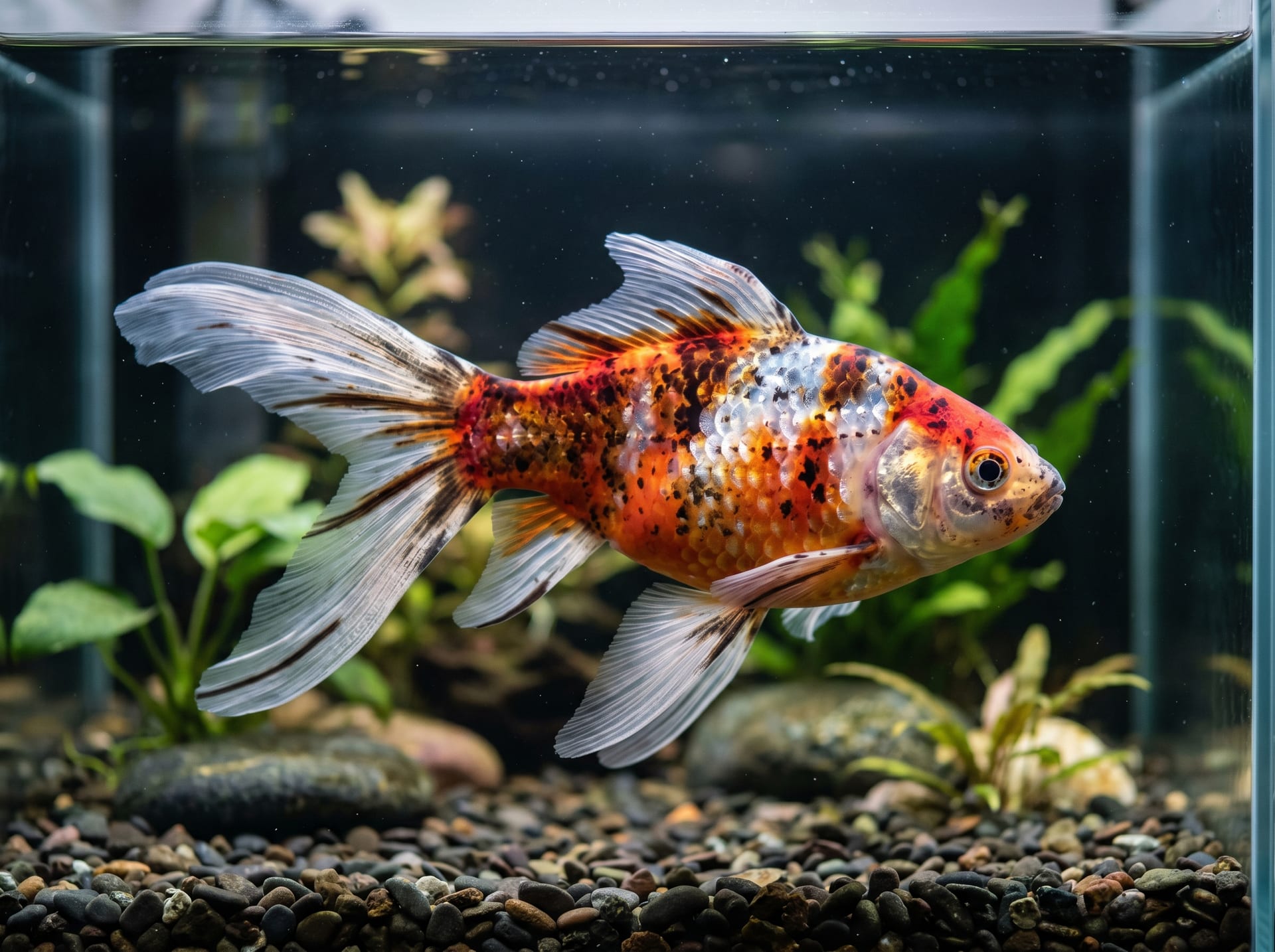
Why Choosing the Right Goldfish Food Matters
A goldfish's health, color, and growth are greatly influenced by the quality and method of feeding. While there are many options available—from commercially available goldfish food to frozen bloodworms and live food—each has its own characteristics and appropriate use. Improper feeding methods can lead to indigestion, water quality deterioration, and body shape problems. This guide covers all types of goldfish food and explains how to select the best options based on breed, season, and purpose.
Types and Characteristics of Artificial Feed
Flake Feed
Flake-type feed that floats on the water surface is the most convenient option. It is suitable for active swimming breeds like Wakin and Comet goldfish. However, it increases the risk of goldfish swallowing air, making it unsuitable for round-bodied varieties like Ryukin, Telescope, and Oranda, which are prone to swim bladder disease.
Pellet (Floating) Feed
Currently the most popular type. The uniform pellet size makes it easier to manage feeding amounts. It is suitable for breeds that prefer feeding at the water surface. Many products contain color-enhancing ingredients (carotenoids and spirulina), making them suitable for serious color enhancement.
Sinking Feed
Feed designed to sink in water, particularly suitable for bottom-feeding varieties like Ranchu and other bottom-dwelling breeds. Additionally, using sinking feed for Ryukin and Telescope goldfish, which are prone to swim bladder issues with floating feed, can reduce the burden on the digestive system.
| Feed Type | Suitable Breeds | Notes |
|---|
| Flake | Wakin, Comet, Red-and-White | Easy to swallow air |
| Pellet (Floating) | All breeds (except round-bodied) | Uneaten food sinks to the bottom |
| Sinking | Ranchu, Ryukin, Telescope | Easily becomes debris on the bottom |
How to Choose Color-Enhancing Feed
To keep goldfish colors vibrant, carotenoids (especially astaxanthin and canthaxanthin) and spirulina (a type of green algae) are effective.
Top color-enhancing products:
- Kyorin "Hikari Food Goldfish Food Color Enhancer": Enhances red and yellow coloration
- GEX "Saki Hikari Goldfish Food Color-Enhancing": Contains spirulina and carotenoids
- Tetra "TetraFin Color": Enhanced natural carotenoids
Color-enhancing feed should not be used daily; the basic practice is to replace about 30-50% of regular feed with color-enhancing varieties. Excessive color-enhancing ingredients can burden the digestive system.
How to Use Frozen Bloodworms and Live Food
Frozen Bloodworms
Frozen bloodworms are freeze-processed larvae of midge flies. They are high in protein and highly palatable, making them a favorite food for goldfish.
Characteristics and cautions:
- Much more palatable than artificial feed, and effective even for goldfish with poor appetite
- High protein content makes them ideal for supplementing nutrition in breeding stock and recovering individuals
- They easily foul the water, so uneaten portions should be promptly removed
- The standard method is to thaw one or two cube-shaped blocks before feeding
Tubifex Worms
Live tubifex worms are among the most palatable foods for goldfish. Because they move more than frozen varieties, they stimulate feeding more easily and are used for nutritional enhancement in breeding stock before spawning. However, they require careful hygiene management, as there is a risk of introducing pathogens. Always rinse thoroughly with tap water before use.
Brine Shrimp
Primarily used for juvenile goldfish, but can also be used to supplement nutrition in adults. Newly hatched nauplii have especially high nutritional value and are very effective for feeding during breeding.
Feeding Amount and Frequency by Breed and Season
Feeding Amounts by Breed
Goldfish breeds differ in their digestive system structure and metabolism.
- Streamlined breeds like Wakin, Comet, and Red-and-White: Feed 2-3 times daily, with an amount they can consume in 3-5 minutes
- Round-bodied breeds like Ryukin, Telescope, and Oranda: Feed 1-2 times daily, limiting to an amount they can consume in 2-3 minutes. Since their digestive organs are easily compressed, reducing the number of feedings while maintaining small portions lowers the risk of swim bladder disease better than frequent small feedings
- Ranchu: Feed 2-3 times daily with specialized sinking feed, with an amount they can consume in 3-5 minutes
Seasonal Feeding Guide
| Season | Water Temperature Target | Feeding Frequency and Amount |
|---|
| Spring (March-May) | 15-22°C | Metabolism begins to increase. Gradually increase the amount |
| Summer (June-September) | 23-28°C | Most active. Feed 2-3 times daily, normal amount |
| Fall (October-November) | 15-20°C | Begin gradually reducing the amount |
| Winter (December-February) | 10°C or lower | Stop feeding or feed a minimal amount once per week. Be careful of indigestion |
When water temperature drops below 10°C, goldfish digestive ability decreases significantly. Food given during this period can rot in the intestines and cause disease, so it is safest to stop feeding almost entirely.
Common Feeding Mistakes and Solutions
Mistake 1: Water quality deterioration from overfeeding
Uneaten feed decays in the water and ammonia levels rise. Strictly follow the "3-minute rule" (only feed an amount they can consume in 3 minutes).
Mistake 2: Swim bladder disease from floating feed
When round-bodied breeds eat food at the water surface, they can swallow large amounts of air, which negatively affects the swim bladder. This can be improved by switching to sinking feed or by feeding floating feed in small amounts when the water surface is calm.
Mistake 3: Nutritional imbalance from single-feed diet
Using only artificial feed can result in deficiency of certain nutrients. Adding frozen bloodworms or dried tubifex worms 1-2 times per week can supplement the nutritional balance.
Summary
The key to choosing goldfish feed is "selecting the appropriate amount, frequency, and type based on breed and season." By using sinking feed for round-bodied breeds, specialized feed for color enhancement, and frozen bloodworms for nutritional supplementation, you can enjoy healthy and beautiful goldfish for years to come. Overfeeding is the leading cause of water quality deterioration. Make "less, more frequent" your basic principle and practice optimal feeding management while observing your goldfish's condition.