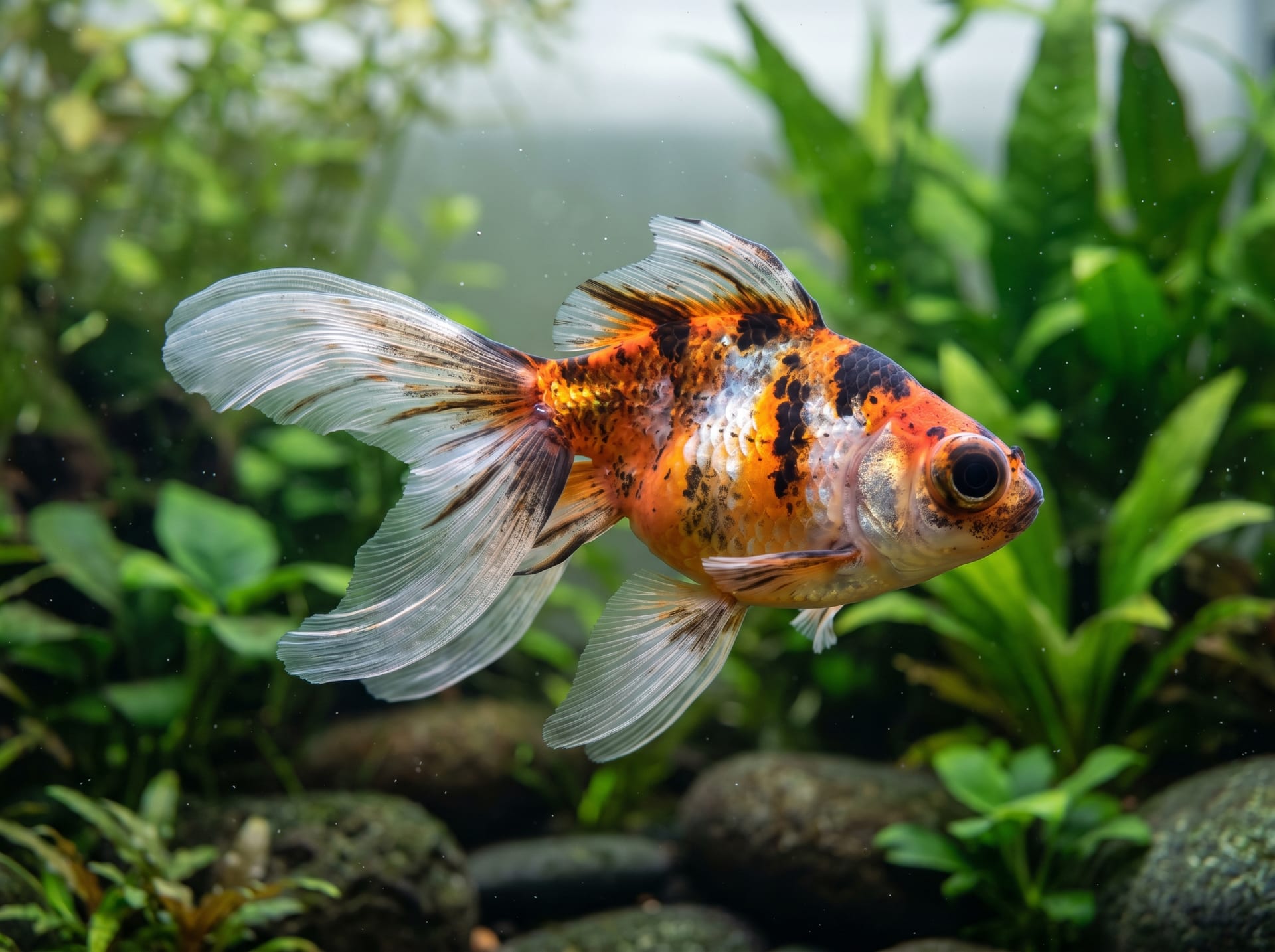
Telescope
Defined by large protruding eyes. Black Moor is the most popular variant. Poor eyesight requires smooth decor without sharp edges. Slow-moving and charming.
View Telescope encyclopedia →0% commission on your first sales!Register by September 30, 2026 and your first 2 sales are commission-free!
Breeder Wanted!
List on BreederDirect and sell directly to customers nationwide!
6 Transparency Commitments from Br-Choku
All Goldfish listings from Breeder include the following details. We guarantee transparency in lineage (Yamato/Yatomi/Edo) and competition awards.
- Lineage
- Real Photos
- Breeder Lineage
- Award History
- Competition History
- Age Stated
Browse all 26 breeds
Care Difficulty
No listings match your filters
Adjust your filters, or get notified when new listings arrive.
Getting alerts is free with a member account. When new listings match your saved search, we'll notify you by email and in-app.
Browse other categories
Verified breeders (preview)
Telescope key facts
- Care level
- Intermediate
- Lifespan
- 10-15 years
- Size
- 12-18cm
- Temperature
- 15〜26℃
- Diet
- Goldfish pellets, bloodworms
- Container
- 45cm+. Avoid sharp decor that could injure protruding eyes
- Water
- Around pH 7.0. Maintain clean water
- Tank Mates
- Poor eyesight makes them unsuitable with fast-swimming species
- Notes
- Protruding eyes are injury-prone and susceptible to infection. Water cleanliness is critical
About Telescope
The Telescope Goldfish is a selectively bred variety that originated in China and is believed to have arrived in Japan during the Edo period. Its most defining feature is the pair of dramatically protruding eyes that resemble telescopes, hence its English name. The body is rounded and compact, with elegantly flowing fins. While the black variety — known as Black Telescope or Kuro Demekin — is the most iconic, red, calico, and white variants also exist. Their slow, drifting movements give them a distinctive charm that stands out in any aquarium. Their limited vision means they require a thoughtfully arranged environment, but this same quality makes them feel approachable and endearing to their keepers. Beloved by beginners and experienced aquarists alike, the Telescope Goldfish remains one of the most cherished ornamental goldfish in the world.
7 things to know before welcoming a Telescope
1Eye Protection First
The protruding eyes of telescope goldfish are extremely delicate and can be injured by sharp edges of rocks or driftwood. Choose smooth, rounded decorations for the tank and avoid any accessories with pointed ends. Injuries to the eyes are difficult to heal, so prevention is the most important form of care.
2Choosing Tankmates
Because of their poor eyesight, telescope goldfish often lose out on food when kept with faster swimmers like common or comet goldfish. It is best to house them with similarly slow-moving, round-bodied varieties such as ryukin or ranchu. Matching companions by swimming speed helps reduce stress and ensures everyone eats well.
3Feeding Tips
Because telescope goldfish have limited vision, sinking pellets work better than floating ones, allowing them to find food at the bottom at their own pace. Floating food can be difficult for them to locate at the surface. Feed twice daily in amounts they can finish within two to three minutes.
4Water Quality and Temperature
Telescope goldfish are sensitive to poor water quality, and elevated ammonia levels can trigger popeye, a condition causing swelling around the eyes. Aim to change about one-third of the tank water once a week. Keep the water temperature between 15 and 25 degrees Celsius and avoid sudden fluctuations.
5Tank Size and Stocking
Adult telescope goldfish can grow to 15–20 cm, so aim for at least 30 to 40 liters of water per fish. Overcrowding accelerates water quality decline and also raises the risk of fish bumping into each other and injuring their eyes. Providing ample space is fundamental to long-term care.
6Filter and Flow Strength
Telescope goldfish are poor swimmers, and strong currents can exhaust them quickly. Choose a filter with gentle flow, such as a top-mounted filter or a sponge filter. Filtration is essential, but angle the outlet so that fish are not exposed to a direct, strong current.
7Initial Cost Overview
The price of telescope goldfish varies by color and body quality; common black telescopes typically range from a few hundred to a few thousand yen, while high-quality specimens can exceed ten thousand yen. Budget around 10,000 to 30,000 yen for initial equipment including a tank, filter, heater, and substrate. Ongoing costs mainly include food, water treatment supplies, and electricity.
Frequently asked questions about Telescope
- Q.Are Telescope Goldfish suitable for beginners?
- A.Yes, with proper water quality management and a suitable tank setup, beginners can keep them successfully. Just take care with tank décor and tank mate selection, as their poor eyesight makes them more vulnerable than average goldfish.
- Q.How long do Telescope Goldfish live?
- A.With good care, Telescope Goldfish typically live 10–15 years. Consistent water quality management and early disease detection are key factors in their longevity.
- Q.What should I do if the eyes look cloudy?
- A.Cloudy eyes are often caused by poor water quality or bacterial infection. Start by performing a water change to improve conditions. If there is no improvement, consider using a fish-safe antibacterial treatment or consulting a specialist aquatic store.
- Q.How often should I feed Telescope Goldfish?
- A.Feed once or twice a day, offering only as much as they can eat in 2–3 minutes. Sinking pellets are easier for them to find due to their poor eyesight. Remove any uneaten food promptly to prevent water quality issues.
- Q.Can they be kept with other goldfish?
- A.It is best to avoid mixing them with active, fast-swimming varieties like Common or Comet Goldfish. They do well with similarly slow-moving breeds such as Ryukin or Ranchu, which are less likely to outcompete them for food or injure their eyes.
Useful tools for Telescope care
Learn more about Telescope in the encyclopedia
View Telescope encyclopedia entry →
Care difficulty, lifespan, size and diet — all basics covered.
Telescope related articles
Telescope Eye Goldfish Care Guide: Eye Protection, Water Flow, and Feeding Management
Expert care guidance for telescope eye goldfish. Detailed explanation of tank layout considering weak eyesight, water flow adjustment, proper food types and feeding methods, and prevention and treatment of eye diseases.
Telescope Goldfish (Demekin) Care Guide | Creating an Environment to Protect Protruding Eyes and Health Management
A comprehensive guide to telescope goldfish care. From variety characteristics including red, tricolor, black, and butterfly tail types, to layout design that protects protruding eyes from injury, tank selection, feeding management, tank mate compatibility, and swim bladder disorder prevention—a complete guide for the long-term healthy care of goldfish with weak vision.
Butterfly Tail Goldfish Care Guide | Characteristics of Flowing Double Tails, Swimming Habits & Tank Management Tips
Explanation of Butterfly Tail Goldfish characteristics, breeding environment, water quality management, tankmate compatibility, and disease prevention. A complete guide to this beautiful fin-tailed species that differs from Telescope Eye goldfish and is suited to top-down viewing style.
How to Distinguish Male and Female Goldfish | Sex Differentiation by Breed Including Ranchu, Ryukin, and Telescope Eyes
Explaining how to distinguish male and female goldfish. In addition to three key points—spawning stars, abdomen, and vent—we introduce breed-specific tips for ranchu, ryukin, telescope eyes, ping-pong pearls, and practical steps for pairing breeding pairs.
How to Raise Telescope Goldfish and Ranchus | Tips for Keeping Round-Bodied Goldfish Healthy
A guide to breeding round-bodied goldfish such as telescope goldfish and ranchus. Covers how to manage protruding eyes and weak digestion due to short intestines, water quality management, prevention of swim bladder disease, and proper feeding techniques.
Demekin (Telescope Eye Goldfish) Care Guide | How to Protect Protruding Eyes
We explain key points to watch when keeping demekin. Introducing eye damage prevention, aquarium layout ideas, and tankmate considerations.
More in this category
Can't find the one you're looking for?
Post your wishes for free and breeders with matching animals will contact you with introductions.