Telescope Eye Goldfish Specialized Care Guide | Eye Protection, Water Flow, and Feeding Management
Explains the specialized care required for Telescope Eye Goldfish. Detailed coverage of tank layout considering weak eyesight, water flow adjustment, appropriate feed types and feeding methods, prevention and treatment of eye diseases.
Key Takeaways
Explains the specialized care required for Telescope Eye Goldfish. Detailed coverage of tank layout considering weak eyesight, water flow adjustment, appropriate feed types and feeding methods, prevention and treatment of eye diseases.
Related Species
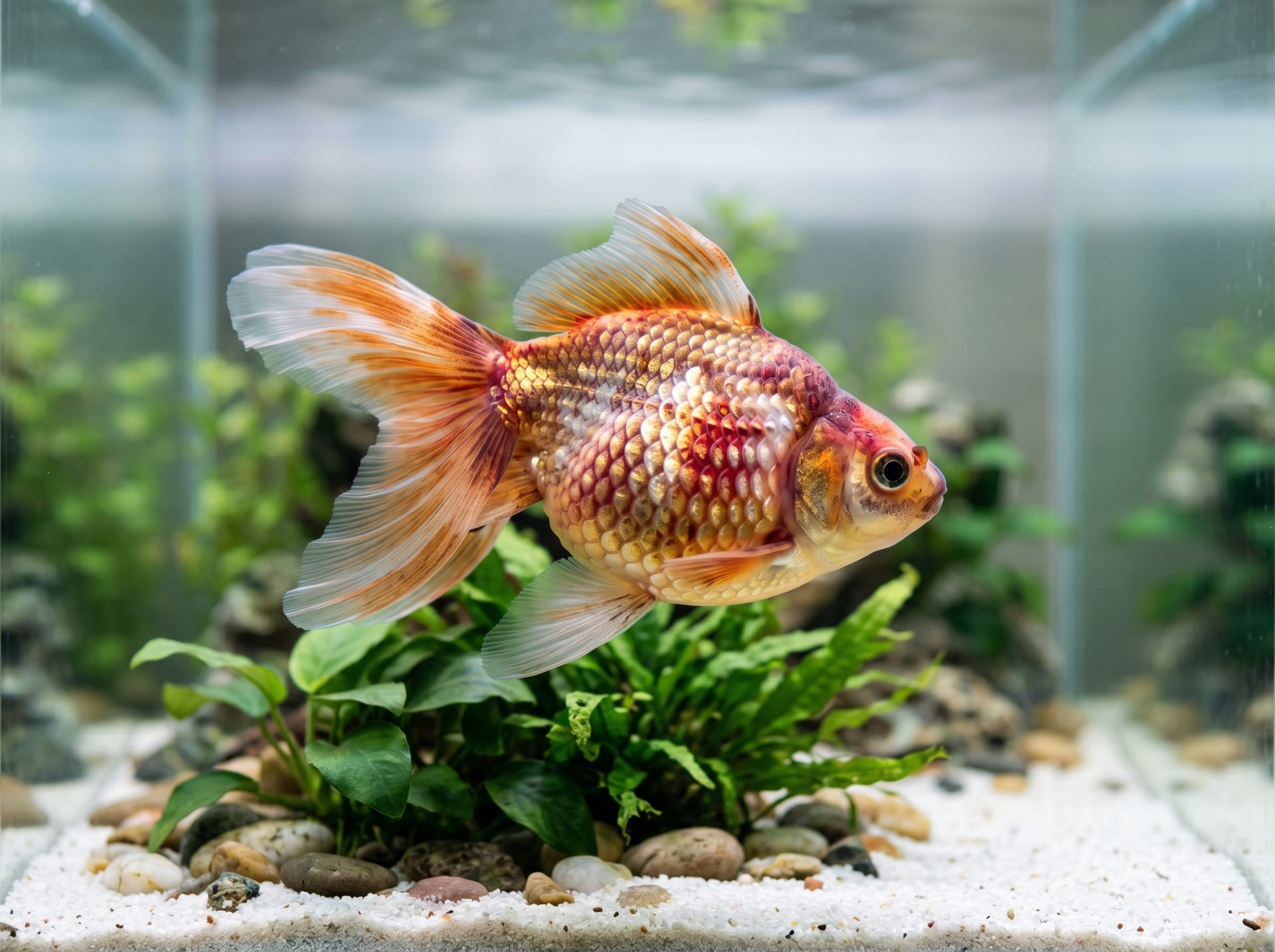

The Telescope Eye Goldfish is characterized by its distinctively large, protruding eyes. Due to their endearing appearance, they are popular pets, but their unique eye structure requires specialized care different from standard goldfish. The key to keeping Telescope Eye Goldfish healthy and long-lived is establishing a care environment that compensates for their weak vision and eye vulnerability. This article provides a detailed explanation of husbandry considerations specific to Telescope Eye Goldfish and practical care methods.
Features of Telescope Eye Goldfish and Care Precautions
The eyes of Telescope Eye Goldfish protrude much more than those of ordinary goldfish, and this protruding structure is inherently very fragile. Eyes can be damaged by sharp corners of tank decorations, pointed filter intake tubes, and collisions caused by turbulent water flow. In severe cases, the fish may lose an eye. Additionally, the protruding eyes have a narrower field of vision than standard goldfish and lower visual acuity overall, making it more difficult for them to find food compared to other goldfish species.
Therefore, "ensuring safety" and "accounting for visual handicaps" become the primary care principles for Telescope Eye Goldfish. If kept in the same environment as standard goldfish, frequent problems arise such as inability to find food, eye injury, and food being taken by other fish. Ideally, Telescope Eye Goldfish should be kept alone or alongside other species with similarly weak eyesight, such as Ryukin or Ping Pong Pearl goldfish.
Tank Selection and Layout
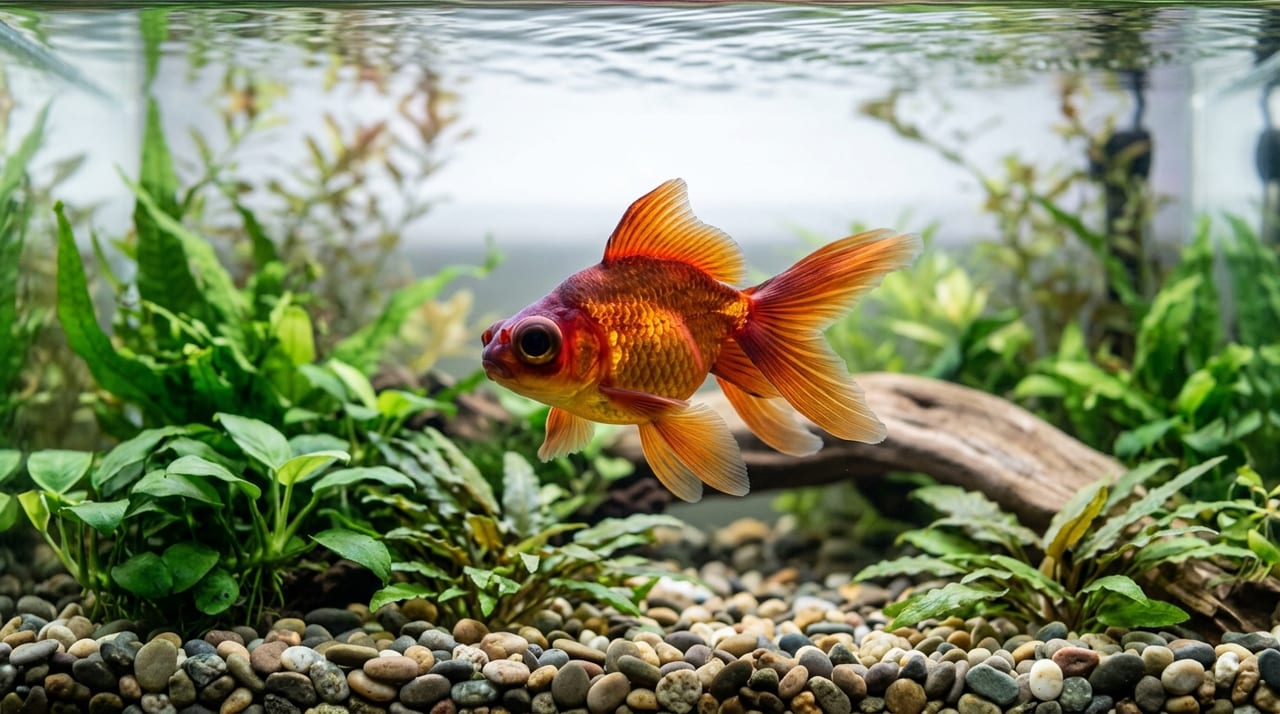
When selecting a tank for Telescope Eye Goldfish, choose one with rounded corners and no sharp internal elements. The most critical aspect of layout is to avoid sharp rocks, pointed decorations, and jagged driftwood. Smooth, rounded stones, smooth artificial plants, and soft aquatic plants (such as Anacaris or Water Sprite) are safe options. Always attach a sponge cover to the filter intake to prevent the fish's eyes from being sucked in.
A tank volume of 40–60L or more per fish is desirable. Adult Telescope Eye Goldfish can reach 15–20cm in body length, and overcrowding leads to water quality deterioration and food competition. Choose a tank with rounded edges that won't cause significant damage if the goldfish bumps into them, or cover sharp corners with soft materials for protection.
Water Flow Management
Strong water current is one thing Telescope Eye Goldfish struggle with. Telescope Eye Goldfish are not strong swimmers (especially when swimming against the current), and in strong water flow they constantly expend energy, increasing the risk of eye injury. It is important to reduce water flow by directing the filter outlet's shower pipe horizontally toward the water surface or using a sponge filter.
Aeration via air stones (bubble diffusers) or air-lift filters with sponge attachments are ideal for Telescope Eye Goldfish. These provide oxygen supply and biological filtration while maintaining gentle water movement. If using external or hang-on filters, attach a shower pipe to the outlet to disperse the water flow. Adjust so the water surface ripples gently.
Feeding Methods and Feeding Tips
Since Telescope Eye Goldfish have lower visual acuity than standard goldfish, feeding requires careful consideration. Flake-type floating feed spreads across the water surface and can be difficult for Telescope Eye Goldfish to consume. Using sinking pellet feed makes it easier for them to find and eat food that falls to the bottom. However, uneaten sinking feed accumulates on the substrate and degrades water quality, so managing uneaten portions is important.
When feeding, concentrate the food in one spot to guide the Telescope Eye Goldfish to eat reliably. If keeping multiple fish, observe to ensure all individuals are eating. Check that other fish don't eat before the weak-sighted Telescope Eye Goldfish gets a chance. The basic rule is to feed 2–3 times daily in amounts that are consumed within 3–5 minutes.
Digestive considerations are also important. Deformed goldfish like Telescope Eye varieties are prone to swim bladder disease (buoyancy disorder where the fish floats upside down). Excessive floating dried feed can cause gas accumulation in the intestines, so regularly provide frozen brine shrimp, frozen bloodworms, and fresh vegetables (such as blanched spinach) to maintain balance and prevent swim bladder disease.
Eye Diseases and Treatment Methods
The most common health issues specific to Telescope Eye Goldfish are eye damage, cloudy eye (where the eye becomes white and opaque), and pop-eye (abnormal bulging of the eye). Eye damage is prevented through layout and water flow improvements as mentioned earlier. Injured eyes carry infection risk, so encourage recovery through salt baths (0.3–0.5% saline solution) while maintaining clean water conditions.
Cloudy eye is a condition where the eye becomes white and opaque due to water quality deterioration, sudden temperature changes, or trauma. Removing the cause and maintaining clean water and stable temperature (approximately 18–23°C) typically results in natural recovery. Pop-eye is a condition where the eye swells severely and protrudes further, often caused by bacterial infection. In such cases, isolate the fish and use antibacterial medication baths such as Green F Gold.
Water Quality Management and Regular Maintenance
Deformed goldfish like Telescope Eye varieties have inferior digestive function compared to standard goldfish and produce excessive waste, easily fouling the water. A minimum weekly water change of approximately one-third of the tank volume is recommended. When performing water changes, match the temperature of new water to existing water (within 2°C difference) and always treat with dechlorinator. Since organic matter accumulates easily in the substrate, perform substrate vacuuming with a gravel siphon approximately once weekly.
With proper ongoing care, Telescope Eye Goldfish can live 10–15 years or longer. Their endearing appearance and unique personality will continue to bring joy to their keeper over many years. Understanding the delicate nature of Telescope Eye Goldfish and creating an environment that does not neglect necessary considerations forms the foundation of a long relationship with this special goldfish.