Complete Guide to Keeping and Managing High-Head Goldfish (Ranchu and Bubble Eyes) | Special Body Type, Feeding, White Spot Disease Prevention, and Breeding Basics
Detailed explanation of special rearing environments, feeding, white spot disease prevention, breeding management, and selective breeding basics for high-head goldfish such as Ranchu and Bubble Eyes. We introduce different rearing approaches from ordinary goldfish.
Key Takeaways
Detailed explanation of special rearing environments, feeding, white spot disease prevention, breeding management, and selective breeding basics for high-head goldfish such as Ranchu and Bubble Eyes. We introduce different rearing approaches from ordinary goldfish.
Related Species

Ranchu (lionhead) and Bubble Eye goldfish, which have tumorous growths that develop prominently on the head, require different rearing approaches than ordinary goldfish. Due to the unique beauty of their distinctive body shapes, they are sometimes traded at high prices among enthusiasts. This article provides a practical guide for long-term keeping of high-head goldfish and maintaining healthy individuals.
Representative Species and Characteristics of High-Head Goldfish
Ranchu (Lionhead Goldfish)
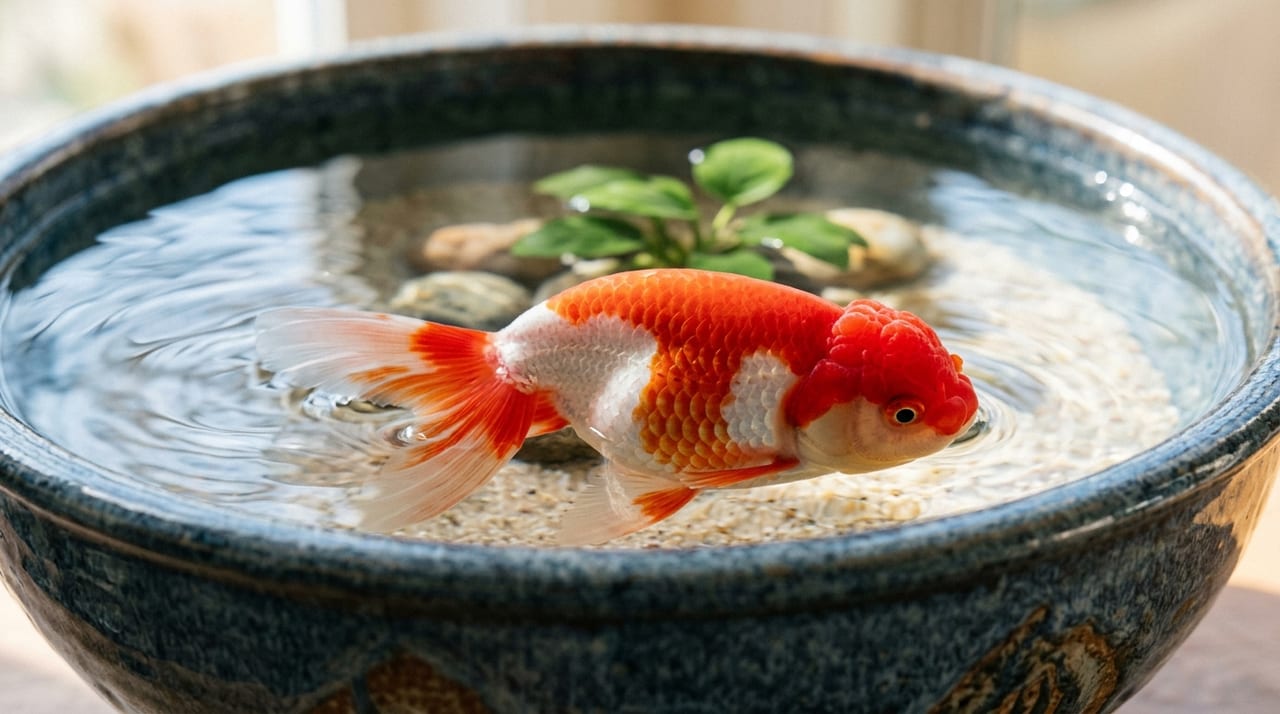
The most common high-head goldfish. Its characteristic feature is the development of tumorous growths on both sides of the head that cover the head, and the absence of a dorsal fin. Color: Red and white (red patterns on white background) is the most common, and skilled breeders strictly select based on color placement.
Bubble Eye Goldfish (Demekin)
A goldfish with abnormally protruding eyeballs. Since their vision is not particularly keen and they are easily outcompeted by other goldfish during feeding, individual keeping or carefully monitored community keeping is essential.
Tama Saba (Celestial Eye)
It has a short body type with a round, spherical shape overall. It is easier to obtain than Ranchu and is considered suitable for beginners.
Special Aspects of the Rearing Environment
Tank Size and Setup
High-head goldfish are recommended to be kept in larger tanks than ordinary goldfish.
- Single Ranchu: 90cm or larger, with a capacity of 200L or more
- Multiple fish: Increase by 50L for each additional fish
The reason is that the growth of the tumorous growth requires substantial nutrition, and to supply this nutrition stably, a large tank (with stable water quality, abundant filter bacteria, and feeding flexibility) is essential.
Substrate and Obstacles
Substrate selection: Choose rounded gravel with a grain size of 5-8mm rather than fine gravel. Since high-head goldfish peck at the substrate, coarse sand or sharp-edged rocks risk damaging their fins.
Placement: Keep the structure simple so that the raised tumorous growths do not catch on obstacles. Minimize driftwood and rocks, prioritizing swimming space for the goldfish.
Water Quality and Temperature
- Temperature: 18-24°C (same as ordinary goldfish)
- pH: 6.5-7.5
- Nitrate: Maintain at 50 ppm or below (excess can stress tumorous growth)
Perform partial water changes (25-30% per week) without fail to prevent nitrate accumulation.
Feeding Strategy and Nutritional Management
For high-head goldfish tumorous growth formation, high-protein and high-fat feed is effective.
Feeding Food
Specialized high-head goldfish feed: Commercially available pellets for high-head goldfish typically contain 40% or more protein and 10% or more fat. Feed once or twice daily in amounts that are consumed in 5-10 minutes.
Frozen bloodworms: Add as a protein source 2-3 times per week. They have an effect in promoting tumorous growth.
Live feed: Live foods such as tubifex worms and bloodworms are also highly nutritious, making feeding approximately once per week effective.
Nutritional Supplementation and Color Enhancement
To enhance the red color of red and white Ranchu, feed containing carotenoid pigments (such as spirulina-containing pellets) is effective. However, overfeeding can lead to obesity and body shape irregularities such as dorsal fin regression, so dose management is important.
White Spot Disease and Disease Prevention
High-head goldfish tend to be susceptible to white spot disease due to their protruding eyeballs and large tumorous growths.
Early Detection of White Spot Disease
- White spots around the eyeballs: Areas most likely to appear first
- White spots on the tumorous growth: Careful observation is essential as medication has difficulty penetrating during treatment
Prevention Measures
- Temperature management: Avoid sudden temperature changes (white spot parasites prefer low temperatures)
- Water quality management: Prevent nitrate accumulation (which causes immunosuppression)
- New fish quarantine: Implement 2-week quarantine when introducing new fish
Treatment Methods
Salt bath: Dissolve table salt at a concentration of 0.5-1.0% and continue for 2-3 weeks. This method is relatively safe and can be applied to high-head goldfish.
Medicated bath: White spot disease treatments such as Green F Gold can sometimes cause cells in the tumorous growth to react sensitively to the medication, so it is recommended to reduce the dose to 1/2 to 1/3 of the standard amount.
Basics of Breeding and Selective Breeding
Breeding Age and Selection
The basic principle for Ranchu breeding is to start with individuals that are at least 2 years old. If eggs are collected from young individuals (less than 1 year old), there is a tendency for tumorous growth development to become fixed while still underdeveloped.
Growth Period of Tumorous Growth
Tumorous growth development peaks at 2-3 years of age. If proper nutrition and rearing environment are provided during this period, a well-developed tumorous growth will form. Conversely, in poor conditions, the tumorous growth hardens and growth stops.
Selection and Lineage Management
High-head goldfish breeders simultaneously evaluate and select based on multiple traits such as red and white coloration placement, shape of the tumorous growth, and caudal fin shape. In this process, out of 100 fry born, often only a few individuals meet high quality standards.
Common Rearing Problems
Stunted Growth of Tumorous Growth
Cause: Insufficient nutrition, poor water quality, or cool water temperature. Increase feeding amount, check water quality parameters, and maintain a temperature around 25°C.
Floating Disease in Goldfish Without Dorsal Fins
Some high-head goldfish lack a dorsal fin and are prone to swim bladder imbalance. Floating problems caused by feeding content (excessive high-fat feed) or constipation can be improved by adjusting feeding.
Infection and Suppuration of Tumorous Growth
The concave parts of the tumorous growth tend to accumulate dirt and carry a risk of bacterial infection. Strict water quality management and inspection of affected areas (illuminating with a flashlight) approximately once per week are preventive measures.
Ethics of High-Head Goldfish Keeping
High-head goldfish are products of extreme selective breeding. Excessive tumorous growth development can cause stress and health risks to the goldfish itself. When breeding, it is important to maintain a balance between beauty and health while practicing responsible selection without undue stress.