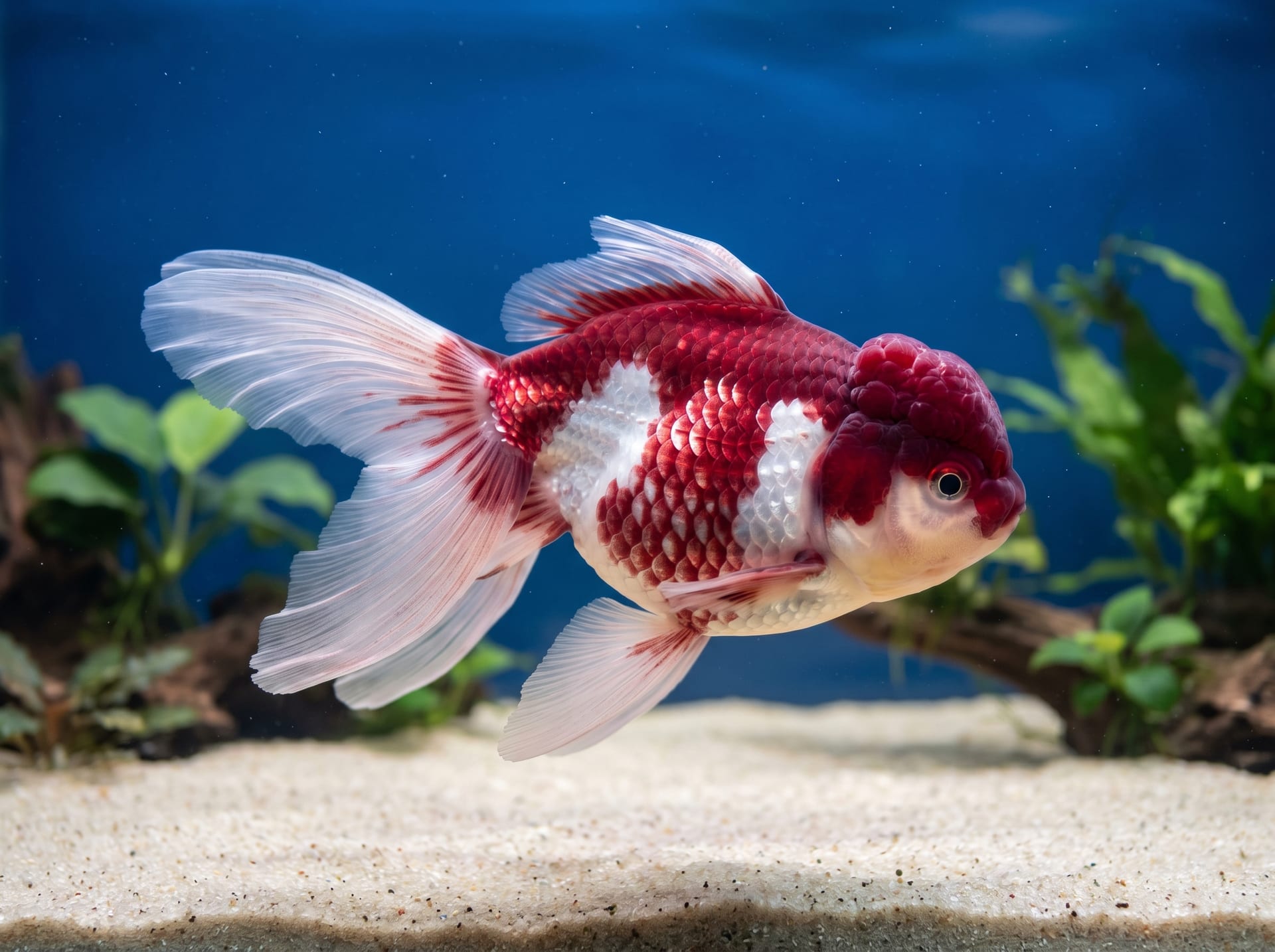
Oranda
Named for the lion-mane-like head growth (wen). Ryukin body shape with rich colors. Often called the king of goldfish.
View Oranda encyclopedia →0% commission on your first sales!Register by September 30, 2026 and your first 2 sales are commission-free!
Breeder Wanted!
List on BreederDirect and sell directly to customers nationwide!
6 Transparency Commitments from Br-Choku
All Goldfish listings from Breeder include the following details. We guarantee transparency in lineage (Yamato/Yatomi/Edo) and competition awards.
- Lineage
- Real Photos
- Breeder Lineage
- Award History
- Competition History
- Age Stated
Browse all 26 breeds
Care Difficulty
Verified breeders wanted for Goldfish
Breeders are signing up now ahead of launch. Subscribe to be notified when new listings go live.
Getting alerts is free with a member account. When new listings match your saved search, we'll notify you by email and in-app.
Browse other categories
Verified breeders (preview)
Oranda key facts
- Care level
- Intermediate
- Lifespan
- 10-15 years
- Size
- 15-30cm
- Temperature
- 15〜25℃
- Diet
- Goldfish pellets, bloodworms
- Container & Tank
- A spacious tank of 60L or more is recommended. Keeping the water clean with a good filter is essential for healthy wen development.
- Water Temperature & Quality
- The ideal temperature is 15-25°C. In Japanese indoor conditions it can usually be kept year-round without a heater. Regular water changes prevent sores on the wen.
- Diet & Feeding
- Feed goldfish pellets and bloodworms in easily digestible form, in small portions split over several feedings.
- Tank Mates & Compatibility
- Fairly gentle, it suits varieties with similar swimming ability. Not a strong swimmer, so avoid active fish.
- Wen
- Wen prone to infection in poor water quality
- Notes
- Keep flow gentle — not strong swimmers
About Oranda
The Oranda is a goldfish variety developed in China and further refined in Japan, with its current form established from the late Edo period through the Meiji era. Its most iconic feature is the wen, a fleshy growth on the head that evokes the mane of a lion, which inspired the breed's name. The body is egg-shaped and rounded, similar to the Ryukin, giving the fish a dignified, unhurried presence in the water. Orandas come in a wide range of colors — red, white, calico, black, and blue — and both wen development and coloration are key criteria in show judging. They have a generally calm temperament and tend to become comfortable with their keepers over time. With attention to water quality and swim bladder health, Orandas are manageable even for beginners, and watching their wen grow and flourish over the years is one of the most rewarding aspects of keeping them.
Featured breeders for Oranda
See all Oranda breeders (1) →7 things to know before welcoming a Oranda
1Needs a Spacious Tank
Adult Orandas can grow to 20–30 cm, so a tank of at least 60 cm is recommended. Their round body shape means they swim slowly, and strong water currents from filters can be stressful. Aim for ample space with gentle water flow.
2Wen Care Is Important
The wen is susceptible to inflammation and necrosis if water quality deteriorates. Performing partial water changes one to two times per week is essential for keeping it healthy. Redness or white film on the wen are warning signs that require prompt attention.
3Prone to Swim Bladder Issues
The Oranda's compact body shape puts strain on its swim bladder, making it prone to swim bladder disorder. Overfeeding is a common trigger, so keep meals modest and split into one to two feedings per day. Digestion slows in cold water, so extra care is needed during cooler months.
4Ideal Water Temp: 18–23°C
Orandas tolerate cooler temperatures to some extent but are sensitive to sudden changes. For indoor keeping, using a heater to maintain 18–23°C helps stabilize their condition. Summer heat above 28°C can cause oxygen depletion and health issues, so cooling measures may also be worthwhile.
5Choose Tank Mates Carefully
Because Orandas swim slowly, keeping them with faster single-tailed varieties like Wakin or Comet often results in competition for food and malnutrition. Tank mates with similarly round bodies such as Ranchu or Pearlscale are generally a safer choice, though slight differences in preferred temperature and flow should still be considered.
6Wen Grows Dramatically with Age
Juvenile Orandas show little to no wen development; it gradually emerges over one to two years. The extent of growth varies widely depending on the individual, lineage, and care conditions — some develop a wen that covers the entire head, while others remain modest. It is a breed best enjoyed as a long-term companion whose appearance keeps evolving.
7Expected Costs to Keep in Mind
Quality Orandas range from a few thousand to tens of thousands of yen, with show-grade specimens priced even higher. Initial setup costs for a 60 cm tank, filter, and heater typically run around 10,000–20,000 yen. Monthly running costs for water changes, food, and consumables are roughly 500–1,500 yen; it is also wise to budget for medication in case of illness.
Frequently asked questions about Oranda
- Q.How long does it take for the wen to develop?
- A.Wen development varies by individual and conditions, but growth typically begins around one year after hatching and continues gradually over two to three years. Proper water quality, nutrition, and stable temperature support healthy wen development.
- Q.Can Orandas be kept with other goldfish?
- A.Orandas get along well with other round-bodied varieties such as Ryukins and Pearlscales. Avoid mixing them with faster-swimming types like Wakins or Comets, as Orandas tend to lose out at feeding time and may become undernourished.
- Q.Do Orandas need a heater?
- A.Goldfish are cold-blooded and can survive without a constant heater, but sudden temperature swings increase the risk of swim bladder disorder and ich. Using a heater to maintain a stable temperature of 18–23°C, especially in winter, is generally recommended.
- Q.What should I feed my Oranda?
- A.A quality goldfish pellet (floating or sinking) is the staple diet. Due to their compact body shape, Orandas are prone to digestive issues, so feed small amounts twice daily — only what they can finish in a few minutes. Occasional treats like brine shrimp or frozen bloodworms provide nutritional variety.
- Q.How long do Orandas typically live?
- A.With proper care, Orandas can live 10–15 years or longer. Consistent water quality, appropriate feeding, and early detection of illness are the keys to a long life. Well-kept Orandas can become long-term companions over many years.
Useful tools for Oranda care
Learn more about Oranda in the encyclopedia
View Oranda encyclopedia entry →
Care difficulty, lifespan, size and diet — all basics covered.
Oranda related articles
Selection Standards for Ranchu and Oranda Lionhead | How to Assess Body Type, Head Lumps, and Color, and How to Choose Specimens for Fish Shows
A detailed explanation of selection standards for ranchu and oranda lionhead goldfish that are essential for breeders. This article covers head lump development patterns, ideal body proportions, evaluation of bilateral symmetry, judging criteria for fish shows, and a checklist for purchasing.
Wagn, Ryukin, and Oranda Compatibility Guide for Mixed Tank Keeping | Body Type Considerations and Success Tips
A compatibility guide for successfully keeping Wagn, Ryukin, and Oranda goldfish together. This guide explains in detail the swimming ability differences due to body type variations, competition risks, and recommended combinations.
Comparing the Difficulty of Keeping Pinpon Pearl, Dutch Lion Head, and Ranchu | Types of Fancy Goldfish and Care Tips
A comparative guide to the characteristics, care difficulty, required environment, and common diseases of fancy goldfish varieties including Pinpon Pearl, Dutch Lion Head, and Ranchu (Oranda). A selection guide for successfully starting with fancy goldfish.
Guide to Entering Oranda Lionhead Goldfish in Competitions | Judging Criteria and Finishing Techniques
Explanation of entering Oranda lionhead goldfish in competitions. Introduction of judging criteria, finishing breeding techniques, and condition management.
More in this category
Can't find the one you're looking for?
Post your wishes for free and breeders with matching animals will contact you with introductions.