Wagn, Ryukin, and Oranda Compatibility Guide for Mixed Tank Keeping | Body Type Considerations and Success Tips
A compatibility guide for successfully keeping Wagn, Ryukin, and Oranda goldfish together. This guide explains in detail the swimming ability differences due to body type variations, competition risks, and recommended combinations.

Key Takeaways
A compatibility guide for successfully keeping Wagn, Ryukin, and Oranda goldfish together. This guide explains in detail the swimming ability differences due to body type variations, competition risks, and recommended combinations.
Related Species
Is It Difficult to Keep Wagn, Ryukin, and Oranda Goldfish Together?
Keeping multiple goldfish varieties together in one tank—known as "mixed tank keeping"—is one of the pleasures of keeping ornamental fish. However, Wagn, Ryukin, and Oranda goldfish have significantly different body shapes, and placing them together in a tank without consideration often results in one variety becoming weak.
In this article, I will explain the characteristics of each of these three varieties and then introduce specific methods for successfully keeping them together.
Body Type and Swimming Ability Differences Among the Three Varieties
The Wagn (Common Goldfish) has a slender, spindle-shaped body that closely resembles the wild ancestor. It swims rapidly by powerfully moving its two tail fins. Due to its active movements, it has a strong appetite and tends to outcompete other fish during feeding. It is well-suited to outdoor pond keeping and has long been cherished in Japan.
The Ryukin is characterized by a rounded, spherical body shape. Although it has long tail fins, it swims more slowly than Wagn and is somewhat sluggish. Its curved digestive system makes it prone to swim bladder disease. Its graceful, flowing movements while swimming are beautiful, making it a popular variety with high ornamental appeal.
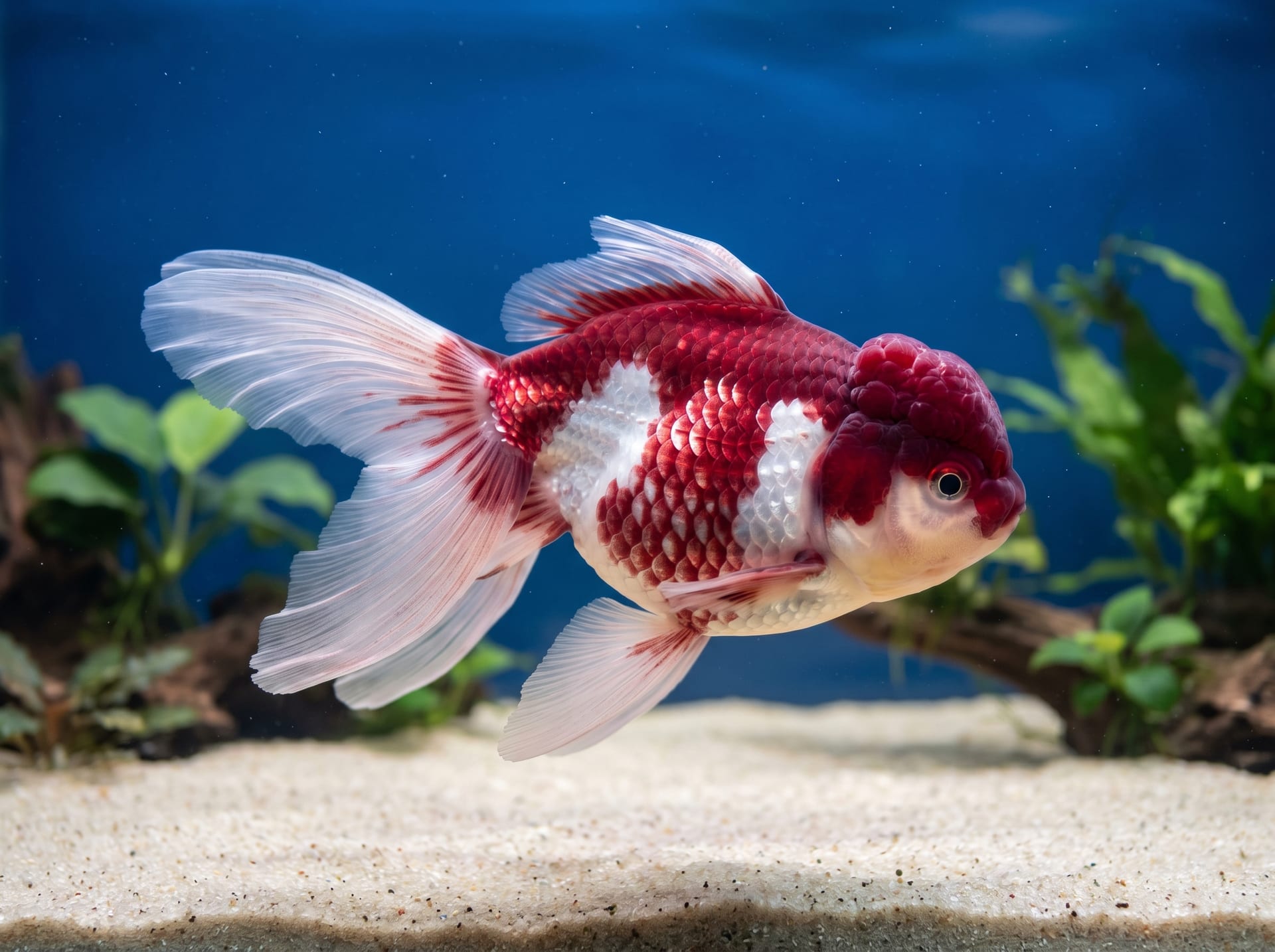
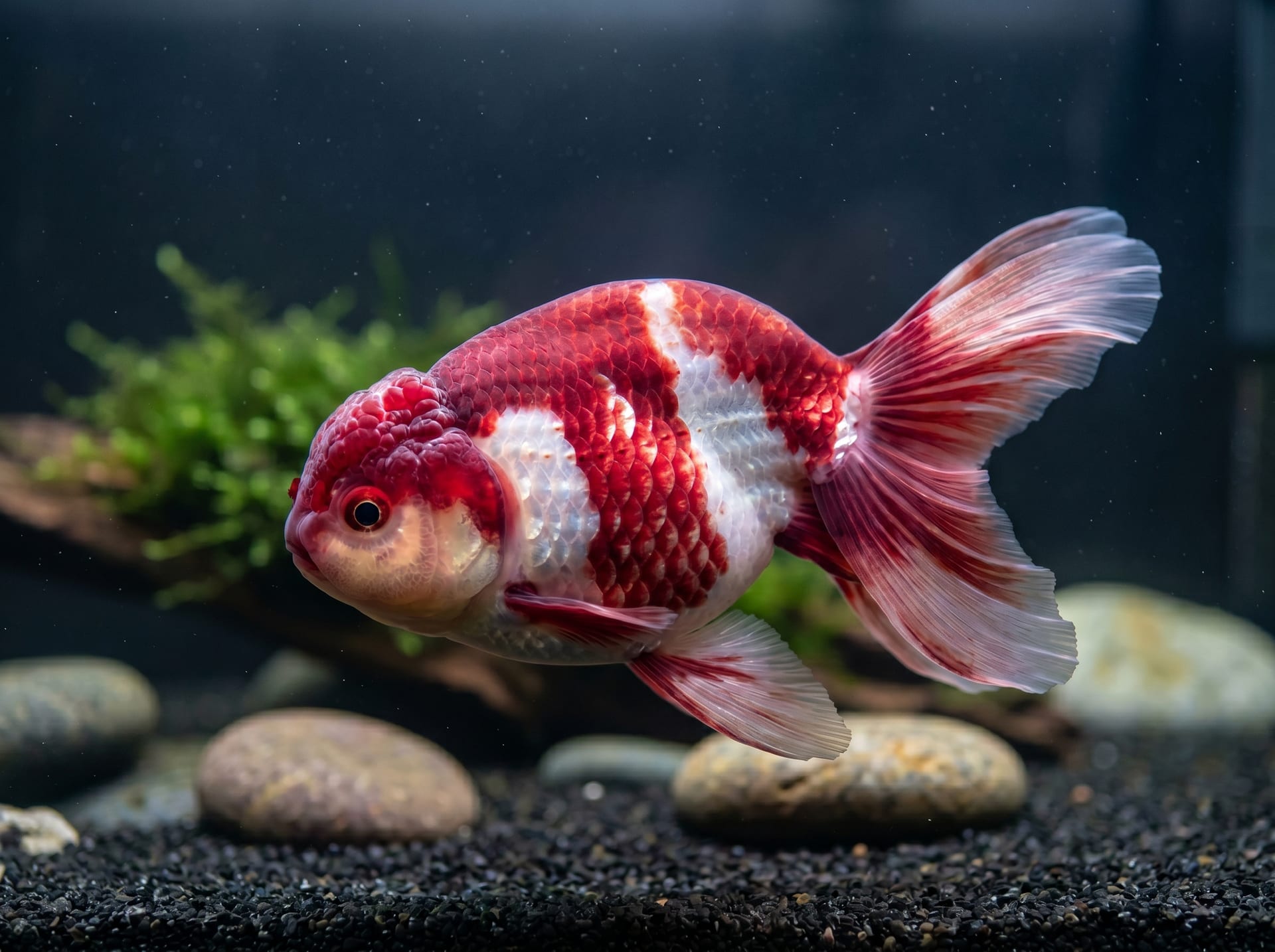
The Oranda is a variety characterized by a well-developed head growth called a "wen." Its body shape is similar to Ryukin in that it is rounded, but most Orandas have even weaker swimming ability than Ryukins and are sensitive to water flow. The development of the wen is the highlight of viewing, and selective breeding for this variety is actively pursued by breeders.
This difference in swimming ability is the main cause of problems in mixed tank keeping.
Mixed Tank Risks: Competition and Body Type Differences
Competition During Feeding
Wagn tend to swim quickly and monopolize food. Because Ryukins and Orandas are poorer swimmers, when housed in the same tank as Wagn, they may not get enough food and can become malnourished and thin. This difference is especially pronounced when using floating food.
Contact Damage to Fins and Wens
When Wagn move actively, they repeatedly bump into slower Ryukins and Orandas. The wen of Orandas is particularly delicate, and injuries increase the risk of bacterial infection. Long-finned varieties are also prone to fin damage from being chased by Wagn.
Water Flow Issues
The stronger water flow that Wagn prefer puts considerable stress on round-bodied Ryukins and Orandas. Excessively strong water flow can cause them to tire while swimming, creating stress that may trigger swim bladder disease. In particular, many Orandas have low tolerance for strong water flow.
Conditions for Successful Mixed Tank Keeping
Minimize Size Differences
Selecting fish of similar size is most important. When the size difference exceeds a 2:1 ratio, the risk that the smaller fish cannot get food increases sharply. Regularly monitor the size of fast-growing Wagn and move them to a separate tank if necessary. Wagn tend to grow faster than Ryukins and Orandas.
Ensure Sufficient Tank Capacity
Provide a minimum of 20-30 liters per fish. For mixing three varieties, prepare a tank of 60cm or larger (approximately 60-70L) and ensure each fish has a place to escape. Overcrowding leads to water quality deterioration and stress between individuals, which is undesirable for any variety.
Distribute Feeding Points
Reduce competition by distributing food to multiple locations in the tank. Combining sinking and floating food allows fish with different swimming abilities to eat more easily. Feeding in small amounts 2-3 times is also gentler on digestion.
Adjust Filtration and Water Flow
Ensure adequate filtration with a hang-on filter or top filter while weakening the water flow by placing a sponge at the outlet to reduce stress on round-bodied varieties. Installing multiple filters to distribute water flow is also effective.
Recommended and Incompatible Combinations
Recommended Combinations
- Ryukin and Oranda: Similar body shapes with minimal swimming ability differences. Excellent compatibility when matched by size.
- Wagn with Wagn: Identical body shape and swimming ability result in minimal competition.
- Oranda and Ranchu: Both are round-bodied with similar swimming ability (however, many breeders keep them separate because Ranchu lack a dorsal fin).
Incompatible Combinations
- Wagn and Ryukin: Large swimming ability difference; Ryukins often become underfed.
- Wagn and Oranda: Risk that Wagn movements damage the Oranda's wen.
- Wagn and Ranchu: Ranchu forage for food on the bottom and are overwhelmed by the fast-swimming Wagn.
Summary
Mixed tank keeping of Wagn, Ryukin, and Oranda is not impossible, but care is needed because of differences in body shape, swimming ability, and water flow preferences. Success depends on selecting similarly-sized fish, providing adequate tank capacity, and using thoughtful feeding strategies.
Understand the characteristics of each variety well and create an environment where each goldfish can live comfortably. When purchasing fish from a breeder, it's also effective to ask for advice on the proper environment for that variety. If you find mixed tank keeping difficult, don't hesitate to keep each variety in separate tanks—that's the secret to long-term success.