Selection Standards for Ranchu and Oranda Lionhead | How to Assess Body Type, Head Lumps, and Color, and How to Choose Specimens for Fish Shows
A detailed explanation of selection standards for ranchu and oranda lionhead goldfish that are essential for breeders. This article covers head lump development patterns, ideal body proportions, evaluation of bilateral symmetry, judging criteria for fish shows, and a checklist for purchasing.
Key Takeaways
A detailed explanation of selection standards for ranchu and oranda lionhead goldfish that are essential for breeders. This article covers head lump development patterns, ideal body proportions, evaluation of bilateral symmetry, judging criteria for fish shows, and a checklist for purchasing.
Ranchu and oranda lionhead goldfish hold a special place in Japanese goldfish culture. Both are distinguished by unique fleshy protrusions called "head lumps" (肉瘤) that cover the head, and the degree of their development significantly influences judging at goldfish shows. This article provides a comprehensive explanation of selection standards for both varieties and how to identify specimens suitable for exhibition.
✍️
BreederDirect Editorial
The BreederDirect editorial team specializes in care information for animals, covering veterinary care and breeding to deliver beginner-friendly guides.
Find Goldfish on BreederDirect
Buy directly from verified breeders
Browse Related Listings
Find Goldfish listings related to this article on BreederDirect. Buy directly from verified breeders.
First, let's clarify the fundamental differences between the two varieties.
Feature
Ranchu
Oranda Lionhead
Dorsal fin
Absent
Present
Body shape
Round, stocky
Egg-shaped, slightly elongated
Head lump distribution
Entire head (hood type)
Cranial region (cap type) is typical
Tail shape
Four-lobe tail ideal
Butterfly tail, three-lobe tail, etc. (varied)
Swimming posture
Must maintain horizontal position
Relatively flexible
Show frequency
Very frequent (dedicated organizations)
General goldfish shows
Selection Standards for Ranchu
Body Type: Round Body and Head Proportion
The most critical evaluation criterion for ranchu is body roundness and proportional balance.
Ideal body type:
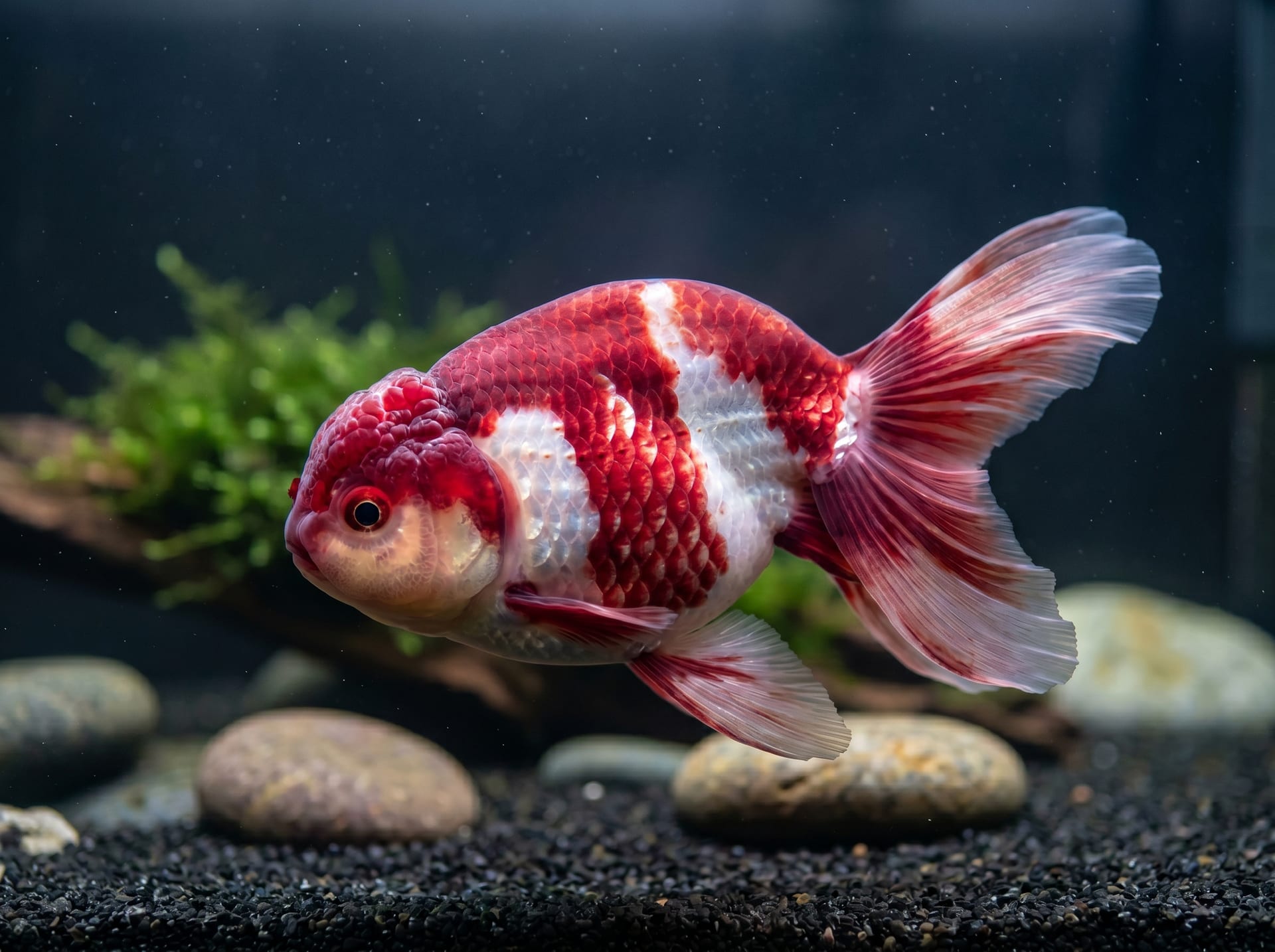
Top view (viewing from above) shows a nearly circular elliptical shape
Body length to body width ratio of approximately 1:0.7 to 1:0.8
Perfect left-right symmetry of the body
Moderately rounded belly (barrel-shaped)
Body types to avoid:
Body that is too flat (flatfish-like)
Curved back (bent back deformity)
Tail peduncle that is too narrow
Head Lump (Meat Lump) Evaluation
The ranchu's head lump is called "hood type" and covers the entire head.
Conditions for quality head lumps:
Uniform development: The crown, cheeks, and chin develop equally
Fine texture: Fine granular appearance ranks higher than coarse bumps
Bilateral symmetry: Development should not be skewed to either side
Color uniformity: Harmony between head lump coloration and body color
Head lump development stages (approximate age):
Young fish (1st year): Slight elevation beginning
2 years old: Prominent development. A major selection turning point
3 years and older: Approaches final form. Show entries typically begin at this stage
Tail Shape Evaluation
The ranchu's tail is highest valued as a four-lobe tail (四つ尾).
Tail Shape
Evaluation
Four-lobe tail
Highest (four fin lobes expand equally)
Three-lobe tail (sakura tail)
High
Two-lobe tail (butterfly tail)
Moderate (may result in deductions at shows)
Single-lobe tail
Low
The ideal tail opening angle is slightly downward from horizontal, with specimens swimming parallel to the water surface rated highly.
Swimming Posture: Horizontal Swimming
Since ranchu lack a dorsal fin, swimming stability is a crucial evaluation criterion at fish shows.
Characteristics of good swimming:
Body maintains nearly horizontal position
Tail spreads and remains stable
No head bobbing up and down
Swims calmly without darting movements
Problematic swimming patterns:
Tending to flip over (swim bladder issue)
Head-down posture (tail-heavy)
Swimming at an angle
Selection Standards for Oranda Lionhead
Head Lump Development Patterns
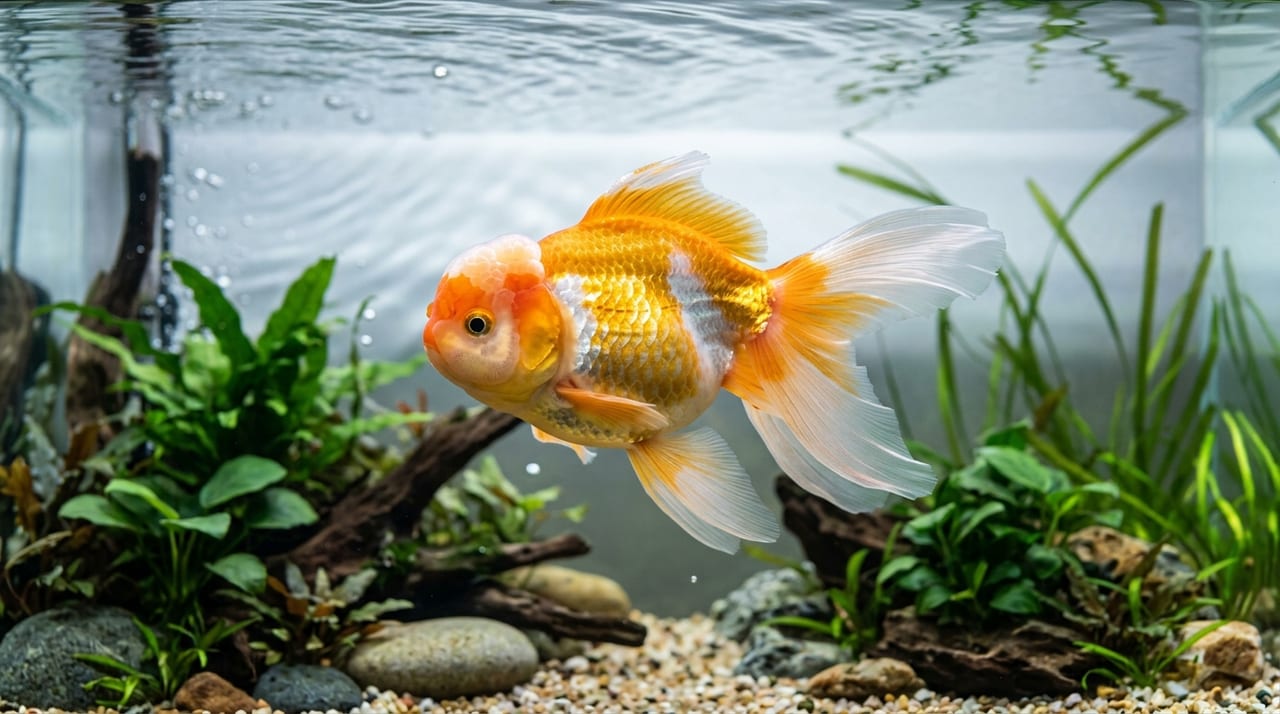
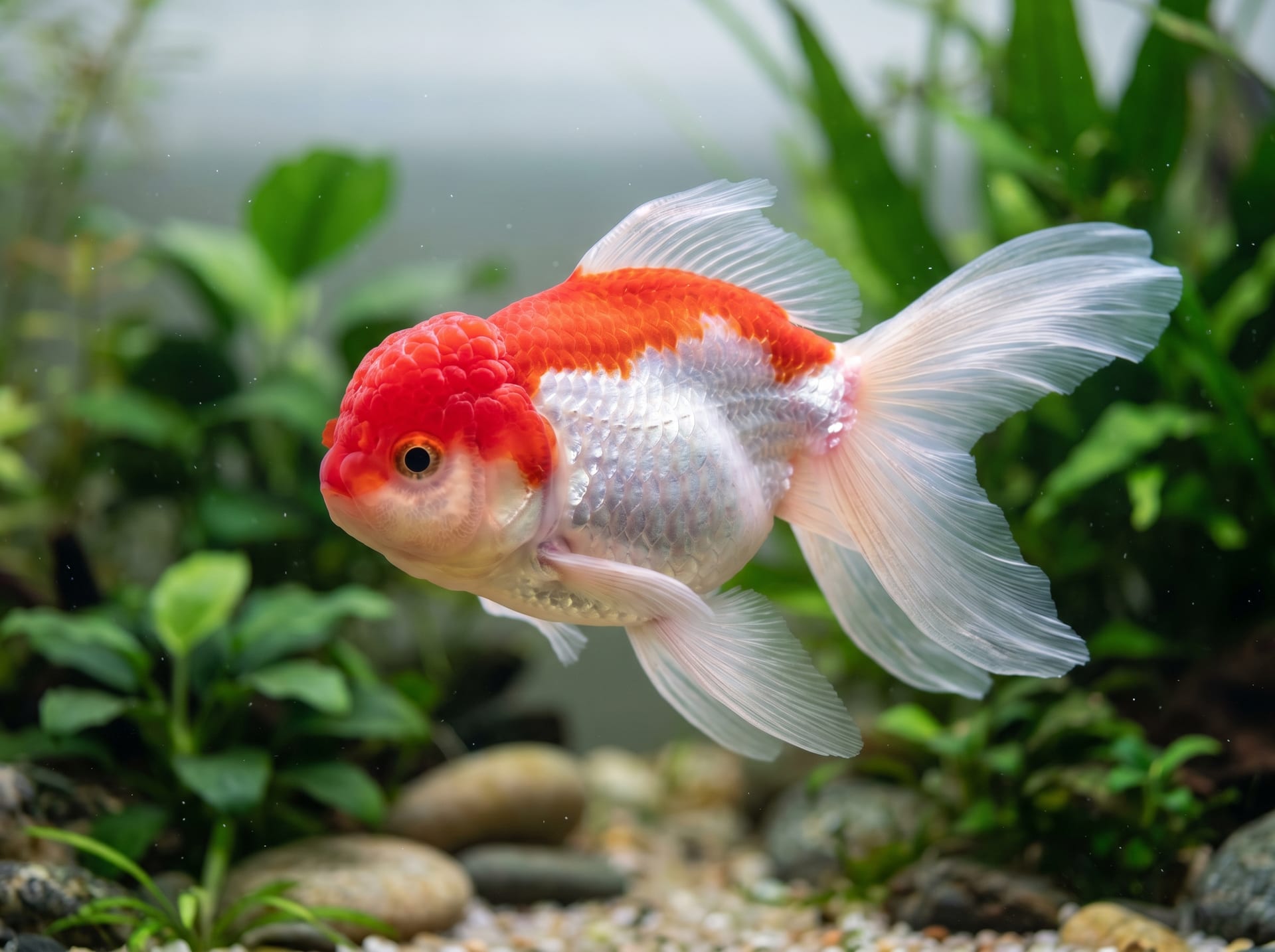
Oranda head lumps typically develop in a "cap type," concentrating on the cranial region. However, a "lionhead type" variant also exists, extending development to the cheeks.
Cap type evaluation points:
Does the cranial region form a natural dome shape in the center?
Is the texture fine and development uniform?
Is the left-right symmetry even when viewed from the front?
Lionhead type evaluation points:
Is cheek development equal on both sides?
Is the overall facial balance maintained?
Are the eyes not buried too deeply in the head lumps (vision preservation)?
Body Type and Dorsal Fin Evaluation
Since oranda possess a dorsal fin, body type evaluation differs from ranchu.
Ideal body type:
Dorsal fin is large and stands upright
Body is egg-shaped with moderate roundness
Ventral and pectoral fins develop equally
Tail fin is large and spreads wide (butterfly tail and three-lobe tail are popular)
Color and Patterns
Color evaluation varies by variety, but in oranda the following are considered high-value:
Color evaluation:
Kohaku (red and white): Clear, distinct boundaries and vibrant coloration
Solid colors (red, black): Deep, uniformly distributed color
Calico (tricolor): Balanced red, black, and white distribution
Particularly valued color patterns:
"Head-red-body-white" (red head lump with white body)
Deep red throughout the body (closer to true red than orange)
Purchasing Checklist
When selecting specimens for show exhibition or breeding purposes, check the following points:
Essential checklist items:
Are there any missing or damaged scales?
Are any fins torn or damaged?
Are the eyes protruding excessively? (Are the eyeballs protruding equally?)
Is there any abnormality in swimming (flipping, tilting)?
Are the gill movements (breathing) even?
Is there any white spot disease, eroding lesions, or excessive mucus coating on the body surface?
Additional checklist for show specimens:
Is head lump development equal on both sides?
Is left-right symmetry present in overall body shape?
Tail shape (prioritize four-lobe tail for ranchu)
Overall balance of body height and length
Philosophy of Selection and Culling
As a breeder, selection (culling) is essential to maintaining high-quality specimens for the next generation.
Timing for fingerling selection:
2-3 weeks post-hatch (early young fish stage): Remove obvious body deformities and severe tail defects
3-4 months (summer-autumn): Assess body roundness and emerging head lump development
Following spring (2 years old): Final selection of show exhibition candidates
While selecting quality specimens, it is equally important to separate fish with body type or health problems early on, which also helps maintain overall water quality in the breeding facility.
Summary
Ranchu selection revolves around three core elements: body roundness, uniform head lump development, and four-lobe tails, while oranda evaluation centers on cap-type head lump development, upright dorsal fin, and vibrant coloration. When purchasing, prioritize health condition assessment first, and if aiming for show competition, pay particular attention to left-right symmetry of body type and uniform head lump development. The greatest appeal of keeping ranchu and oranda lies in the "pleasure of development"—watching head lumps develop as the fish mature over the years.