Goldfish Selection Standards and Culling Ethics Guide | Scientific Selection and Responsible Decision-Making for Breed Quality Enhancement
Explains the criteria, timing, and key considerations for goldfish fry selection (culling) by breed. Details the selection ethics and practical methods of responsible breeders who balance breed quality improvement with individual welfare.
Key Takeaways
Explains the criteria, timing, and key considerations for goldfish fry selection (culling) by breed. Details the selection ethics and practical methods of responsible breeders who balance breed quality improvement with individual welfare.
Related Species
What is Goldfish Selection (Culling)? A Breeder's Essential Responsibility
In goldfish breeding, a single spawning produces hundreds to thousands of eggs. Raising all fry is impractical from the perspectives of tank space, resources, and animal welfare, and to pass breed characteristics to the next generation, selection (Culling) is an unavoidable task.
However, selection is both "preserving good individuals" and "treating excluded individuals as humanely as possible". This article details selection criteria, timing, breed-specific considerations, and ethical implementation methods.
Timing of Selection: Weekly Age Checkpoints
First Selection (3-7 Days Post-Hatch)
The first selection occurs during the early fry stage. The goal at this stage is to check basic swimming ability and body shape.
Exclusion Criteria (First Selection):
- Spinal curvature (bent backbone)
- Extremely small or non-swimming individuals (zero vigor)
- Congenital deformities (non-closing mouth, abnormal abdominal swelling, etc.)
Second Selection (2-4 Weeks Post-Hatch)
This is a critical selection point where the basic body shape outline becomes visible.
Check Items:
- Straightness of body axis
- Tail fin shape (distinguishing single-tail, double-tail, butterfly-tail)
- Symmetry of body parts
- Uniformity of growth
Third Selection (2-3 Months Post-Hatch)
This is the most critical selection stage where breed characteristics begin to appear. Selection results at this point greatly influence the quality of adult fish.
Check Items (Breed-Dependent):
- Body shape (roundness, height, depth)
- Tail fin shape and spread
- Head (initial development of wen: for ryukin, lionhead, etc.)
- Body color (especially during color change period: color transition)
- Presence/absence of dorsal fin (essential check for ryukin strains)
Fourth Selection (6-12 Months Post-Hatch)
This is the final quality check during the transition to adulthood.
Check Items:
- Overall proportions (from both side and top views)
- Completeness of body color
- Wen development (for lionhead, ryukin, edo-ryukin, etc.)
- Tail fin tautness and completion of symmetry
- Behavior (vigor and absence of abnormal swimming)
Breed-Specific Selection Standards: Key Points for Each Breed
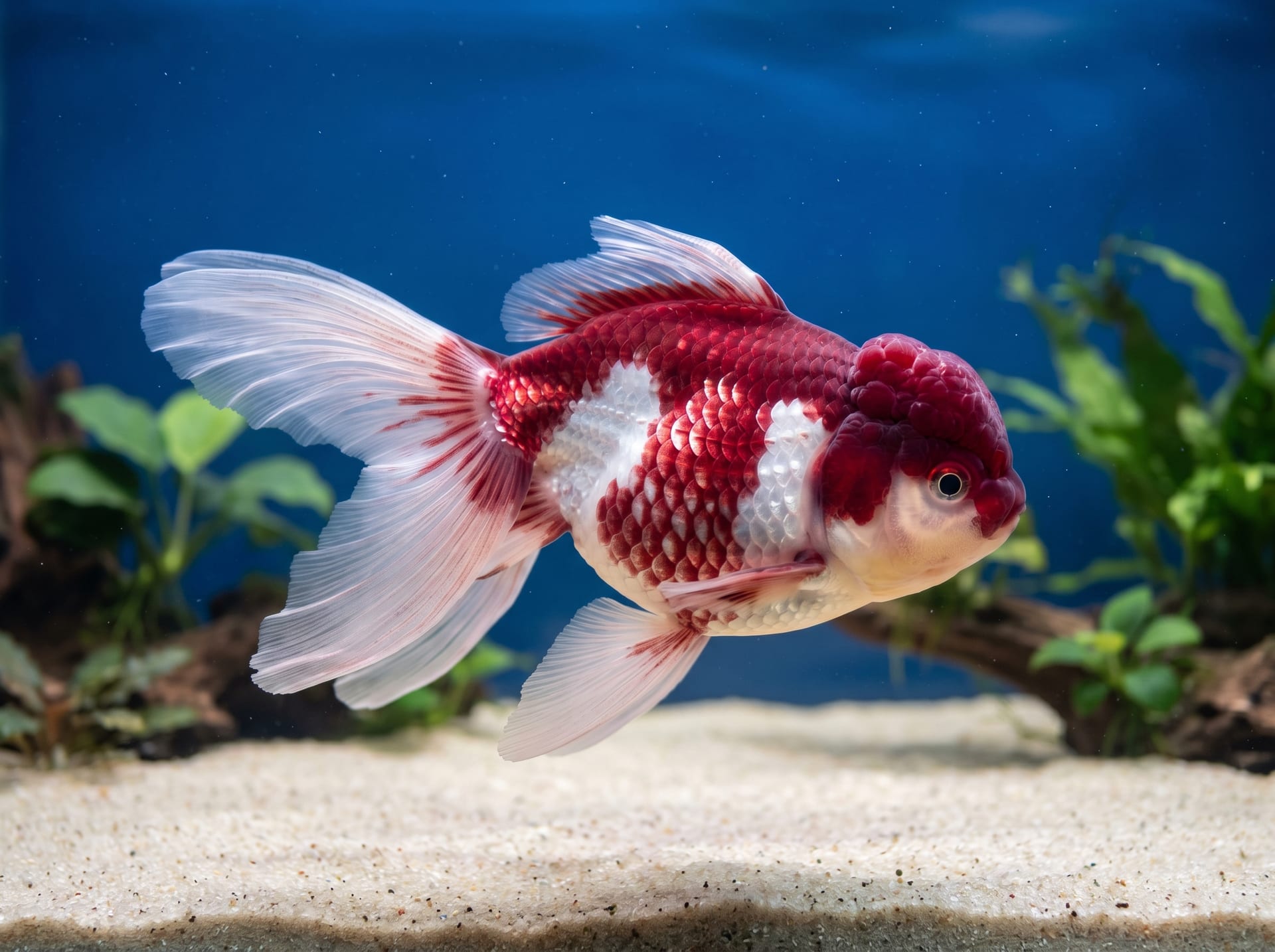
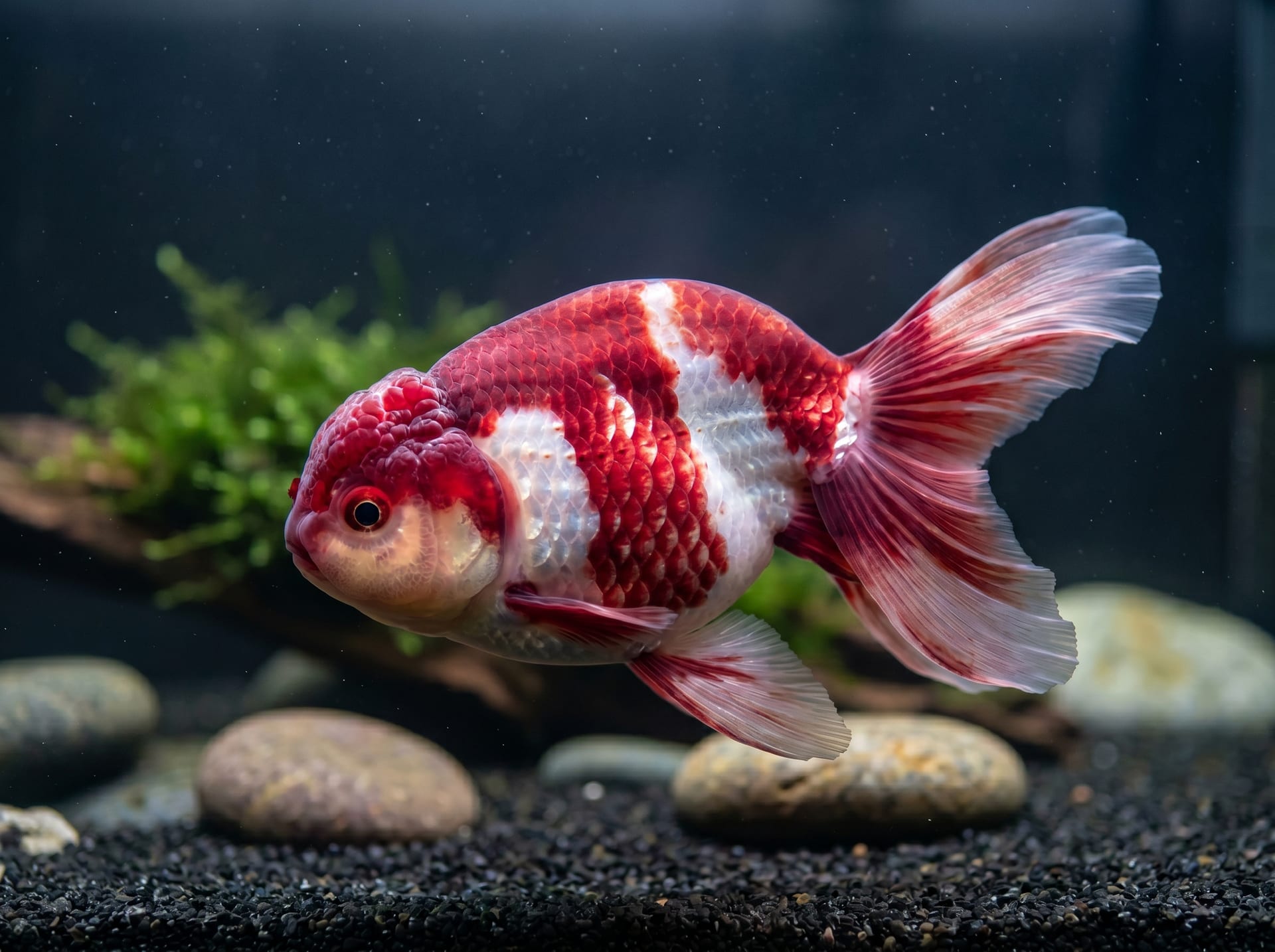
Ranchu (The King of Goldfish)
Ranchu selection standards are the most stringent and are deeply connected to show culture.
Key Indicators (Primarily Top View Evaluation):
- Body Shape: "Barrel-shaped" (compact roundness), deep body height
- Head: Uniform wen development, broad head width
- Back Line: Completely flat (spinal curvature absolutely not allowed)
- Dorsal Fin: Complete absence (even dorsal fin traces not allowed)
- Tail Fin: Quad-tail is ideal, butterfly-tail and triple-tail are inferior
- Symmetry: Left-right equality
Ryukin
Key Indicators (Both Side and Top Views):
- Body Shape: Deep body height and strongly curved back line
- Head: Small and sharp (wen not required)
- Tail Fin: Beauty of long, flowing tail (triple-tail or quad-tail)
- Abdomen: Roundness and volumetric feel
Oranda Lionhead
Key Indicators:
- Wen: Wen covering the entire head (especially velvet-like texture)
- Body Shape: Balance of not too long, not too short
- Tail Fin: Long, flowing tail similar to ryukin type
- Body Color: Clear patterns such as calico, solid red, or crane
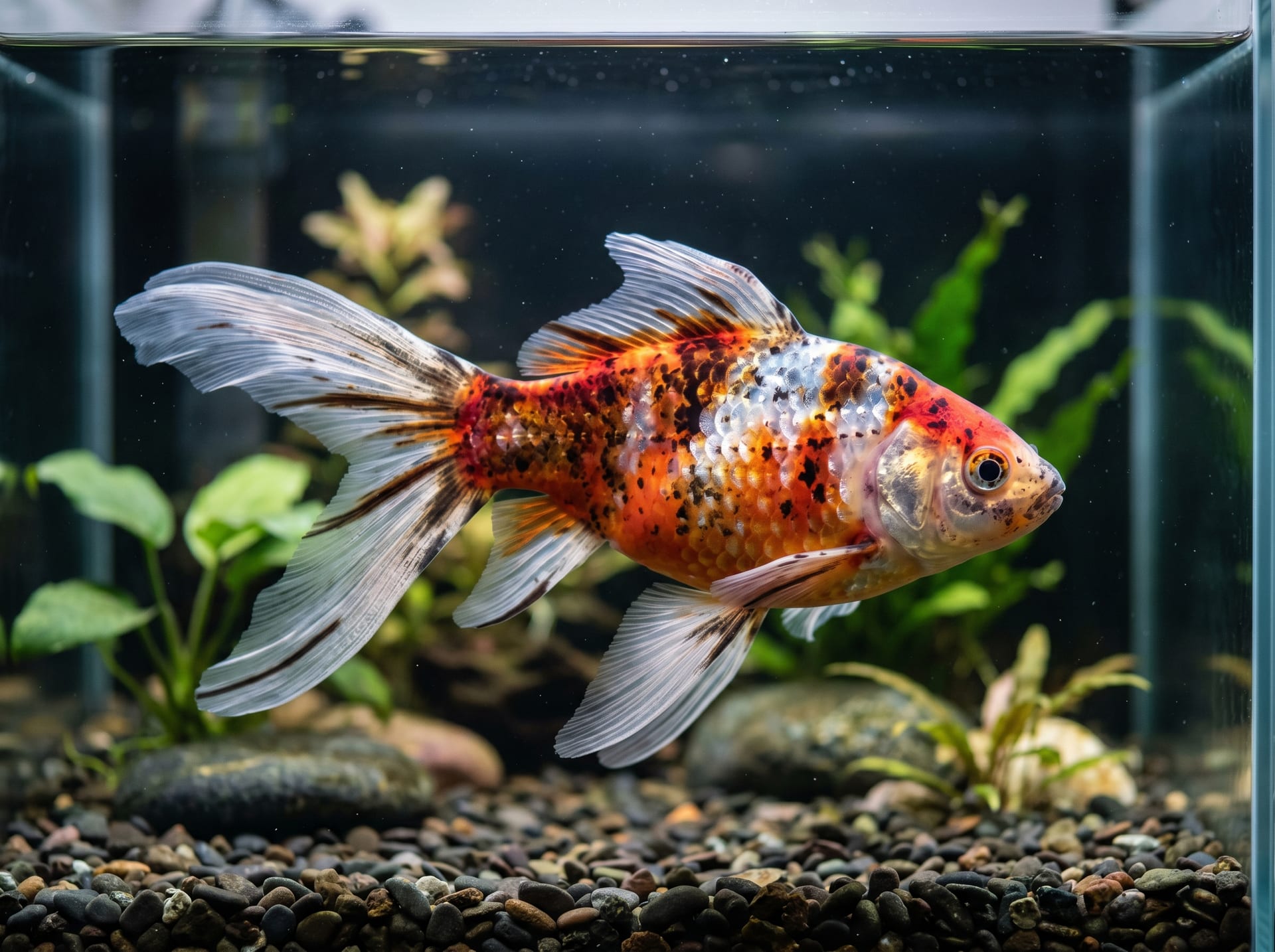
Kohaku and Wakin (Single-Tail Types)
Key Indicators:
- Speed and Vigor: Healthy swimming ability
- Body Shape: Streamlined and flexible
- Tail Fin: Well-formed triangular shape to the tip
- Calico Pattern (Kohaku): Balance of red, white, black, and blue
Humane Treatment of Culled Individuals: Ethical Implementation Methods
The treatment of excluded individuals is a matter that tests breeder ethics. The following methods are internationally recommended.
Recommended Humane Methods
1. Clove Oil Anesthesia Method
- Dissolve clove oil in a small amount of water (10-15 drops per liter), then add fry
- Pain-free deep anesthesia within seconds, followed by cardiac arrest
- Recommended by fish welfare experts as the most humane and least painful method
2. Rapid Low-Temperature Method (Ice Water)
- Cause loss of consciousness through rapid transition to ice water (0-4°C)
- Used as a supplementary method as it may be more stimulating than clove oil
Methods to Avoid
- Prolonged exposure to air (prolongs suffering)
- Release into sewage or rivers (invasive species issues, legal concerns)
- Disposal into dry waste (processing while conscious)
Disposal After Humane Treatment
- Discard as household waste (organic waste)
- Use as fertilizer for garden plants
- Use local composting facilities
Selection Record Management: Utilizing Breeding Data for Future Generations
By recording selection results, you can accumulate bloodline characteristics, strengths, and areas for improvement, applying them to future breeding plans.
Items to Record
- Breeding pair (parent fish ID, breed)
- Spawning date, hatch date, hatch rate
- Selection date for each round, number selected, number excluded, number remaining
- Trends in exclusion reasons (frequent tail issues, poor wen development, etc.)
- Growth records (body length, photos of body shape changes)
Recording Tools
- Spreadsheets (Google Sheets, etc.)
- Dedicated breeding apps (available for some fish species)
- Individual management linked with BreederDirect's listing management features
Selection and Breed Future: Long-Term Breeding Perspective
Selection is not merely about "choosing good individuals," but also about properly maintaining the genetic diversity inherent in specific breeds.
Managing Inbreeding Risk
Repeatedly breeding excellent individuals (inbreeding) fixes breed traits, but simultaneously increases the risk of reduced immunity and manifestation of genetic diseases.
Recommendations:
- Introduce other bloodlines after 3-4 generations of inbreeding within the same line
- Breeding plans with awareness of genetic diversity
Selection Ethics and Breeder Responsibility
"Selection to create more beautiful breeds" is simultaneously "responsibility to excluded lives." In handling living creatures, minimizing suffering and maintaining respectful treatment builds trust as a breeder.
As goldfish breeders listing on BreederDirect, maintaining high standards in both selection criteria and ethics is the foundation for consistently providing high-quality individuals and building long-term customer trust.