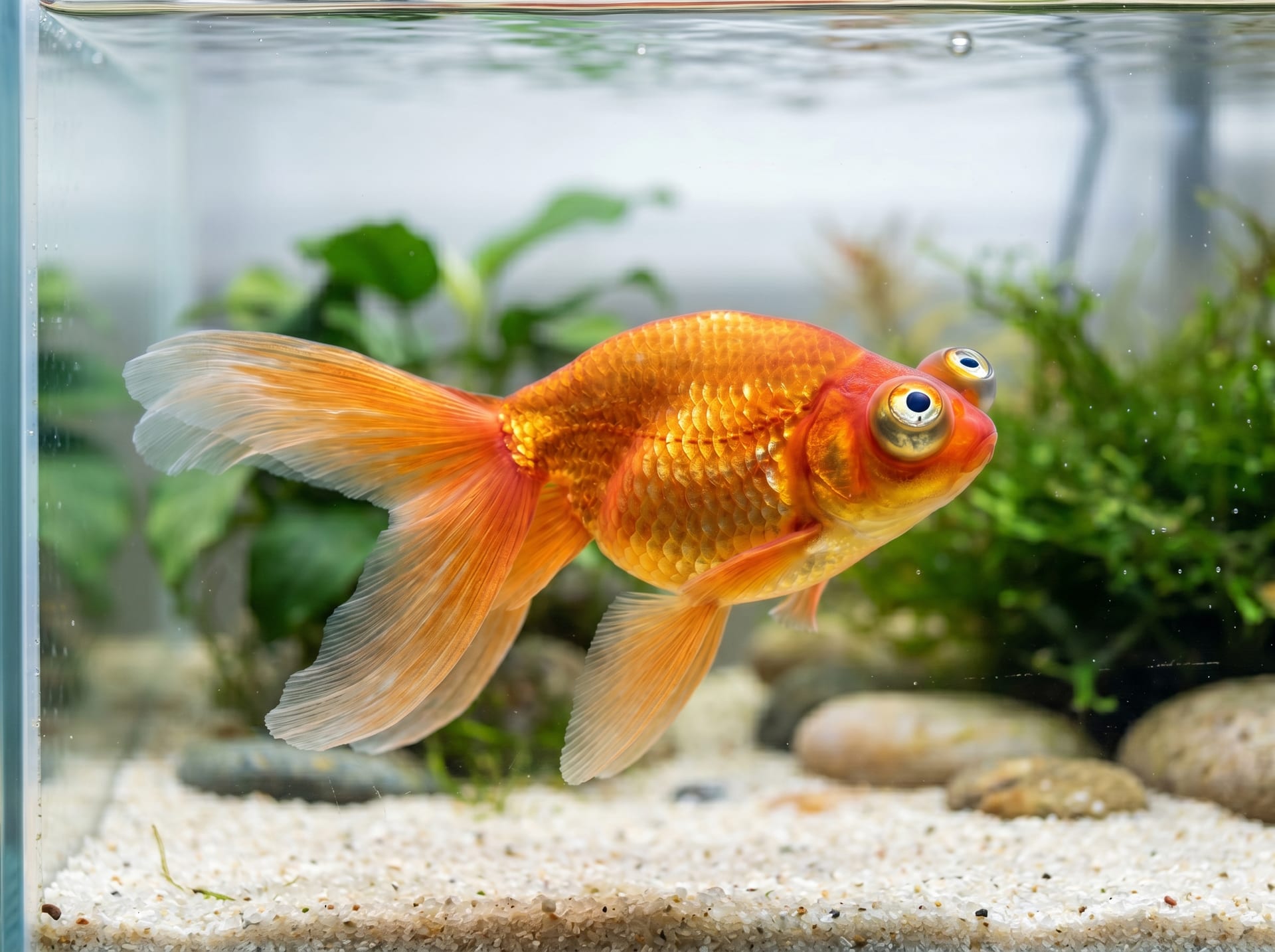
Celestial Eye
Rare goldfish with upward-facing eyes. Chinese-bred to resemble gazing at heaven. No dorsal fin, very rare variety.
View Celestial Eye encyclopedia →0% commission on your first sales!Register by September 30, 2026 and your first 2 sales are commission-free!
Breeder Wanted!
List on BreederDirect and sell directly to customers nationwide!
6 Transparency Commitments from Br-Choku
All Goldfish listings from Breeder include the following details. We guarantee transparency in lineage (Yamato/Yatomi/Edo) and competition awards.
- Lineage
- Real Photos
- Breeder Lineage
- Award History
- Competition History
- Age Stated
Browse all 26 breeds
Care Difficulty
Verified breeders wanted for Goldfish
Breeders are signing up now ahead of launch. Subscribe to be notified when new listings go live.
Getting alerts is free with a member account. When new listings match your saved search, we'll notify you by email and in-app.
Browse other categories
Verified breeders (preview)
Celestial Eye key facts
- Care level
- Advanced
- Lifespan
- 5-10 years
- Size
- 10-15cm
- Diet
- Goldfish pellets (sinking type)
- Tank
- Shallow tank best
- Eyes
- Upward eyes make finding food difficult
- Diet
- Drop sinking food near nose
- Compatibility
- Ideally keep with same variety only
- Notes
- Very rare — obtain from specialty shops
About Celestial Eye
The Choten-gan, developed during China's Qing Dynasty, was bred to resemble a fish forever gazing at the sky — a poetic image that gave the variety its name, meaning "upward-gazing eyes." Its rounded, dorsal-fin-free body paired with those skyward eyes creates a uniquely meditative appearance found in no other goldfish variety. Rarely seen outside specialist shops and competitive shows in Japan, it remains one of the most distinctive fish a hobbyist can keep. Temperamentally calm and unhurried, Choten-gan drift at a gentle pace that suits quiet display tanks. Successful keeping requires thoughtful accommodation of their visual limitations — reduced water flow, smooth rounded décor, and consistent use of sinking food — but the reward is a fish of singular beauty and character. Whether you are an experienced goldfish keeper seeking something exceptional or a newcomer drawn to rare breeds, the Choten-gan offers a deeply rewarding and genuinely uncommon aquarium experience.
7 things to know before welcoming a Celestial Eye
1Understand Its Limited Vision
Because the eyes point upward, the fish has almost no forward or downward vision. It struggles to see food dropped at the surface, so sinking pellets are strongly recommended. Feeding at the same spot and time each day helps the fish learn where to find food.
2Dorsal-Fin-Free Swimming
The absence of a dorsal fin gives this fish an unusual center of balance, making it sensitive to strong currents. Attaching a sponge diffuser to the filter outlet helps reduce flow. Keeping water movement gentle minimizes physical stress on the fish.
3Protect Those Protruding Eyes
The protruding eyes are vulnerable to scratches from sharp decor or the fins of tank mates. Avoid driftwood with pointed edges or jagged rocks, and choose fine, smooth substrate. Limit tank mates to gentle goldfish varieties to reduce the risk of eye injury.
4Water Temperature and Quality
The ideal water temperature range is 15–25°C; sudden shifts can trigger illness. Perform partial water changes of about one-third weekly to keep ammonia and nitrite levels low. Avoid overcrowding by allowing 30–40 liters of water per fish.
5Sinking Pellets Are Essential
Floating food is hard for this fish to reach and increases the risk of swallowing air, which can cause buoyancy problems. Feed sinking goldfish pellets twice daily in amounts the fish can finish within two to three minutes. Remove any uneaten food promptly to prevent water quality decline.
6Initial and Ongoing Costs
As a rare variety, Choten-gan typically costs 3,000–15,000 JPY per fish. Expect initial setup expenses of 20,000–50,000 JPY for a tank, filter, heater, and accessories. Monthly running costs for food, water conditioners, and electricity generally range from 2,000 to 5,000 JPY.
7Choosing Compatible Tank Mates
Due to poor vision and slow swimming, this fish is easily outcompeted for food by active or large-mouthed species. Good tank mates include similarly slow-moving varieties such as Ranchu or Black Moor. When keeping mixed varieties, observe each feeding to ensure every fish gets adequate food.
Frequently asked questions about Celestial Eye
- Q.Can beginners keep Choten-gan?
- A.Choten-gan require a few specific accommodations for their visual limitations, so some familiarity with basic goldfish care — water quality, flow management, and feeding technique — is helpful before starting. No specialized equipment is needed, but attentive daily observation is important.
- Q.Can they be kept with other goldfish?
- A.Their limited vision and slow swimming make them poor matches for active varieties like Wakin or Comet, which will outcompete them at feeding time. Pairing with calm breeds such as Demekin or Pearlscale, or keeping them as a single-species group, gives the best results.
- Q.How often should water be changed?
- A.A general guideline is to change about one-third of the water weekly. Choten-gan eyes are sensitive to declining water quality — ammonia and nitrite buildup frequently cause redness or cloudiness — so regular testing with a simple water quality kit alongside water changes is recommended.
- Q.The eyes look cloudy — is something wrong?
- A.Cloudy eyes are most commonly caused by poor water quality, bacterial infection, or a physical scratch. Start by testing ammonia, nitrite, and pH levels, and perform an immediate partial water change if values are off. If the cloudiness does not improve within a few days, consult a specialist shop about appropriate treatment.
- Q.Where can I buy Choten-gan?
- A.Due to limited availability, specialist goldfish stores, competitive shows, and direct breeders are the most reliable sources. Online retailers do carry them occasionally, but wherever possible it is worth inspecting the fish in person to assess eye shape, body form, and overall health before purchasing.
Useful tools for Celestial Eye care
Learn more about Celestial Eye in the encyclopedia
View Celestial Eye encyclopedia entry →
Care difficulty, lifespan, size and diet — all basics covered.
More in this category
Can't find the one you're looking for?
Post your wishes for free and breeders with matching animals will contact you with introductions.