Source: Wikimedia Commons
Celestial Eye Goldfish
AdvancedRare goldfish with upward-facing eyes. Chinese-bred to resemble gazing at heaven. No dorsal fin, very rare variety.
Difficulty
Advanced
Temperature
5〜30℃(適温18〜24℃)
Lifespan
5-10 years
Size
10-15cm
Diet
Goldfish pellets (sinking type)
About
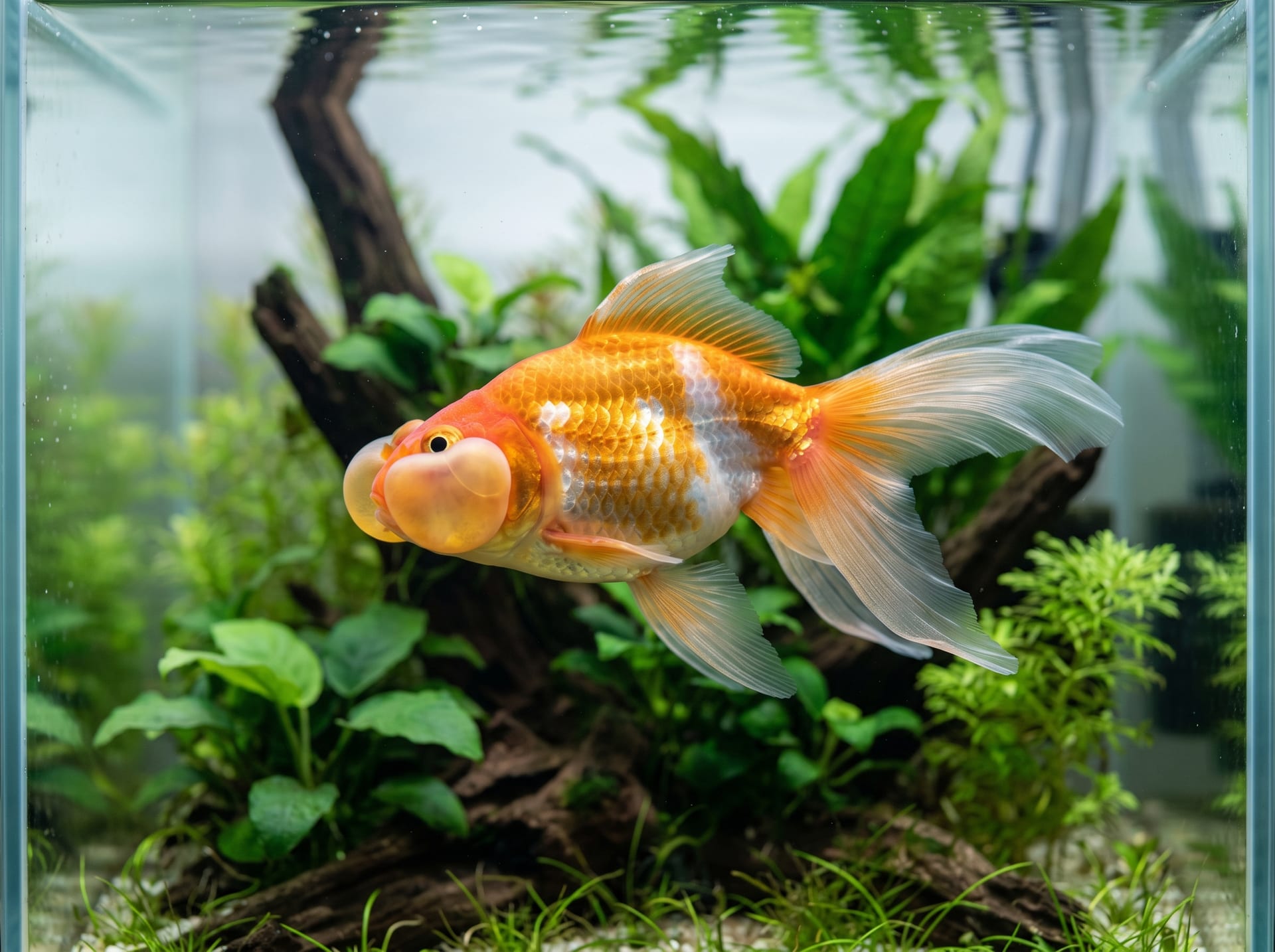
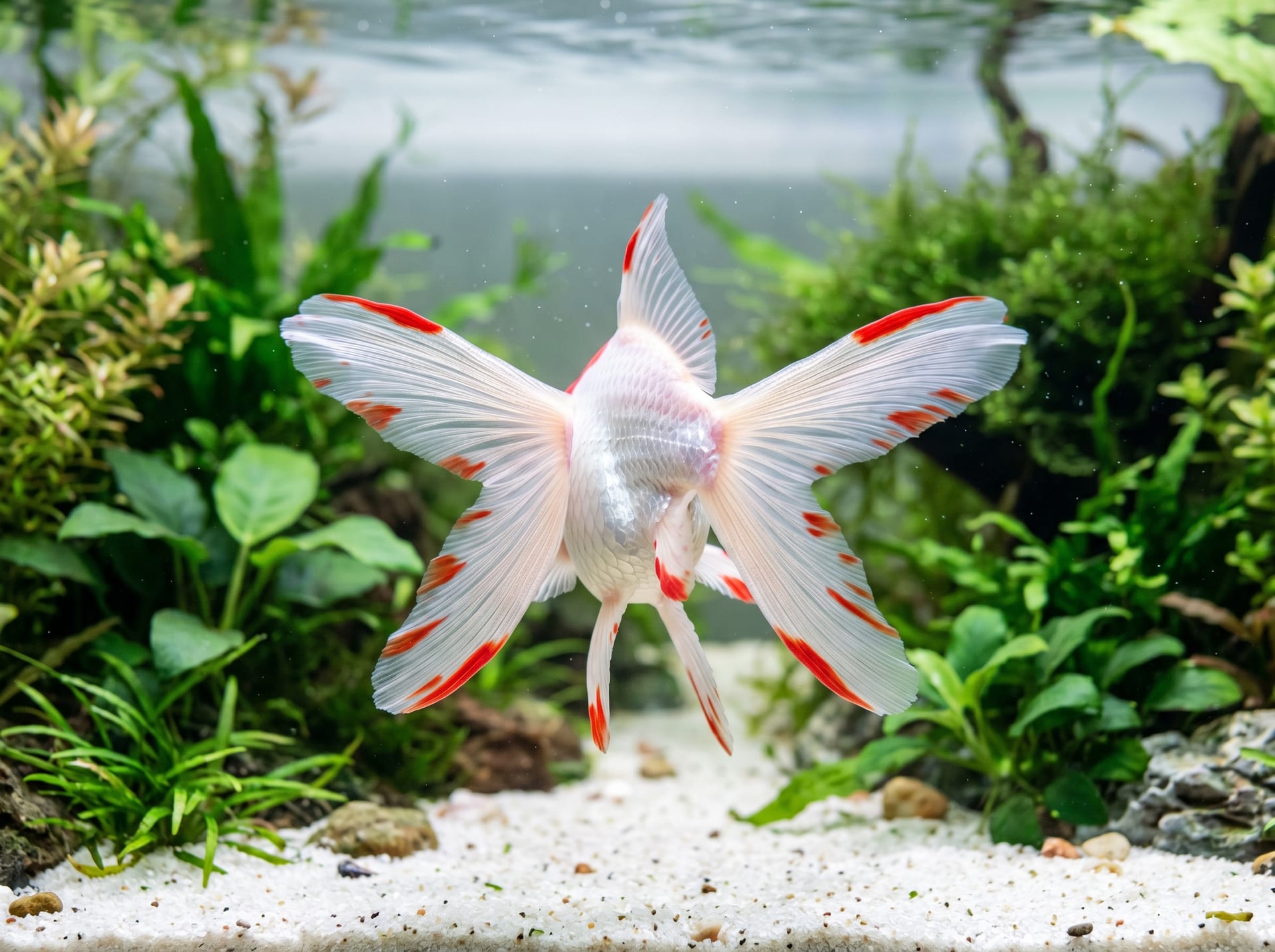
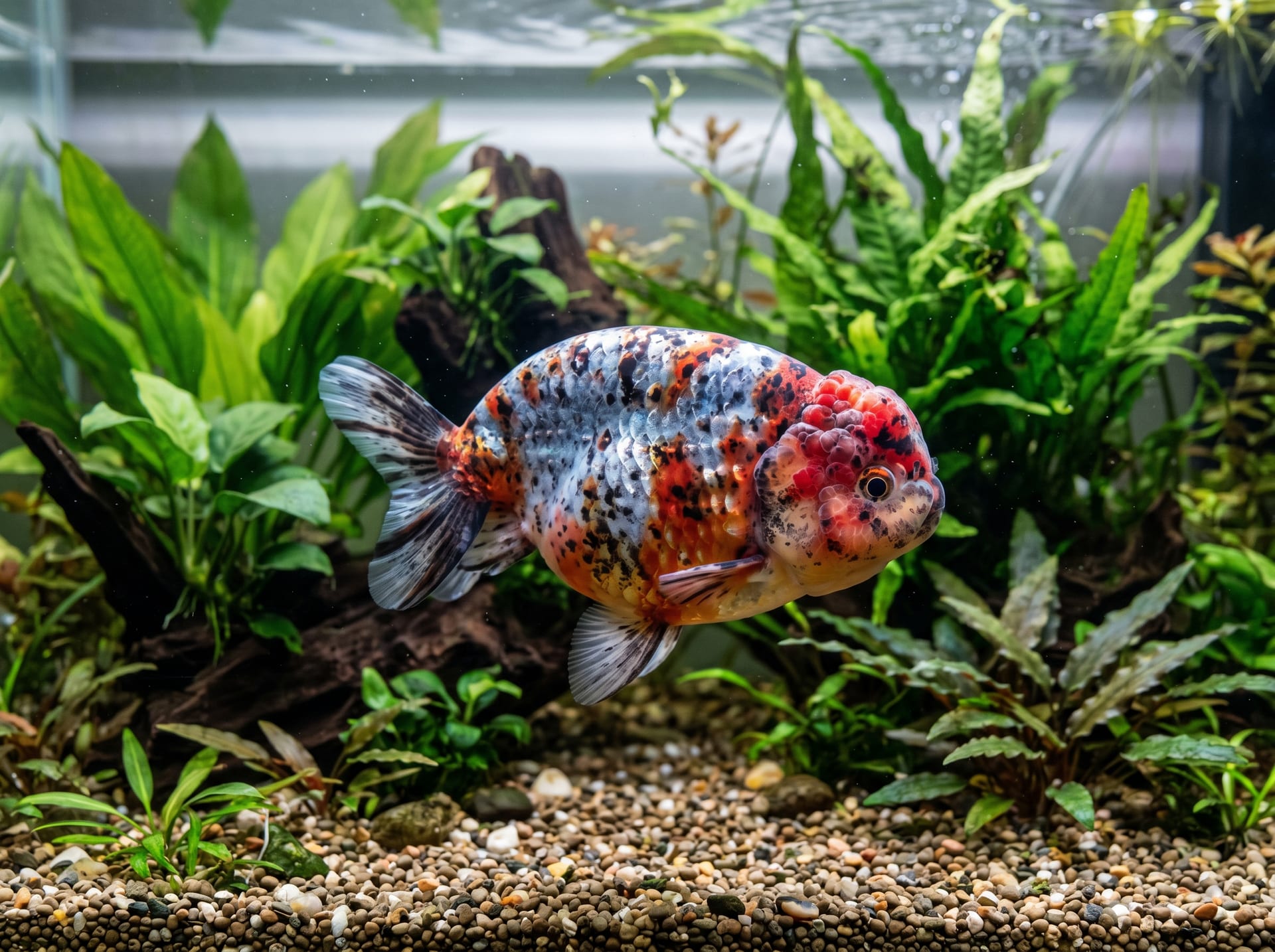
The Celestial Eye (also known as Stargazer goldfish or Choudenmoku) is a rare Chinese goldfish variety in which the eyes are permanently directed upward, as though gazing at the sky—a trait the breed was deliberately selected for. This characteristic, while visually arresting, renders the fish virtually blind to what lies in front of or below it. Feeding requires careful attention: floating pellets at the water surface are easiest for the fish to locate, and shallow tank designs facilitate feeding management. The Celestial Eye lacks a dorsal fin and has a compact, egg-shaped body. It is a very slow swimmer and must be kept exclusively with its own kind in a bare or minimally decorated tank. Water quality should be maintained at neutral pH around 7.0. Due to its specialized needs and rarity, the Celestial Eye is considered an advanced-level goldfish.
Lifespan of the Celestial Eye Goldfish
The Celestial Eye Goldfish lives 5-10 years.
Size of the Celestial Eye Goldfish
The Celestial Eye Goldfish grows to 10-15cm.
Basic Info
Origin
China
Lifespan
5-10 years
Size
10-15cm
Temperature
5〜30℃(適温18〜24℃)
Diet
Goldfish pellets (sinking type)
Care Specifications
- pH
- 6–8
- Hardness (GH)
- 5–19 dGH
- Water Temp.
- 18–23℃
PeacefulGroupBreeding: Moderate
Sources: FishBase / Aqueon Goldfish Care Guide
Morphs (Varieties)
Goldfish varieties are line-bred for body shape, tail type, scale type, and coloration. Traits such as protruding eyes, transparent scales (calico), and albinism are single-locus traits.
Line-bredEstablished by selective line breeding.
Dorsal-lessUpturned (celestial) eyes
Sources: Wikipedia - Goldfish (Varieties) / Goldfish — Wikipedia (Japanese edition, varieties)
A curated selection of notable morphs. Inheritance modes are a breeding-planning guide; actual appearance varies with combos.
References & Sources
Edited & verified by: BreederDirect editorial team
The taxonomic, regulatory, and husbandry data on this page are compiled and verified against the authoritative primary sources below.
Taxonomy & Authority
Accepted name: (Linnaeus, 1758)
Synonyms: Cyprinus auratus Linnaeus, 1758, Carassius auratus auratus (Linnaeus, 1758), Cyprinus thoracatus Valenciennes, 1842, Carassius burgeri Temminck & Schlegel, 1846, Cyprinus chinensis Gronow, 1854
Authority databases: FishBase · GBIF · FishBase: Carassius auratus · GBIF: Carassius auratus
Nomenclature follows global taxonomic authority databases.
Celestial Eye Goldfish Listings
Loading latest listingsFind listings for this species