Care Guide for Bubble-Eye and Celestial Goldfish | Tips for Raising Delicate Rare Varieties in Good Health
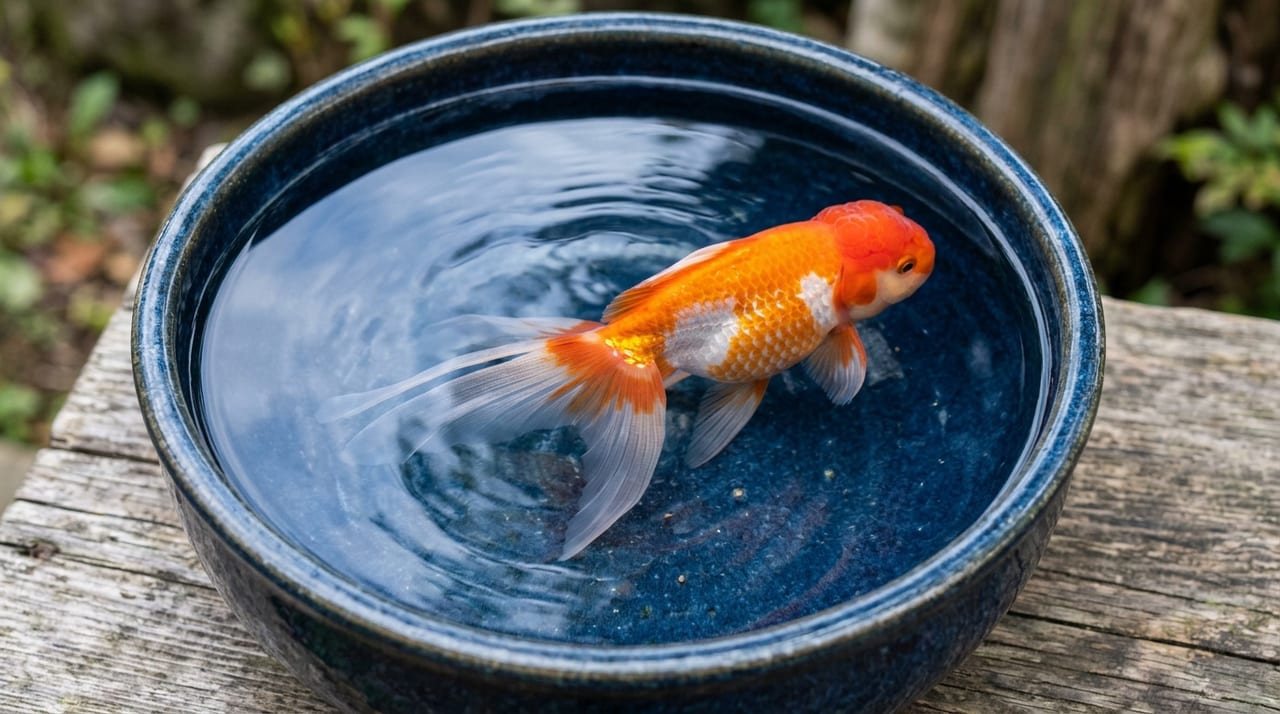
Bubble-Eye (Suihoûgan) and Celestial (Chôtengan) goldfish are especially delicate varieties among goldfish breeds. Attention to water current, obstacles, and tankmates is essential. This guide covers professional care points from adapting to their visual limitations to water quality management and feeding strategies.
Key Takeaways
Bubble-Eye (Suihoûgan) and Celestial (Chôtengan) goldfish are especially delicate varieties among goldfish breeds. Attention to water current, obstacles, and tankmates is essential. This guide covers professional care points from adapting to their visual limitations to water quality management and feeding strategies.
Related Species


What Are Bubble-Eye and Celestial Goldfish?
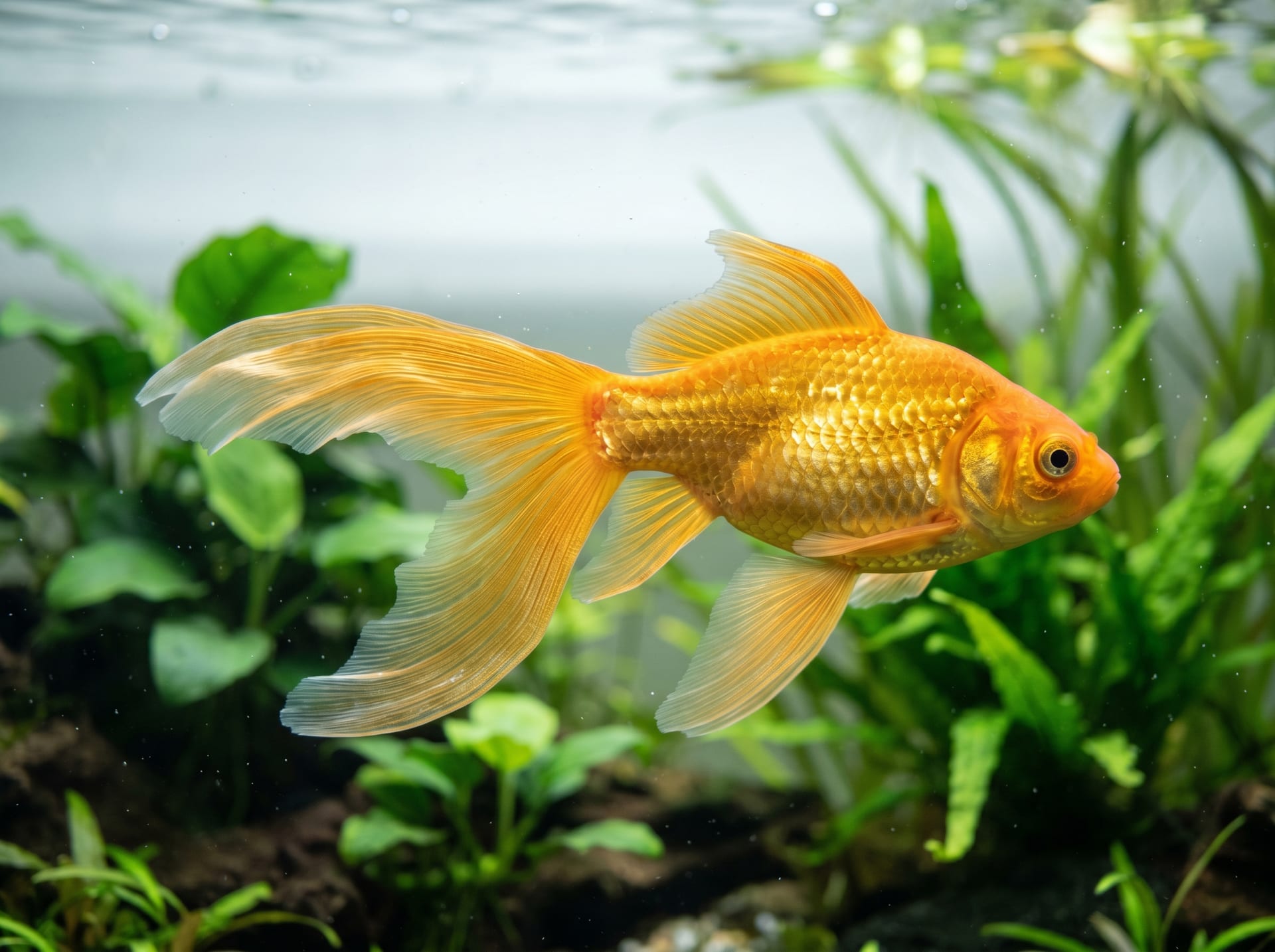
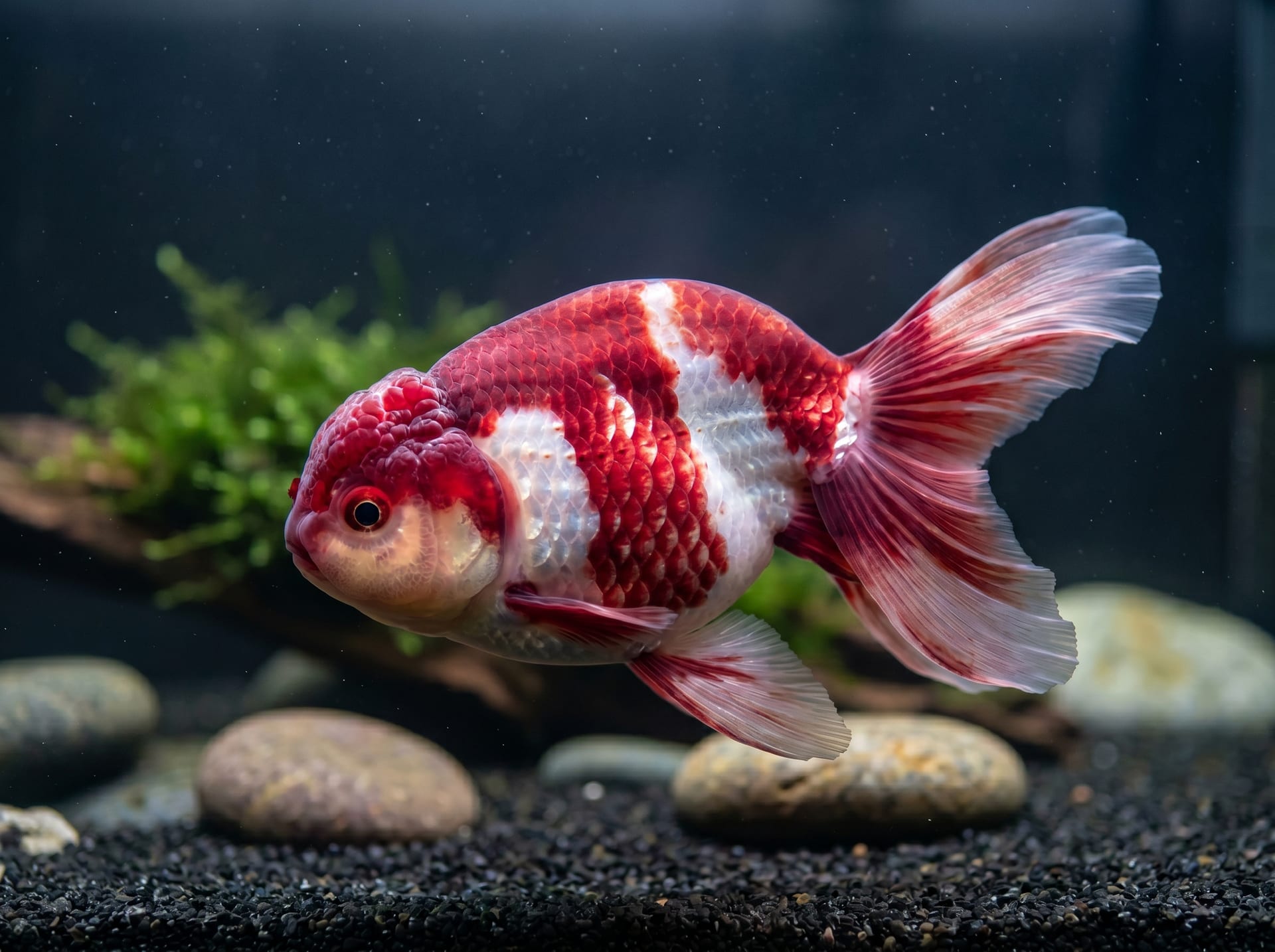
Bubble-Eye (Suihoûgan) and Celestial (Chôtengan) goldfish are rare varieties known for their distinctive appearance and delicate nature among goldfish breeds. Both varieties belong to the "Chinese goldfish" lineage developed in China, and they have strong popularity among specialist breeders and enthusiasts in Japan.
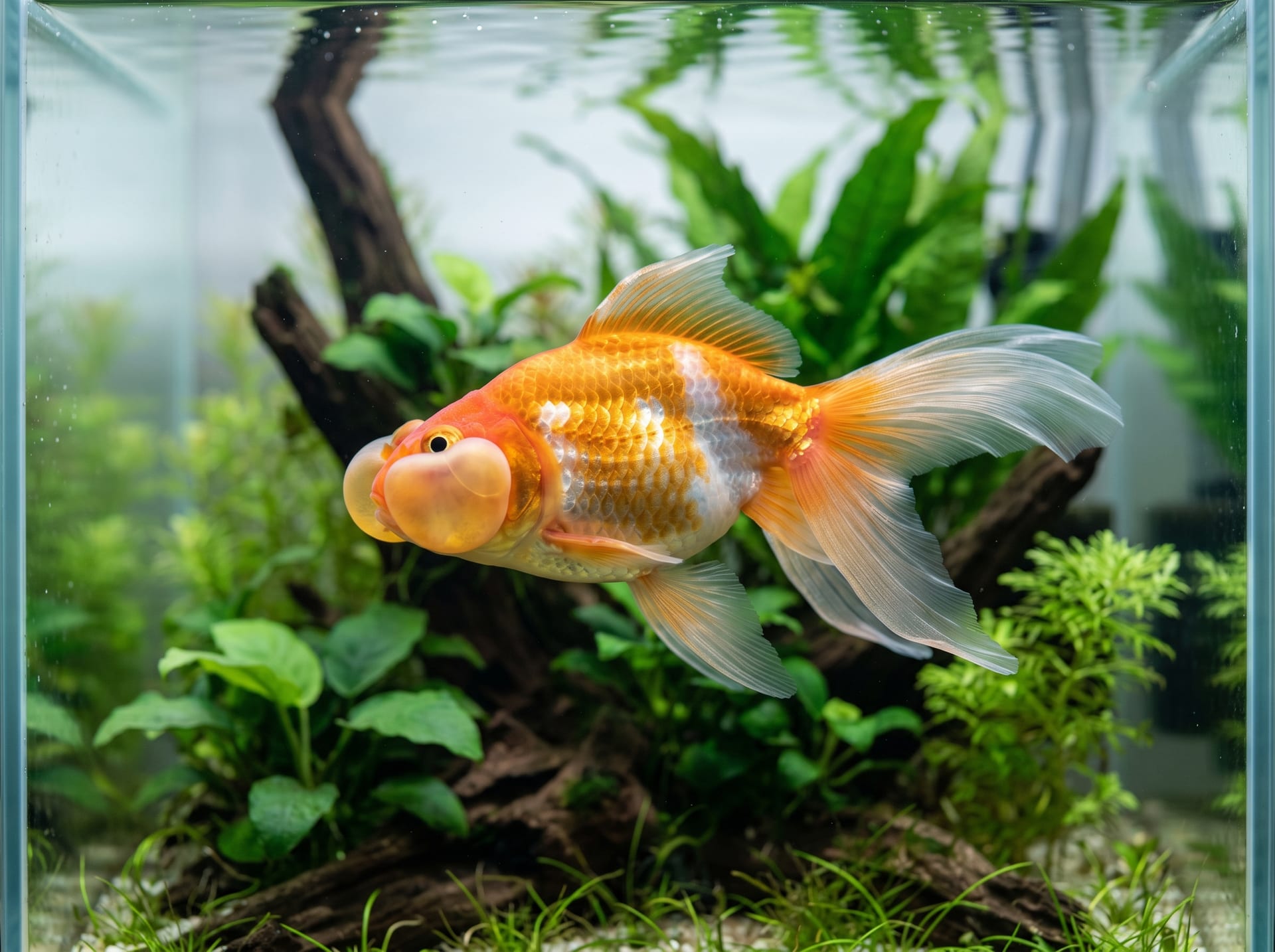
Bubble-Eye goldfish's most distinctive feature is the translucent, sac-like tissue called a "bubble" (suihou) that develops beneath the eye. This bubble is filled with lymph fluid and has such a soft structure that its shape changes with gentle pressure. Once ruptured, it does not return to its original form, and deformation often remains even after healing, so careful attention to the rearing environment is essential.
Celestial goldfish have their eyes fixed upward and cannot see forward or to the sides. Because their field of vision is limited to looking upward only, they respond sensitively to food that falls on the water surface, but they have difficulty noticing stimuli from below or the sides. Most varieties lack a dorsal fin, and their stocky body shape and upward-facing eyes create a unique charm.
Both varieties can be reared in the same water quality as regular goldfish, but physical damage to the eyes becomes the greatest risk.
Bubble-Eye and Celestial Goldfish: Basic Information
| Variety | Characteristics | Maximum Size | Most Important Care Points | Price Range |
|---|---|---|---|---|
| Bubble-Eye | Bubble (lymph sac) beneath the eye | 5–8 cm | Avoid damaging the bubble (weak water flow, no obstacles) | ¥1,000–several thousand |
| Celestial | Eyes fixed upward, no dorsal fin | ~15 cm | Use floating food, avoid strong water flow | ¥1,000–several thousand |
Both are rare varieties with limited distribution, and obtaining them primarily comes through specialist breeders.
Differences Between Celestial and Bubble-Eye Goldfish · Price Range
Celestial (Chôtengan) and Bubble-Eye (Suihoûgan) goldfish both are rare varieties characterized by "eyes facing upward," but their eye structures are completely different.
| Variety | Eye Characteristics | Price Range |
|---|---|---|
| Celestial | The eyeballs themselves are fixed facing upward (no bubble) | ¥3,000–¥10,000 (premium specimens ¥10,000–¥30,000) |
| Bubble-Eye | Large bubble (lymph sac) beneath the eyes | ¥1,500–¥5,000 (premium specimens ¥10,000–¥30,000) |
Celestial goldfish have the appeal of a unique expression, "always looking straight up," and unlike Bubble-Eye goldfish, they lack an easily ruptured bubble, so their injury risk is somewhat lower. However, both species have weak eyesight and swim slowly, so attention to water flow, obstacles, and tankmates is essential in both cases. Celestial goldfish have lower distribution than Bubble-Eye, and well-formed specimens are easier to find at specialist shops and breeders.
Why Celestial and Bubble-Eye Goldfish Are Considered "Pitiful"—and What the Reality Is
When people see Celestial (chôtengan) or Bubble-Eye (suihoûgan) goldfish for the first time, they sometimes ask, "Isn't it sad to watch them?" or "Isn't selective breeding taken too far?" Eyes fixed facing upward, bodies without dorsal fins, and slow swimming movements certainly differ greatly from regular goldfish. This is an unavoidable question when deciding whether to keep them, so let me address it directly.
The eye structure itself is not painful
As a matter of fact, neither the upward-facing eyes of Celestial goldfish nor the bubbles of Bubble-Eye goldfish are inherently painful conditions. Both are genetic traits fixed over centuries in China, and they are born this way. The eyes of young Celestial goldfish initially face normally, and gradually become fixed facing upward as they grow. The bubbles in Bubble-Eye goldfish are simply sacs filled with lymph fluid, not inflammation or tumors.
In other words, these are not fish that are "constantly suffering from pain"—that is the starting point.
However, they are objectively disadvantaged
On the other hand, it is also true that these varieties are clearly disadvantaged compared to regular goldfish.
- Limited field of vision — Celestial goldfish cannot see forward or to the sides, so they have difficulty noticing approaching food or other fish
- Slow swimming — Lacking a dorsal fin and with a rounded body shape, they are poor at maintaining posture and changing direction
- Prone to injury — In particular, the bubble of Bubble-Eye goldfish does not return to its original shape once ruptured
- Lose in competition — If their tankmates are agile, they may eat little and become thin
This disadvantage can be "almost no problem" depending on the environment, or "serious suffering." Whether they appear "pitiful" is determined not by the variety itself, but by how they are kept—that is what actually matters.
What Makes the Difference
| Harsh Environment for Celestial and Bubble-Eye | Appropriately Considerate Environment |
|---|---|
| Keeping with Wakin or Comet goldfish, where food is stolen | Keeping only the same variety, or only with slow-swimming varieties |
| Feeding only sinking food and leaving it without noticing they don't eat | Placing floating or semi-sinking food directly in front of them |
| Layout with driftwood and rock arrangements that rub against the bubble | No obstacles placed, substrate is fine sand or no substrate |
| Constantly pushed by strong external filter currents | Weak water flow, similar to a sponge filter |
| Treating them as "just goldfish" with standard care | Managing individually while understanding breed-specific traits |
The left column is what naturally happens when you treat this variety like regular goldfish. That is precisely why individuals that appear "pitiful" actually exist. Conversely, if the right column is satisfied, Celestial and Bubble-Eye goldfish, as delicate varieties, can spend a typical lifespan of around 5–10 years peacefully.
Things to Check Before Bringing One Home
- Can you set up a dedicated tank (or a tank with only the same variety)?
- Can you prioritize safety (no obstacles) over the aesthetics of the layout?
- Can you observe at every feeding whether they are actually eating, not just "putting food out"?
- Can you accept the possibility of the bubble rupturing? (Including swim bladder disease and digestive problems, they definitely require more care than standard varieties)
Unless you can answer "yes" to all of these, it is better for the fish if you do not bring one home. If you are new to goldfish keeping in general, it is recommended that you first gain experience with hardy, easy-to-keep varieties before considering these.
Your choice of breeder directly impacts the fish's welfare. There are sellers who distribute individuals with unrealistic body shapes or swimming patterns without selection. Obtaining a specimen from a breeder who meets the purchase checklist points described below and can explain their breeding philosophy in their own words will ultimately minimize the burden on the fish.
Tank and Rearing Environment Design
Choosing a Tank and Layout
For Bubble-Eye and Celestial goldfish, a simple layout with few obstacles is essential. Driftwood, rock arrangements, and sharp decorations commonly used in goldfish tanks are strictly prohibited, as the bubble can be injured if it touches them.
| Item | Recommended | Avoid |
|---|---|---|
| Substrate | Fine sand (2 mm or less) or no substrate | Sharp gravel, large gravel |
| Decorations | Smooth stones (no sharp edges), ceramic products | Driftwood, sharp driftwood, rock arrangements |
| Filter | Sponge filter, top filter | Powerful external filter (if the water flow is too strong) |
| Aquatic plants | Soft plants (Anacharis, Water sprite, etc.) | Hard-leaved plants, plants with tangled roots |
A minimum tank size of 60 cm is recommended. Bubble-Eye goldfish grow to approximately 5–8 cm in body length, but because they swim slowly and are poor at changing direction, providing ample space for swimming is directly linked to maintaining their health.
Water Flow Management Is Most Important
For Bubble-Eye goldfish, strong water flow is a direct cause of bubble deformation and injury. Weak water flow, similar to aeration with a sponge filter, is optimal. If using a top filter, attach a flow diffuser to the outflow to spread the water flow.
Celestial goldfish also are unsuitable for strong water flow, though they are less delicate than Bubble-Eye. However, because they are poor swimmers, excessive water flow causes them to tire easily.
Water Quality Management
Water quality management for Bubble-Eye and Celestial goldfish is basically the same as for other goldfish varieties. However, because they are prone to weakened immunity, they are particularly sensitive to sudden changes in water quality.
Appropriate Water Quality Parameters
- Water temperature: 15–26°C (optimal 18–22°C)
- pH: 7.0–8.0
- Ammonia: 0 mg/L (must not be detected)
- Nitrite: 0 mg/L
- Nitrate: 40 mg/L or below
Water Change Frequency and Method
The basic schedule is to perform a 20–30% water change once per week. When performing a water change, always match the water temperature before adding new water. A temperature difference of 3°C or more can easily trigger stress-related diseases such as ich.
Care is also needed when handling the hose during water changes. In tanks with Bubble-Eye goldfish, be conscious of avoiding the hose tip touching the bubble while cleaning the bottom.
Feeding Strategies
Feeding Method for Celestial Goldfish
Celestial goldfish have field of vision only upward, so floating food near the water surface is optimal. If you feed sinking food, they will not notice it as it sinks to the bottom, leading to increased uneaten food and water quality deterioration. However, some individuals swallow air along with floating food, so care must be taken regarding swim bladder disease risk. For such individuals, "semi-sinking food" that slowly sinks in the water is effective.
Feeding Method for Bubble-Eye Goldfish
Bubble-Eye goldfish have vision, but the large bubble can sometimes obstruct part of their field of vision. They eat both sinking and floating food, but observe their feeding response and choose the appropriate type.
Feeding amount guideline: Feed an amount that can be eaten in 2–3 minutes, twice per day. In summer, increase slightly due to higher metabolism; in winter (below 15°C), reduce to once per day or alternate days.
Considerations Regarding Tankmates
Bubble-Eye and Celestial goldfish carry high risks when kept with other goldfish varieties.
Incompatible Combinations
- Wakin and Comet goldfish (they are agile, and pecking behavior toward Bubble-Eye bubbles has been reported)
- Telescope goldfish (risk of protruding eyes interfering with each other)
- All fast-swimming varieties in general (they eat food first, causing the slower varieties to weaken)
Relatively Compatible Combinations
Keeping the same variety together—Bubble-Eye with Bubble-Eye or Celestial with Celestial—is safest. If keeping different varieties together, combinations with slow-swimming Ranchu-type varieties (Ranchu, Edo Nishiki, etc.) are considered relatively lower risk. However, pecking behavior toward bubbles can still occur when keeping Bubble-Eye and Ranchu together, so observe individual personalities and make judgments accordingly.
Common Diseases and Treatment
Bubble Damage and Rupture
This is the most common problem. If the bubble ruptures, the wound is susceptible to bacterial infection, so manage it with salt bath (0.3–0.5% salt concentration) for about a week. Antibacterial medications (Green F, Elbaage, etc.) can also be used. The bubble will regenerate but rarely returns to its original shape.
Swim Bladder Disease
Both Celestial and Bubble-Eye goldfish are prone to swim bladder disease. Most cases result from "digestive problems due to overeating" and "air intake when eating floating food." Fasting for several days and raising the water temperature to around 25–26°C can sometimes improve the condition. If it becomes chronic, switching to sinking food is effective.
Gill Disease and Ich
Poor water quality and sudden temperature changes can trigger these. For early detection, make daily observation and weekly water quality testing a habit.
Points to Check When Purchasing from a Breeder
Bubble-Eye and Celestial goldfish have limited distribution at home centers and chain stores, so direct purchase from a specialist breeder is advantageous in terms of quality. Check the following points when purchasing:
- Bubble symmetry: The left and right bubbles are approximately the same size
- Bubble transparency: No cloudiness or deformation
- Swimming manner: Swimming while maintaining a horizontal posture (no signs of buoyancy problems)
- Appetite: Eating actively at feeding time
- Body shape: No curved spine or missing fins
For Celestial goldfish, confirm that the eyes are completely facing upward and that both eyes face the same direction.