A Beginner's Guide to Keeping Jikin Goldfish: The Beauty of Rokurin, Peacock Tail, and Color-Stripping Techniques
A comprehensive guide to raising Jikin goldfish, an endangered species native to Aichi Prefecture. This guide covers the distinctive Rokurin (six-scale) pattern where only six specific areas display red coloration, the characteristic four-petal Peacock Tail, rearing methods for both outdoor plastic tubs and indoor aquariums, maintaining red coloration through astaxanthin-rich foods and natural light, an overview of the traditional "Shibori" (color-stripping) technique, and evaluation criteria used at goldfish shows.

Key Takeaways
A comprehensive guide to raising Jikin goldfish, an endangered species native to Aichi Prefecture. This guide covers the distinctive Rokurin (six-scale) pattern where only six specific areas display red coloration, the characteristic four-petal Peacock Tail, rearing methods for both outdoor plastic tubs and indoor aquariums, maintaining red coloration through astaxanthin-rich foods and natural light, an overview of the traditional "Shibori" (color-stripping) technique, and evaluation criteria used at goldfish shows.
Related Species
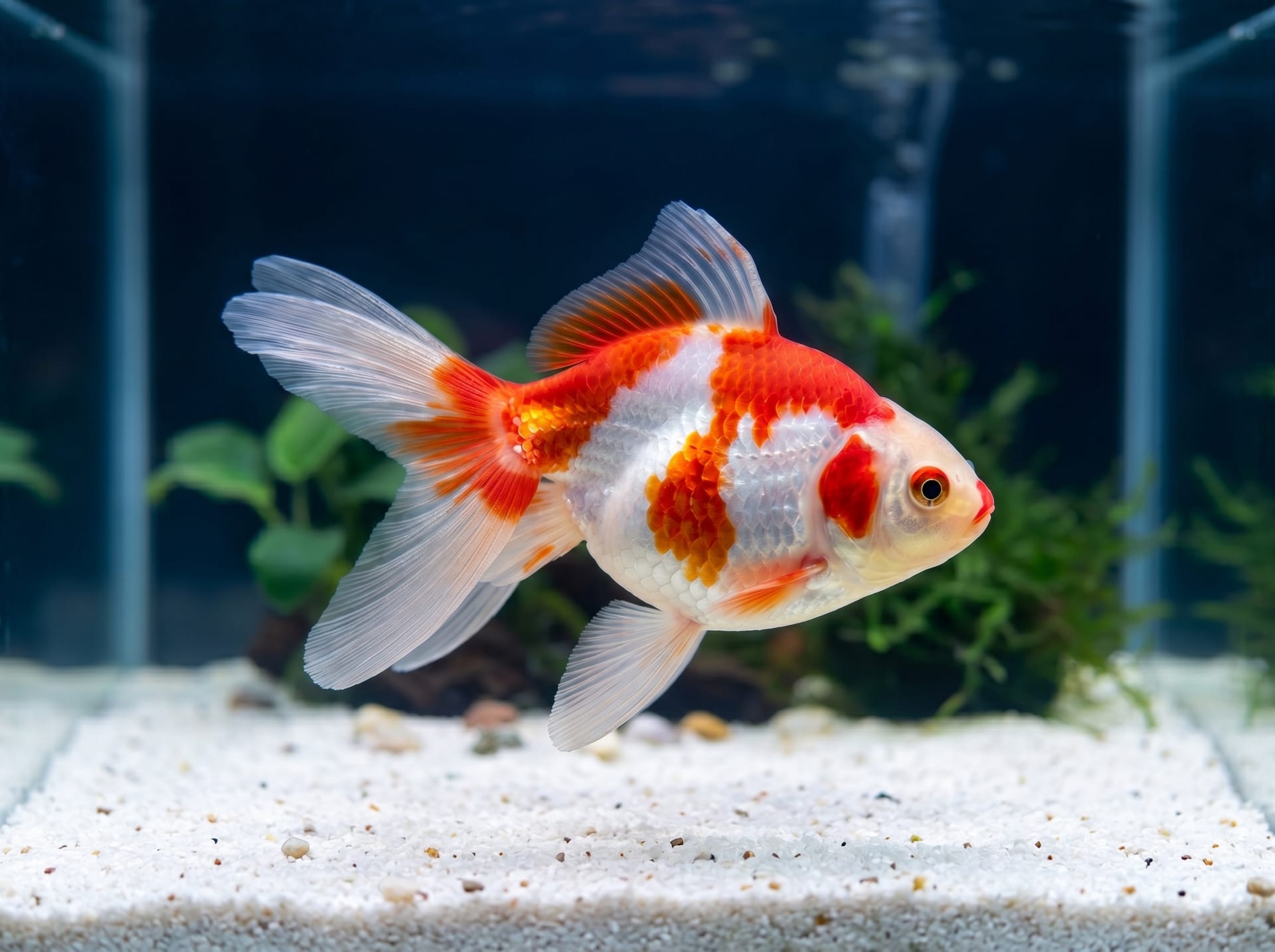
What Kind of Goldfish Is Jikin?
Jikin (じきん, English name: Jikin) is a uniquely Japanese goldfish variety native to Aichi Prefecture (Nagoya) and is also called the "Nagoya Goldfish." Its body shape is the Wa-kin type (a sleek, elongated streamlined form), and its most distinctive feature is the beautiful color pattern called "Rokurin" (六鱗, six scales)—where only the tail fins and the tips of the pectoral and ventral fins display red or orange coloration, while the rest of the body remains white or silver-white.
Jikin Characteristics at a Glance
- Rokurin Pattern: The lips, dorsal fin, tail fin, pectoral fins, ventral fins, and anal fin (six areas in total—though there are various interpretations) displaying red coloration is considered the ideal
- Body Shape: A slim Wa-kin type body. They are active swimmers with powerful movements
- Tail Fin (Peacock Tail): The unique "Peacock Tail (Kujakuo)" that spreads in four petals is the most prized viewing feature
- A Historically Significant Variety Equivalent to a Designated Natural Monument: This is an ancient variety whose existence was confirmed during the mid-Edo period
Why Are Jikin Called the "Phantom Goldfish"?
To achieve the ideal Rokurin pattern, Jikin require a unique technique called "color-stripping (shibori)" to be applied at the juvenile stage. This involves treating young fish that have excess pigmentation (black and red coloring) in a special environment (cold temperatures, highly acidic water, etc.) to remove excess pigment and reveal the white base with the Rokurin pattern. Because only a limited number of breeders possess this technique, the supply of high-quality Jikin is extremely scarce, which is why they are called the "phantom goldfish."
Setting Up Your Jikin Aquarium
Choosing Your Rearing Method
Jikin are active Wa-kin type fish well-suited to large aquariums, outdoor ponds, and large plastic tubs.
Outdoor Rearing (Recommended)
- Plastic tubs (60–200L): The traditional Japanese method for raising goldfish. Natural light and temperature fluctuations promote vibrant coloration and good health in Jikin
- Protection against rainwater (to prevent water quality fluctuations) and predators like birds and cats (netting is essential)
Indoor Aquarium Rearing
- 60–90cm aquariums (60–180L) or larger are recommended
- An upper filter or external canister filter plus aeration (oxygen supply) is necessary
- Since Wa-kin types are active swimmers, a long rectangular tank with plenty of space is ideal
Water Quality Management
| Parameter | Recommended Value |
|---|---|
| Temperature | 15–25°C (they adapt well to a wide range) |
| pH | 7.0–7.5 |
| Ammonia | 0 mg/L |
| Nitrite | 0 mg/L |
| Nitrate | 20 mg/L or less |
| Hardness (GH) | 8–12 dGH |
Goldfish in general produce large amounts of waste and foul water quickly, making regular water changes (weekly, replacing 25–30% of the total volume) essential. Filter maintenance should also be performed approximately once a month.
Maintaining Red Coloration (Color Enhancement)
Both diet and environment are important for maintaining the beautiful red color of Jikin.
Coloration Through Diet
- Use high-quality goldfish-specific pellets containing astaxanthin, spirulina, and carotenoids
- Regularly provide color-enhancing foods such as "bloodworms (frozen or freeze-dried)" and "shrimp-based pellet feeds"
Coloration Through Environment
- Outdoor rearing in direct sunlight tends to produce more vibrant coloration (be careful about water temperature increases during summer heat)
- Rearing in white substrate and white plastic tubs makes body color appear brighter
- Dark substrates and concrete-colored environments reduce contrast
Color-Stripping for Rokurin Patterns (Professional Technique)
For those raising champion-quality Jikin, the "shibori" technique is necessary at the juvenile stage (around 4–6 cm).
Basic Principles
- Young Jikin initially have dark or reddish pigmentation throughout their entire body
- Treatment combines cold water (around 10°C), acidic water (pH 5–6), and UV light exposure
- Excess pigment cells regress, leaving only the white base with the Rokurin pattern
This technique remains highly secretive among Jikin specialists, and attempting it as a beginner is extremely challenging. For those wanting to acquire high-quality Rokurin Jikin, purchasing completed individuals from a trusted Jikin specialist breeder is recommended.
Feeding Management
Basic Feeding Method
- Feed 2–3 times daily, in amounts they can consume within 3–5 minutes
- Always remove any uneaten food (it causes water quality deterioration and white spot disease)
- When temperatures drop below 15°C, appetite decreases, so reduce feeding to once daily or once every few days during winter
Recommended Foods
- Floating Pellets: Easy to digest and convenient for monitoring food consumption
- Sinking Pellets (for Wa-kin and active swimmers): Suitable for Jikin, which spend time at all water levels
- Frozen Bloodworms and Tubifex Worms: High in protein, highly palatable, and effective for improving coloration (2–3 times per week)
Health Management and Disease Prevention
Common Diseases in Jikin
White Spot Disease (small white spots): An infection caused by protozoans (Ichthyophthirius). Temperature fluctuations trigger the condition. Treatment involves raising the water temperature to 28°C while medicating with nitrofurazone or methylene blue solutions.
Tail Rot (Fin Rot): Bacterial infection causes fins to deteriorate. Caused by poor water quality and injuries. Treatment involves salt baths (0.5%) or antibiotic medication.
Swim Bladder Disorder: Fish float at the surface or sink. Caused by overeating, constipation, or swim bladder abnormalities. Treatment involves fasting, small frequent feedings, and switching to fiber-rich foods.
Gill Disease: Loss of gill function. Caused by water quality problems, parasites, or bacteria. Treatment involves immediate water changes and medication.
Daily Health Checks
- Observe fish condition during daily feeding (look for injuries, white spots, fin condition, and swimming behavior)
- Clear tanks and adequate lighting are important for early disease detection
- When introducing new fish, quarantine for 2–4 weeks to prevent disease introduction
Acquiring Jikin and Goldfish Shows
Where to Purchase
Jikin are difficult to find at general pet shops and are primarily available through specialty goldfish shops, Jikin specialist breeders, goldfish shows, and enthusiast clubs.
Evaluation Criteria at Goldfish Shows
- Rokurin Precision: Does the red coloration precisely conform to the designated six areas (only fin tips)?
- Peacock Tail Form: Do the four petals spread evenly?
- Body Symmetry: Is it a beautiful, symmetrical Wa-kin type?
- Body Color: Is the white base clean and radiant?
Jikin rearing presents unique challenges through the "color-stripping technique," yet the beauty of a completed Rokurin pattern is incomparable to other goldfish varieties. For Jikin enthusiasts, passing this rare goldfish—a product of Japanese traditional culture—on to future generations is an important responsibility.