Fancy Goldfish Care Comparison — Difficulty & Tips for Pearlscale, Oranda & Ranchu | ブリちょく
Goldfish| ✍️ BreederDirect Editorial
Fancy Goldfish Care Comparison — Difficulty & Tips for Pearlscale, Oranda & Ranchu
Comparison of fancy goldfish breeds: Pearlscale, Oranda, and Ranchu characteristics, care difficulty, environmental needs, and disease risks — a guide to choosing your first fancy goldfish.
Key Takeaways
Comparison of fancy goldfish breeds: Pearlscale, Oranda, and Ranchu characteristics, care difficulty, environmental needs, and disease risks — a guide to choosing your first fancy goldfish.
Related Species
Comparison of Care Difficulty for Ping Pong Pearl, Oranda, and Ranchu | Types of Fancy Goldfish and Breeding Tips
In the goldfish world, "fancy goldfish (round-bodied varieties)" featuring round body shapes and distinctive head formations captivate many enthusiasts. Each variety such as Ping Pong Pearl, Oranda, and Ranchu possesses unique beauty, but their care difficulty and required environments differ significantly. This article compares popular fancy goldfish varieties in terms of their characteristics, care difficulty, and breeding environments.
What Are Fancy Goldfish (Round-Bodied Varieties)?
Goldfish are broadly classified into two types: "Wakin-type (slender body shape)" and "Round-bodied type (nearly spherical body shape)."
Body Type
Representative Varieties
Characteristics
Wakin-type
Wakin, Shuubunkinn, Comet
Agile, Hardy, Easy to care for
Round-bodied type
Ping Pong Pearl, Oranda, Ranchu
Charming, Requires careful care
In round-bodied goldfish, as selective breeding makes their bodies increasingly spherical, their internal organs become more compressed and their swimming ability weakens. Therefore, they require greater breeding expertise than ordinary wakin goldfish.
Comparison of Major Varieties
Ping Pong Pearl
Care Difficulty: ★★★★☆ (Somewhat Difficult)
✍️
BreederDirect Editorial
The BreederDirect editorial team specializes in care information for animals, covering veterinary care and breeding to deliver beginner-friendly guides.
Find Goldfish on BreederDirect
Buy directly from verified breeders
Browse Related Listings
Find Goldfish listings related to this article on BreederDirect. Buy directly from verified breeders.
Related Tools
Related Articles
Browse by Category
🪸Coral
🐠Marine Fish
🐟Tropical Fish
🐡Goldfish
🐟Medaka
🦎Reptiles
Share
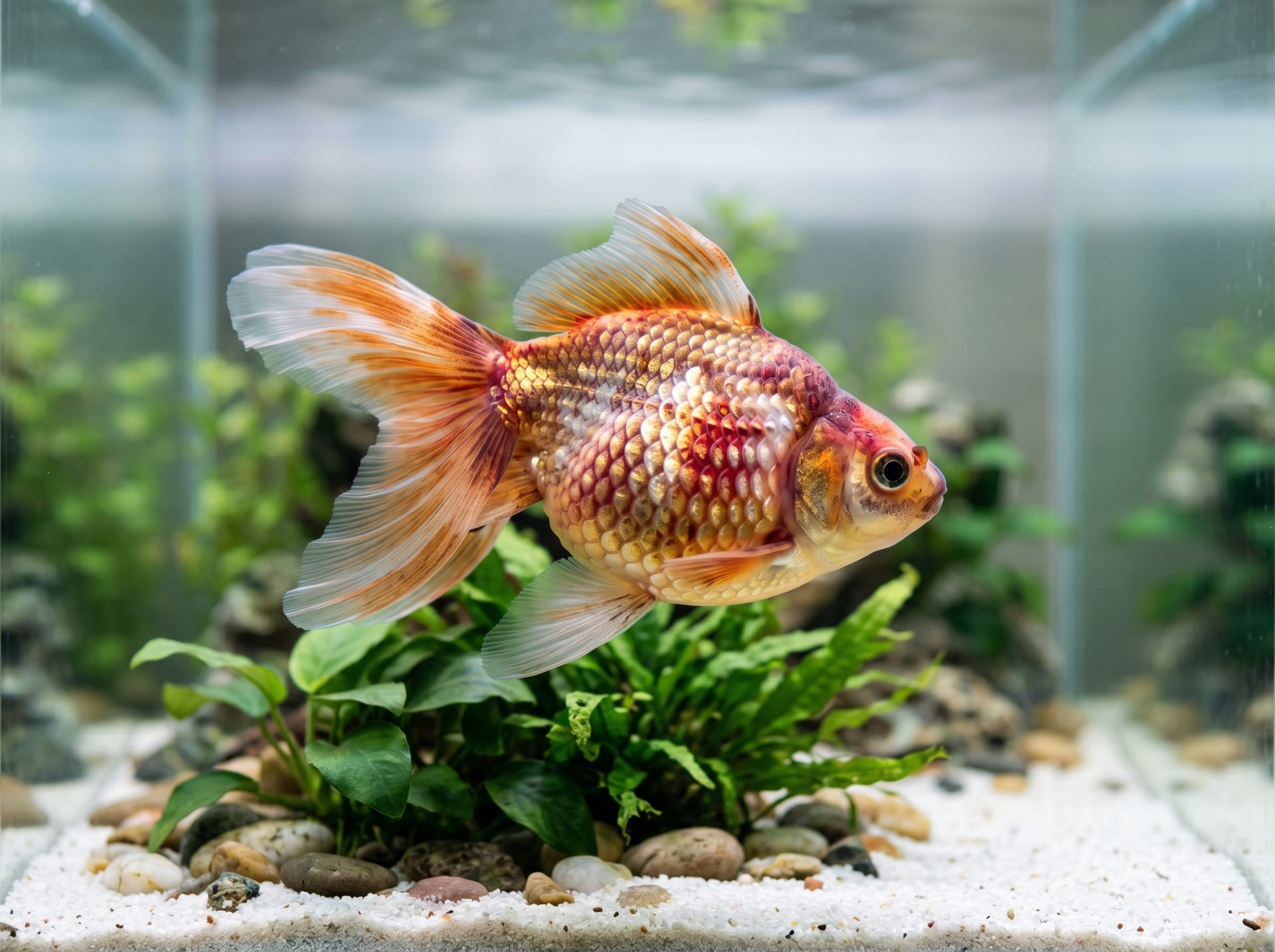
Characterized by a perfectly spherical body like a ping pong ball and lustrous scales resembling pearls (pearl scales). Originally from China, many domestic breeders have developed this variety through selective breeding.
Item
Details
Body Length
5–10 cm (Adult)
Body Shape
Extremely round, No dorsal fin
Scales
Pearl scales (raised scales)
Swimming
Extremely slow (short fins)
Water Temperature
15–28°C (Sensitive to low temperatures)
Optimal pH
7.0–8.0
Care Precautions:
- Minimize Water Current: Poor swimmers that become stressed by strong currents. Use sponge filters or hang-on filters set to low flow.
- Temperature Control: Sensitive to temperatures below 10°C. Year-round indoor breeding is essential.
- Swim Bladder Disease Risk: Their spherical body shape frequently causes swim bladder disorders, making them prone to flip disease (floating at the surface unable to swim properly).
- Water Quality Management: Their large bodies and slow digestion require careful feeding to avoid overfeeding.
Preventing Flip Disease:
- Feed sparingly (1–2 times daily, amounts consumed within 2–3 minutes)
- Avoid sudden temperature changes
- Use low-protein, high-fiber feed
Oranda (Dutch Lionhead)
Care Difficulty: ★★★☆☆ (Intermediate)
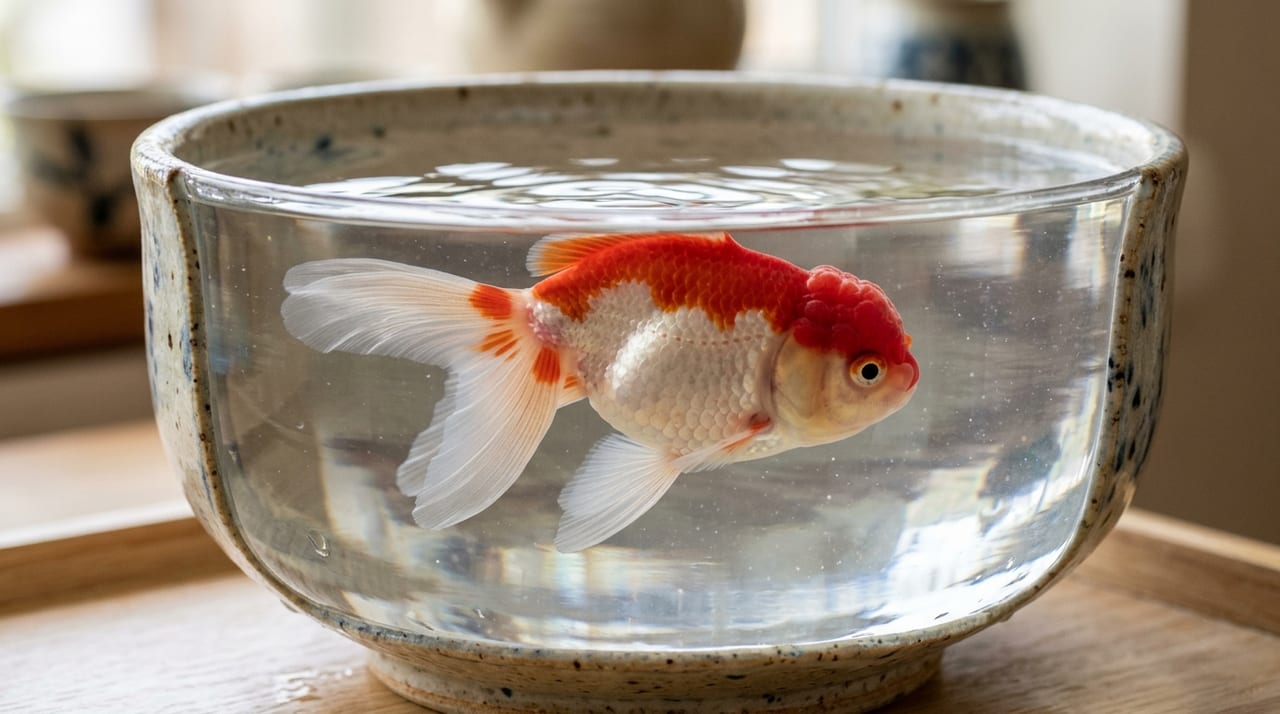
Distinguished by a head growth called "wen" (fleshy protrusion). The development of the wen is the key quality indicator, with larger, more developed wens commanding higher prices.
Item
Details
Body Length
20–30 cm (Adult)
Body Shape
Rounded body, With dorsal fin
Wen
Large protrusion covering the entire head
Swimming
Somewhat slow (less capable than wakin, but swims)
Water Temperature
10–28°C (Cold-hardy)
Tips for Developing a Larger Wen:
- Increase feeding during growth period (fry to 1 year old)
- Provide high-protein live food and specialty feed
- Maintain water temperature at 20–25°C (slower development if too cold)
- Breed in spacious tanks/ponds (allows unrestricted growth)
Care Precautions:
- Wen may compress eyes (watch for eye injuries and inflammation)
- Requires 60+ cm tank due to large size
- May lose food competition if kept with wakin goldfish
Ranchu
Care Difficulty: ★★★★★ (Advanced/Show Competition Level)
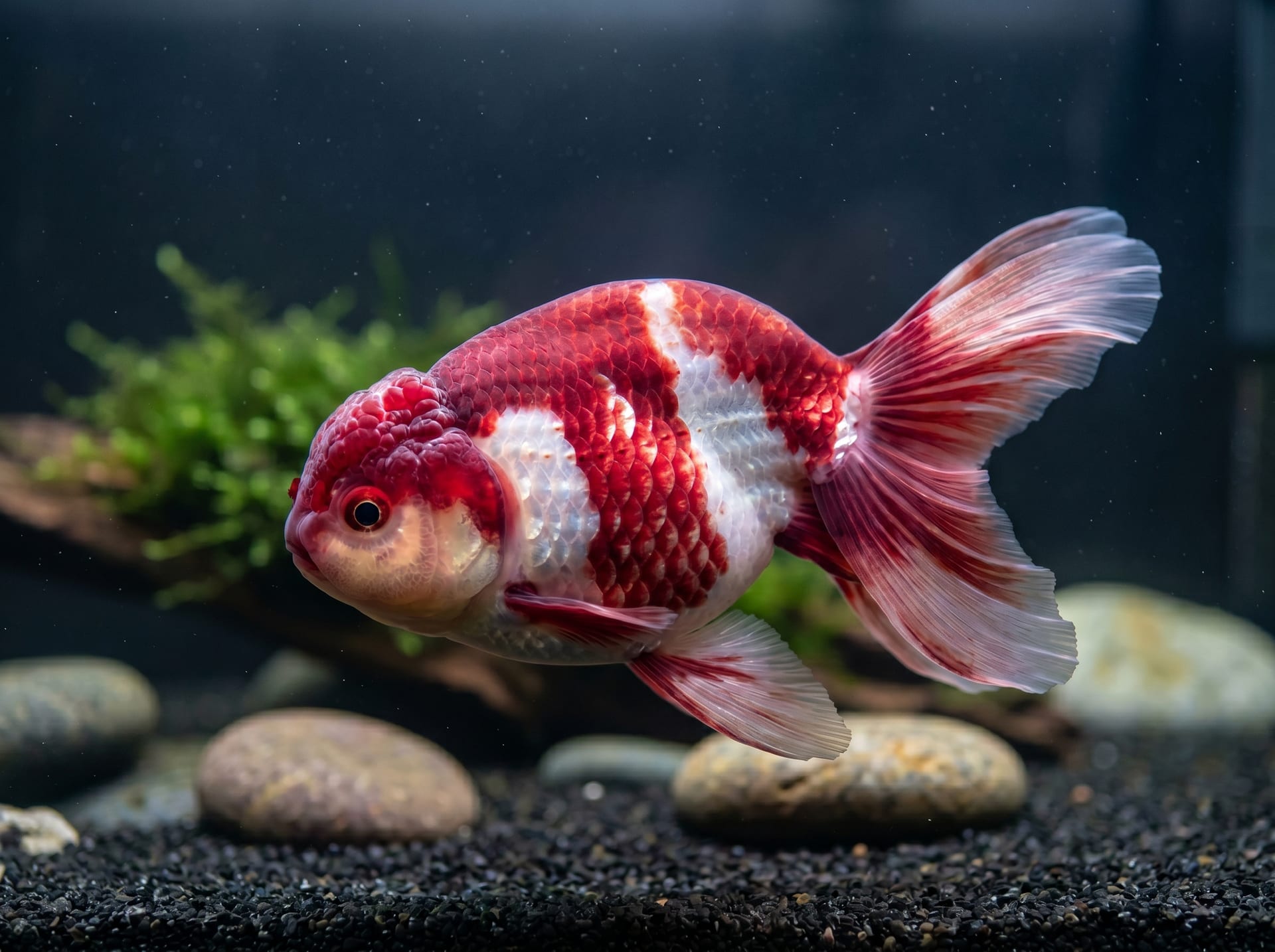
The premier variety most valued in Japanese goldfish competitions. Lacking a dorsal fin with a flat head wen and distinctive compact body shape, it possesses unique beauty.
Item
Details
Body Length
15–25 cm
Body Shape
Round, compact body, No dorsal fin
Wen
Develops on head (especially around eyes and crown)
Swimming
Slow, sensitive to water currents
Water Temperature
15–25°C (Sensitive to both high and low temperatures)
Breeding Form
Top view (uwami) is standard (specialized trough containers/shallow basins)
Ranchu Breeding Characteristics:
- Top-View Breeding: Viewed from above rather than the side. Bred in shallow containers (trough, breeding basins).
- Avoid Overcrowding: Requires 10–15L+ water per fish
- Minimal Water Current: Many use only air stones for oxygen supply
- Show Specimen Management: Body shape, wen, scale alignment, and coloration are all evaluation criteria
Show Competition Evaluation Criteria (Overview):
1. Body Shape (roundness, balance)
2. Wen (size, form, bilateral symmetry)
3. Scale Alignment (proper scale arrangement)
4. Coloration (clear boundaries in patterns like calico or solid red)
5. Swimming (elegance of swimming posture)
Asuma Nishiki (East Brocade)
Care Difficulty: ★★★☆☆ (Intermediate)
A variety born from crossing Oranda with Calico. Distinguished by a head wen and three-color calico pattern (red, white, black, and blue).
Celestial Eye and Water Bubble Eye
Care Difficulty: ★★★★☆ (Difficult)
Celestial Eye: Eyes directed upward (can only see upward), a specialized variety
Water Bubble Eye: Transparent fluid-filled sacs (bubbles) attached below the eyes, a specialized variety
These varieties have limited vision, making food difficult to find and extremely sensitive to water currents. They require meticulous care.
Summary of Breeding Difficulty by Variety
Variety
Difficulty
Main Challenges
Beginner-Friendly
Oranda
★★★☆☆
Large size, feeding management
○ (From intermediate)
Asuma Nishiki
★★★☆☆
Color maintenance, feeding
○ (From intermediate)
Ping Pong Pearl
★★★★☆
Flip disease, temperature control
△ (Knowledge required)
Celestial/Water Bubble Eye
★★★★☆
Feeding difficulty, current response
△ (For experienced keepers)
Ranchu
★★★★★
All management aspects difficult
✕ (Advanced only)
Common Precautions for Fancy Goldfish Care
Temperature Control
Fancy goldfish generally prefer temperatures of 25–28°C. Especially for spherical and current-sensitive varieties, drastic temperature fluctuations (3°C+ variation daily) cause health deterioration.
Feeding
Round-bodied goldfish have compressed digestive organs, making them prone to indigestion.
- Limit to 2 feedings daily, amounts consumed within 2–3 minutes
- Minimize high-fat, high-protein feeds
- Soften dried feed in water before feeding for easier digestion
Filters and Water Current
Fancy goldfish are sensitive to water currents, requiring careful arrangement to avoid strong flows.
Sponge filters (airlift style) are ideal for goldfish tanks
If using external filters, reduce flow or angle shower pipes toward the water surface to disperse current
Tank Size
Variety
Minimum Tank Size (1 fish)
Recommended
Ping Pong Pearl
30–45 cm
60 cm
Oranda
60 cm
90 cm
Ranchu
80L+ trough
120L+ trough
Conclusion
Breeding fancy goldfish requires greater care precision than ordinary wakin or common goldfish. Ping Pong Pearls specifically require flip disease management and temperature control, while Ranchu demand top-view breeding and show competition standard management.
The unique beauty and charm of each variety make the care effort worthwhile. When attempting fancy goldfish, beginning with Oranda or Asuma Nishiki to develop breeding skills, then gradually progressing to more difficult varieties, is the key to long-term success.