Butterfly Tail Goldfish Care Guide | Characteristics of Flowing Double Tails, Swimming Habits & Tank Management Tips
Explanation of Butterfly Tail Goldfish characteristics, breeding environment, water quality management, tankmate compatibility, and disease prevention. A complete guide to this beautiful fin-tailed species that differs from Telescope Eye goldfish and is suited to top-down viewing style.
Key Takeaways
Explanation of Butterfly Tail Goldfish characteristics, breeding environment, water quality management, tankmate compatibility, and disease prevention. A complete guide to this beautiful fin-tailed species that differs from Telescope Eye goldfish and is suited to top-down viewing style.
Related Species


What is a Butterfly Tail Goldfish?
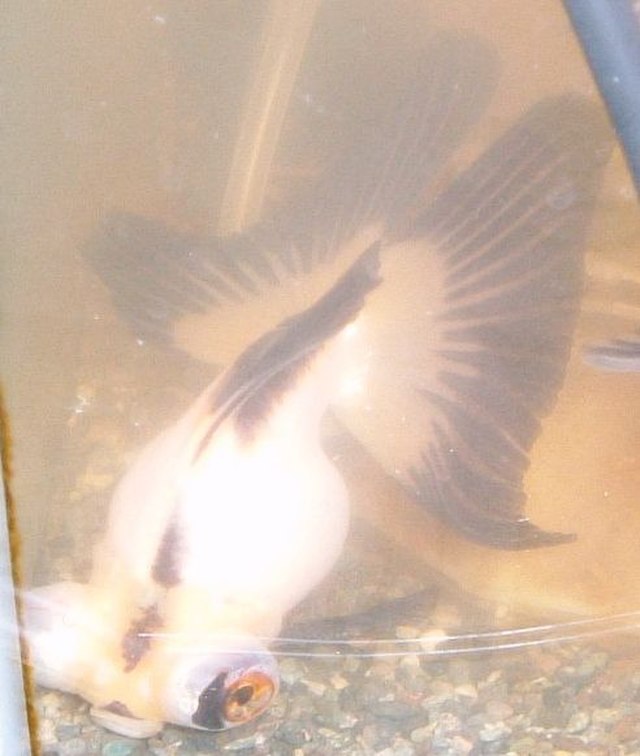
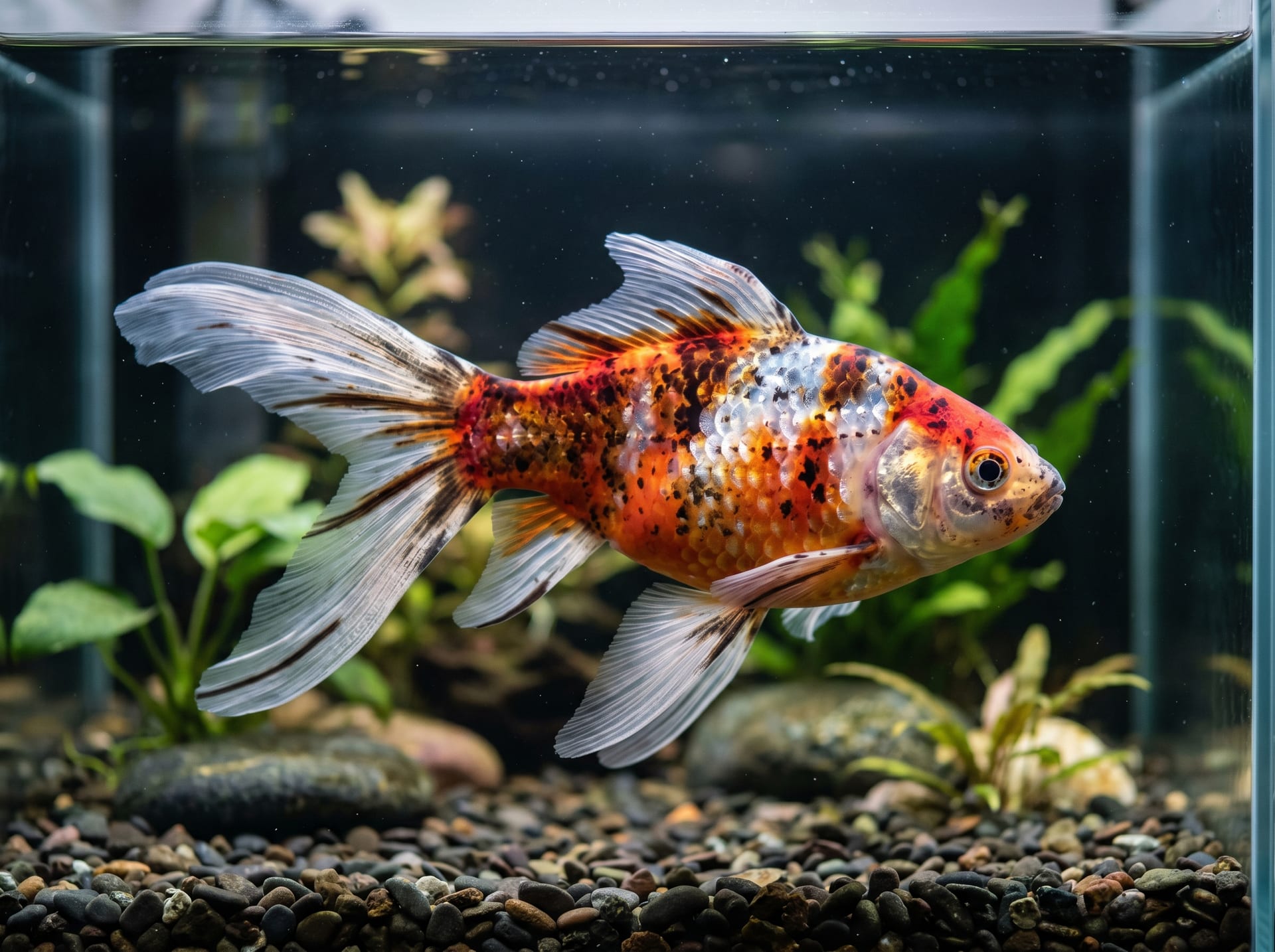
The Butterfly Tail (chobi) is a goldfish breed named for how its tail fins appear like a butterfly spreading its wings when viewed from directly above. In English, it's called "Butterfly Tail Goldfish," and it originated as a selectively bred variety from China, gaining attention in Japan in recent years.
Its defining feature is symmetrical, widely-spreading tail fins. When viewed from the side, the tail extends horizontally, and from above, it forms a beautiful butterfly shape. This dual-perspective tail shape is unique among goldfish, and it's particularly striking in "top-down viewing"—viewing from above.
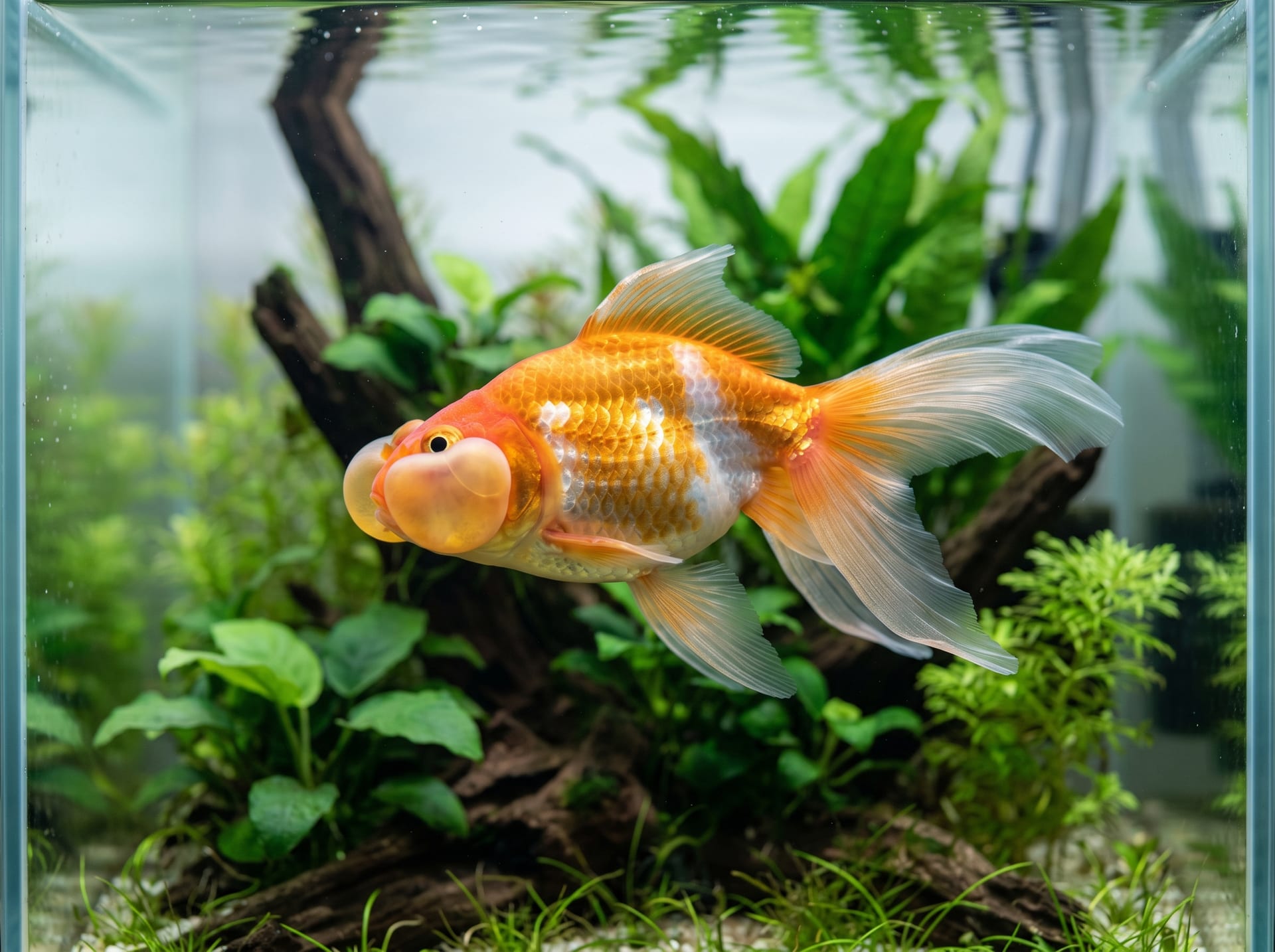
Its body shape often follows the Telescope Eye goldfish lineage, with protruding eyes (telescopic eyes) being typical. The body is usually round and ryukin-like in shape, with slow, leisurely swimming.
Differences from Telescope Eye Goldfish
Although Butterfly Tail and Telescope Eye goldfish are sometimes confused, they are distinct breeds.
| Aspect | Butterfly Tail | Telescope Eye (Demekin) |
|---|---|---|
| Tail Shape | Horizontally-spreading butterfly-like | Drooping 4-fin or 3-fin tail |
| Viewing Style | Top-down viewing especially striking | Side viewing most common |
| Body Type | Round, ryukin-like | Distinctive round belly |
| Eyes | Protruding telescopic eyes (common) / normal eyes also exist | Protruding telescopic eyes |
| Availability | Relatively rare | Commonly available in trade |
The criterion for identifying a Butterfly Tail is the tail fin shape; it's crucial to clearly see the butterfly wing form when viewed from above. The tail fin's edge should extend horizontally to the water surface. In competitions, symmetry, width, and spread are judged.
Setting Up the Tank Environment
Tank Size
For 1-2 fish, you can start with a standard 60cm tank (approximately 57 liters). Since they swim slowly, a very large tank isn't necessary, but as adults can exceed 15-20cm, consider upgrading to a 90cm tank in the future.
For top-down viewing, you can also use plastic troughs or large basins. Shallow containers with wide footprints are ideal for top-down viewing and bring out this breed's full appeal.
Filtration
Round-bodied goldfish tend to have weak digestive systems and are sensitive to water quality deterioration. Use high-capacity filtration systems such as external or hang-on-back filters.
I strongly recommend setting water flow to be gentle. Strong currents cause fatigue in slow-swimming Butterfly Tails. Combining with sponge filters or covering the outlet with a sponge to diffuse flow is also effective.
Water Quality Parameters
- Temperature: 15-25°C (ideal). Be aware of high summer temperatures (over 30°C)
- pH: 7.0-8.0
- Ammonia/Nitrite: 0 ppm
- Nitrate: Aim for below 20 ppm (manage with regular water changes)
- Chlorine: Remove completely (dechlorinator essential)
Perform 1/3 water changes 1-2 times weekly to maintain stable water quality.
Feeding and Digestive Care
A common issue with round-bodied goldfish is swim bladder disorder (flipover disease). Butterfly Tails face similar risks, so special feeding care is necessary.
Recommended Feeding Method:
- Use sinking pellets (floating food causes them to ingest air, increasing swim bladder disorder risk)
- Feed only what they'll consume in 2-3 minutes per feeding
- Feed twice daily (morning and evening)
Swim Bladder Prevention Tips:
- Feeding frozen live food (brine shrimp, daphnia) 1-2 times weekly promotes digestion
- Softening dry food in water before feeding improves absorption
- Setting a fasting day (once weekly) is also standard care practice
During hot summers, digestion improves so you can increase feeding, but in winter (below 10°C), reduce feeding significantly, and stop feeding entirely when temperatures drop below 5°C.
Tankmate Considerations
Butterfly Tails aren't suited to living with active, fast-swimming goldfish due to their slow speed and large fins.
Compatible Tankmates:
- Other Butterfly Tails
- Telescope Eye Goldfish
- Pearl Scale Goldfish (similar swimming speed)
- Bubble-eye and Celestial Eye varieties (similarly weak vision and slow swimming)
Avoid:
- Wakin and Comet goldfish (quickly steal food)
- Kohaku goldfish (too active)
- Mixing with koi (size disadvantage)
Additionally, Butterfly Tails with telescopic eyes have weak vision, so they may miss food during feeding. Use sinking food and monitor to ensure weaker individuals are eating enough.
Common Diseases and Treatment
Swim Bladder Disorder A condition where abnormal swim bladder function causes the fish to flip sideways or upside down at the surface. Digestive problems are the main cause. Recovery is sometimes possible by raising water temperature to 24-25°C (using a heater), fasting for 2-3 days, then offering small amounts of sinking food or vegetables (like blanched spinach).
Ich (White Spot Disease) Occurs with sudden temperature changes or immune system weakness. Standard treatment is raising water temperature to 28-30°C for about one week while performing salt baths (0.5% salinity).
Gill Disease An illness where parasites or bacteria infect the gills, causing respiratory distress. Early detection is crucial—if you see gasping or the fish lingering near the surface, immediately perform water changes and quarantine.
Purchasing and Selecting Butterfly Tails
Butterfly Tails are rarely seen in general tropical fish shops; purchasing from goldfish specialists or breeders directly is recommended. While online purchases are possible, you can't assess condition, so in-person purchasing is ideal.
Selection Criteria:
- Tail Symmetry — Do they spread equally on both sides? (Asymmetry is considered defective)
- Telescopic Eye Size — Are the eyes equally protruding on both sides?
- Body Shape — Is it rounded rather than overly elongated?
- Swimming Condition — Is it actively swimming, not lethargic?
- Color — Choose your preferred coloration: calico (red and white), black, black-and-calico, etc.
Summary
Butterfly Tail goldfish are appealing for their unique beautiful tail fins and a new viewing style enjoyed from above. With slow, gentle swimming, they make suitable quiet ornamental fish for indoor keeping. Managing swim bladder disorder risk and water quality maintenance are key to care, but with proper attention, they can live long lives (5-10+ years). Enjoy exploring the deep world of Butterfly Tails through direct purchases from breeders and participation in competitions.