How to Distinguish Male and Female Goldfish | Sex Differentiation by Breed Including Ranchu, Ryukin, and Telescope Eyes
Explaining how to distinguish male and female goldfish. In addition to three key points—spawning stars, abdomen, and vent—we introduce breed-specific tips for ranchu, ryukin, telescope eyes, ping-pong pearls, and practical steps for pairing breeding pairs.
Key Takeaways
Explaining how to distinguish male and female goldfish. In addition to three key points—spawning stars, abdomen, and vent—we introduce breed-specific tips for ranchu, ryukin, telescope eyes, ping-pong pearls, and practical steps for pairing breeding pairs.
Related Species
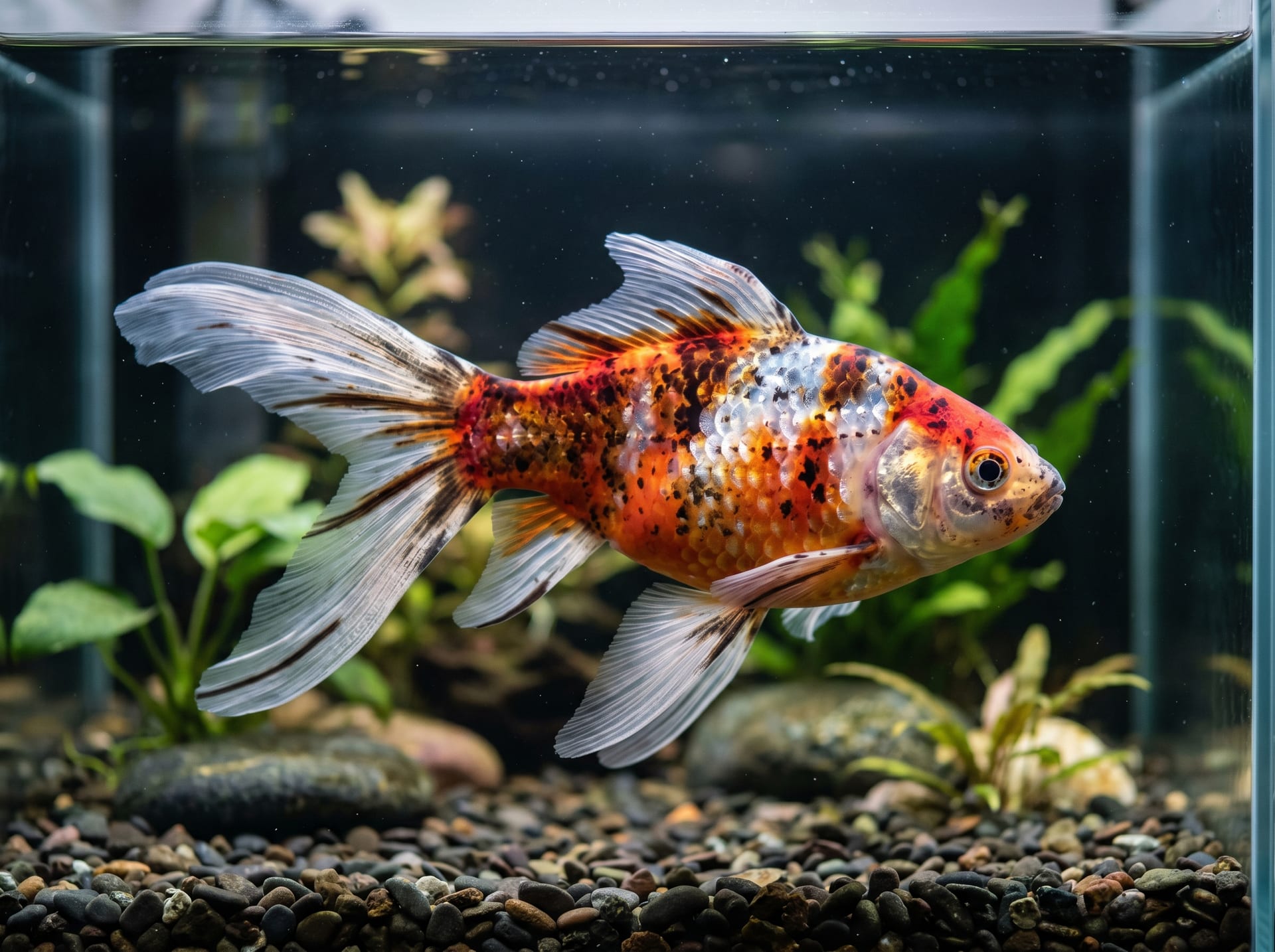

Why Sex Determination of Goldfish Is Important
For those engaged in goldfish breeding or enthusiasts who enjoy breeding, knowing how to distinguish males from females is essential knowledge. By accurately determining sex, planned breeding becomes possible and spawning-related troubles can be prevented in advance. Conversely, if pairs are formed with incorrect sex identification, not only will spawning fail to occur, but the individuals may be injured by the stress of males chasing each other.
Goldfish are weakly sexually dimorphic (males and females do not look dramatically different), so there are few characteristics that are "obvious at a glance." Accurate determination requires observing multiple points in combination.
Spawning Stars (Oiboshi) During Breeding Season Are the Most Reliable Sign
The most reliable way to distinguish males from females is by the spawning stars (oiboshi) that appear on the surface of males' bodies during breeding season (spring to early summer). Spawning stars are structures consisting of densely packed small white bumpy protrusions that appear on the gill covers and front edges of the pectoral fins, and are seen only on sexually mature males during breeding season.
Spawning stars typically appear around February to April when water temperature begins to rise from around 15°C and become most prominent from April to June when peak water temperature is reached. In indoor aquariums maintaining constant water temperature, spawning stars may not appear easily, so caution is necessary.
Spawning stars are easily confused with white spots from ichthyophthirius multifiliis (Ich). The differences between the two are as follows.
| Feature | Spawning Star | Ich White Spot |
|---|---|---|
| Shape | Fine, hard bumps | White spots like dusted powder |
| Location | Only gill covers and front edges of pectoral fins | Spreads across entire body |
| Touch | Rough texture | Easily flakes off |
| Seasonality | Appears in spring to early summer | Appears year-round |
Ich spreads across the entire body and is accompanied by deterioration of condition such as heavy breathing. In contrast, spawning stars appear only on specific areas in regular patterns and on healthy individuals.
Morphological Distinctions Usable Outside Breeding Season
Outside breeding season or before spawning stars appear, distinction is made by morphological differences in body shape. However, as these vary among individuals, the rule is to judge based on multiple points.
Male and Female Characteristics Quick Reference Table
| Observation Point | Male | Female |
|---|---|---|
| Spawning Star (breeding season) | White bumps on gill covers and front edges of pectoral fins | None |
| Abdomen | Slender and streamlined | Plump and rounded (prominent when carrying eggs) |
| Vent | Small and elongated, parallel to body | Large and round, slightly protruding |
| Pectoral Fin (breed-dependent) | Pointed at tip | Rounded |
The most reliable is the "spawning star" during breeding season. When spawning stars are not present, judgment is made by combining observations of abdomen, vent, and pectoral fins.
Abdominal Shape
As spawning season approaches, female abdomens become swollen with eggs and may become asymmetrical. Particularly when observed from the side, females have plump abdomens with rounded contours compared to males. Conversely, males typically have relatively slender body shapes, though this varies by breed.
Ryukin and round-bodied varieties (such as telescope eyes and ping-pong pearls) have naturally spherical body shapes, making abdominal differences difficult to distinguish, but females carrying eggs during breeding season show clear abdominal swelling.
Vent (Anal Opening) Shape
One of the most reliable morphological characteristics is the shape of the vent (anus).
- Female: Vent is large, rounded, and slightly protruding outward (because the oviduct opens outward)
- Male: Vent is small, elongated, and oriented parallel to the body
To observe, lift the goldfish sideways in water or place it on a white tray and observe from underwater. Differences become apparent during breeding season, but may be difficult to discern outside breeding season.
Pectoral Fin Shape (Breed-Specific)
In some breeds, pectoral fin shape differs by sex.
- Male: Pectoral fin tips may be pointed
- Female: Pectoral fins may be rounded
However, this characteristic shows significant individual variation between breeds and is not suitable for judgment alone. Use it only in combination with observations of spawning stars, abdomen, and vent shape.
Sex Differentiation by Goldfish Breed
How to apply the three basic points (spawning stars, abdomen, vent) varies by breed. Here we compile practical tips for commonly searched breeds.
How to Distinguish Male and Female Ranchu
Ranchu are difficult to distinguish among goldfish breeds. Spawning stars (gill covers and front edges of pectoral fins) during breeding season are most reliable, and body shape is used as a supplement where males tend to have thick, muscular caudal pedestals (tail bases) while females develop roundness in the abdomen. The hood (cranial growth) is said to develop more prominently in males, but individual variation is large, making judgment based on hood alone impossible. Determining sex in young fish (first-year fish) is difficult even for professionals, so determination during breeding season at age 2 and beyond is more practical.
How to Distinguish Male and Female Ryukin
Because ryukin naturally have rounded abdomens, abdominal swelling is not a reliable indicator. Prioritize spawning stars during breeding season and vent shape. When viewed from above, an obvious sign is when egg-bearing females have asymmetrical bulging on either side of the abdomen.
How to Distinguish Male and Female Telescope Eyes
Individual variation in body shape is large, making spawning stars and vent shape the practical indicators. Because eyes are large, observing the head is difficult, so spawning stars are better seen by holding a light source to the front edge of the pectoral fins rather than the gill covers.
How to Distinguish Male and Female Ping-Pong Pearls
Because of their spherical body shape, abdominal distinction is extremely difficult. Spawning stars during breeding season are virtually the only reliable sign, with vent shape used as supplementary evidence. Wait patiently for breeding season before making a determination.
How to Distinguish Male and Female Wakin, Comet, and Kohaku
These are the easiest group to distinguish because of their crucian carp-like body shape. Differences in abdominal roundness and pectoral fin shape are pronounced, and spawning stars clearly appear during breeding season. This group is ideal for practicing sex determination for the first time.
Quick Reference Table of Effective Sex Differentiation Points by Breed
| Breed | Spawning Star | Abdomen | Vent | Difficulty |
|---|---|---|---|---|
| Wakin, Comet | ◎ | ◎ | ○ | Easy |
| Ryukin | ◎ | △ | ○ | Medium |
| Telescope Eyes | ◎ | △ | ○ | Medium |
| Ranchu | ◎ | △ | ○ | Difficult |
| Ping-Pong Pearl | ◎ | × | △ | Most Difficult |
Practical Steps for Sex Determination
Here we compile the steps for accurate sex determination as a breeder.
Step 1: Manage Water Temperature Before Breeding Season
For indoor aquariums, lower water temperature to around 12-15°C in winter and gradually raise it in spring to encourage spawning star appearance. For outdoor tanks, rely on natural seasonal changes.
Step 2: Confirm Spawning Stars During Breeding Season (Water Temperature 15-25°C)
Observe the gill covers and front edges of the pectoral fins under light. If white bumpy spawning stars are confirmed, it is definitely male.
Step 3: Confirm Abdomen and Vent Shape as Supplementary Check
For individuals without spawning stars, judge by combining observations of abdominal swelling and vent shape.
Step 4: Synthesize Multiple Observation Points
Do not judge based on a single characteristic, but reach a final conclusion by synthesizing 3-4 points.
Tips for Pairing in Breeder Practice
Once sex determination is confirmed, proceed to pairing for breeding. The general ratio is 1-2 males: 1 female as a baseline. If there are too many males, chasing becomes too vigorous, potentially injuring females or causing spawning failure due to excessive stress.
During breeding season, prepare a separate pairing tank and introduce the pair with spawning substrate (palm fiber, aquatic plants, or artificial spawning media) installed. Spawning is typically observed the next morning to within 2-3 days, and removing the parent fish to a separate tank immediately after spawning prevents egg predation.
Accurate sex determination and proper pairing are the first step toward consistently producing high-quality fry as a goldfish breeder.
Frequently Asked Questions
Can goldfish male and female identification be done outside breeding season?
It is possible, but accuracy decreases. Outside breeding season, spawning stars do not appear, so judgment is based primarily on abdominal roundness and vent shape. The most reliable way to distinguish males from females is by spawning stars in spring to early summer, so if there is no rush, waiting until breeding season for determination is more certain.
Are there males that do not develop spawning stars?
Yes, there are. Young fish before sexual maturity and fish in indoor environments with nearly constant year-round water temperature are less likely to develop spawning stars. Having them experience a "seasonal cycle" by lowering water temperature to around 12-15°C in winter and raising it in spring makes them more likely to appear.
From what age can male and female goldfish be distinguished?
From around 1-2 years of age when sexual maturity is reached is the guideline. Determining sex in young fish born that year is difficult whether by body shape or spawning stars, and even veteran breeders cannot determine it with certainty.
Which grows larger, males or females?
Under the same conditions, females tend to appear somewhat larger with more developed abdominal girth, but breed differences, feeding amounts, and rearing environment have far greater influence, so sex cannot be determined by size alone.