Source: Wikimedia Commons
Tomato Frog
BeginnerDyscophus antongilii
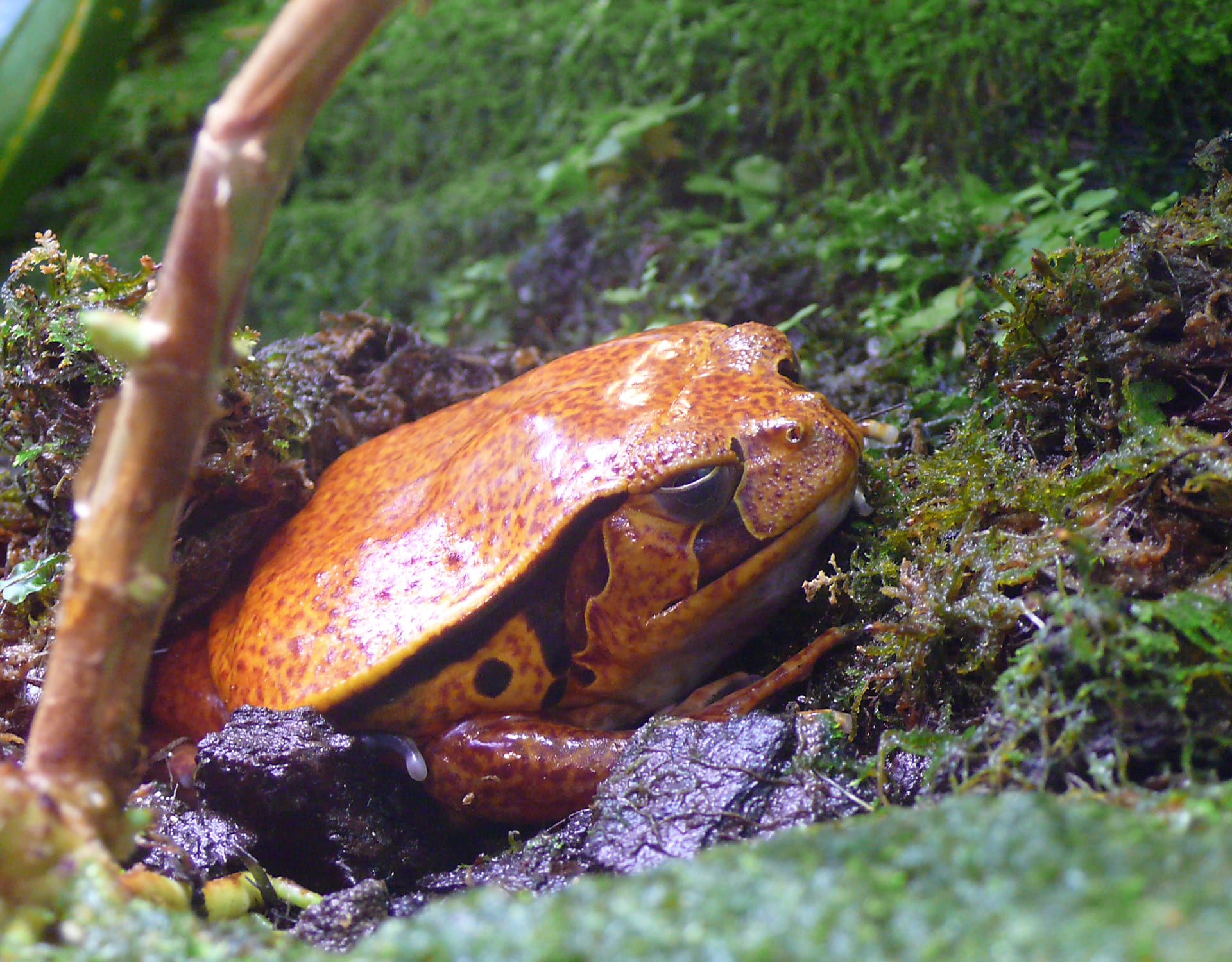
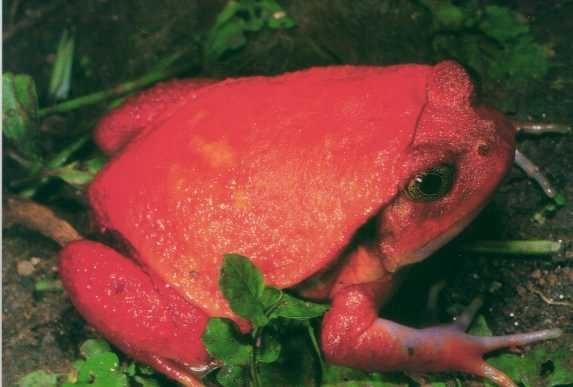
A terrestrial frog endemic to the Antongil Bay area of north-eastern Madagascar. It shows the brightest red of the genus, and females reach 11 cm. When provoked it inflates the body and secretes a white sticky substance from the skin.
Difficulty
Beginner
Temperature
24〜27℃
Lifespan
3 to 12+ years in captivity
Size
6-11cm
Humidity
70%
Diet
Crickets, earthworms and other insects
About
Dyscophus antongilii is a terrestrial microhylid endemic to the Antongil Bay region of north-eastern Madagascar. Females are far larger, reaching 10.5 cm and 230 g, while males stay around 6.5 cm and 41 g. It shows the brightest orange-red of the genus, with a pale underside and sometimes black throat spots. The vivid colour is thought to warn predators, and a white sticky secretion is released from the skin when the frog is provoked; it deters snakes and can trigger an allergic reaction in people. Breeding follows heavy rain in February and March, when females lay 1,000 to 1,500 eggs in shallow pools. Heavy collection once put the species on CITES Appendix I; it was transferred to Appendix II in 2017.
Source: Wikipedia (CC BY-SA 4.0)
Lifespan of the Tomato Frog
The Tomato Frog lives 3 to 12+ years in captivity.
Size of the Tomato Frog
The Tomato Frog grows to 6-11cm.
Temperature & humidity for the Tomato Frog
The ideal temperature for the Tomato Frog is 24〜27℃. Ideal humidity is 70%.
Keep it in a terrarium at 24-27 C by day with a night drop to about 18 C and humidity above 70%.
Basic Info
Origin
North-eastern Madagascar (Antongil Bay south to Andevoranto, up to 200 m elevation)
Lifespan
3 to 12+ years in captivity
Care Specifications
PeacefulGroupBreeding: Hard
Sources: Amphibian Care: Tomato Frog / Animal Diversity Web: Dyscophus antongilii / Wikipedia (English)
References & Sources
Edited & verified by: BreederDirect editorial team
The taxonomic, regulatory, and husbandry data on this page are compiled and verified against the authoritative primary sources below.
Taxonomy & Authority
Accepted name: Dyscophus antongilii Grandidier, 1877
Synonyms: Discophus antongili Grandidier, 1877, Dyscophus insularis antongilii Grandidier, 1877
Authority databases: GBIF
Nomenclature follows global taxonomic authority databases.
Regulations & Conservation Status
CITES Appendix IIIUCN LC · Least Concern
Listed on Appendix I in 1987, but transferred to Appendix II at CoP17 in 2016, effective January 2, 2017 (Species+). As it is listed on Appendix II, no international endangered species certificate is required.
Sources: CITES Appendices (トマトガエル属 Dyscophus spp. 附属書II、2017年1月2日発効) / IUCN Red List
Regulations may change. Always verify the latest information with the relevant authorities.
Tomato Frog Listings
Loading latest listingsFind listings for this species