Source: Wikimedia Commons
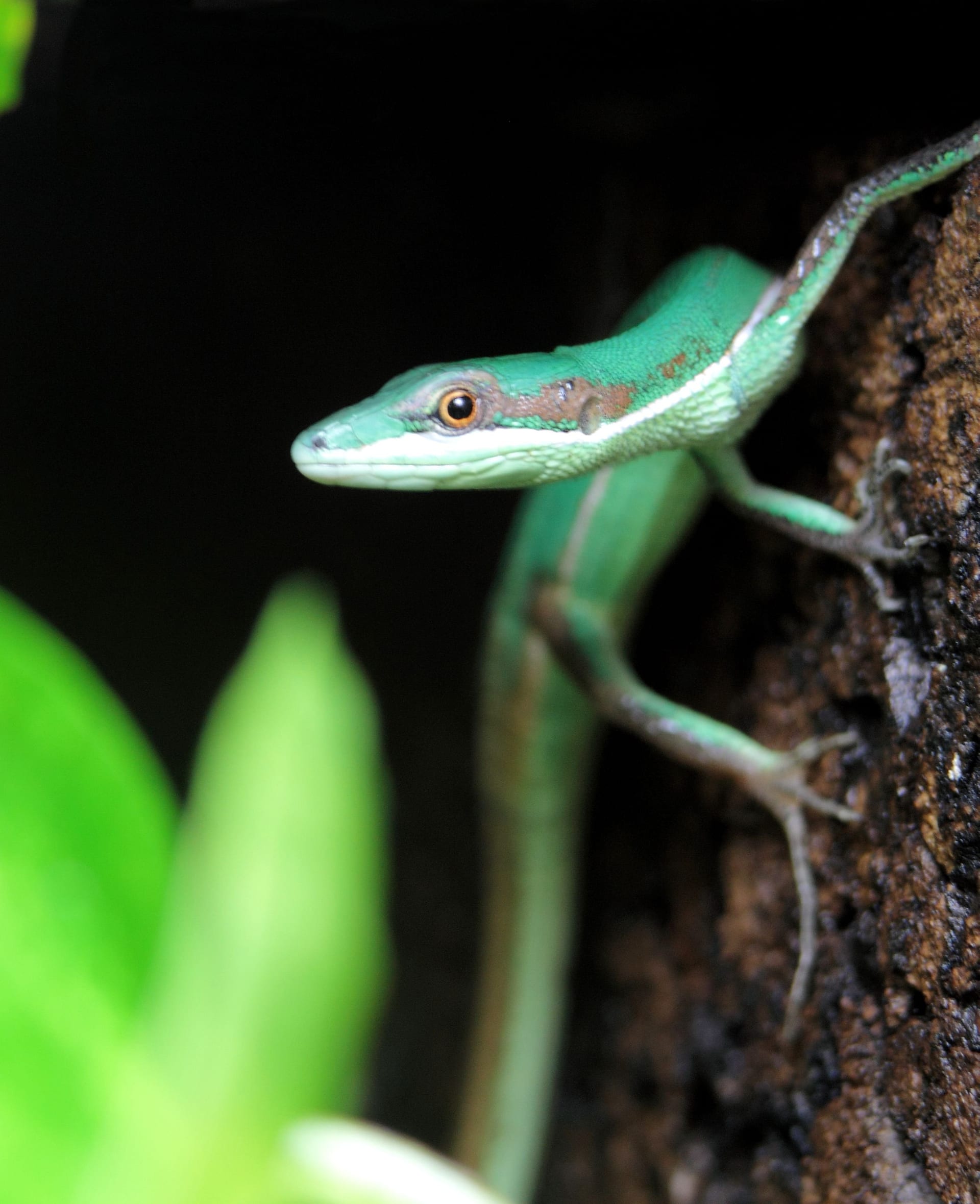
Green Grass Lizard
IntermediateTakydromus smaragdinus
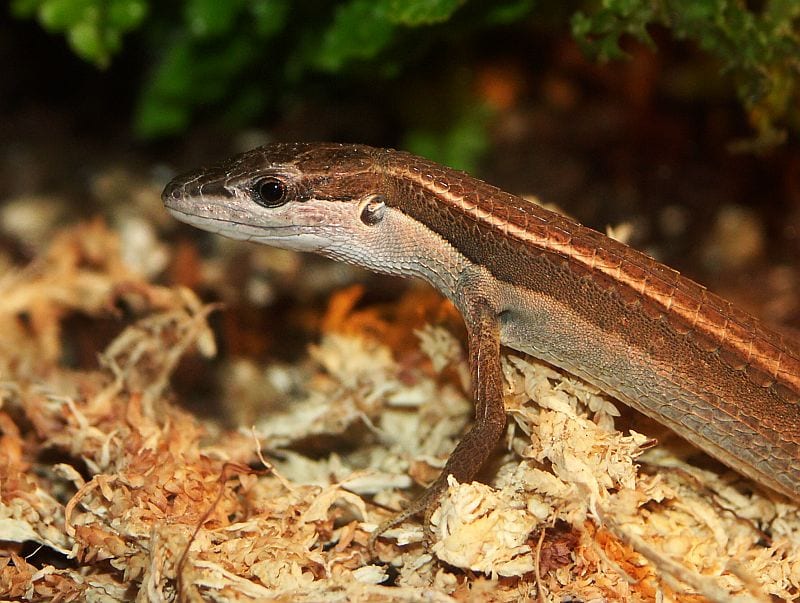
A grass lizard endemic to Japan (Amami, Okinawa and southern Tokara Islands). It is bright green with a white side stripe and uses its long tail, about three-quarters of its length, to climb grass and twigs.
Difficulty
Intermediate
Temperature
25〜32℃
Lifespan
Few data on lifespan in captivity
Size
20-28 cm total length (tail about three-quarters)
Humidity
40〜70%
Diet
Carnivore (insects, spiders, earthworms)
About
The green grass lizard is a Takydromus lacertid endemic to Japan, occurring in the Amami and Okinawa Islands and on Kodakarajima and Takarajima in the Tokara Islands. It reaches 20 to 28 cm in total length, and its tail makes up about three-quarters of that; it wraps the tail around grass and twigs to climb shrubs. Despite the Japanese name "ao" (blue), it is bright green, though brown individuals also occur. A white stripe runs from the snout along the flanks to the tail base; males have a brown band above the white stripe and a brown tail. The snout is slightly longer than in the Japanese grass lizard, and the dorsal scales are large and keeled. It is diurnal, living in grassland, forest, farmland and near houses from lowlands to mountains, and eats insects, spiders and earthworms. From March to August females lay several clutches of two eggs, which hatch in about a month, and young mature within a year. The IUCN lists it as Near Threatened because introduced weasels and mongooses have caused declines, and Japan's Ministry of the Environment lists the Okinoerabu and Tokunoshima populations as threatened local populations. Its congeners the Sakishima and Miyako grass lizards are protected National Endangered Species and are different species.
Source: Wikipedia (CC BY-SA 4.0)
Size of the Green Grass Lizard
The Green Grass Lizard grows to 20-28 cm total length (tail about three-quarters).
Basic Info
Origin
Endemic to Japan (Amami and Okinawa Islands, Kodakarajima and Takarajima)
Lifespan
Few data on lifespan in captivity
Size
20-28 cm total length (tail about three-quarters)
References & Sources
Edited & verified by: BreederDirect editorial team
The taxonomic, regulatory, and husbandry data on this page are compiled and verified against the authoritative primary sources below.
Primary sources
Taxonomy & Authority
Accepted name: Takydromus smaragdinus Boulenger, 1887
Synonyms: Tachysaurus japonicus Adams, 1848
Authority databases: GBIF · The Reptile Database: Takydromus smaragdinus · GBIF: Takydromus smaragdinus
Nomenclature follows global taxonomic authority databases.
Regulations & Conservation Status
Not CITES-listed
Not listed under CITES (no entry in Species+). It is not designated under the Act on Conservation of Endangered Species of Wild Fauna and Flora, but its congeners the Sakishima and Miyako grass lizards are National Endangered Species whose capture and transfer are in principle prohibited. The Ministry of the Environment lists the Okinoerabu and Tokunoshima populations as threatened local populations. Check local ordinances and natural-monument area rules before collecting in the wild, and never release captive animals.
Sources: Species+ search (Takydromus smaragdinus: no match) / Ministry of the Environment, Japan: list of National Endangered Species
Regulations may change. Always verify the latest information with the relevant authorities.
Green Grass Lizard Listings
Loading latest listingsFind listings for this species