Source: Wikimedia Commons
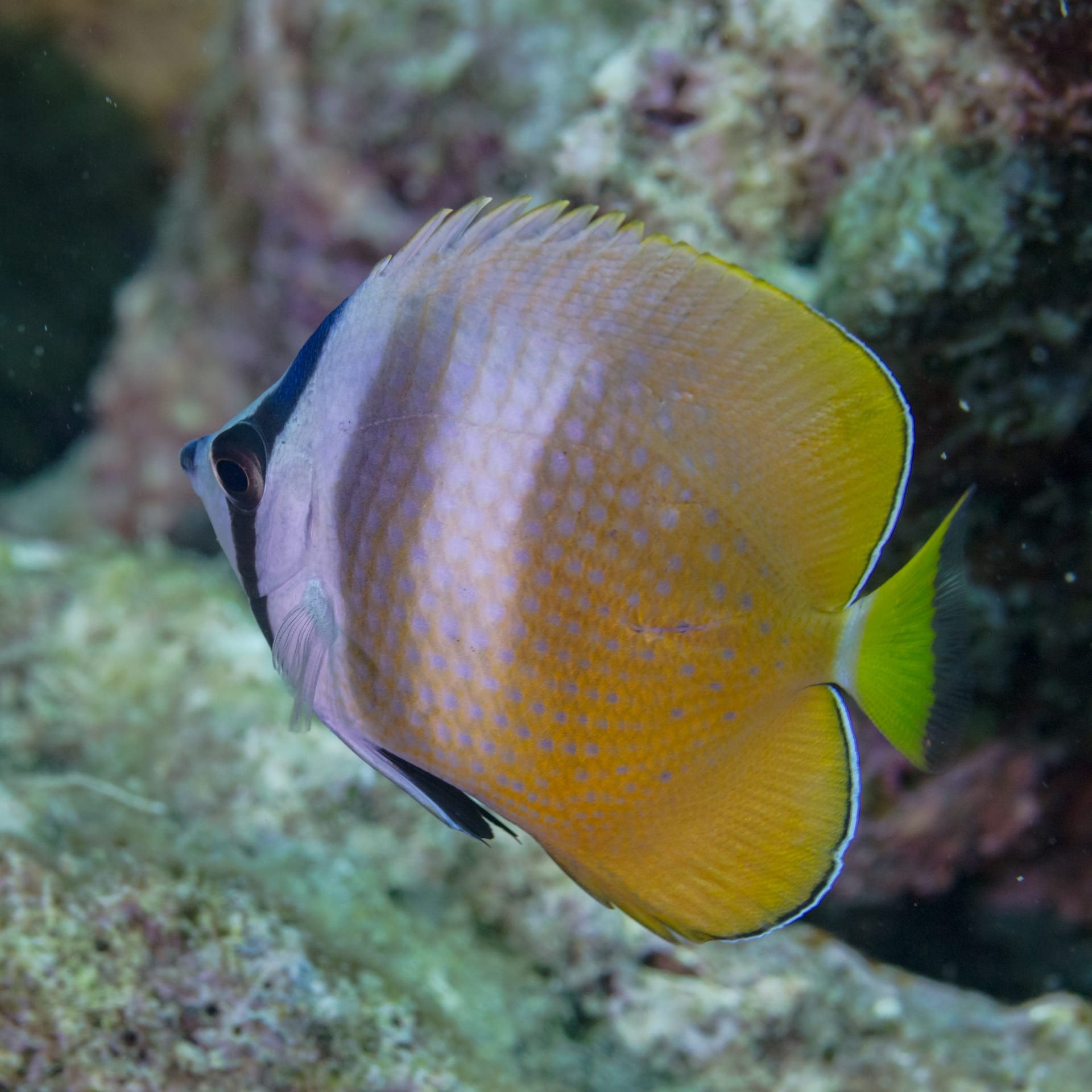
Sunburst butterflyfish
BeginnerChaetodon kleinii
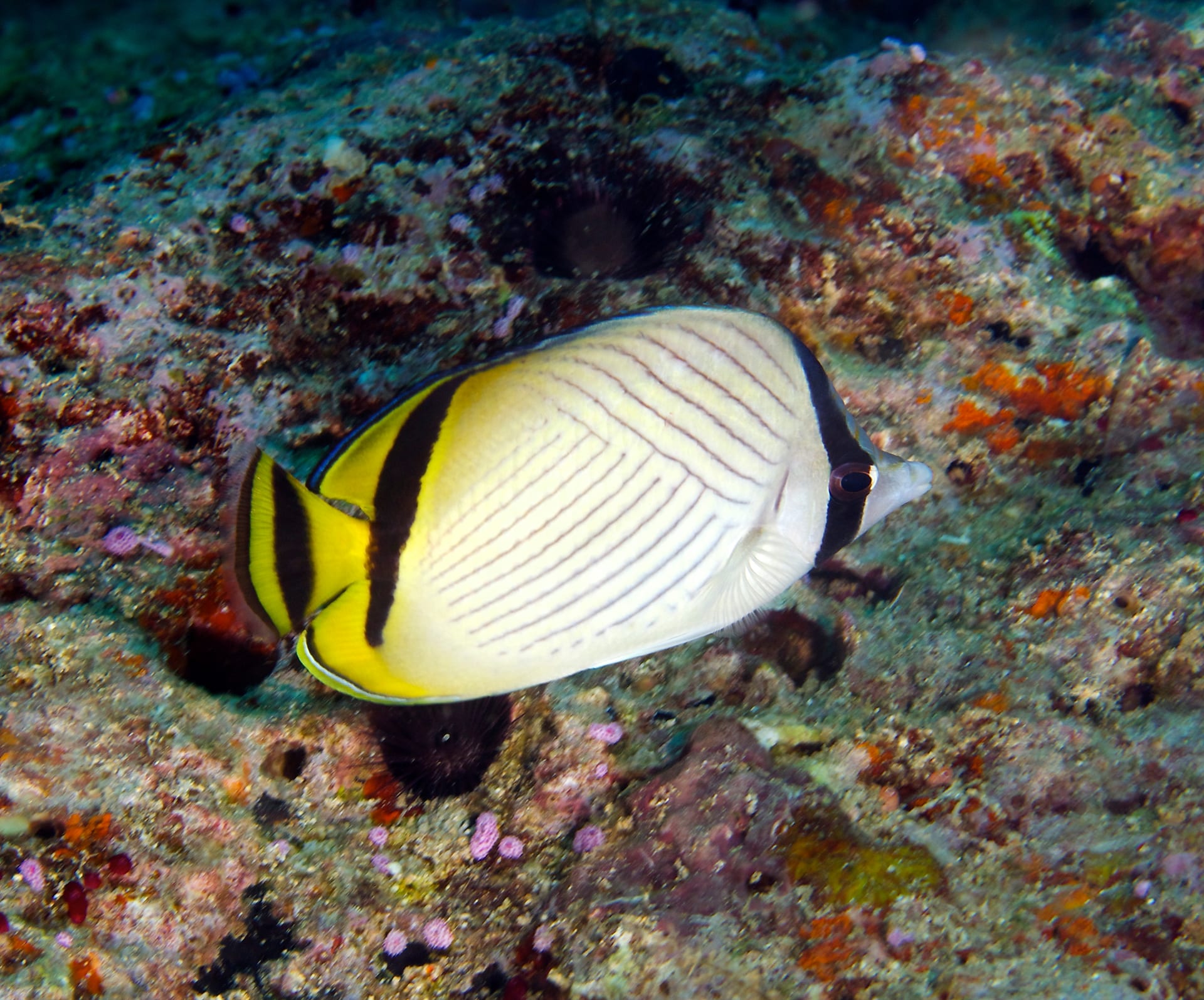
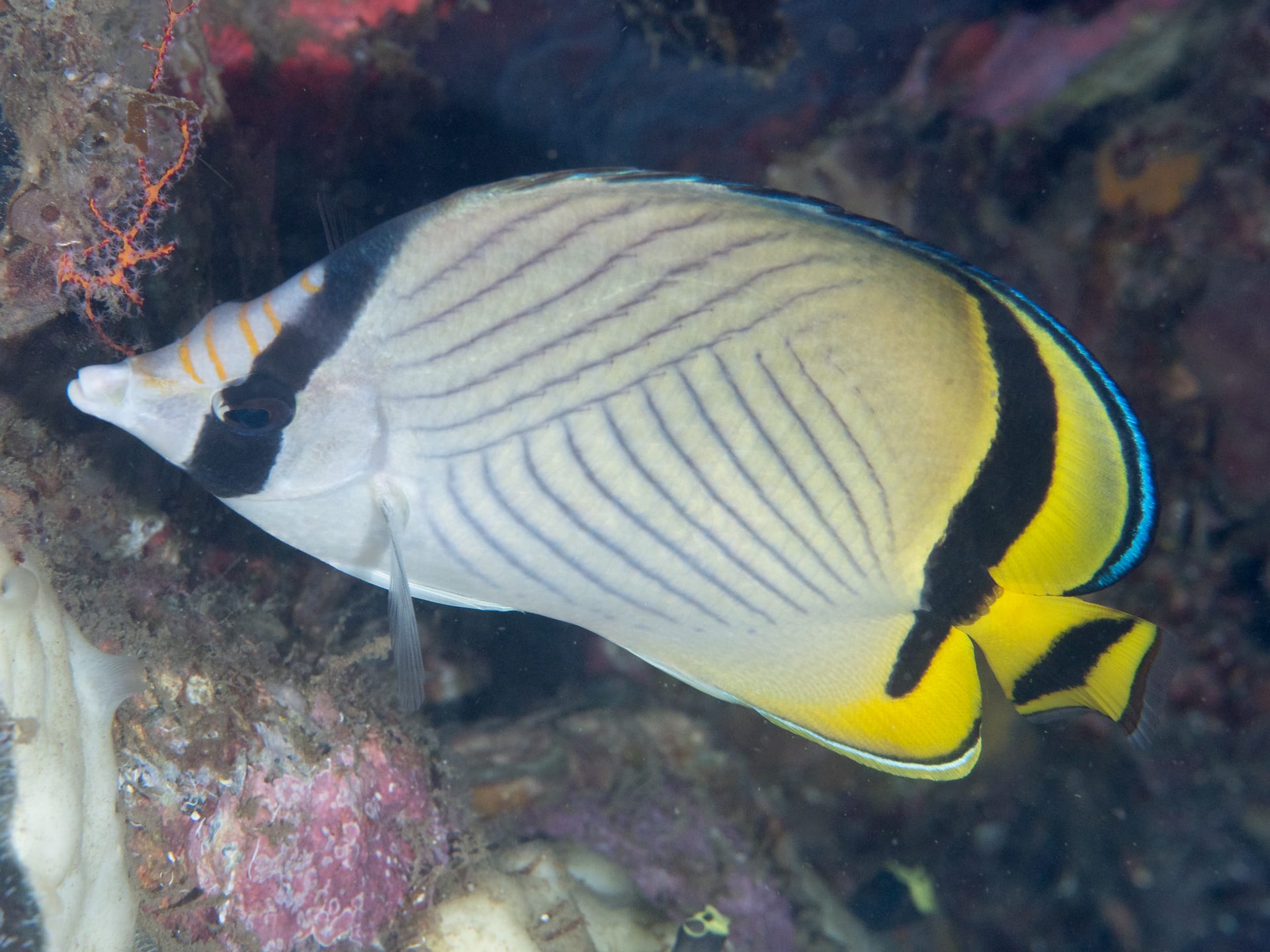
A yellowish-brown butterflyfish with two broad pale bars and a black eye bar. One of the hardiest butterflyfishes, it is also known for eating pest Aiptasia anemones.
Difficulty
Beginner
Temperature
21〜28℃
Lifespan
Little data available
Size
Up to 15 cm TL (FishBase)
Diet
Omnivore (soft coral polyps, algae, zooplankton)
About
Klein's or sunburst butterflyfish (Chaetodon kleinii) ranges through the Indo-West Pacific from the Red Sea and East Africa to Hawaii and Samoa, north to southern Japan and south to New South Wales, and also occurs at the Galapagos (FishBase). It reaches 15 cm TL. It is yellowish brown with two broad pale bars, a black eye bar and rows of dotted lines along the flanks. It lives alone or in pairs in lagoons, channels and seaward reefs, feeding on soft coral polyps, algae and zooplankton. It is considered one of the hardiest butterflyfishes and readily accepts frozen and prepared foods. Give it open swimming space and feed algae-based and meaty frozen foods several times a day. It eats pest Aiptasia anemones, but may nip soft corals and also eats tubeworms, so it is reef-safe only with caution. It is a staple beginner butterflyfish in Japan, including fish collected in Okinawa.
Source: Wikipedia (CC BY-SA 4.0)
Size of the Sunburst butterflyfish
The Sunburst butterflyfish grows to Up to 15 cm TL (FishBase).
Temperature & humidity for the Sunburst butterflyfish
The ideal temperature for the Sunburst butterflyfish is 21〜28℃.
Basic Info
Origin
Indo-West Pacific (Red Sea to Hawaii, north to southern Japan) and the Galapagos
Lifespan
Little data available
Size
Up to 15 cm TL (FishBase)
Care Specifications
- Water Temp.
- 21–28℃
- Specific Gravity
- 1.02–1.026
- Min. Tank
- 280 L
PeacefulWith caution
Sources: FishBase (Chaetodon kleinii) / Saltcorner Fish Library (Bob Goemans) / LiveAquaria
References & Sources
Edited & verified by: BreederDirect editorial team
The taxonomic, regulatory, and husbandry data on this page are compiled and verified against the authoritative primary sources below.
Taxonomy & Authority
Accepted name: Chaetodon kleinii Bloch, 1790
Synonyms: Anisochaetodon kleinii (Bloch, 1790), Chaetodon bellulus Thiollière, 1857, Chaetodon cingulatus Fowler, 1934, Chaetodon corallicola Snyder, 1904, Chaetodon flavescens Bennett, 1831, Chaetodon kleini Bloch, 1790, Chaetodon melammystax Bloch & Schneider, 1801, Chaetodon melastomus Bloch & Schneider, 1801
Authority databases: WoRMS · GBIF · GBIF · WoRMS · FishBase
Nomenclature follows global taxonomic authority databases.
Regulations & Conservation Status
Not CITES-listedIUCN LC · Least Concern
Not listed in the CITES Appendices (checked on Species+). Not designated as an Invasive Alien Species under Japanese law. It also occurs along the coasts of Japan (southern Japan, the Ryukyu Islands, etc.); collecting in Japan is subject to each prefecture's fisheries adjustment regulations. Never release aquarium animals into the sea.
Sources: Species+ (CITES) / Ministry of the Environment: List of Designated Invasive Alien Species / FishBase
Regulations may change. Always verify the latest information with the relevant authorities.
Sunburst butterflyfish Listings
Loading latest listingsFind listings for this species