Source: Wikimedia Commons
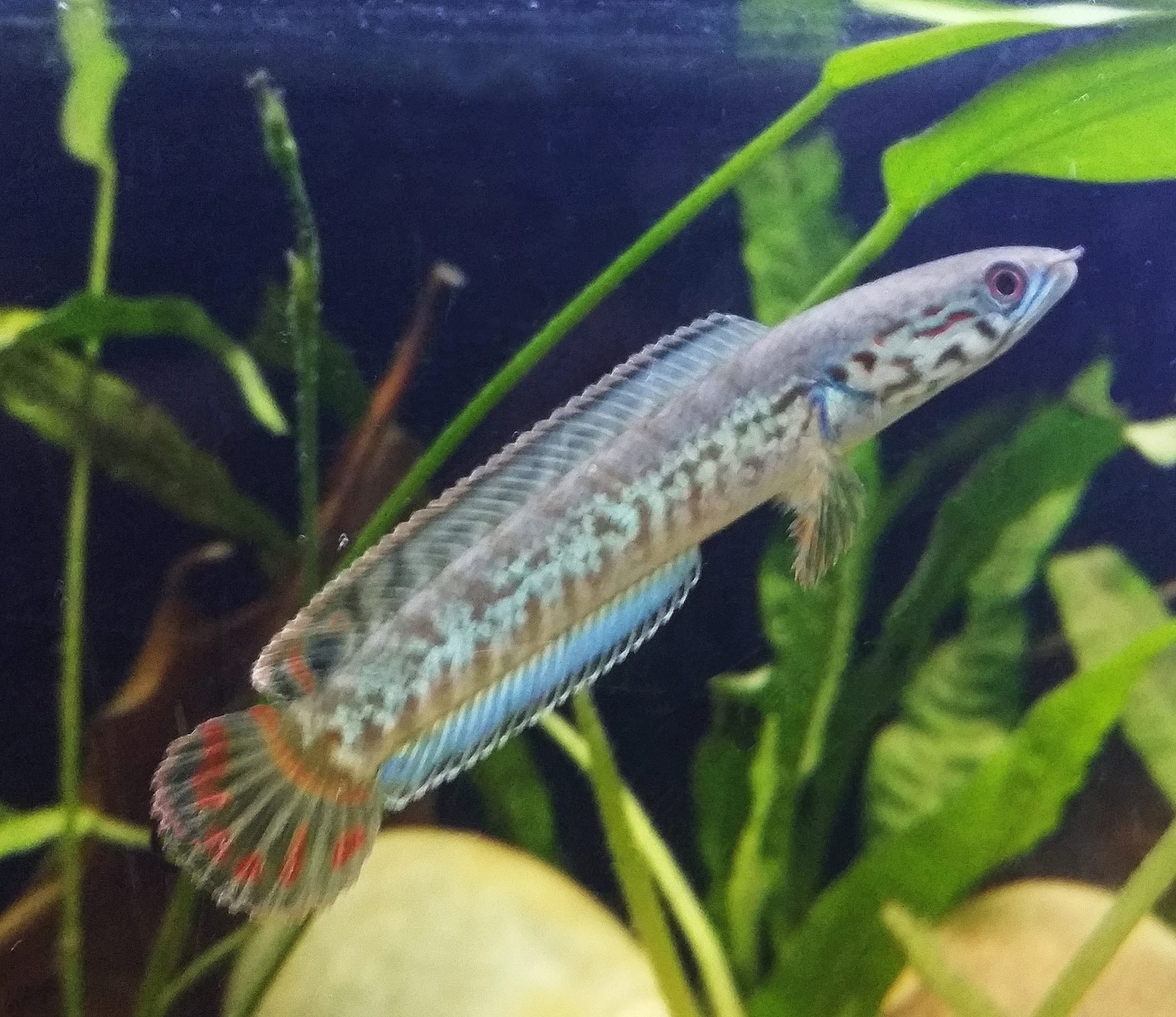
Rainbow Snakehead
IntermediateChanna bleheri
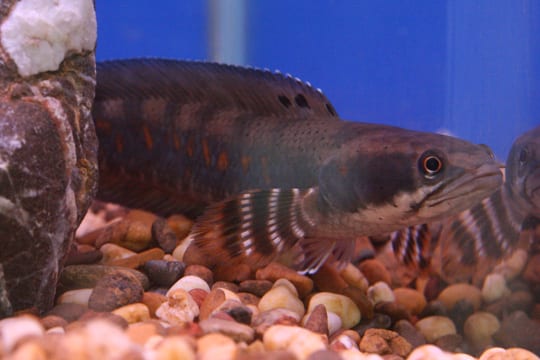
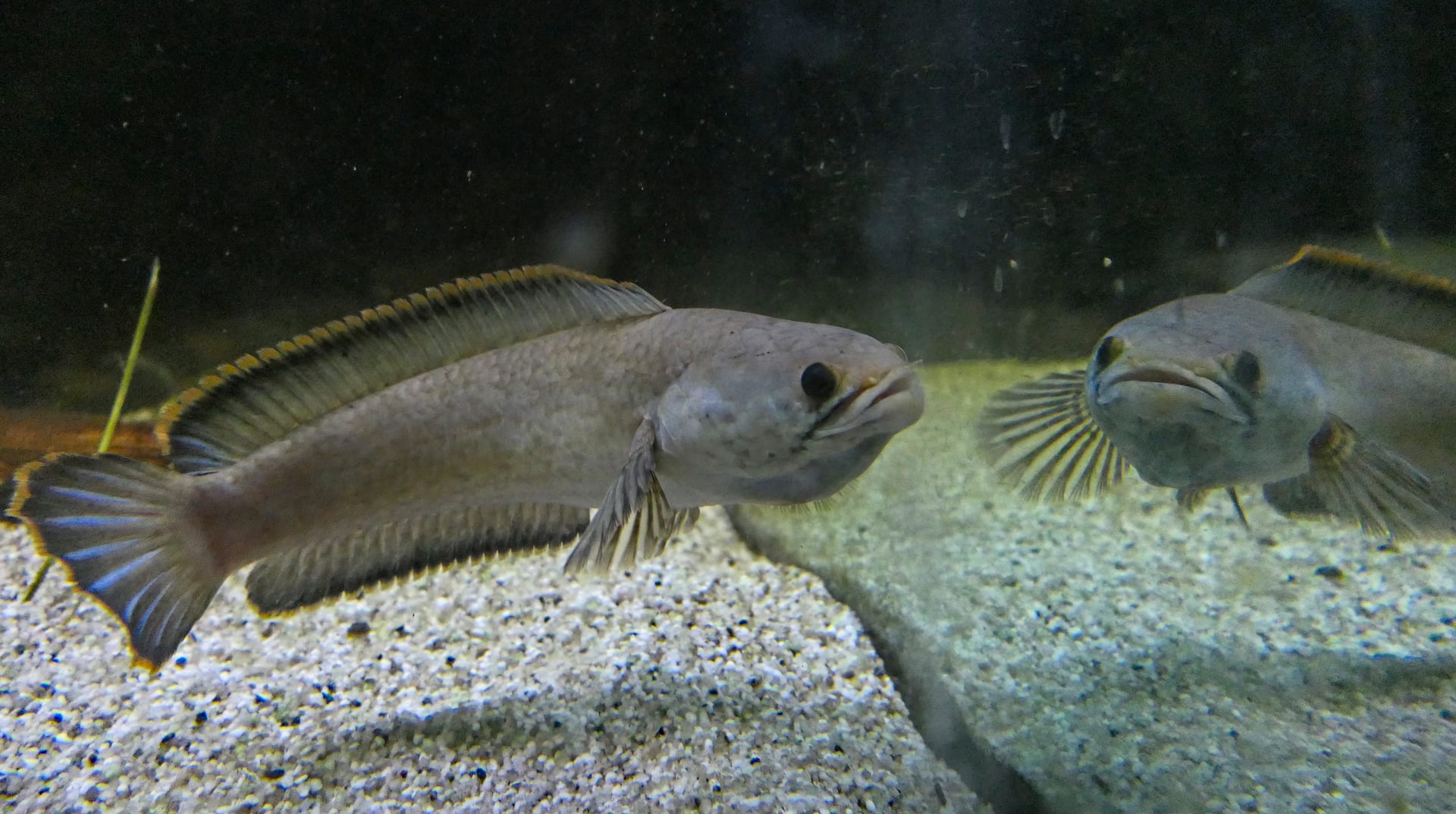
Endemic to the Brahmaputra drainage of northeastern India, this small snakehead is named for its mix of red, orange and blue. It lacks pelvic fins. Both parents guard eggs and fry, and it breeds regularly in aquaria.
Difficulty
Intermediate
Temperature
14〜28℃
Lifespan
8-12 years
Size
14-17cm
Diet
Frozen bloodworm, earthworms, chopped prawn and fish
About
Channa bleheri is a channid from the Brahmaputra and Dikrong drainages of northeastern India. FishBase records 14.4cm total length and Seriously Fish 14-17cm standard length. The absence of pelvic fins is one diagnostic character within the genus. It lives in monsoon forest, sheltering in burrows near tree stumps during the dry season and emerging to hunt and breed when the habitat floods. Seriously Fish recommends 14-28C, pH 6.0-8.0 and 2-20dGH with a 120 x 30cm base, about 108 litres, and stresses that it must be given defined winter and summer periods rather than a constant temperature. No bubble nest is built; several thousand eggs float at the surface and both parents guard the eggs and fry. The IUCN Red List assesses it as Near Threatened.
Source: Wikipedia (CC BY-SA 4.0)
Lifespan of the Rainbow Snakehead
The Rainbow Snakehead lives 8-12 years.
Size of the Rainbow Snakehead
The Rainbow Snakehead grows to 14-17cm.
Temperature & humidity for the Rainbow Snakehead
The ideal temperature for the Rainbow Snakehead is 14〜28℃.
Basic Info
Origin
Northeastern India (Brahmaputra drainage)
Lifespan
8-12 years
Size
Care Specifications
- pH
- 6–8
- Hardness (GH)
- 2–20 dGH
- Water Temp.
- 14–28℃
- Min. Tank
- 108 L
Semi-aggressivePairBreeding: Moderate
Sources: FishBase / Seriously Fish
References & Sources
Edited & verified by: BreederDirect editorial team
The taxonomic, regulatory, and husbandry data on this page are compiled and verified against the authoritative primary sources below.
Taxonomy & Authority
Regulations & Conservation Status
Not CITES-listedIUCN NT · Near Threatened
Sources: CITES Appendices (species not listed) / IUCN Red List
Regulations may change. Always verify the latest information with the relevant authorities.
Rainbow Snakehead Listings
Loading latest listingsFind listings for this species