Source: Wikimedia Commons
Ruthven's Kingsnake
IntermediateLampropeltis ruthveni
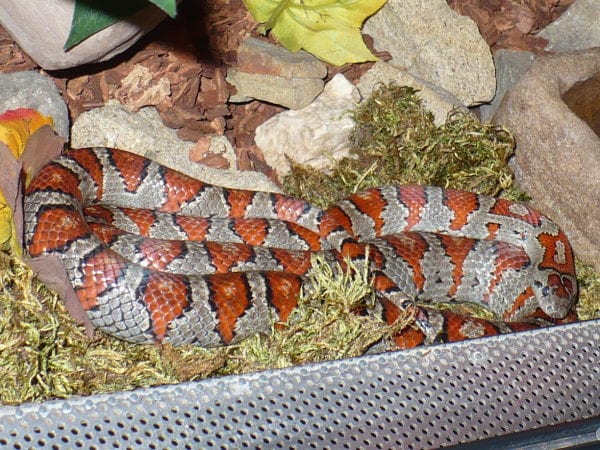
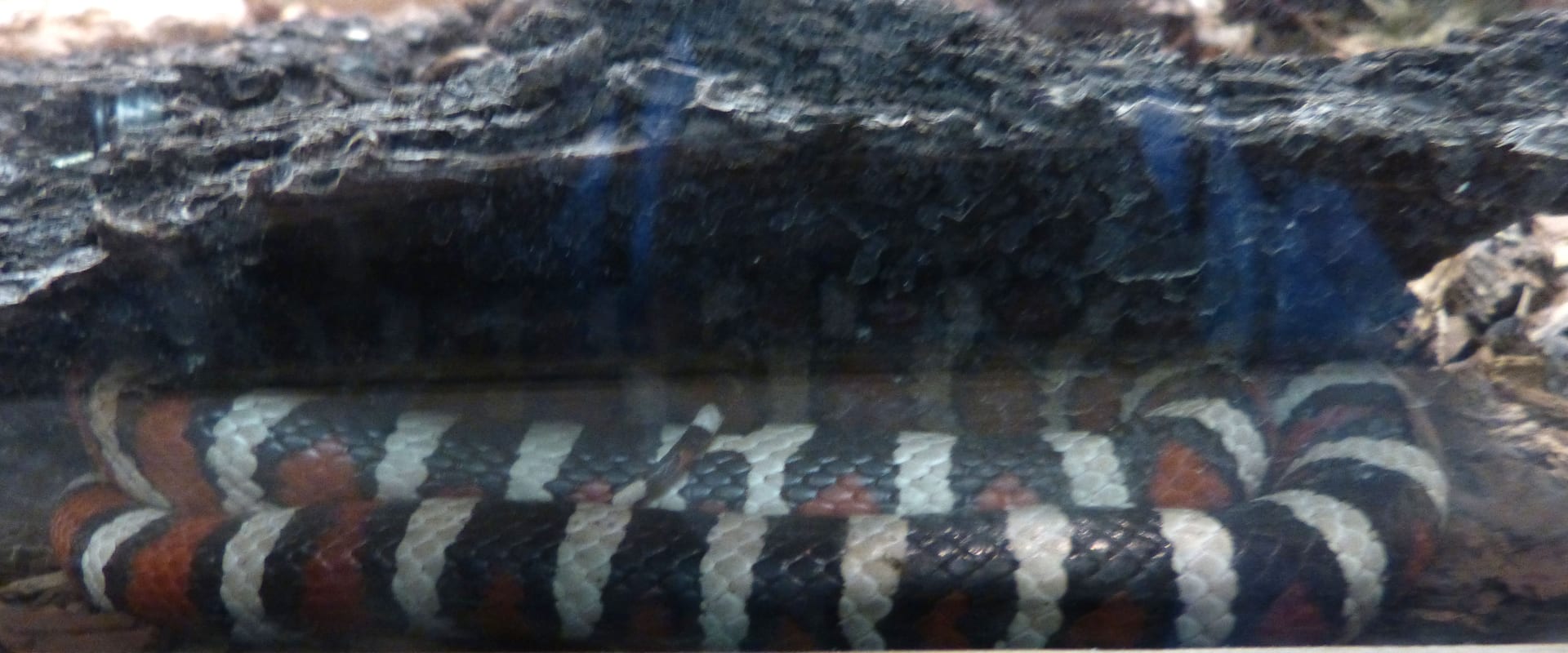
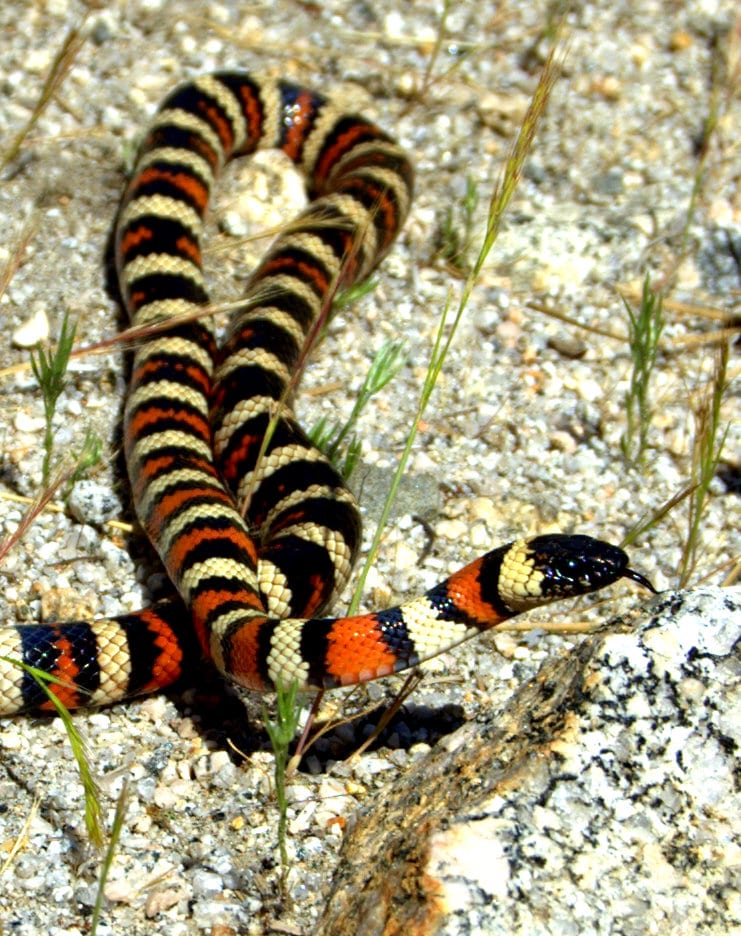
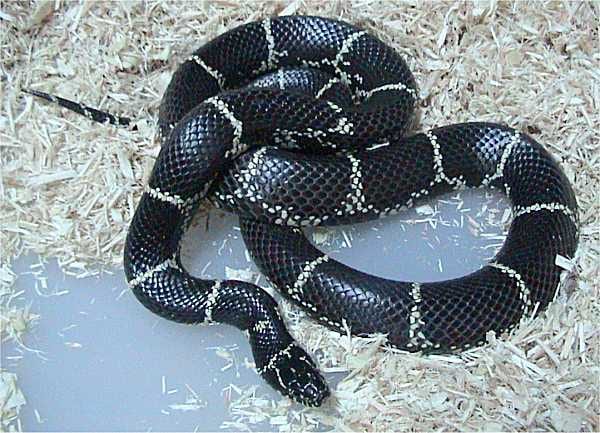
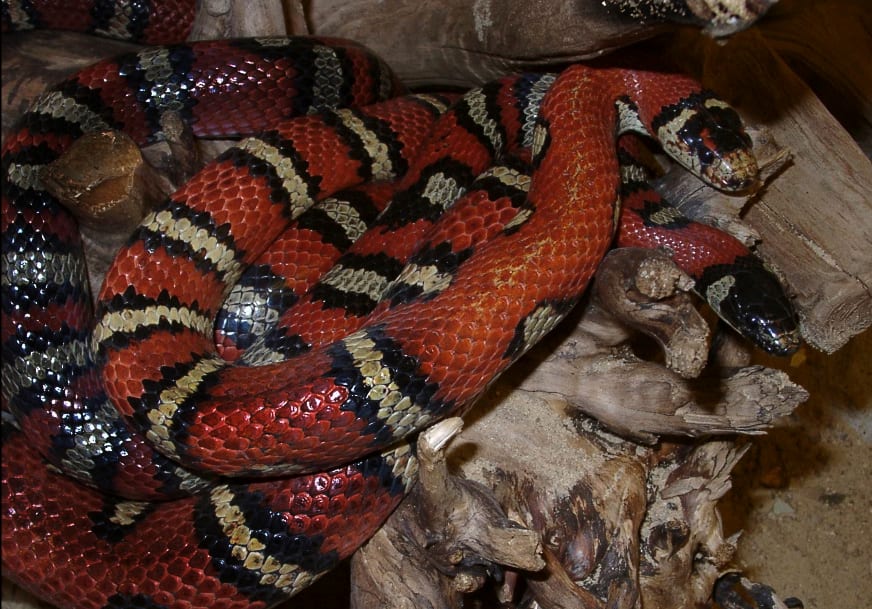
A non-venomous colubrid endemic to pine-oak forest and grassland in central Mexico. Its tricolour pattern of white bands bordered with black on vivid red is unusually consistent for a Mexican kingsnake.
Difficulty
Intermediate
Lifespan
Over 20 years in captivity
Size
70-80cm, up to about 130cm
Humidity
40〜60%
Diet
Frozen-thawed mice; in the wild rodents, lizards and other snakes
About
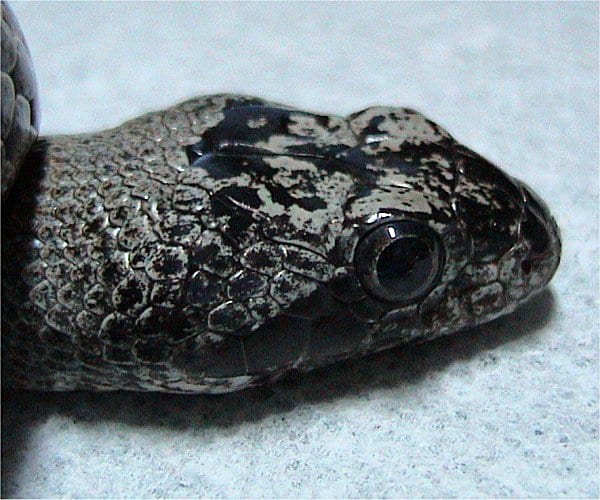
Lampropeltis ruthveni is a non-venomous colubrid endemic to the highlands of central Mexico. The Reptile Database records a maximum total length of 1,295 mm, while the keeping literature gives 70 to 80 cm as typical. Unlike most Mexican kingsnakes, which vary greatly, its coloration is fairly consistent: white bands bordered with black on a red ground, the red always vivid and the black banding relatively thick for a Mexican kingsnake. Ventral scales number 182 to 195, the head is distinct from the neck and the eyes are golden brown. It lives at 1,925 to 2,667 m in pine-oak forest and mesquite grassland, in both semi-humid and arid settings, and is known to be plentiful on rocky ground adjacent to crop fields. In the wild it preys on rodents, lizards and other snakes. It is oviparous, typically laying six to ten eggs. It is separated from the related L. polyzona by its broader head, clearly distinct from the neck. The IUCN assesses it as Near Threatened.
Source: Wikipedia (CC BY-SA 4.0)
Lifespan of the Ruthven's Kingsnake
The Ruthven's Kingsnake lives Over 20 years in captivity.
Size of the Ruthven's Kingsnake
The Ruthven's Kingsnake grows to 70-80cm, up to about 130cm.
Basic Info
Origin
Central Mexico in Michoacan, Queretaro, Jalisco, Hidalgo and Guanajuato, at 1,925 to 2,667 m
Lifespan
Over 20 years in captivity
Size
70-80cm, up to about 130cm
Care Specifications
PeacefulSolitaryBreeding: Moderate
Sources: Reptiles Magazine: Successfully Reproducing Mexican Kingsnakes in Captivity / ReptiFiles: Kingsnake Care Sheet / Wikipedia (English) / Reptile Database
References & Sources
Edited & verified by: BreederDirect editorial team
The taxonomic, regulatory, and husbandry data on this page are compiled and verified against the authoritative primary sources below.
Taxonomy & Authority
Accepted name: Lampropeltis ruthveni Blanchard, 1920
Synonyms: Lampropeltis triangulum ruthveni Blanchard, 1920
Authority databases: GBIF · Reptile Database
Nomenclature follows global taxonomic authority databases.
Regulations & Conservation Status
Not CITES-listedIUCN NT · Near Threatened
Not listed in any appendix of the Convention on International Trade in Endangered Species (CITES) (not registered in Species+). Does not fall under either the specified animals listed in the appended table of the Ordinance for Enforcement of the Animal Welfare and Management Law, nor the specified invasive alien species under the Invasive Alien Species Act.
Sources: CITES Appendices (species not listed) / IUCN Red List
Regulations may change. Always verify the latest information with the relevant authorities.
Ruthven's Kingsnake Listings
Loading latest listingsFind listings for this species