Source: Wikimedia Commons
Mexican Kingsnake
IntermediateLampropeltis mexicana
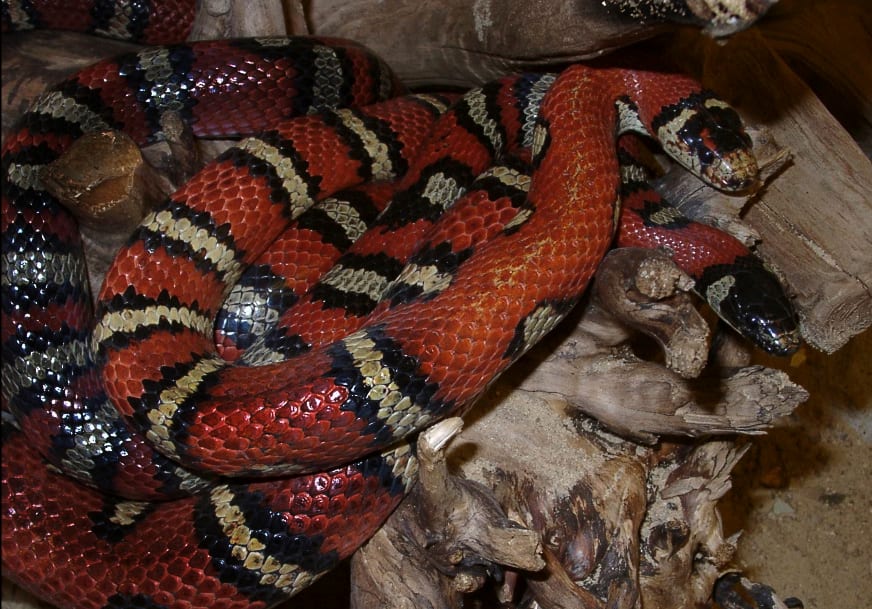
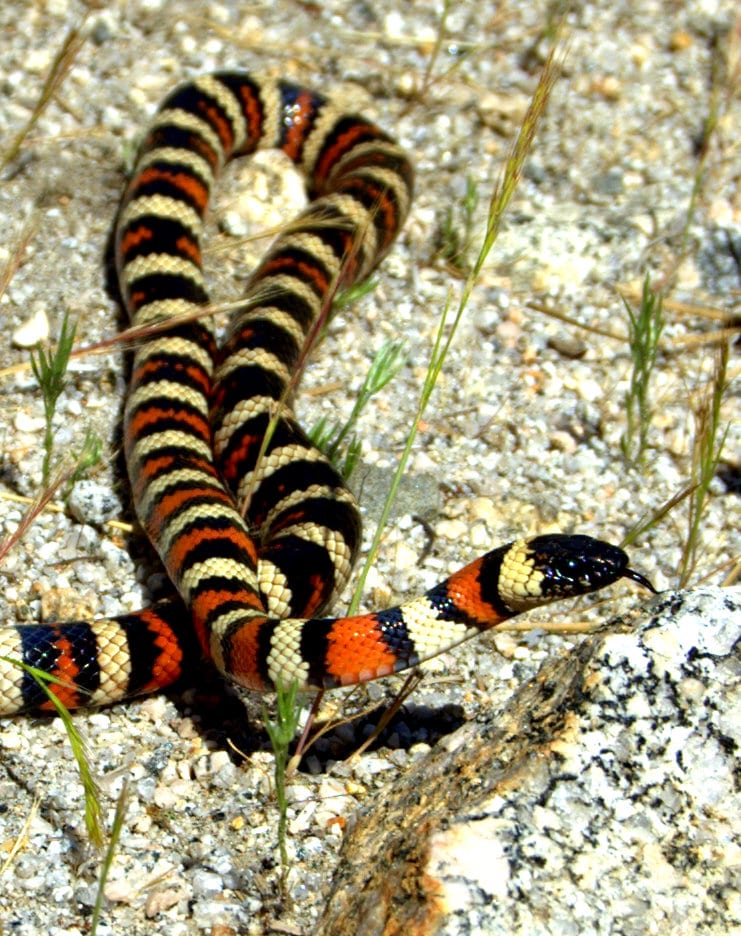
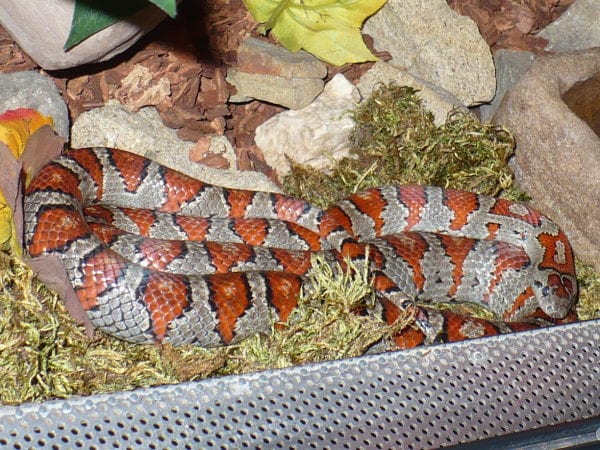
A non-venomous colubrid endemic to the mountains of north-eastern Mexico. Black-bordered red saddles sit on a grey or brown ground, and the red head markings are intricate and often three-lobed. It is nocturnal and highly secretive.
Difficulty
Intermediate
Lifespan
Over 20 years in captivity
Size
61-91cm, up to about 116cm
Humidity
40〜60%
Diet
Frozen-thawed mice; in the wild rodents and lizards
About
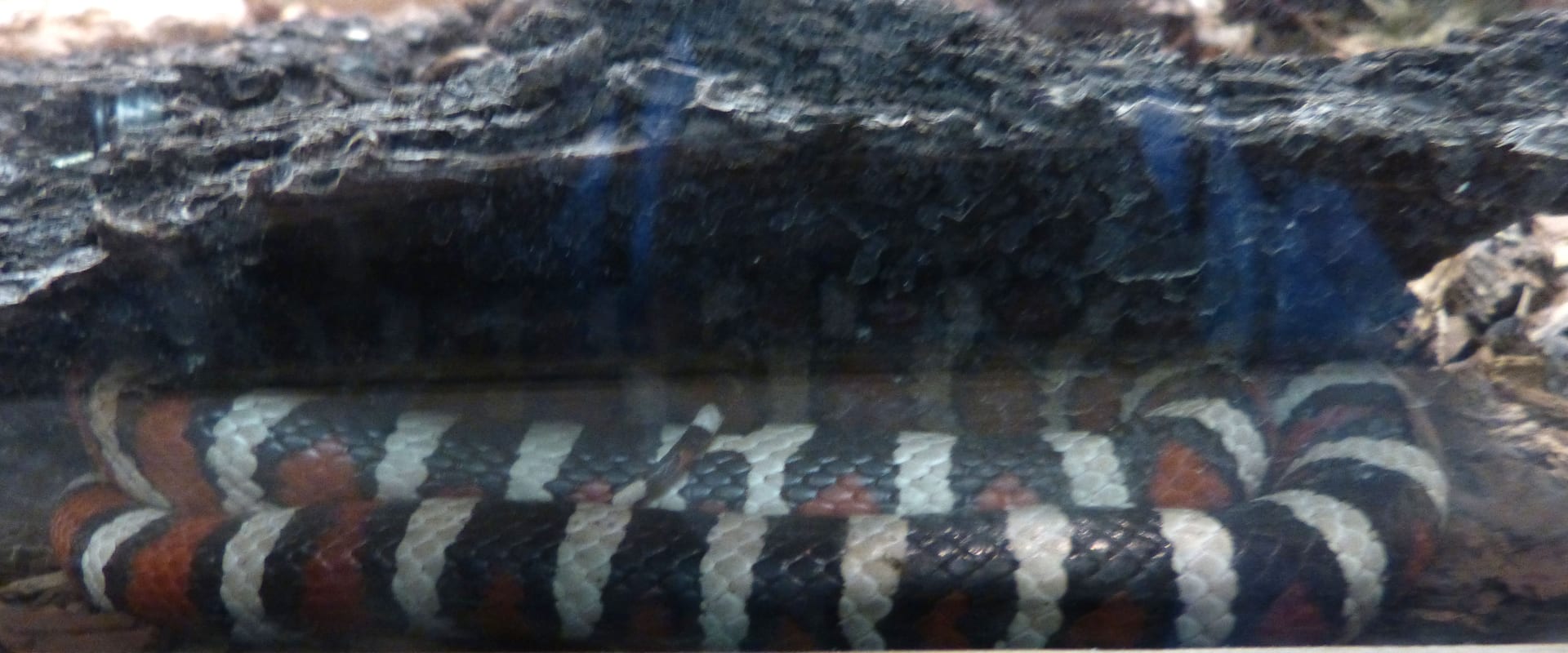
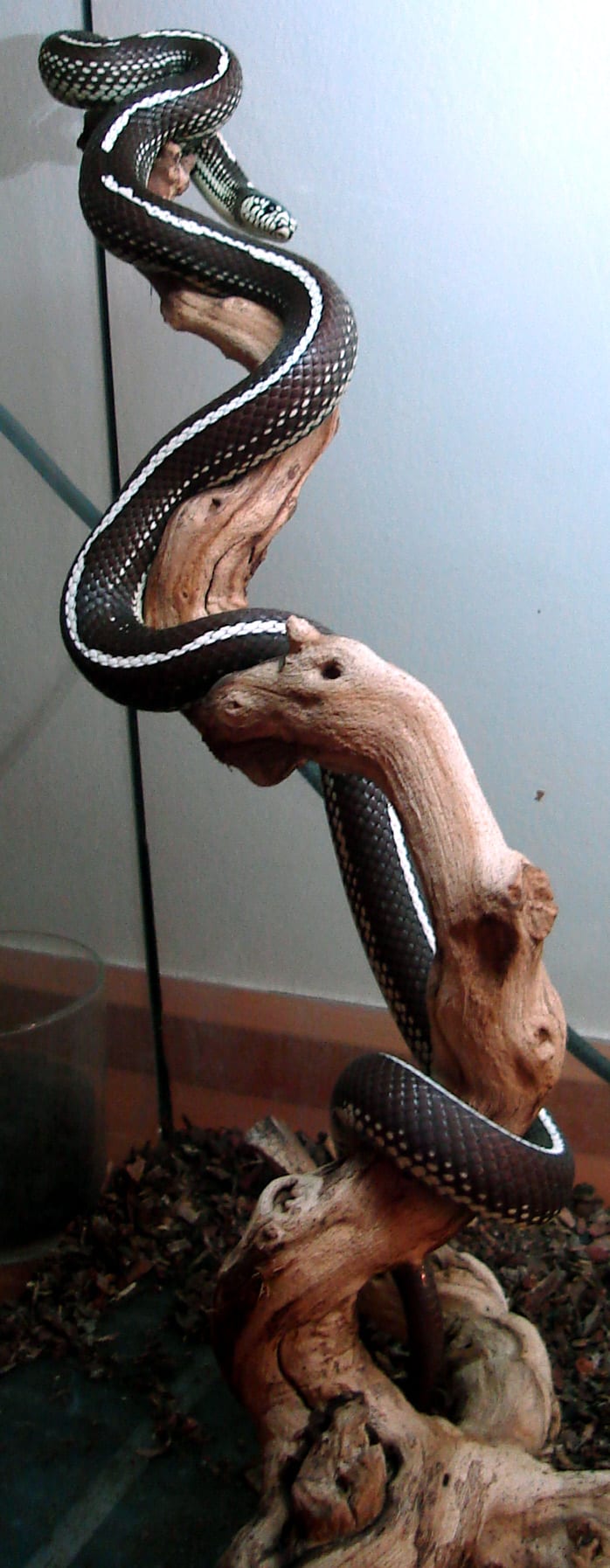
Lampropeltis mexicana is a non-venomous colubrid endemic to the mountains of north-eastern Mexico. The Reptile Database records a maximum total length of 1,156 mm, while the keeping literature gives 61 to 91 cm as typical. It is slender and sub-cylindrical for the genus, more flattened ventrally than most relatives, with a wide head and large eyes. Broad red saddle-shaped markings bordered with black sit on a grey or brown ground, separated by cream, brown or pinkish bars; the sequence of colours is constant but their proportions and shades vary a great deal. The nominate form has intricate red head markings that are often three-lobed, and a black postocular dash distinguishes it from the related L. leonis. The species shows sexual dichromatism, males being slightly more vividly coloured. It lives at 1,300 to 2,400 m on rocky hillsides, in valleys and deserts, and in oak woodland and grassland. It is nocturnal and secretive, hiding under rocks and fallen timber, and is seldom seen in the field.
Source: Wikipedia (CC BY-SA 4.0)
Lifespan of the Mexican Kingsnake
The Mexican Kingsnake lives Over 20 years in captivity.
Size of the Mexican Kingsnake
The Mexican Kingsnake grows to 61-91cm, up to about 116cm.
Basic Info
Origin
North-eastern Mexico, including San Luis Potosi, Nuevo Leon, Coahuila, southern Durango, Tamaulipas and Hidalgo, at 1,300 to 2,400 m
Lifespan
Over 20 years in captivity
Size
Care Specifications
PeacefulSolitaryBreeding: Moderate
Sources: Reptiles Magazine: Successfully Reproducing Mexican Kingsnakes in Captivity / ReptiFiles: Kingsnake Care Sheet / Wikipedia (English) / Reptile Database
References & Sources
Edited & verified by: BreederDirect editorial team
The taxonomic, regulatory, and husbandry data on this page are compiled and verified against the authoritative primary sources below.
Taxonomy & Authority
Accepted name: Lampropeltis mexicana (Garman, 1884)
Synonyms: Ophibolus triangulus mexicanus Garman, 1884, Coronella mexicana Günther, 1893, Oreophis boulengeri Dugès, 1897
Authority databases: GBIF · Reptile Database
Nomenclature follows global taxonomic authority databases.
Regulations & Conservation Status
Not CITES-listedIUCN LC · Least Concern
Not listed in any appendix of the Convention on International Trade in Endangered Species (CITES) (not registered in Species+). Does not fall under either the specified animals listed in the appended table of the Ordinance for Enforcement of the Act on Welfare and Management of Animals, nor the specified invasive alien species under the Invasive Alien Species Act.
Sources: CITES Appendices (species not listed) / IUCN Red List
Regulations may change. Always verify the latest information with the relevant authorities.
Mexican Kingsnake Listings
Loading latest listingsFind listings for this species