Source: Wikimedia Commons
Mourning Gecko
BeginnerLepidodactylus lugubris
A gecko that reproduces by parthenogenesis (females only). Ultra-small, surging in popularity for terrariums.
Difficulty
Beginner
Temperature
25〜32℃
Lifespan
8-10 years
Size
7-10cm
Humidity
40〜70%
Diet
Insects, Pellets
About
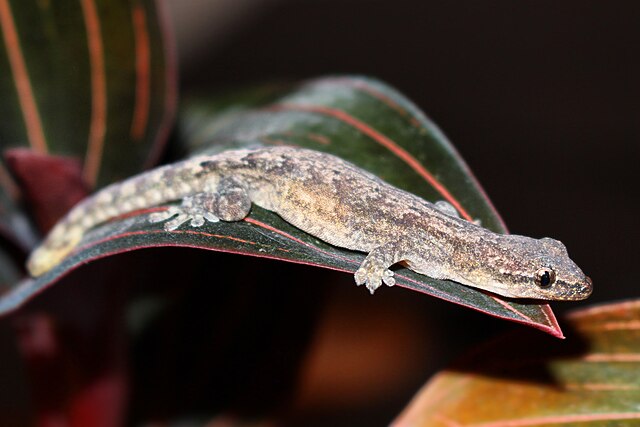
The mourning gecko (Lepidodactylus lugubris) is a small, parthenogenetic gecko with one of the widest natural distributions of any lizard, found throughout tropical and subtropical coastal regions of the Indo-Pacific, from South and Southeast Asia across to Hawaii and various Pacific islands. Adults reach 7–10 cm in total length. Populations consist almost entirely of females that reproduce via parthenogenesis, producing viable eggs without fertilization by males. The body is slender with pale brown or grey coloration and faint dorsal markings. Mourning geckos are communal and can be kept successfully in groups; captive breeding occurs readily in appropriate conditions. Diet includes small insects and fruit-based gecko diet.
Source: Wikipedia (CC BY-SA 4.0)
Lifespan of the Mourning Gecko
The Mourning Gecko lives 8-10 years.
Size of the Mourning Gecko
The Mourning Gecko grows to 7-10cm.
Temperature & humidity for the Mourning Gecko
They thrive in small bioactive terrariums with live plants, temperatures of 24–28°C, and humidity of 60–80%.
Basic Info
Origin
Southeast Asia and Pacific Islands (tropical and subtropical regions)
Lifespan
8-10 years
Morphs (Varieties)
The mourning gecko (Lepidodactylus lugubris) is an all-female parthenogenetic species in which Mendelian inheritance does not operate, and genetic morphs such as recessive or dominant do not exist. The Type B (Hawaiian / Yellow Belly), C, and D circulating in the trade are clonal line-bred variants derived from regional populations.
Line-bredEstablished by selective line breeding.
Hawaiian / Yellow-Bellied (Type B)Higher Hawaiian (Type C)Type D
Sources: Reptile Craze - Mourning Gecko Morphs and Types / Wikipedia - Lepidodactylus lugubris (parthenogenesis)
A curated selection of notable morphs. Inheritance modes are a breeding-planning guide; actual appearance varies with combos.
References & Sources
Edited & verified by: BreederDirect editorial team
The taxonomic, regulatory, and husbandry data on this page are compiled and verified against the authoritative primary sources below.
Taxonomy & Authority
Accepted name: Lepidodactylus lugubris (Duméril & Bibron, 1836)
Synonyms: Amydosaurus lugubris Gray, 1845, Dactyloperus pomareae Fitzinger, 1861, Gecko harrieti Tytler, 1865, Gecko lugubris Steindachner, 1867, Gehyra neglecta Boulenger, 1885, Gehyra ogasawarasimae Wermuth, 1965
Authority databases: GBIF · Reptile Database
Nomenclature follows global taxonomic authority databases.
Regulations & Conservation Status
Not CITES-listedIUCN LC · Least Concern
Sources: CITES Checklist (not listed) / IUCN Red List
Regulations may change. Always verify the latest information with the relevant authorities.
Mourning Gecko Listings
Loading latest listingsFind listings for this species