Source: Wikimedia Commons
Ribbon Eel
AdvancedRhinomuraena quaesita
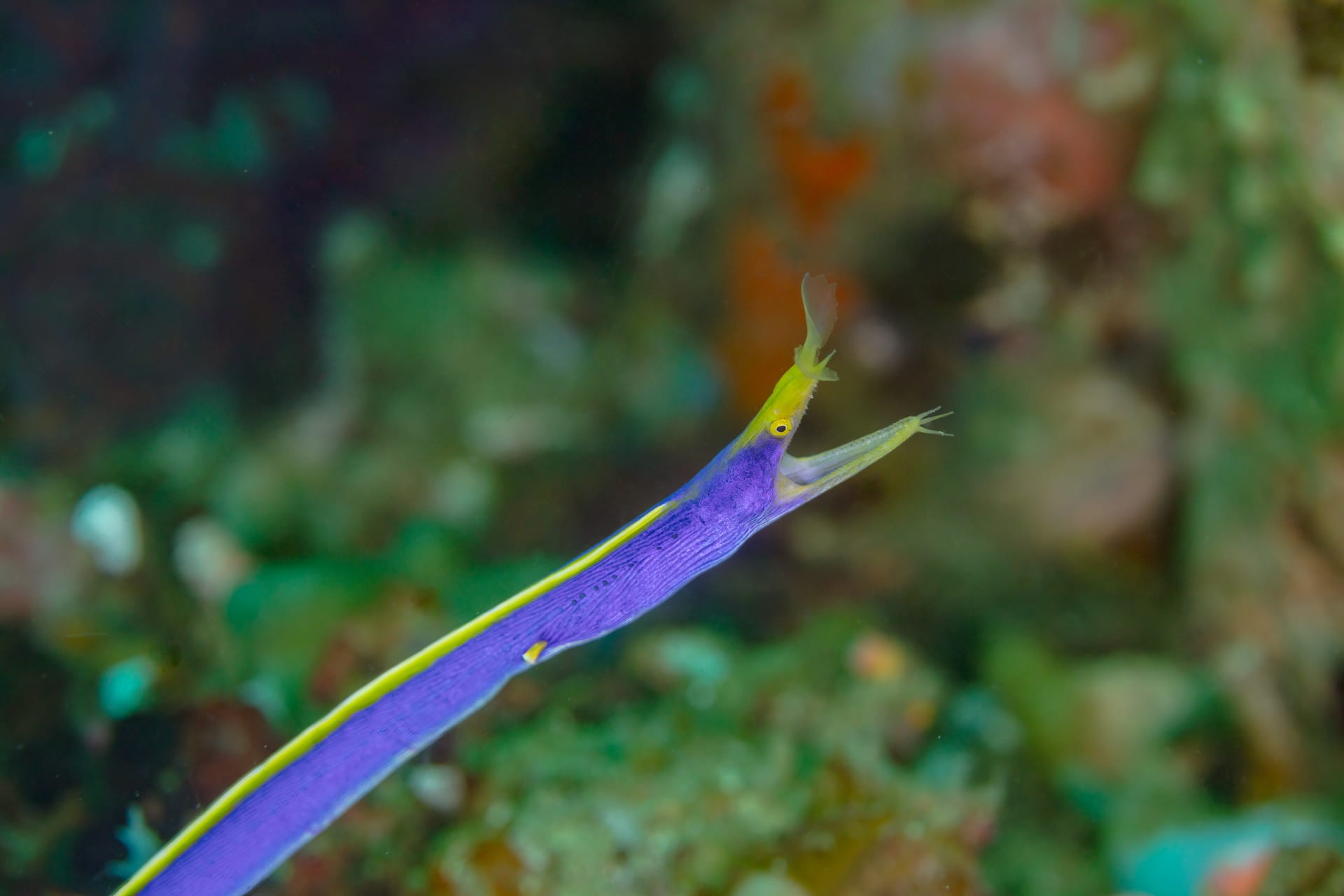
A moray with a ribbon-like body in vivid blue and yellow and petal-shaped nostrils. Many captive fish refuse food and waste away, making it an expert-only species.
Difficulty
Advanced
Temperature
22〜26℃
Lifespan
Up to about 20 years in the wild (most captive fish do not survive a year)
Size
Up to 130cm
Diet
Live shrimp, live small fish, crab (frozen foods once feeding)
About
The Ribbon Eel (Rhinomuraena quaesita) is a muraenid found from East Africa to the Tuamotu Islands, north to southern Japan and south to New Caledonia and French Polynesia. It buries itself in sand or rubble of lagoons and seaward reefs at 1-67m with only the head exposed. The anterior nostrils flare like petals and the body is a slender ribbon. Juveniles are black with a yellow dorsal fin, mature males turn vivid blue with a yellow snout, and with further growth the fish is thought to change sex to female and become entirely yellow, the only moray with such dramatic colour and sex change. Males reach 65-94cm and females up to 130cm; wild fish live about 20 years. It feeds on small fish. Keep at 22-26C, pH 8.1-8.4 and SG 1.020-1.025 in 380L or more with a sand bed of 10cm or deeper and a buried PVC pipe open at one end for shelter. Feeding is the great obstacle: many stop eating after capture and waste away, and most captive fish do not survive a year. Many respond only to live shrimp or fish, so avoid tankmates that steal food. It also escapes. IUCN: Least Concern.
Source: Wikipedia (CC BY-SA 4.0)
Lifespan of the Ribbon Eel
The Ribbon Eel lives Up to about 20 years in the wild (most captive fish do not survive a year).
Size of the Ribbon Eel
The Ribbon Eel grows to Up to 130cm.
Temperature & humidity for the Ribbon Eel
The ideal temperature for the Ribbon Eel is 22〜26℃.
Basic Info
Origin
Indo-Pacific (East Africa to the Tuamotu Islands, north to southern Japan, south to New Caledonia and French Polynesia)
Care Specifications
- pH
- 8.1–8.4
- Water Temp.
- 22–26℃
- Specific Gravity
- 1.02–1.025
- Min. Tank
- 380 L
Semi-aggressiveWith cautionBreeding: Very hard
Sources: LiveAquaria / FishBase
References & Sources
Edited & verified by: BreederDirect editorial team
The taxonomic, regulatory, and husbandry data on this page are compiled and verified against the authoritative primary sources below.
Taxonomy & Authority
Regulations & Conservation Status
Not CITES-listedIUCN LC · Least Concern
Sources: CITES Appendices (species not listed) / IUCN Red List
Regulations may change. Always verify the latest information with the relevant authorities.
Ribbon Eel Listings
Loading latest listingsFind listings for this species