Source: Wikimedia Commons
Purple Queen Anthias
AdvancedPseudanthias pascalus
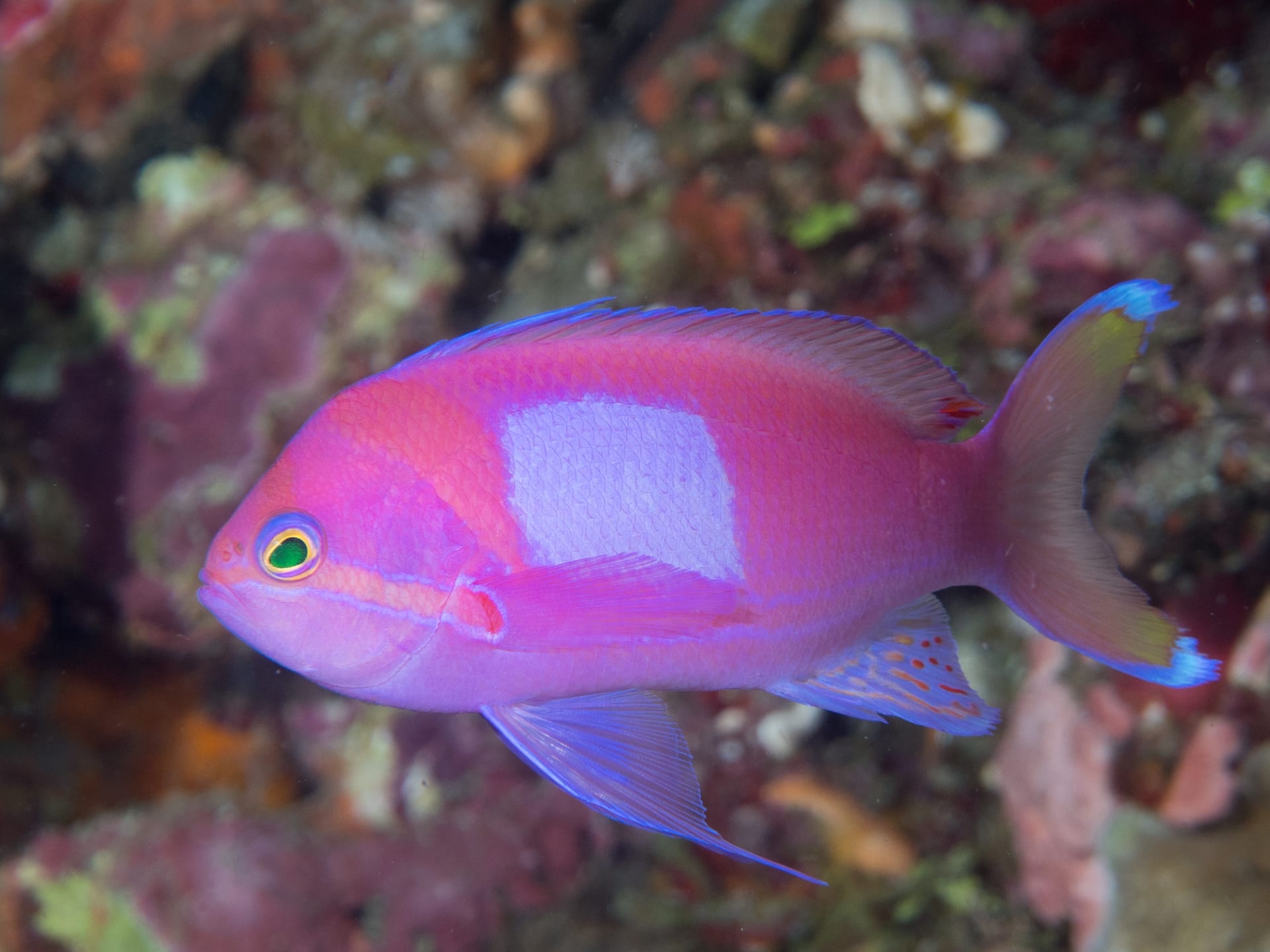
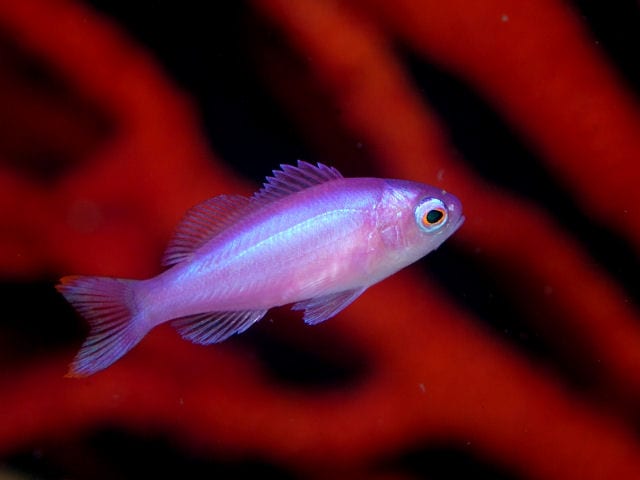
An anthias that is vivid purple all over, forming large shoals on Pacific reefs including southern Japan. Hard to wean onto food and demanding to keep; several feedings a day and group keeping are the baseline.
Difficulty
Advanced
Temperature
24〜27℃
Lifespan
3-5 years in captivity
Size
Up to 20 cm
Diet
Frozen mysis, enriched brine shrimp, copepods, frozen foods for planktivores
About
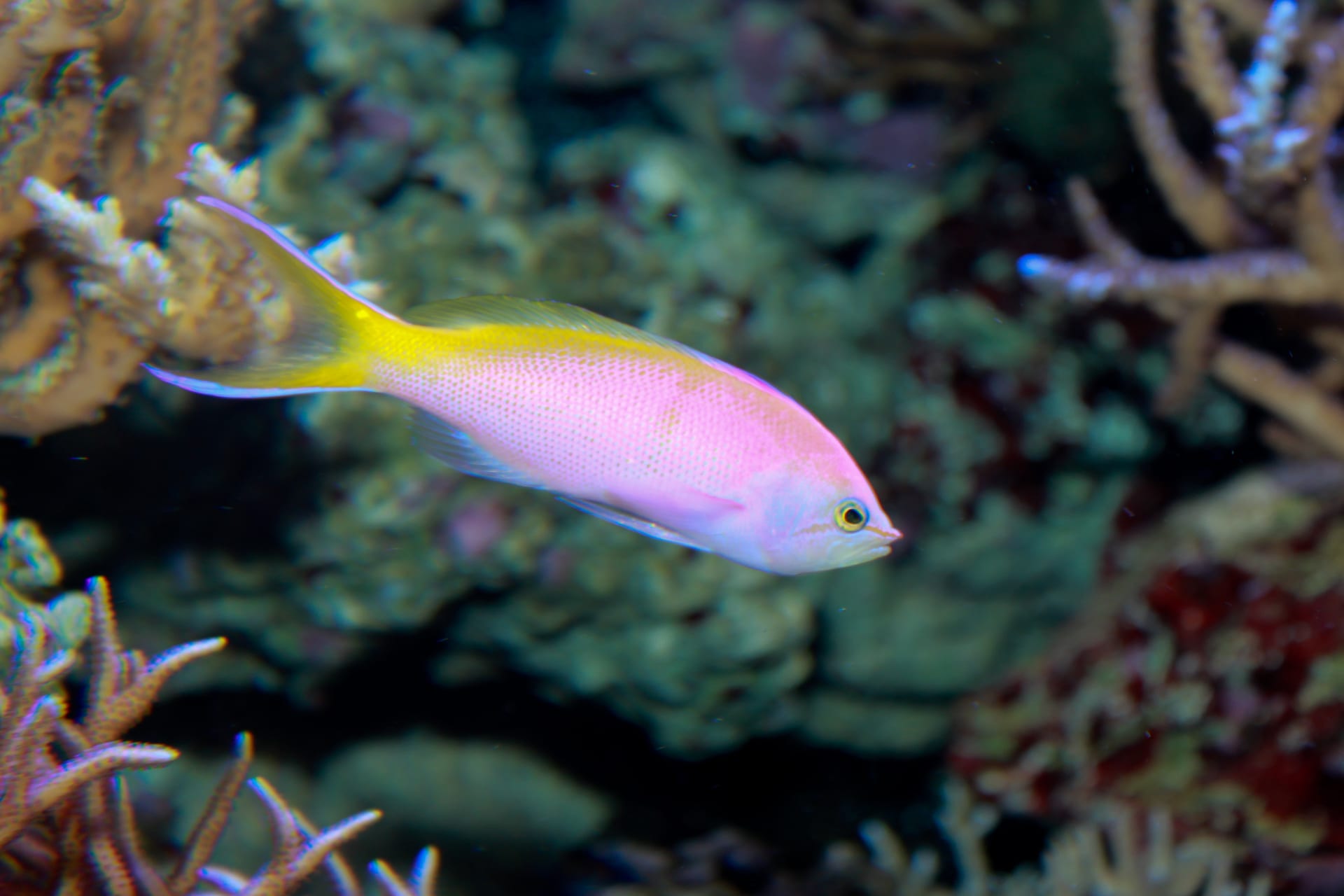
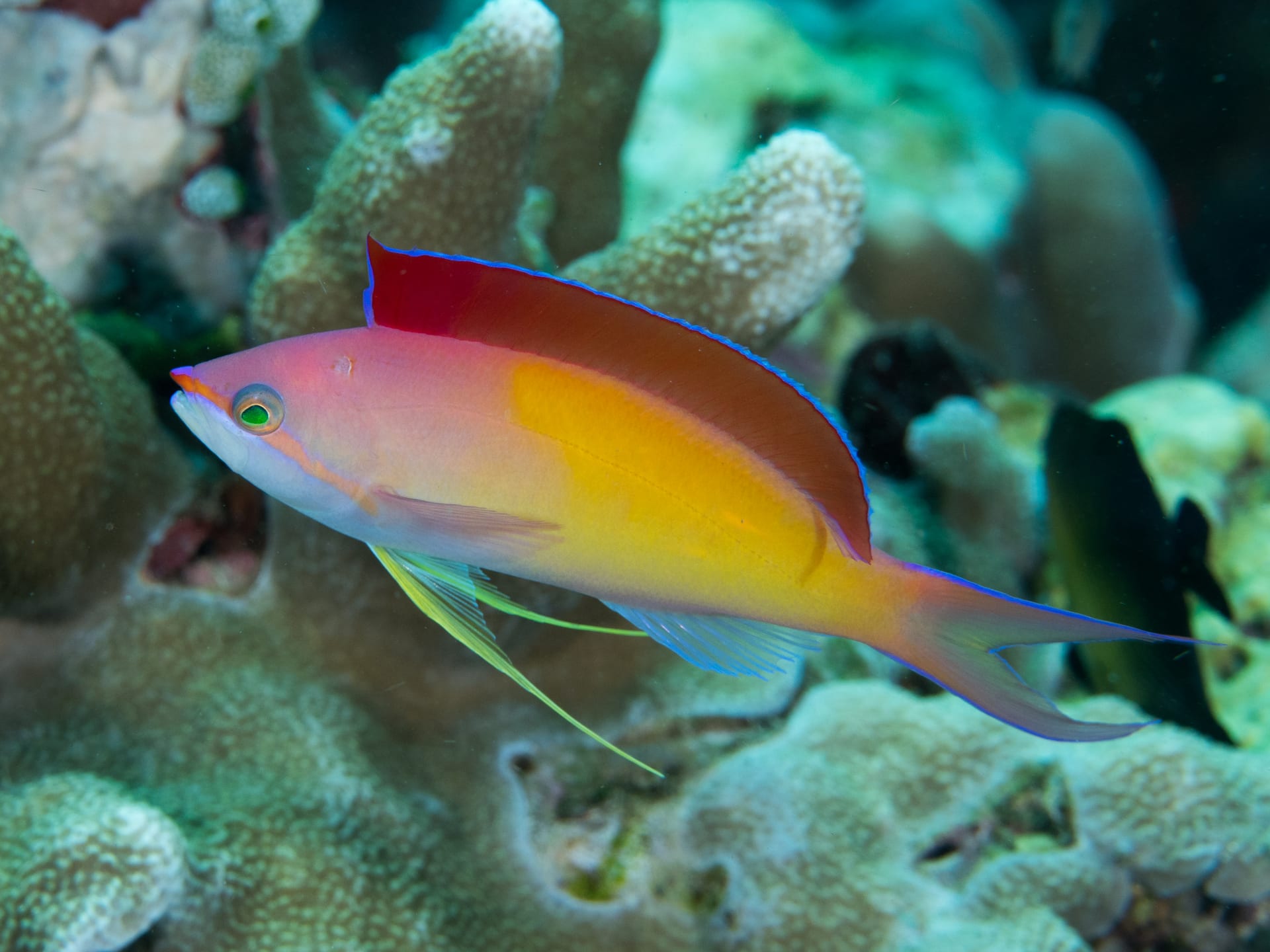
The amethyst or purple anthias (Pseudanthias pascalus) belongs to the subfamily Anthiadinae and ranges across the Pacific from Bali and the Ryukyu Islands to the Tuamotus, north to southern Japan and south to Australia and New Caledonia. It is more common at oceanic islands than on continental reefs, forming large groups around coral outcrops and caves on outer reef slopes and feeding on copepods, other planktonic crustaceans and fish eggs. The body is vivid purple; males carry a red stripe along the flank. Maximum length is about 20 cm. It is a protogynous hermaphrodite: if the male disappears, the largest female changes sex. Among anthias it is one of the harder species, and many specimens refuse food and waste away. Offer frozen planktivore foods, mysis and enriched brine shrimp in small portions 3-4 times a day; a refugium supplying copepods helps greatly. Keep one male with several females in a large tank that offers both open swimming space and shelter.
Lifespan of the Purple Queen Anthias
The Purple Queen Anthias lives 3-5 years in captivity.
Size of the Purple Queen Anthias
The Purple Queen Anthias grows to Up to 20 cm.
Temperature & humidity for the Purple Queen Anthias
The ideal temperature for the Purple Queen Anthias is 24〜27℃.
Basic Info
Origin
Pacific Ocean (Bali and the Ryukyu Islands to the Tuamotus, north to southern Japan, south to Australia and New Caledonia)
Lifespan
3-5 years in captivity
Care Specifications
- pH
- 8.1–8.4
- Water Temp.
- 24–27℃
- Specific Gravity
- 1.02–1.025
- Min. Tank
- 340 L
PeacefulReef safeGroup
Sources: Saltwaterfish.com / FishBase
References & Sources
Edited & verified by: BreederDirect editorial team
The taxonomic, regulatory, and husbandry data on this page are compiled and verified against the authoritative primary sources below.
Taxonomy & Authority
Regulations & Conservation Status
Not CITES-listedIUCN LC · Least Concern
Sources: CITES Appendices (species not listed) / IUCN Red List
Regulations may change. Always verify the latest information with the relevant authorities.
Purple Queen Anthias Listings
Loading latest listingsFind listings for this species