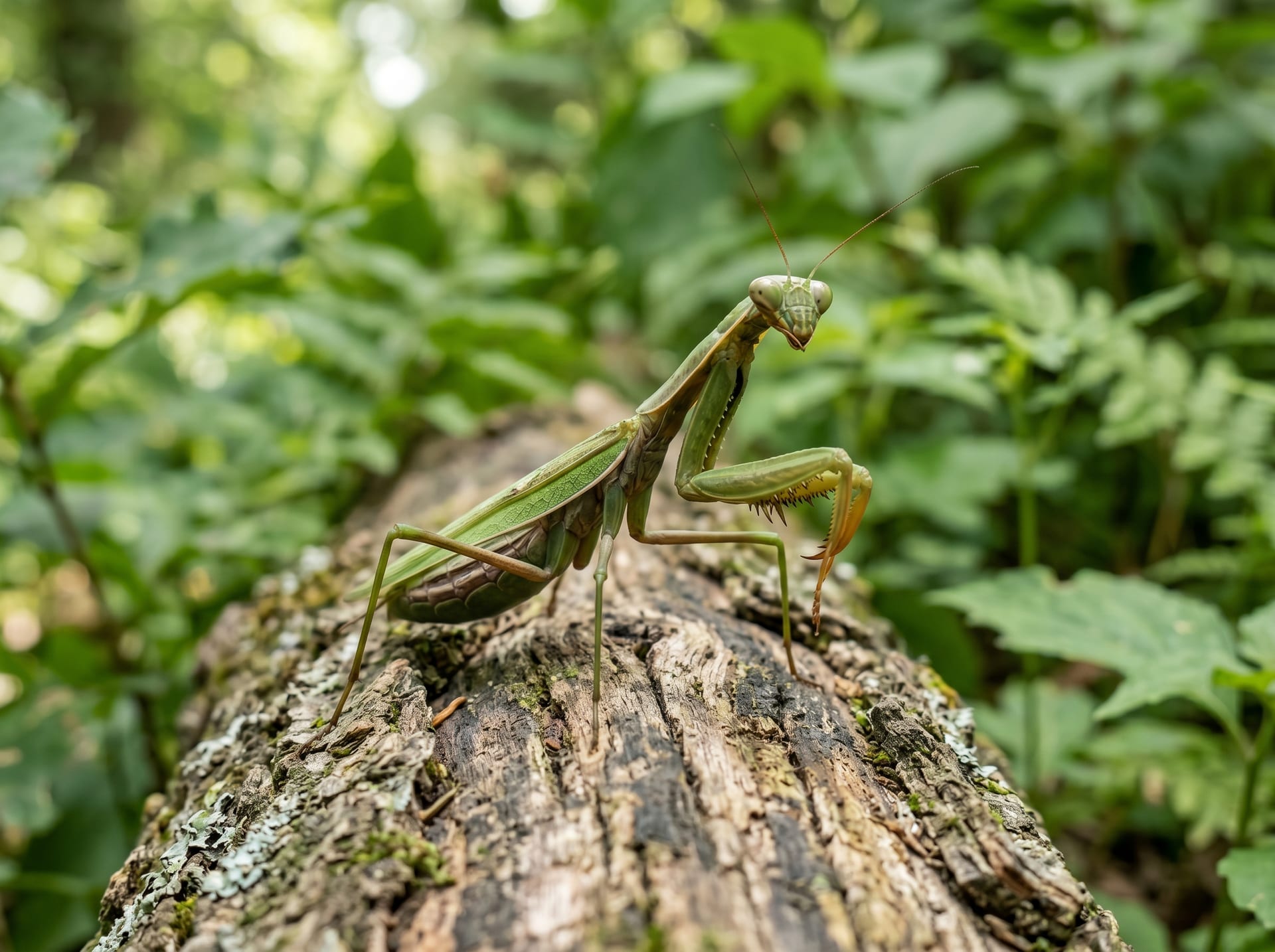
Mantis
A popular insect catching prey with scythe-like forelegs. Many enthusiasts keep them as pets.
View Mantis encyclopedia →0% commission on your first sales!Register by September 30, 2026 and your first 2 sales are commission-free!
Breeder Wanted!
List on BreederDirect and sell directly to customers nationwide!
6 Transparency Standards You Can Trust
When listing Insects, Breeders disclose the following. We guarantee transparency on growth stage and breeding unit.
- Life Stage Clarity
- Generation Info
- Real Photos
- Breeding Unit
- Country of Origin
- Body Length (mm)
Browse all 26 breeds
No listings match your filters
Adjust your filters, or get notified when new listings arrive.
Getting alerts is free with a member account. When new listings match your saved search, we'll notify you by email and in-app.
Browse other categories
Verified breeders (preview)
Mantis key facts
- Care level
- Beginner-friendly
- Lifespan
- Adult 3-6 months
- Size
- 40-100mm
- Diet
- Insects (Crickets etc.)
- Housing
- Tall case to secure molting space
- Breeding
- Female may eat male after mating
- Notes
- Failed molt is biggest risk. Humidity management key
- Temperature & Humidity
- It does best at 20-28°C. Use a well-ventilated plastic case to prevent stuffiness, and mist lightly before molts.
- Diet & Feeding
- Feed live crickets, dubia roaches, or grasshoppers. As an ambush predator, it rarely responds to food that does not move.
- Breeding & Egg-laying
- It lays many eggs in a foamy case called an ootheca, and many nymphs hatch in spring. Separate them early after hatching to prevent cannibalism.
About Mantis
Mantises belong to a diverse order of approximately 2,400 species worldwide, with several native species such as the Chinese mantis and wide-abdomen mantis found across Japan. Their iconic sickle-like forelegs are finely tuned predatory tools capable of snatching prey with remarkable precision. The triangular head rotates freely, giving mantises a wide field of vision, and their compound eyes provide sharp depth perception that aids in targeting fast-moving insects. Temperament varies by individual, but mantises are generally solitary and territorial by nature. As pets, their greatest appeal lies in witnessing live hunts: the patient stillness followed by a lightning strike is endlessly compelling to watch. Enclosures and equipment are inexpensive and simple to set up, making mantises an accessible entry point into insect keeping for both children and adults alike.
Featured breeders for Mantis
See all Mantis breeders (1) →7 things to know before welcoming a Mantis
1Vertical Space Is Essential
Mantises need to hang from the top of their enclosure during molting, so the cage height should be at least three times their body length. A mesh-lidded vertical terrarium is the standard choice. Good ventilation also prevents mold and excess humidity.
2Temperature and Humidity
For Japanese native species, aim for 25–30°C and 50–70% humidity. Overly dry conditions can lead to molting failures, so lightly mist the cage walls. A small panel heater helps maintain warmth in winter.
3Always House Alone
Mantises are highly cannibalistic and will prey on each other regardless of size. Always keep one per enclosure. Even for breeding purposes, place them together only briefly under close supervision and separate immediately afterward.
4Live Prey Is the Staple Diet
Live insects such as crickets, fruit flies, and mealworms form the core diet. Offer prey no wider than the mantis's head. Remove uneaten feeders promptly, and withhold food for 24 hours before and after molting.
5Watch for Molting Problems
Molting failures are a common cause of death, often due to low humidity, poor nutrition, or insufficient cage height. Never handle or feed a mantis during molting. Allow 1–2 days for the new exoskeleton to harden before resuming normal care.
6Short Lifespan to Expect
Adult mantises typically live only 3–6 months and rarely survive winter. Starting from an egg case (ootheca) lets you observe the full life cycle from hatching to adulthood. Commit to caring for them for their entire lifespan before acquiring one.
7Handle With Care
Mantises stress easily when handled and may adopt a threat display or attempt to flee when startled. Some individuals become comfortable perching on a hand over time, but never force contact—introduce handling gradually by reading the mantis's body language. Their forelegs can cause minor scratches.
Frequently asked questions about Mantis
- Q.Are mantises suitable for beginners?
- A.Mantises are generally manageable for beginners. The main challenges are sourcing live prey consistently and monitoring molts, so starting with a domestic species nymph is recommended for first-time keepers.
- Q.Do mantises need to be fed every day?
- A.Daily feeding is not necessary; two to three times per week is a typical schedule. Observe your mantis's appetite and adjust accordingly. It is normal for mantises to stop eating before a molt, so do not force-feed during this period.
- Q.Can I keep multiple mantises together?
- A.Co-housing mantises is not recommended due to their cannibalistic nature. Even similarly sized individuals may attack each other, so each mantis should be kept in its own separate enclosure at all times.
- Q.Can I raise mantises from an egg case?
- A.Hatching mantises from an ootheca is possible, but be aware that dozens to over a hundred nymphs may emerge at once. Securing enough space and live food for all of them can be challenging, so plan for rehoming surplus nymphs in advance.
- Q.How do mantises survive winter?
- A.Wild domestic mantis species do not survive winter as adults; they overwinter as eggs in an ootheca. Pet adults kept indoors can live out their natural lifespan in a heated room, though activity slows in cooler temperatures. Monitor behavior and adjust feeding frequency accordingly during colder months.
Useful tools for Mantis care
Learn more about Mantis in the encyclopedia
View Mantis encyclopedia entry →
Care difficulty, lifespan, size and diet — all basics covered.
Mantis related articles
Types of Mantises and Care Guide 2026 Edition | Characteristics Comparison of 10 Recommended Japanese and Imported Species
Compare the characteristics and care difficulty of 10 popular mantis species, both Japanese and imported, including the Giant Asian Mantis, Orchid Mantis, and Ghost Mantis. Also explains tips on feeding and molting management.
Mantis Care Guide | Managing Domestic and Foreign Species, Feeding, and Tips for Successful Molting
A guide to caring for domestic mantises and foreign species (such as orchid mantises and thick-bodied mantises). Learn feeding methods, humidity control, and cage design tips for successful molting.
Mantis Care Guide | Raising Orchid Mantises and Giant Mantises
A beginner's guide to keeping mantises as pets. Learn about the care environment for exotic mantis species like the Orchid Mantis and the Japanese giant mantis, how to source and raise live food insects, molting management, and breeding tips.
Praying Mantis Care and Breeding Guide | The Fascinating Ecology of a Predator
An explanation of praying mantis care and breeding methods. Introducing feed types, cage setup, mating considerations, and egg case management.
More in this category
Can't find the one you're looking for?
Post your wishes for free and breeders with matching animals will contact you with introductions.