Source: Wikimedia Commons
Zebra Otocinclus
AdvancedOtocinclus cocama
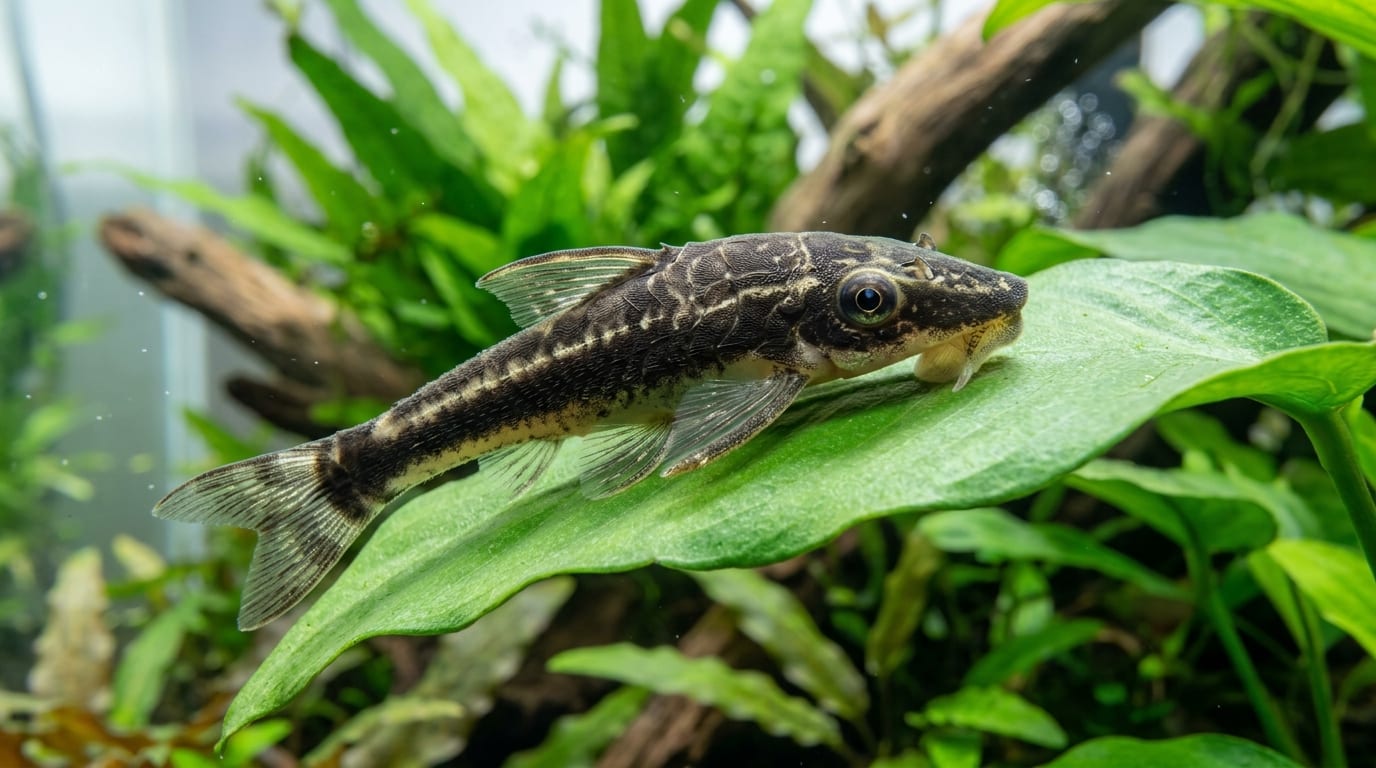
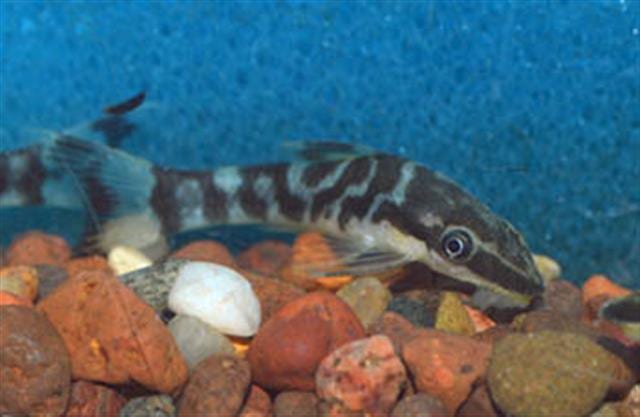
A small Otocinclus marked with vertically elongated black blotches, known only from one drainage in Peru. It lives on algae and biofilm in a mature tank and readily starves in a newly set-up aquarium.
Difficulty
Advanced
Temperature
21〜25℃
Lifespan
3-5 years
Size
4-5cm
Diet
Algae, biofilm, spirulina tablets and blanched vegetables
About
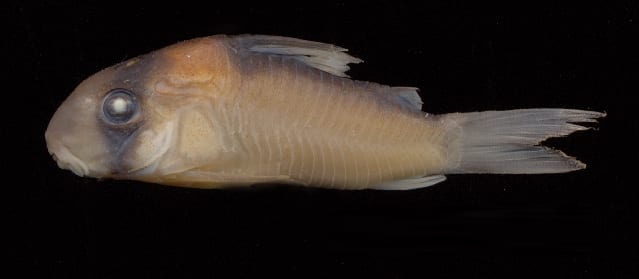
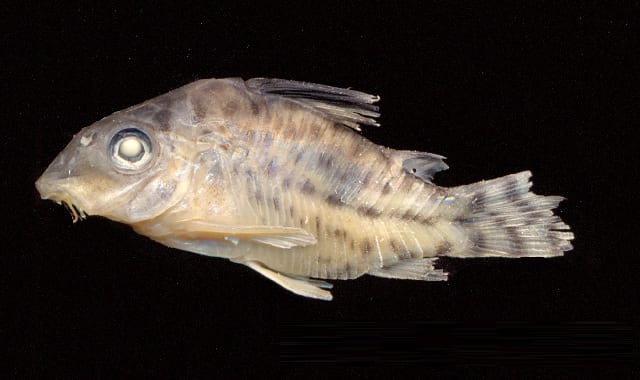
Otocinclus cocama is a small loricariid catfish known only from its type locality, Yanayacu Creek in Requena Province, Loreto, Peru. Described in 2004, it reaches 4.4cm standard length according to FishBase. Vertically elongated blotches along the flanks and a complete lateral line separate it from its congeners, and it has the highest tooth count in the genus; the W mark on the caudal fin is shared only with O. batmani. Seriously Fish gives 21-25C, pH 6.0-7.5, 2-10dGH and a 45 x 30cm base of about 41 litres, and insists on a mature, densely planted set-up rather than a newly established tank. It is a herbivore living on algae and biofilm and will starve if neither is present. Keep it in a group of six or more. The IUCN assesses it as Endangered, although substantial numbers are bred in Asia.
Source: Wikipedia (CC BY-SA 4.0)
Lifespan of the Zebra Otocinclus
The Zebra Otocinclus lives 3-5 years.
Size of the Zebra Otocinclus
The Zebra Otocinclus grows to 4-5cm.
Temperature & humidity for the Zebra Otocinclus
The ideal temperature for the Zebra Otocinclus is 21〜25℃.
Basic Info
Origin
South America (Yanayacu Creek, a tributary of the Rio Ucayali, Loreto, Peru)
Lifespan
3-5 years
Care Specifications
- pH
- 6–7.5
- Hardness (GH)
- 2–10 dGH
- Water Temp.
- 21–25℃
- Min. Tank
- 41 L
PeacefulGroupBreeding: Hard
Sources: FishBase / Seriously Fish / Wikipedia
References & Sources
Edited & verified by: BreederDirect editorial team
The taxonomic, regulatory, and husbandry data on this page are compiled and verified against the authoritative primary sources below.
Taxonomy & Authority
Accepted name: Otocinclus cocama Reis, 2004
Authority databases: FishBase
Nomenclature follows global taxonomic authority databases.
Regulations & Conservation Status
Not CITES-listedIUCN EN · Endangered
Sources: CITES Appendices (species not listed) / IUCN Red List
Regulations may change. Always verify the latest information with the relevant authorities.
Zebra Otocinclus Listings
Loading latest listingsFind listings for this species