Source: Wikimedia Commons
Three-lined Pencilfish
IntermediateNannostomus trifasciatus
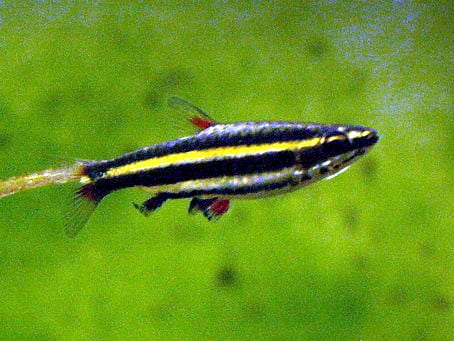
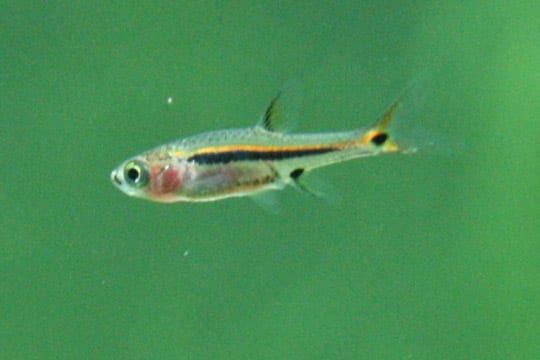
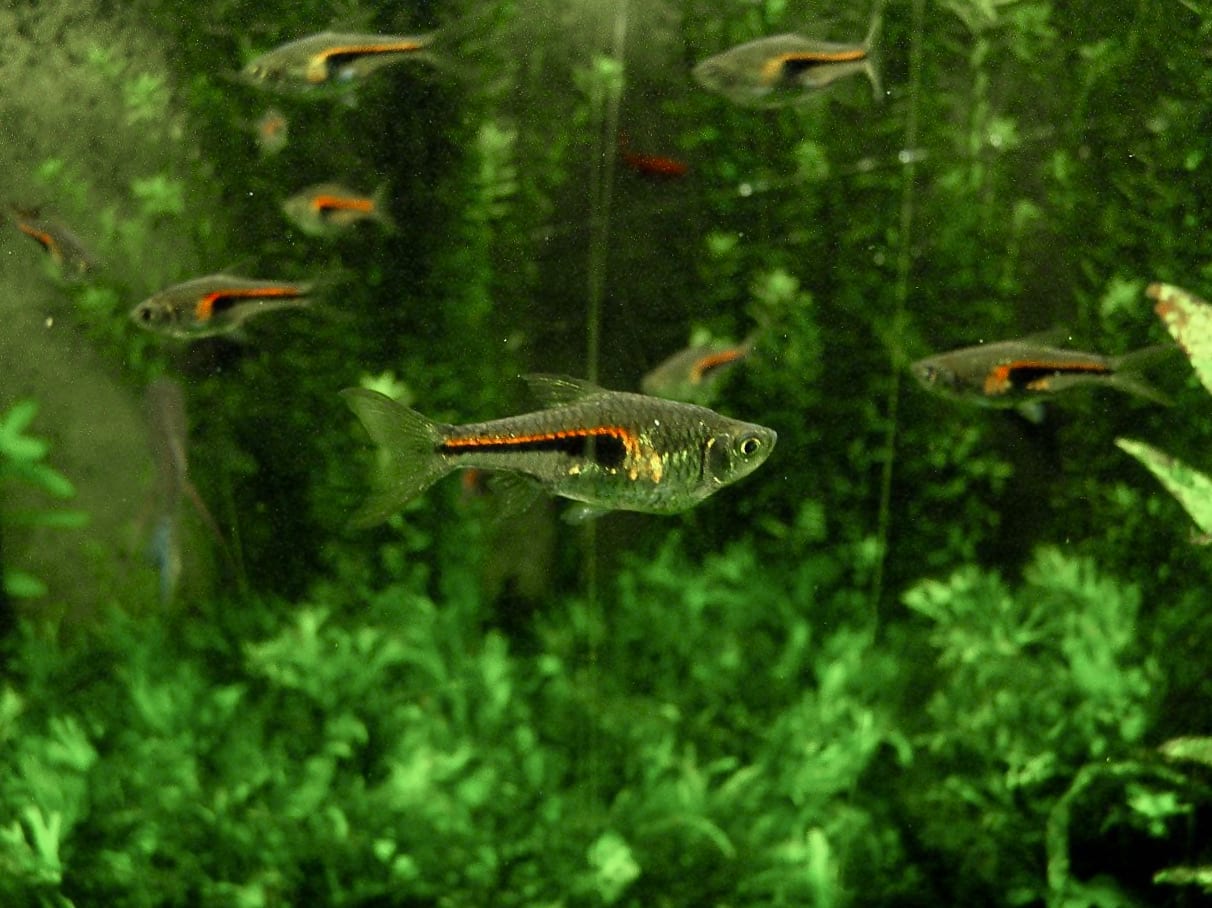
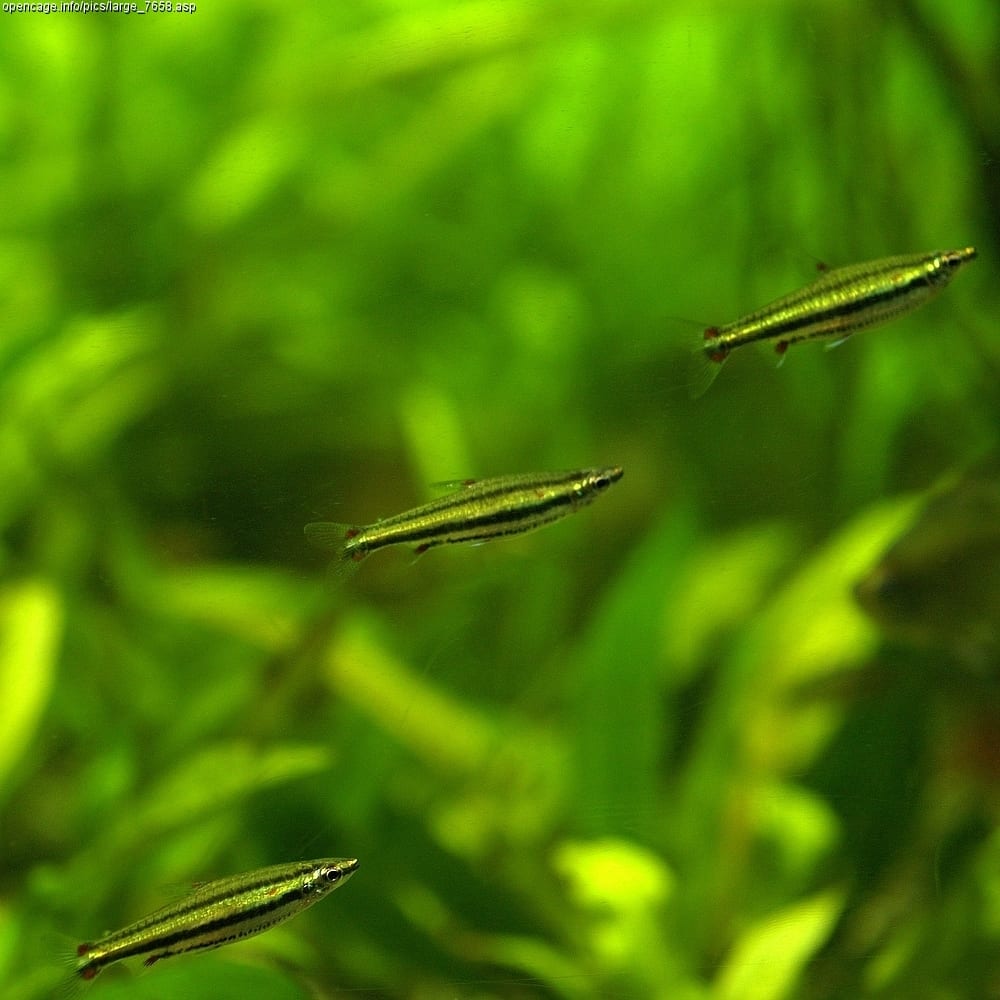
A pencilfish with three dark stripes along the flank and red marks between them. The extent of the red varies by population, and a long-striped form is traded as the super red. It shows its true colour in soft water.
Difficulty
Intermediate
Temperature
22〜28℃
Lifespan
3-5 years
Size
About 3.3-3.6cm
Diet
Fine dried foods, live and frozen brine shrimp, Daphnia
About
Nannostomus trifasciatus is a pencilfish found widely in the rivers of Guyana and the western Amazon basin in Brazil, Peru, Colombia and Bolivia. The type locality is the Amazon near the mouth of the Rio Negro and at Tabatinga in Brazil. FishBase gives 3.6cm SL, pH 5.5-7.0, hardness to 4 dH and 24-28C, while Seriously Fish gives 3.3cm SL, 22-28C, pH 4.0-7.5, 1-12 dGH and a base of at least 75 by 30cm. Three dark stripes run along the flank with red marks between them. It lives in sluggish tributaries, small rivers and swampy areas among dense plants, submerged wood and leaf litter. Typical habitats are shallow and nearly still, with hardness barely detectable and a pH of 4.0 to 6.0. Wild fish are still exported regularly, but most of those on sale are farmed.
Source: Wikipedia (CC BY-SA 4.0)
Lifespan of the Three-lined Pencilfish
The Three-lined Pencilfish lives 3-5 years.
Size of the Three-lined Pencilfish
The Three-lined Pencilfish grows to About 3.3-3.6cm.
Temperature & humidity for the Three-lined Pencilfish
The ideal temperature for the Three-lined Pencilfish is 22〜28℃.
Basic Info
Origin
South America (rivers of Guyana and the western Amazon basin in Brazil, Peru, Colombia and Bolivia)
Lifespan
3-5 years
Care Specifications
- pH
- 4–7.5
- Hardness (GH)
- 1–12 dGH
- Water Temp.
- 22–28℃
- Min. Tank
- 68 L
PeacefulGroup
Sources: Seriously Fish / FishBase
References & Sources
Edited & verified by: BreederDirect editorial team
The taxonomic, regulatory, and husbandry data on this page are compiled and verified against the authoritative primary sources below.
Taxonomy & Authority
Regulations & Conservation Status
Not CITES-listedIUCN LC · Least Concern
Sources: CITES Appendices (species not listed) / IUCN Red List
Regulations may change. Always verify the latest information with the relevant authorities.
Three-lined Pencilfish Listings
Loading latest listingsFind listings for this species