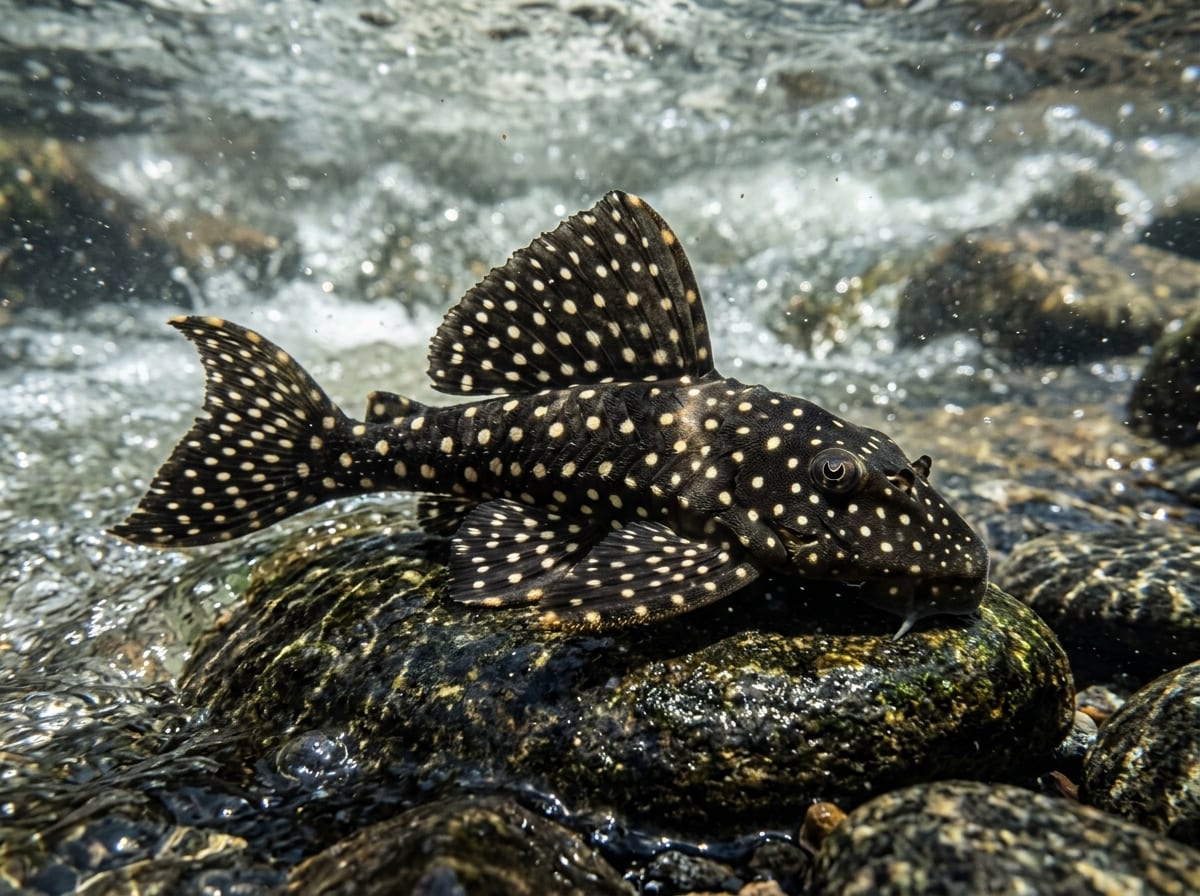
AI-generated image
Snowball pleco
IntermediateHypancistrus inspector
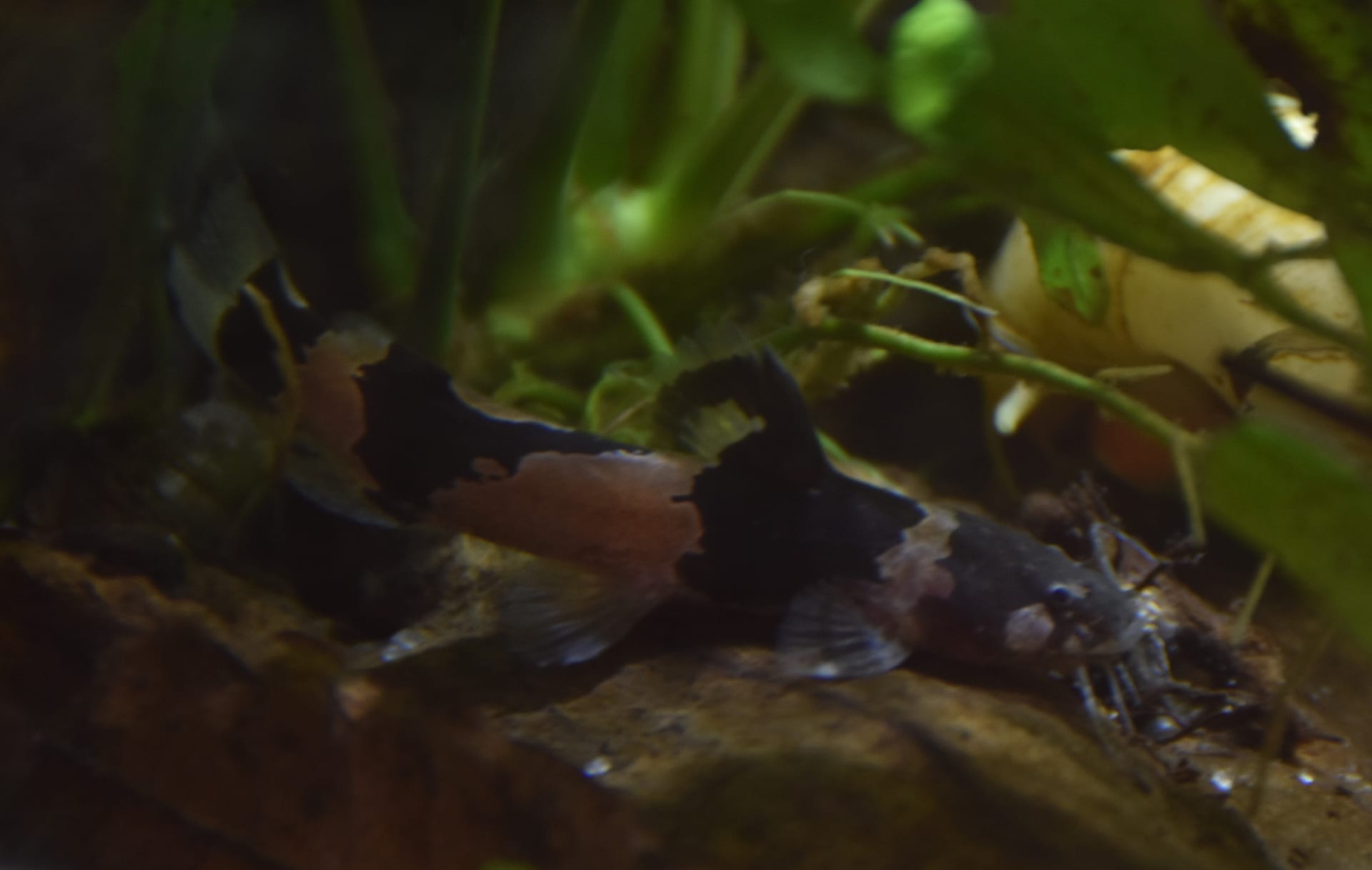
A Hypancistrus from rapids of the upper Rio Negro and Casiquiare, with large white-to-yellow spots on a dark body and big eyes. Known as L102, it grows beyond 12 cm SL.
Difficulty
Intermediate
Temperature
22〜30℃
Lifespan
Few reliable data
Size
Up to 12.6 cm SL (FishBase)
Diet
Omnivore (sinking prepared foods, frozen foods, vegetables)
About
The snowball pleco, Hypancistrus inspector (L102), was described in 2002 from the upper Rio Negro in Amazonas, Brazil, and the Casiquiare canal in Venezuela, which links the Negro and the Orinoco. Orinoco specimens in the original type series were later described as H. contradens. FishBase gives 12.6 cm SL. It is collected from rocky rapids, and stomach contents include algae, detritus and seeds. It has large white-to-yellow spots on a dark body, with smaller spots on the head, and its name refers to its large eyes. Mature males carry more odontodes on the pectoral spines and cheeks and often show a reddish tone. The female spawns in a cave and the male guards eggs and fry. It is distinct from the zebra pleco (H. zebra), and congeners hybridise, so do not keep Hypancistrus species together. It is a standard pleco in Japanese specialist shops.
Source: Wikipedia (CC BY-SA 4.0)
Size of the Snowball pleco
The Snowball pleco grows to Up to 12.6 cm SL (FishBase).
Temperature & humidity for the Snowball pleco
The ideal temperature for the Snowball pleco is 22〜30℃.
Basic Info
Origin
South America (upper Rio Negro, Brazil; Casiquiare canal, Venezuela)
Lifespan
Few reliable data
Size
Up to 12.6 cm SL (FishBase)
Temperature
References & Sources
Edited & verified by: BreederDirect editorial team
The taxonomic, regulatory, and husbandry data on this page are compiled and verified against the authoritative primary sources below.
Primary sources
Taxonomy & Authority
Regulations & Conservation Status
Not CITES-listedIUCN LC · Least Concern
Not listed in the CITES Appendices (checked on Species+). Not designated under Japan's Invasive Alien Species Act, nor on the Ministry of the Environment's list of invasive alien species. Never release aquarium fish into the wild.
Sources: Species+ (CITES) / FishBase
Regulations may change. Always verify the latest information with the relevant authorities.
Snowball pleco Listings
Loading latest listingsFind listings for this species