Source: Wikimedia Commons
Paradise Fish
IntermediateMacropodus opercularis
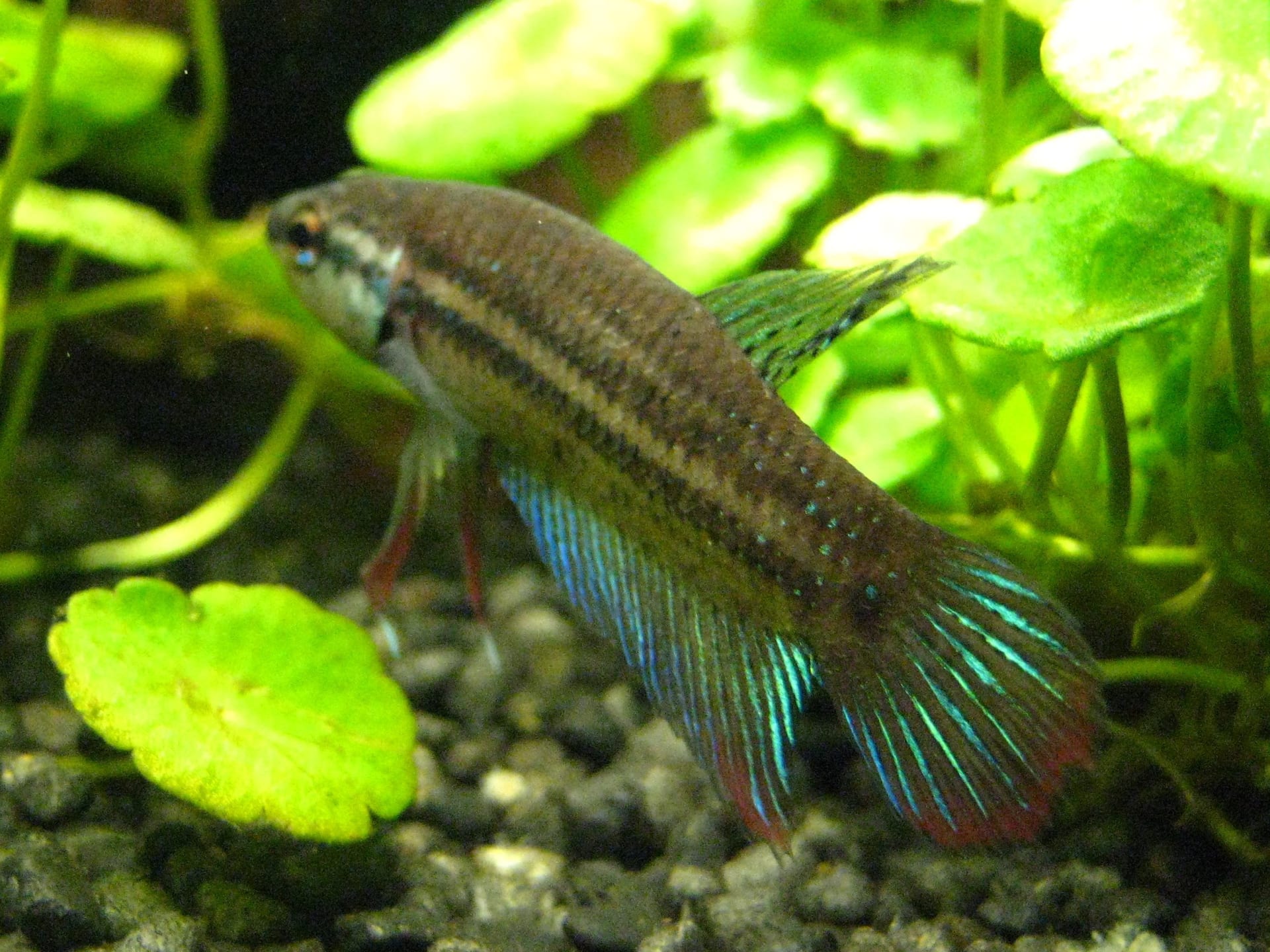
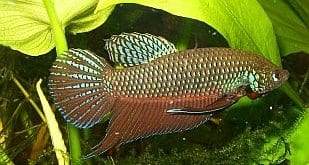
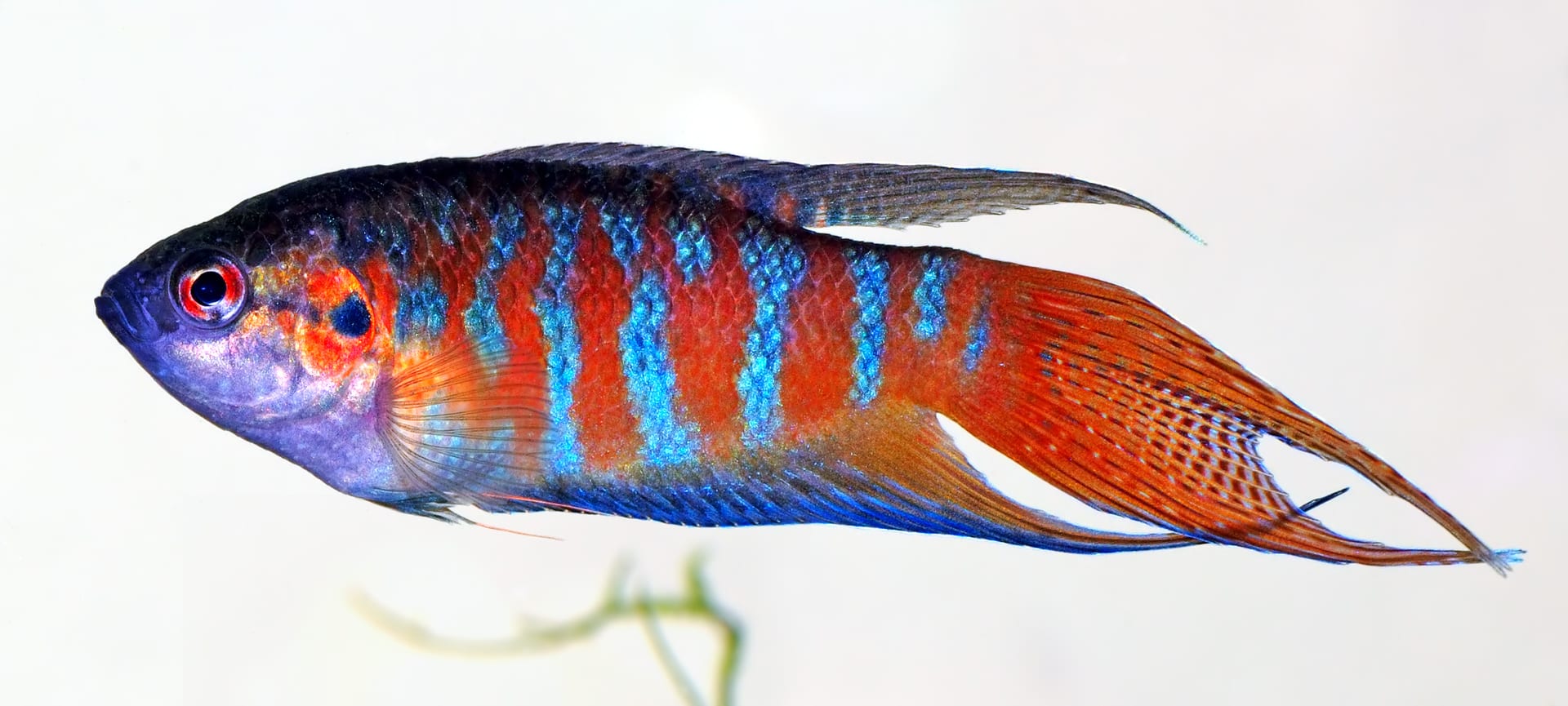
A small anabantoid with blue-green flanks, red bars and long trailing fins. Native to East Asia, it tolerates cool water and can be kept unheated. Males fight fiercely, so keep one alone or with several females. It reached Europe in 1869.
Difficulty
Intermediate
Temperature
10〜22℃
Lifespan
3-5 years
Size
6-8cm
Diet
Live and frozen foods (Daphnia, Artemia, grindal worm), dried foods
About
Macropodus opercularis is a small osphronemid found from the Yangtze basin southwards through Hainan, Taiwan and northern Vietnam. FishBase records 6.7cm standard length and Seriously Fish 8cm. Seriously Fish recommends 10-22C, pH 6.0-8.0 and 5-20dGH with an 80 x 30cm base, about 72 litres; FishBase gives 16-26C in the wild. A cool winter period appears beneficial and the species can be kept unheated in most rooms. Males are strongly territorial and should not be housed together except in very large tanks. It is a bubble nester, and the fry need access to warm humid air above the surface for the labyrinth organ to develop. Introduced to Europe in 1869 and bred there the same year, it is one of the very first tropical ornamental fishes in the hobby.
Source: Wikipedia (CC BY-SA 4.0)
Lifespan of the Paradise Fish
The Paradise Fish lives 3-5 years.
Size of the Paradise Fish
The Paradise Fish grows to 6-8cm.
Temperature & humidity for the Paradise Fish
The ideal temperature for the Paradise Fish is 10〜22℃.
Basic Info
Origin
East Asia (southern China, Hainan, Taiwan, northern Vietnam)
Lifespan
3-5 years
Size
6-8cm
Care Specifications
- pH
- 6–8
- Hardness (GH)
- 5–20 dGH
- Water Temp.
- 10–22℃
- Min. Tank
- 72 L
Semi-aggressivePairBreeding: Easy
Sources: FishBase / Seriously Fish
References & Sources
Edited & verified by: BreederDirect editorial team
The taxonomic, regulatory, and husbandry data on this page are compiled and verified against the authoritative primary sources below.
Taxonomy & Authority
Regulations & Conservation Status
Not CITES-listedIUCN LC · Least Concern
Sources: CITES Appendices (species not listed) / IUCN Red List
Regulations may change. Always verify the latest information with the relevant authorities.
Paradise Fish Listings
Loading latest listingsFind listings for this species