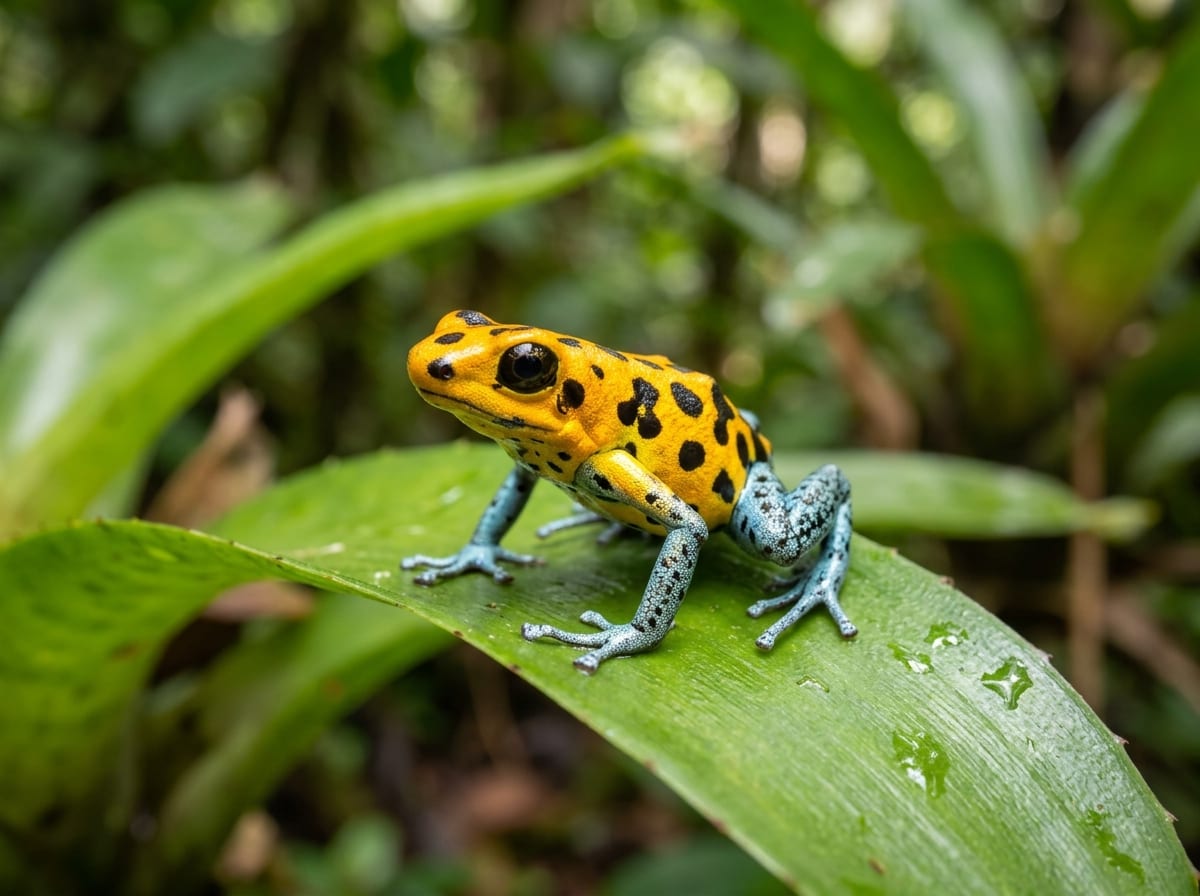
AI-generated image
Zimmermann's Poison Frog
IntermediateRanitomeya variabilis
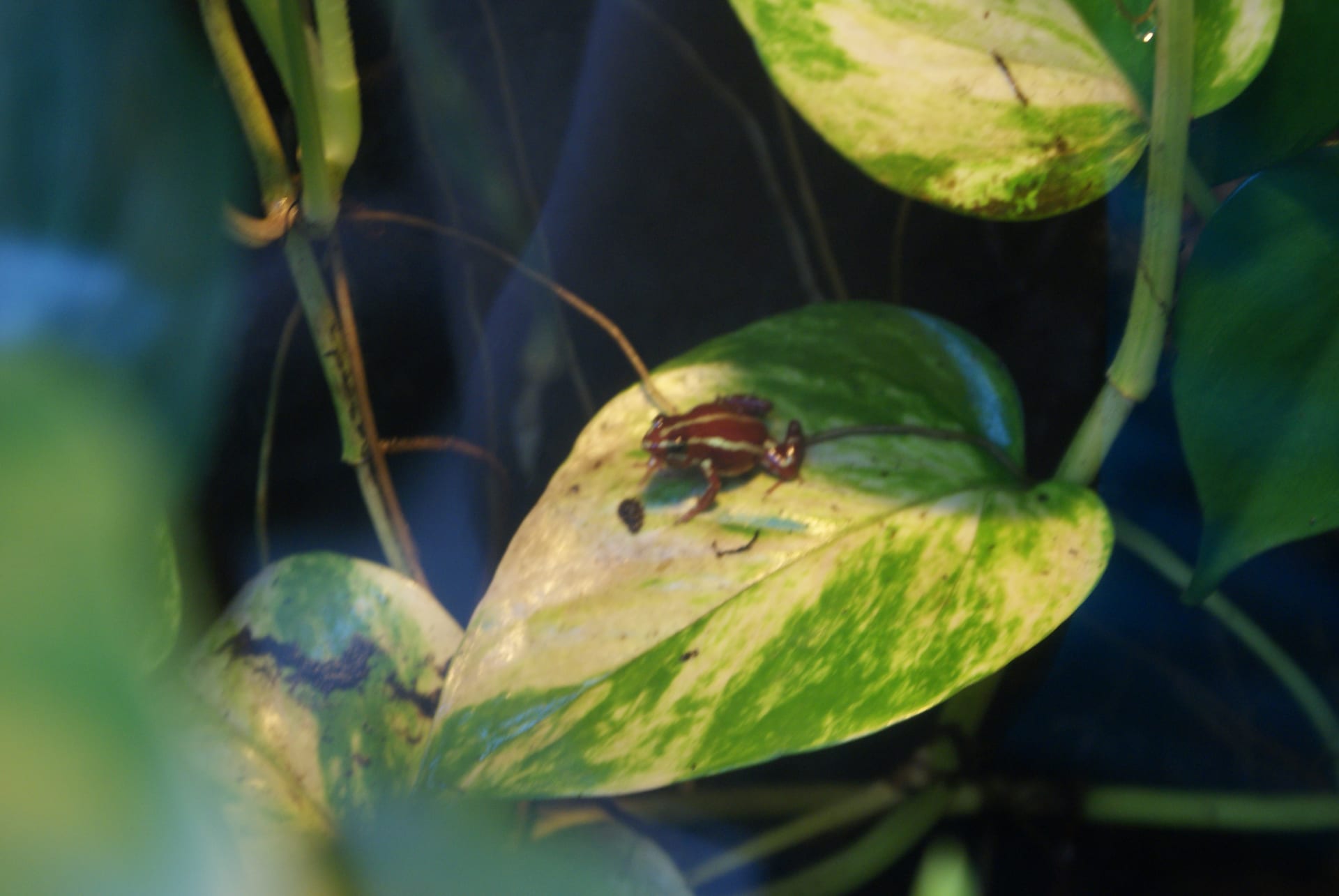
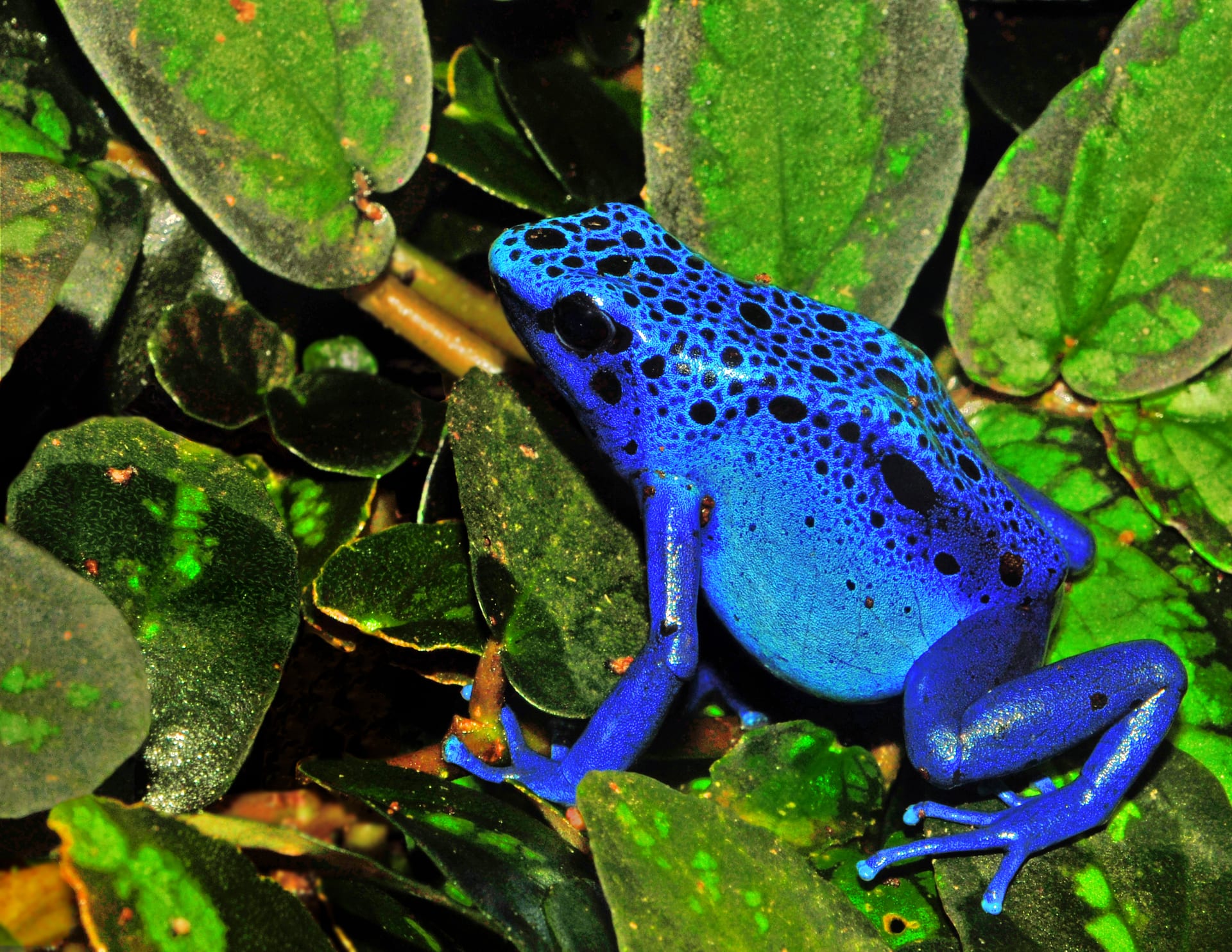
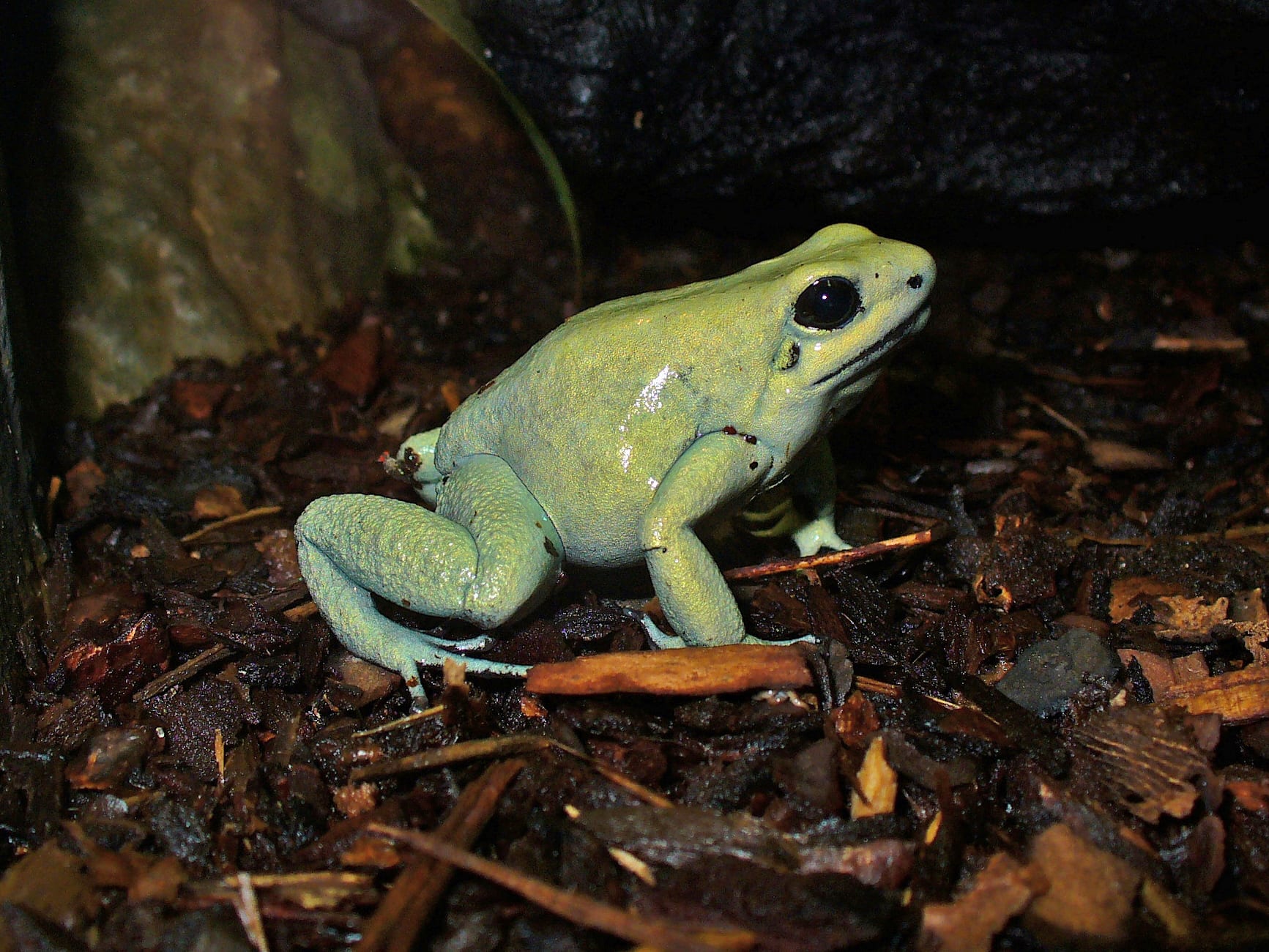
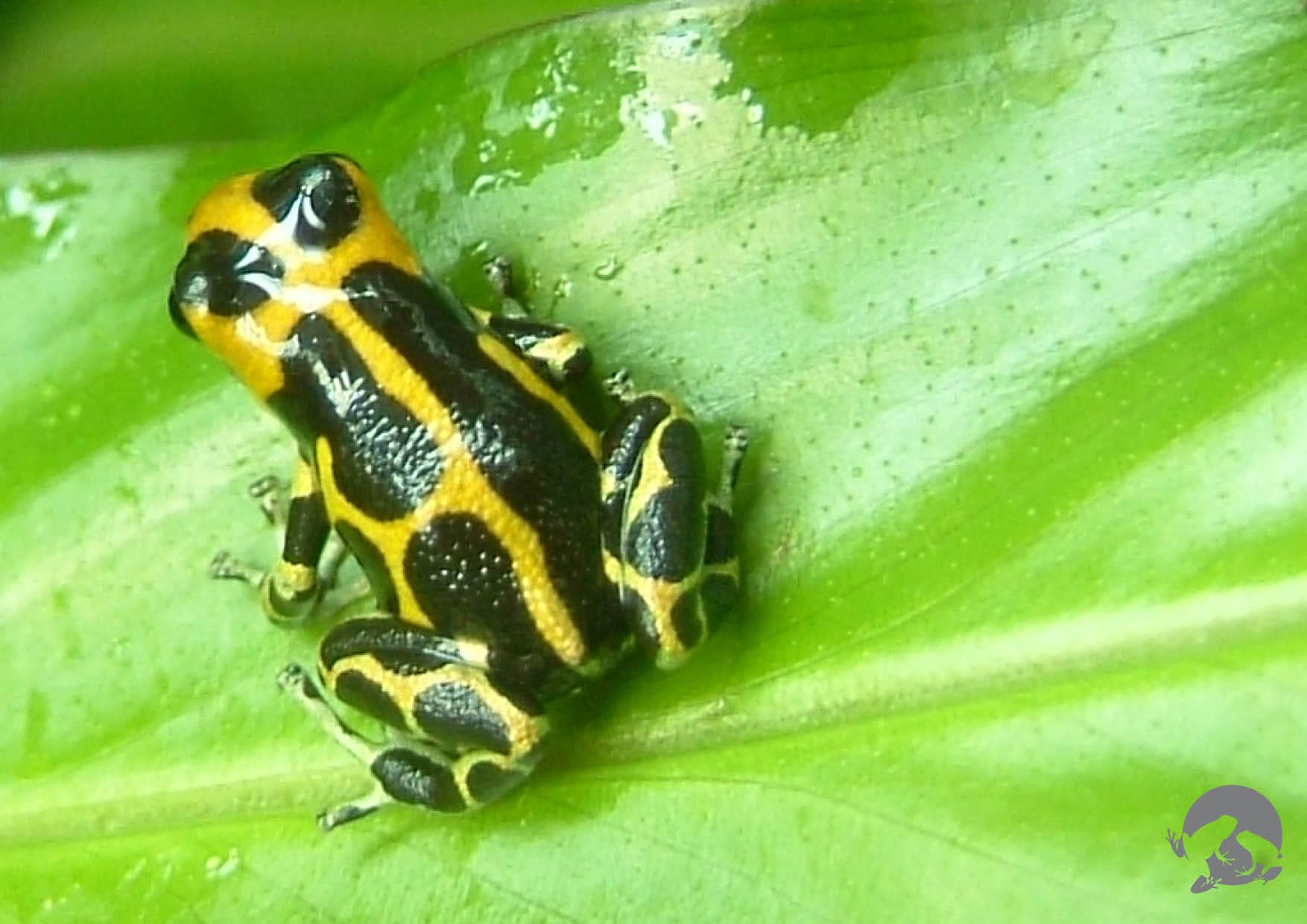
A small poison frog with a yellow to green body, black spots or stripes and blue limbs. A black spot on the snout tip and a Y-shaped back marking are good clues.
Difficulty
Intermediate
Temperature
21〜27℃
Lifespan
Poison frogs are said to live 10-15 years in captivity
Size
A small poison frog (females larger than males)
Humidity
80〜100%
Diet
Carnivore (springtails, fruit flies and other tiny insects)
About
Zimmermann's poison frog is a small Ranitomeya species found mainly on the eastern Andean slopes of northern Peru, in the upper Huallaga River basin. It was once considered the same species as R. ventrimaculata until Elke Zimmermann distinguished it. The body is yellow to green, the color ending where the arms insert, and the limbs are blue with black spots. A black spot on the snout tip and a black Y-shaped pattern on the back are typical, but the species is highly polymorphic: lowland populations are striped, highland ones spotted, and color varies with locality. Females are larger than males. The sympatric mimic poison frog has morphs that copy this species, but R. variabilis is polygamous with paternal care only, while R. imitator is monogamous with biparental care. Because tadpoles are cannibalistic, males carry them on their backs to less crowded pools. In Japan small numbers of captive-bred frogs are offered by specialist shops.
Source: Wikipedia (CC BY-SA 4.0)
Lifespan of the Zimmermann's Poison Frog
The Zimmermann's Poison Frog lives Poison frogs are said to live 10-15 years in captivity.
Temperature & humidity for the Zimmermann's Poison Frog
The ideal temperature for the Zimmermann's Poison Frog is 21〜27℃. Ideal humidity is 80〜100%.
Basic Info
Origin
Northern Peru (eastern Andean slopes, upper Huallaga River basin)
Lifespan
Poison frogs are said to live 10-15 years in captivity
Size
References & Sources
Edited & verified by: BreederDirect editorial team
The taxonomic, regulatory, and husbandry data on this page are compiled and verified against the authoritative primary sources below.
Taxonomy & Authority
Accepted name: Ranitomeya variabilis (Zimmermann & Zimmermann, 1988)
Synonyms: Dendrobates variabilis Zimmermann & Zimmermann, 1988
Authority databases: GBIF · GBIF: Ranitomeya variabilis · Wikipedia: Zimmerman's poison frog
Nomenclature follows global taxonomic authority databases.
Regulations & Conservation Status
CITES Appendix II
Listed in CITES Appendix II. International trade requires an export permit from the country of origin, but no registration is needed to keep or transfer the animal within Japan. The whole genus Ranitomeya is listed (since 1987, formerly under Dendrobates). Under the Invasive Alien Species Act, imported frog larvae (tadpoles) must be accompanied by a species identification certificate; keeping or transferring adults within Japan is not restricted. Amphibians can carry infectious diseases such as chytridiomycosis, so never release captive animals or pour tank water into the wild.
Sources: Species+ (CITES): Ranitomeya variabilis
Regulations may change. Always verify the latest information with the relevant authorities.
Zimmermann's Poison Frog Listings
Loading latest listingsFind listings for this species