Source: Wikimedia Commons
Japanese Common Toad
BeginnerBufo japonicus
A Japanese endemic toad native to southwestern Japan. It reaches 17.6 cm, secretes bufotoxin from its parotoid glands, and depends on water less than almost any other amphibian.
Difficulty
Beginner
Temperature
25〜32℃
Lifespan
3-8 years
Size
7-17.6cm
Humidity
40〜70%
Diet
Insects and earthworms
About
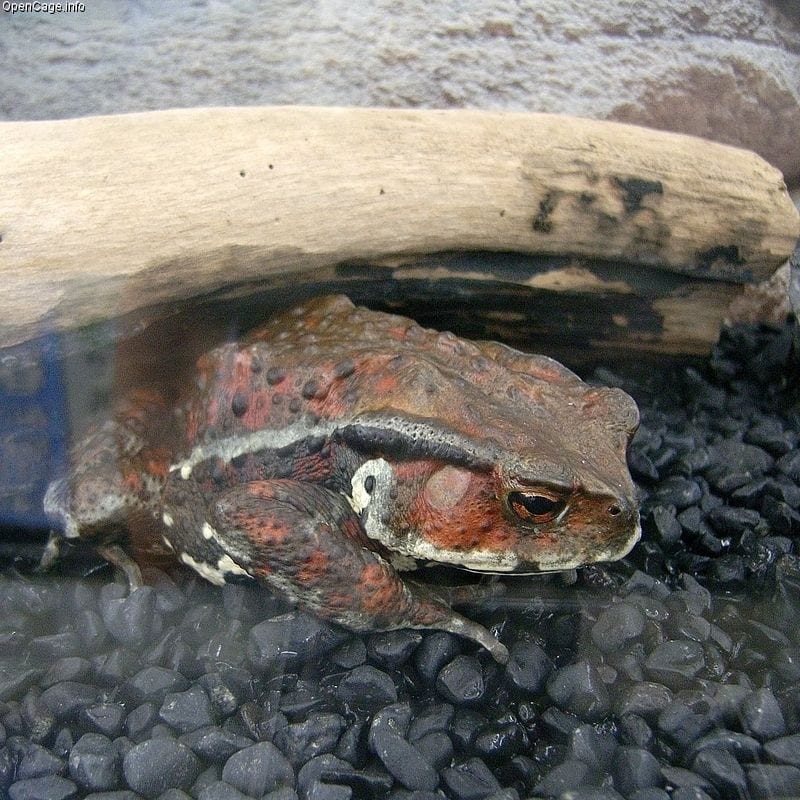
Bufo japonicus is endemic to Japan, native from southern Kinki west of the Suzuka Mountains through the Sanyo region, Shikoku, Kyushu and Yakushima. Adults are 7-17.6 cm, brown to reddish brown, usually with red spots along the flanks. Its small tympanum, separated from the eye by about its own diameter, distinguishes it from the eastern form. It occupies lowland and montane forest and grassland as well as farmland, parks and gardens, and copes well with urbanisation. Nocturnal, it shelters under stones and fallen wood by day. Toads depend on water far less than most amphibians, and adults stay away from it outside the breeding season. It secretes bufotoxin from the parotoid glands; the tiger keelback snake is resistant and stores the toxin in its own nuchal glands. Breeding is explosive, with many toads gathering briefly at a pond to lay 6,000-14,000 eggs in strings. Introduced populations in Tokyo and Sendai now hybridise with the native eastern toad, which is a conservation concern.
Source: Wikipedia (CC BY-SA 4.0)
Lifespan of the Japanese Common Toad
The Japanese Common Toad lives 3-8 years.
Size of the Japanese Common Toad
The Japanese Common Toad grows to 7-17.6cm.
Basic Info
Origin
Endemic to Japan (southern Kinki west of the Suzuka Mountains, Sanyo, Shikoku, Kyushu and Yakushima; introduced to Tokyo and Sendai)
Lifespan
3-8 years
Size
Care Specifications
PeacefulSolitary
Sources: Wikipedia (Japanese) / Wikipedia (English) / GBIF
References & Sources
Edited & verified by: BreederDirect editorial team
The taxonomic, regulatory, and husbandry data on this page are compiled and verified against the authoritative primary sources below.
Taxonomy & Authority
Accepted name: Bufo japonicus Temminck & Schlegel, 1838
Synonyms: Bufo bufo japonicus Temminck & Schlegel, 1838, Bufo japonicus formosus Boulenger, 1883, Bufo vulgaris japonicus Temminck & Schlegel, 1838
Authority databases: GBIF
Nomenclature follows global taxonomic authority databases.
Regulations & Conservation Status
Not CITES-listedIUCN LC · Least Concern
Domestic law: This species is not designated as either a designated alien species or a special animal, but introduced individuals in Tokyo and Sendai are hybridizing with native Asian toads, and release of captive individuals into the wild causes genetic disturbance.
Sources: CITES Appendices (species not listed) / IUCN Red List / Wikipedia (Japanese)
Regulations may change. Always verify the latest information with the relevant authorities.
Japanese Common Toad Listings
Loading latest listingsFind listings for this species