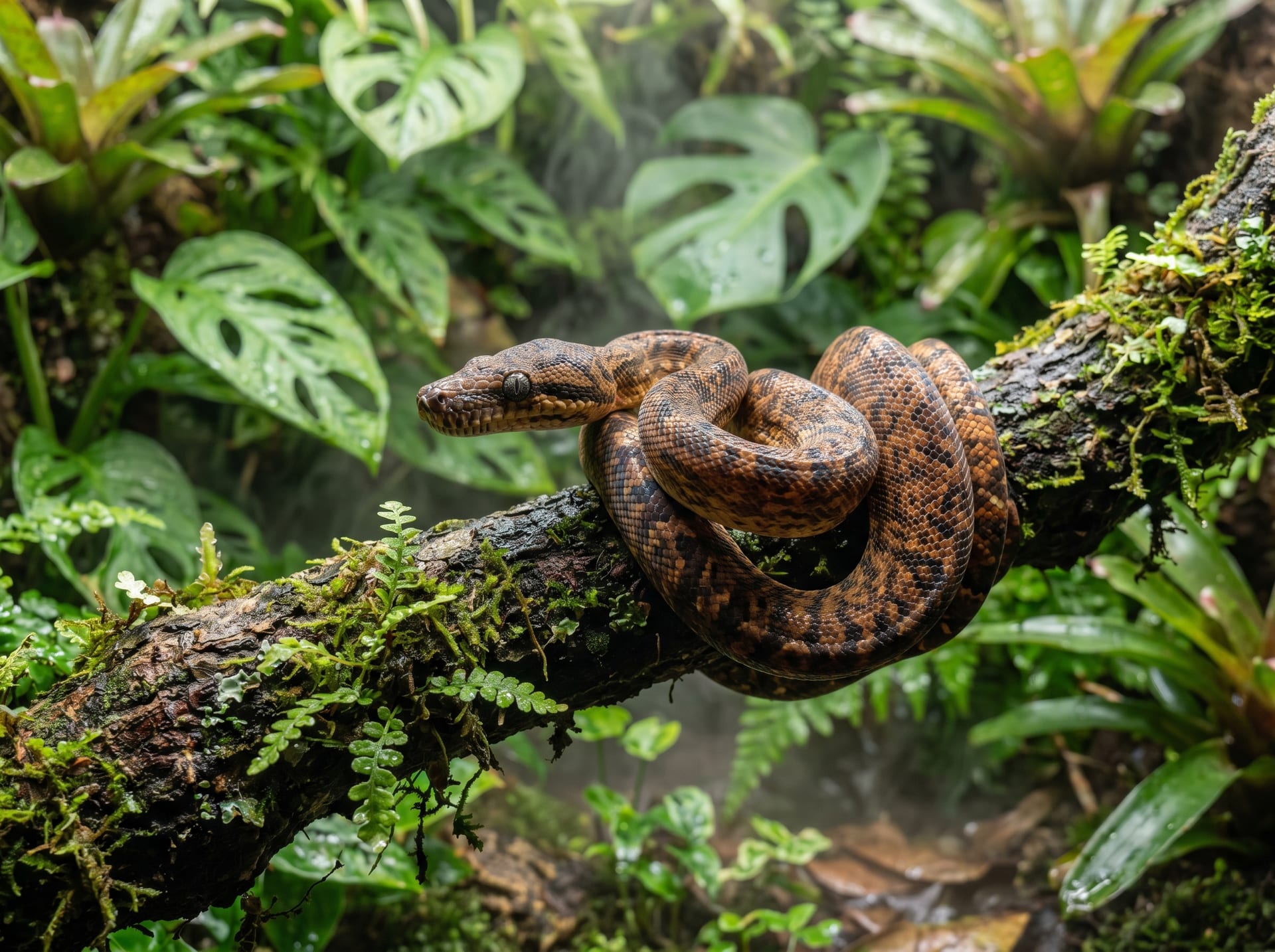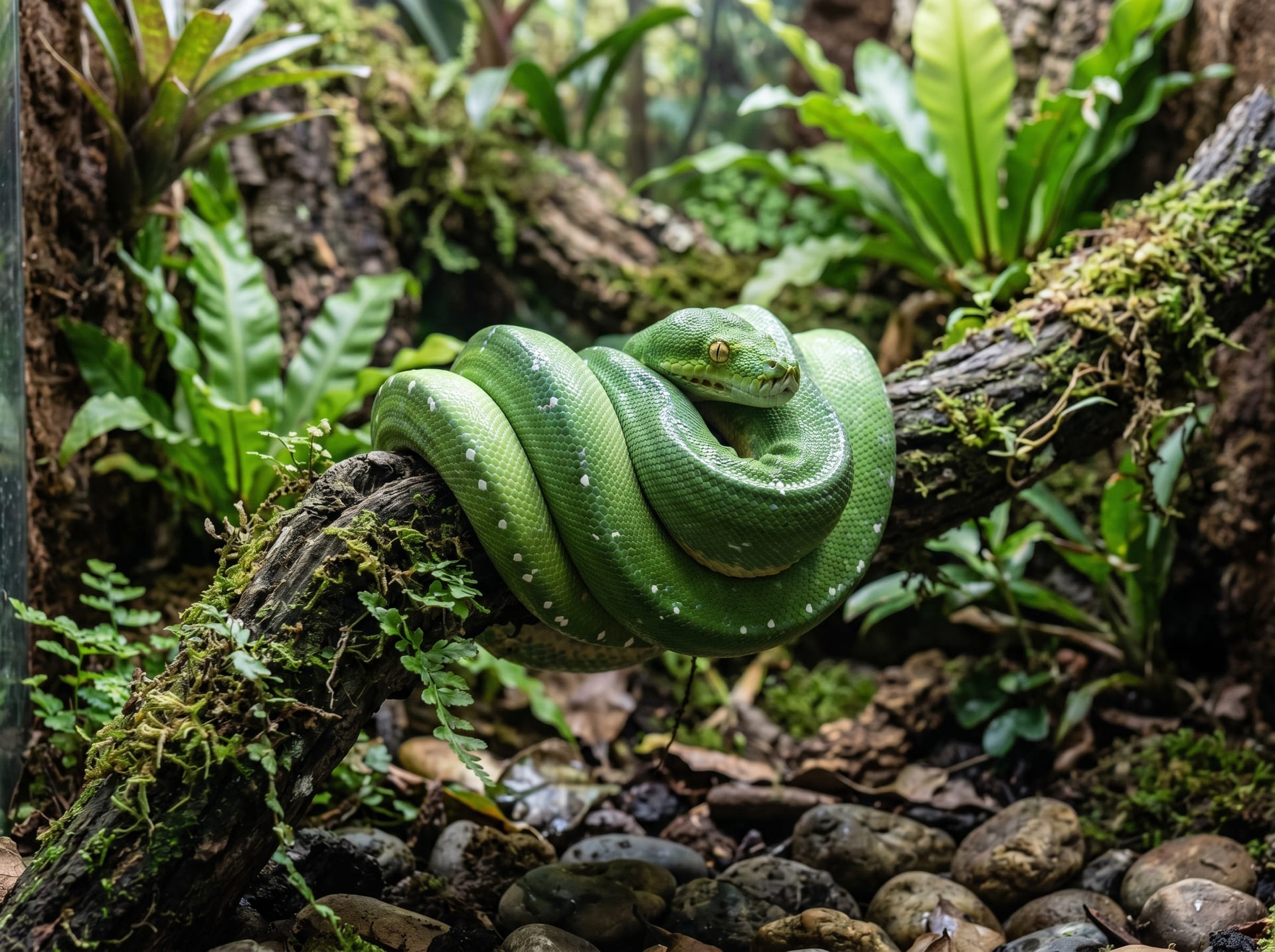
AI-generated image
Green Tree Python
AdvancedMorelia viridis
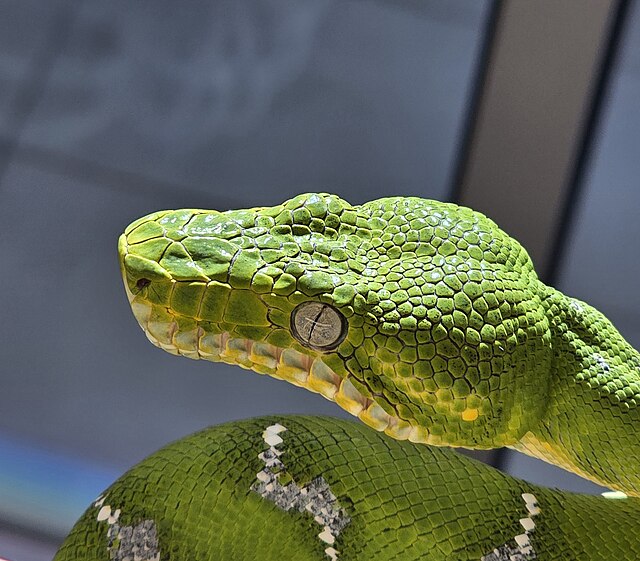
Stunningly green arboreal python. Distinctive coiled posture on branches. Juveniles change from yellow/brick to green.
Difficulty
Advanced
Temperature
25〜32℃
Lifespan
15-20 years
Size
120-200cm
Humidity
40〜70%
Diet
Frozen mice/rats
About
The green tree python, is a species of snake in the family Pythonidae. The species is native to New Guinea, some islands in Indonesia, and the Cape York Peninsula in Australia. First described by Hermann Schlegel in 1872, it was known for many years as Chondropython viridis. As its common name suggests, it is a bright green snake that can reach a total length of 2 m (6.6 ft) and a weight of 1.6 kg (3.5 lb), with females slightly larger and heavier than males. Living generally in trees, the green tree python mainly hunts and eats small reptiles and mammals. It is a popular pet, and numbers in the wild have suffered with large-scale smuggling of wild-caught green tree pythons in Indonesia. Despite this, the green tree python is rated as least concern on the IUCN Red List of endangered species.
Source: Wikipedia (CC BY-SA 4.0)
Basic Info
Origin
New Guinea, some islands in Indonesia, and the Cape York Peninsula in Australia
Lifespan
15-20 years
Size
120-200cm
Temperature
25〜32℃
Humidity
40〜70%
Diet
Frozen mice/rats
Care Guide
Morphs (Varieties)
グリーンツリーパイソン(Morelia viridis)の市場はBiak・Sorong・Aru・Jayapuraなどの産地(ロカリティ)タイプが中心で、これらはモルフではない。遺伝的に確立した単一遺伝子モルフは劣性のアルビノのみ。キャリコやハイブルー等は産地交配や色の選抜累代でメンデル型の単一遺伝子モルフではない。
RecessiveVisual only with two copies; one copy = het (carrier).
Albino
Sources: The Snake Keeper - Green Tree Pythons (albino = only simple recessive mutation) / Reptiles Magazine - Green Tree Python Care Sheet
A curated selection of notable morphs. Inheritance modes are a breeding-planning guide; actual appearance varies with combos.
References & Sources
Edited & verified by: br-choku editorial team
The taxonomic, regulatory, and husbandry data on this page are compiled and verified against the authoritative primary sources below.
Taxonomy & Authority
Accepted name: Morelia viridis (Schlegel, 1872)
Synonyms: Chondropython pulcher Sauvage, 1878, Chondropython viridis (Schlegel, 1872), Chondropython viridis adelynhoserae Hoser, 2009, Chondropython viridis shireenae Hoser, 2003, Python viridis Schlegel, 1872
Authority databases: GBIF · Reptile Database
Nomenclature follows global taxonomic authority databases.
Regulations & Conservation Status
CITES 附属書IIIUCN LC · Least Concern
Sources: CITES Checklist (Pythonidae spp. Appendix II) / IUCN Red List
Regulations may change. Always verify the latest information with the relevant authorities.
Green Tree Python Listings
Loading latest listingsFind listings for this species