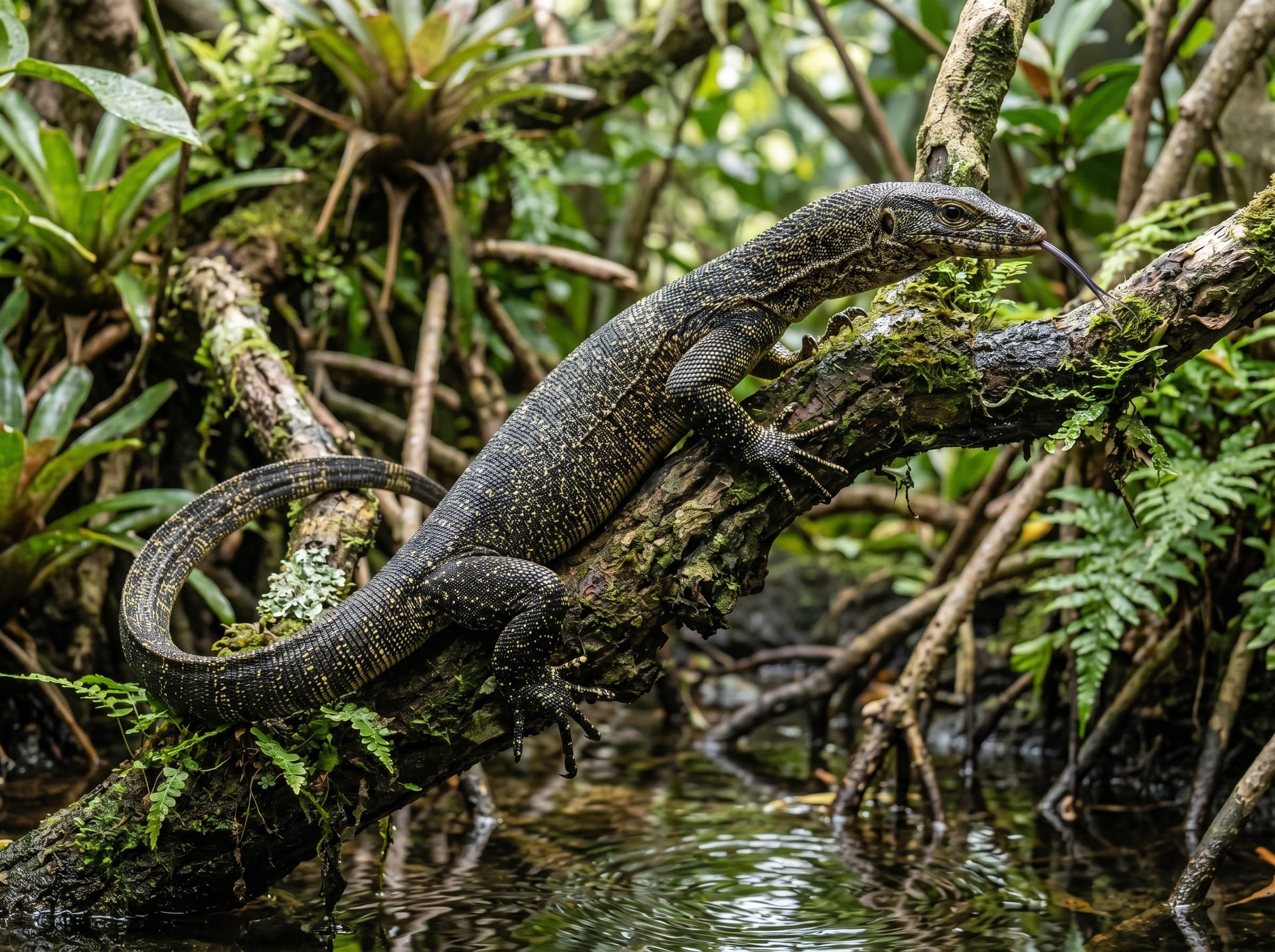
AI-generated image
Mangrove Monitor
AdvancedVaranus indicus
Medium monitor with black body dotted in yellow spots. Semi-aquatic with excellent swimming. Slim and agile among monitors. Often feisty even CB — intermediate to advanced.
Difficulty
Advanced
Temperature
26〜35℃
Lifespan
15-20 years
Size
80-120cm
Humidity
70〜90%
Diet
Carnivore (insects, fish, crustaceans, frozen mice)
About
The mangrove monitor (Varanus indicus) is a semi-aquatic medium-sized monitor lizard distributed across New Guinea, northern Australia, and islands of the western Pacific. As its name suggests, it favors mangrove forests, estuaries, and waterside habitats near the coast, and it is a capable swimmer and diver. Adults reach about 80–120 cm in total length, with a dark ground color scattered with yellow spots. Active and requiring plenty of exercise, it is carnivorous, eating insects, fish, crustaceans, and small animals. Keeping it requires a large, sturdy enclosure, a spacious water area, strong UVB lighting, and a basking spot. It has an active metabolism and prefers warm, humid conditions. Fast and strong, it is an advanced species suited to experienced large-lizard keepers.
Lifespan of the Mangrove Monitor
The Mangrove Monitor lives 15-20 years.
Size of the Mangrove Monitor
The Mangrove Monitor grows to 80-120cm.
Temperature & humidity for the Mangrove Monitor
The ideal temperature for the Mangrove Monitor is 26〜35℃. Ideal humidity is 70〜90%.
Basic Info
Origin
New Guinea, northern Australia, and islands of the western Pacific
Lifespan
15-20 years
Size
80-120cm
References & Sources
Edited & verified by: BreederDirect editorial team
The taxonomic, regulatory, and husbandry data on this page are compiled and verified against the authoritative primary sources below.
Taxonomy & Authority
Accepted name: Varanus indicus (Daudin, 1802)
Synonyms: Monitor chlorostigma Gray, 1831, Monitor doreanus Meyer, 1874, Monitor indicus (Daudin, 1802), Monitor kalabeck Lesson, 1830, Tupinambis indicus Daudin, 1802, Varanus chlorostigma (Gray, 1831)
Authority databases: GBIF · Reptile Database
Nomenclature follows global taxonomic authority databases.
Regulations & Conservation Status
CITES Appendix IIIUCN LC · Least Concern
Sources: CITES Checklist (Varanus spp. Appendix II) / IUCN Red List
Regulations may change. Always verify the latest information with the relevant authorities.
Mangrove Monitor Listings
Loading latest listingsFind listings for this species