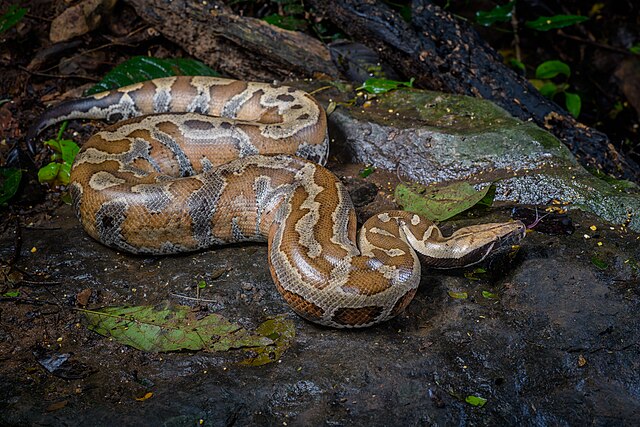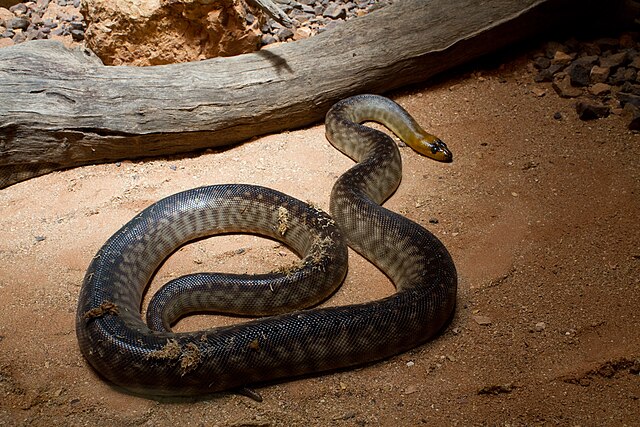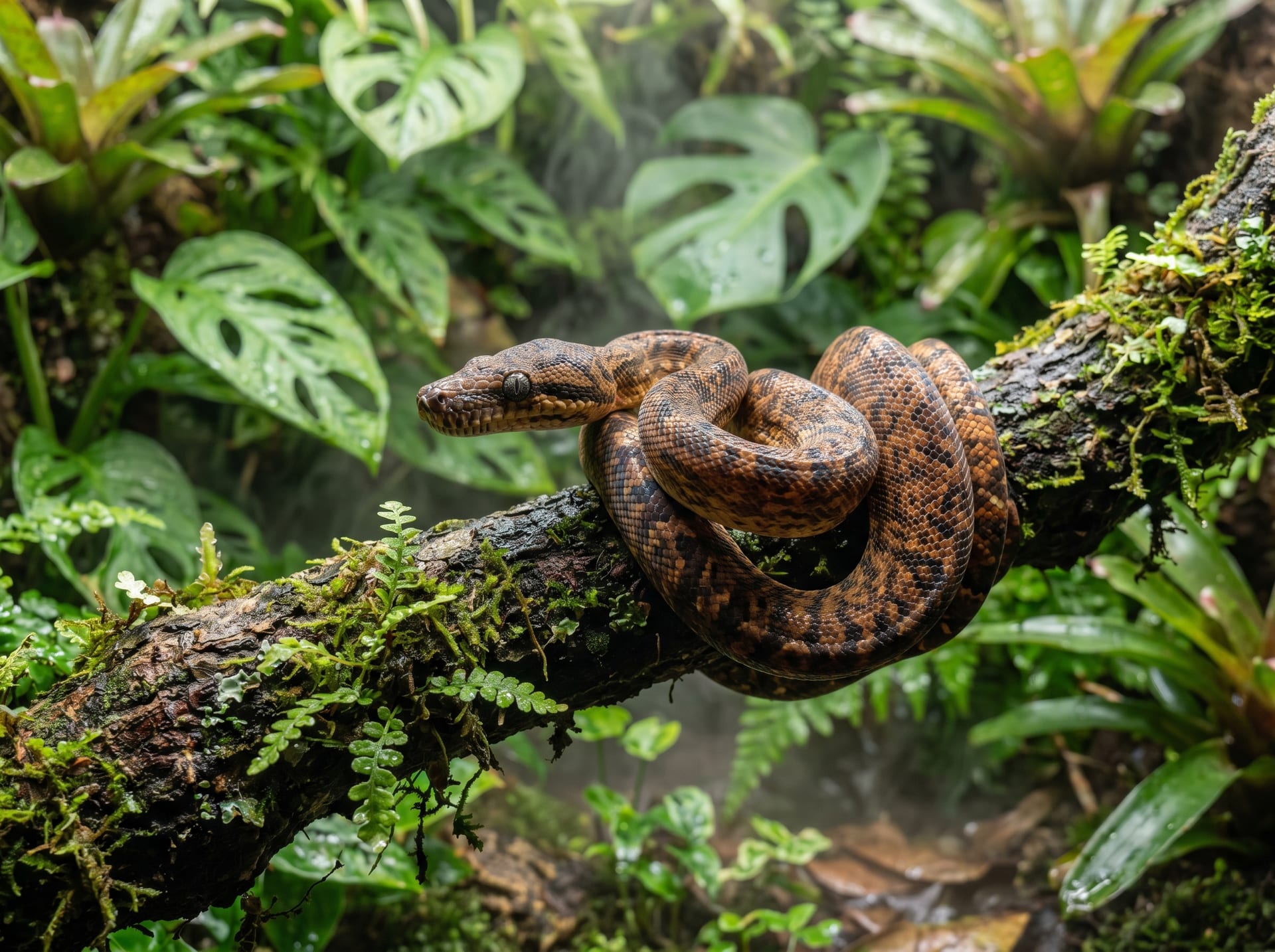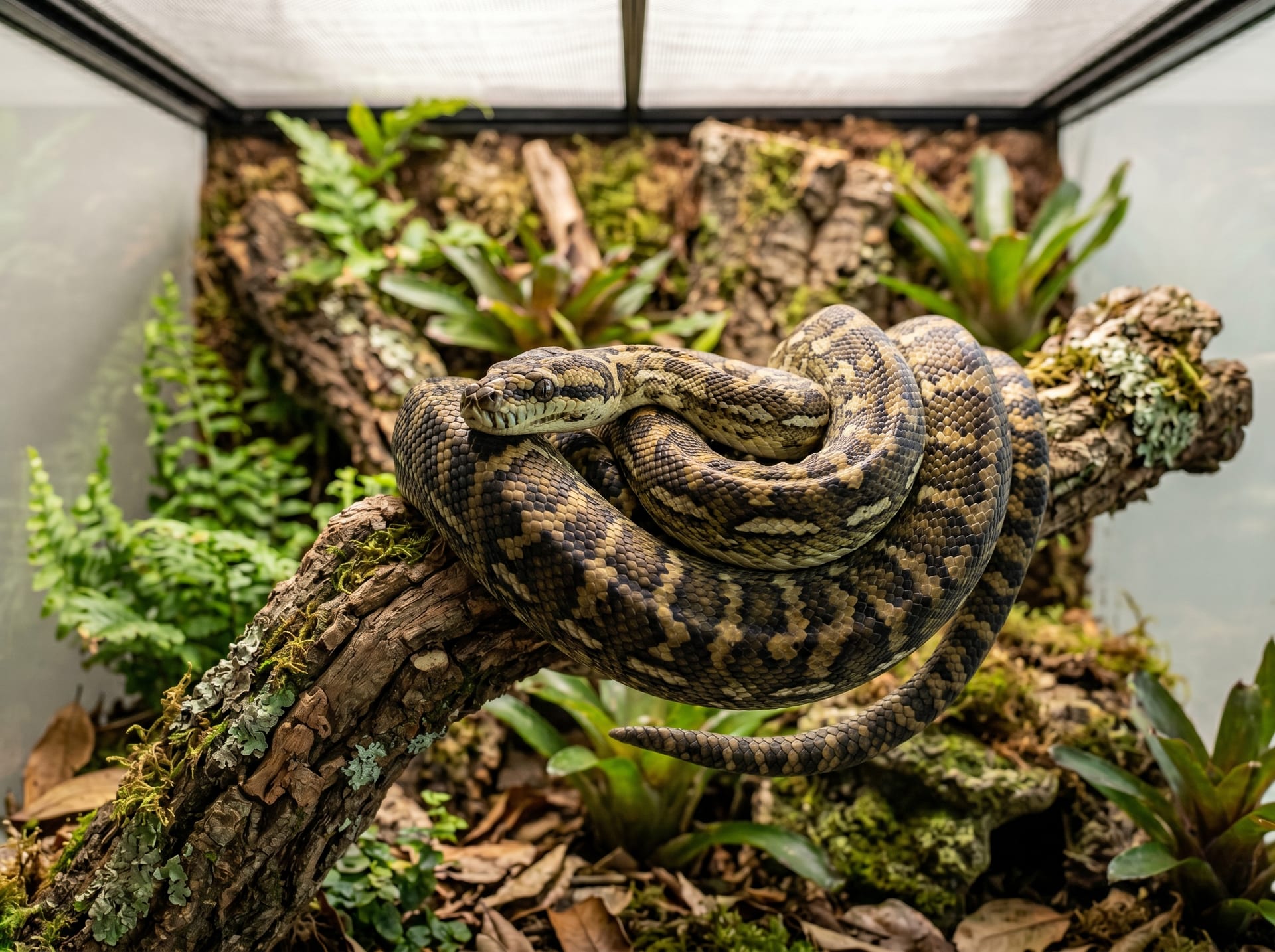
AI-generated image
Carpet Python
IntermediateMorelia spilota
Medium-sized python from Australia. Beautiful patterns and manageable size. Color varies greatly among subspecies.
Difficulty
Intermediate
Temperature
25〜32℃
Lifespan
15-25 years
Size
150-250cm
Humidity
40〜70%
Diet
Frozen mice/rats
About
Morelia spilota, commonly known as the carpet python, is a large snake of the family Pythonidae found in Australia, New Guinea, Bismarck Archipelago, and the northern Solomon Islands. Many subspecies are recognised; ITIS lists six, the Reptile Database six, and the IUCN eight.
Source: Wikipedia (CC BY-SA 4.0)
Basic Info
Origin
Australia, New Guinea, Bismarck Archipelago, and the northern Solomon Islands
Lifespan
15-25 years
Size
150-250cm
Temperature
25〜32℃
Humidity
40〜70%
Diet
Frozen mice/rats
Care Guide
Temperature
26-32°C (basking 35°C)
Humidity
50-70%
Enclosure
Adults need 90cm+ enclosure
Morphs (Varieties)
カーペットパイソン(Morelia spilota)の遺伝形態。アルビノ・グラナイト・アザンティックは劣性、キャラメル・ハイポ・ジャガー・ゼブラは共優性(不完全優性、ホモでスーパー体)。タイガーは多遺伝子(ポリジェニック)形質。ジャガーはホモ(スーパージャグ)が致死とされ、ヘテロでも神経症状(ウォブル)を伴うことがある。ジャングル・コースタル・ダイヤモンドは亜種/産地名でモルフではない。
RecessiveVisual only with two copies; one copy = het (carrier).
AlbinoAxanthicGranite
Incomplete dominant1 copy visual; 2 copies (super form) more pronounced.
CaramelHypo (Hypomelanistic)JaguarZebra
PolygenicContinuous trait from multiple genes; intensified by selective breeding.
Tiger
Sources: StarPythons - Carpet Python Morphs Guide / The Herpetoculture Network - Tiger Carpet Python genetics
A curated selection of notable morphs. Inheritance modes are a breeding-planning guide; actual appearance varies with combos.
References & Sources
Edited & verified by: br-choku editorial team
The taxonomic, regulatory, and husbandry data on this page are compiled and verified against the authoritative primary sources below.
Taxonomy & Authority
Accepted name: Morelia spilota (Lacépède, 1804)
Synonyms: Coluber spilotus Lacépède, 1804, Morelia argus Duméril & Bibron, 1844, Morelia argus fasciolata Jan, 1864, Morelia cheynei Wells & Wellington, 1984, Morelia harrisoni Hoser, 2000, Morelia mcdowelli Wells & Wellington, 1984
Authority databases: GBIF · Reptile Database
Nomenclature follows global taxonomic authority databases.
Regulations & Conservation Status
CITES 附属書IIIUCN LC · Least Concern
Sources: CITES Checklist (Pythonidae spp. Appendix II) / IUCN Red List
Regulations may change. Always verify the latest information with the relevant authorities.
Carpet Python Listings
Loading latest listingsFind listings for this species