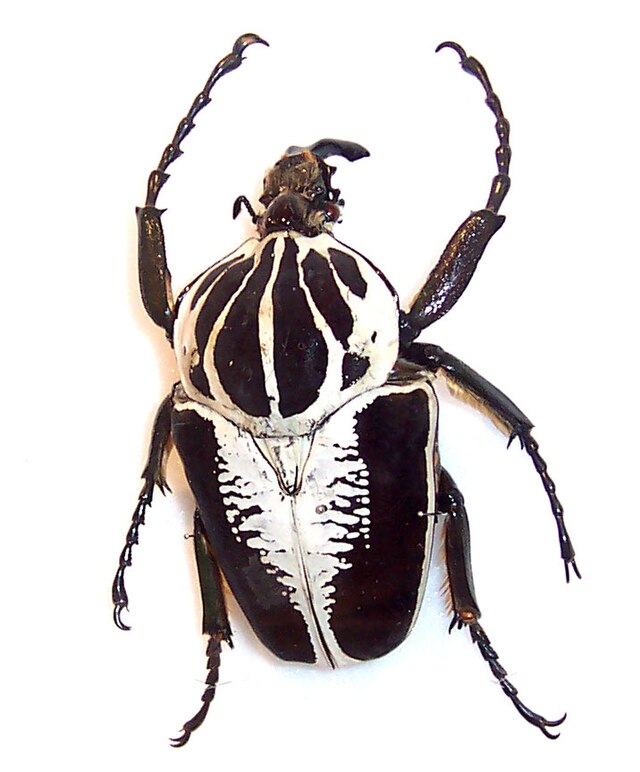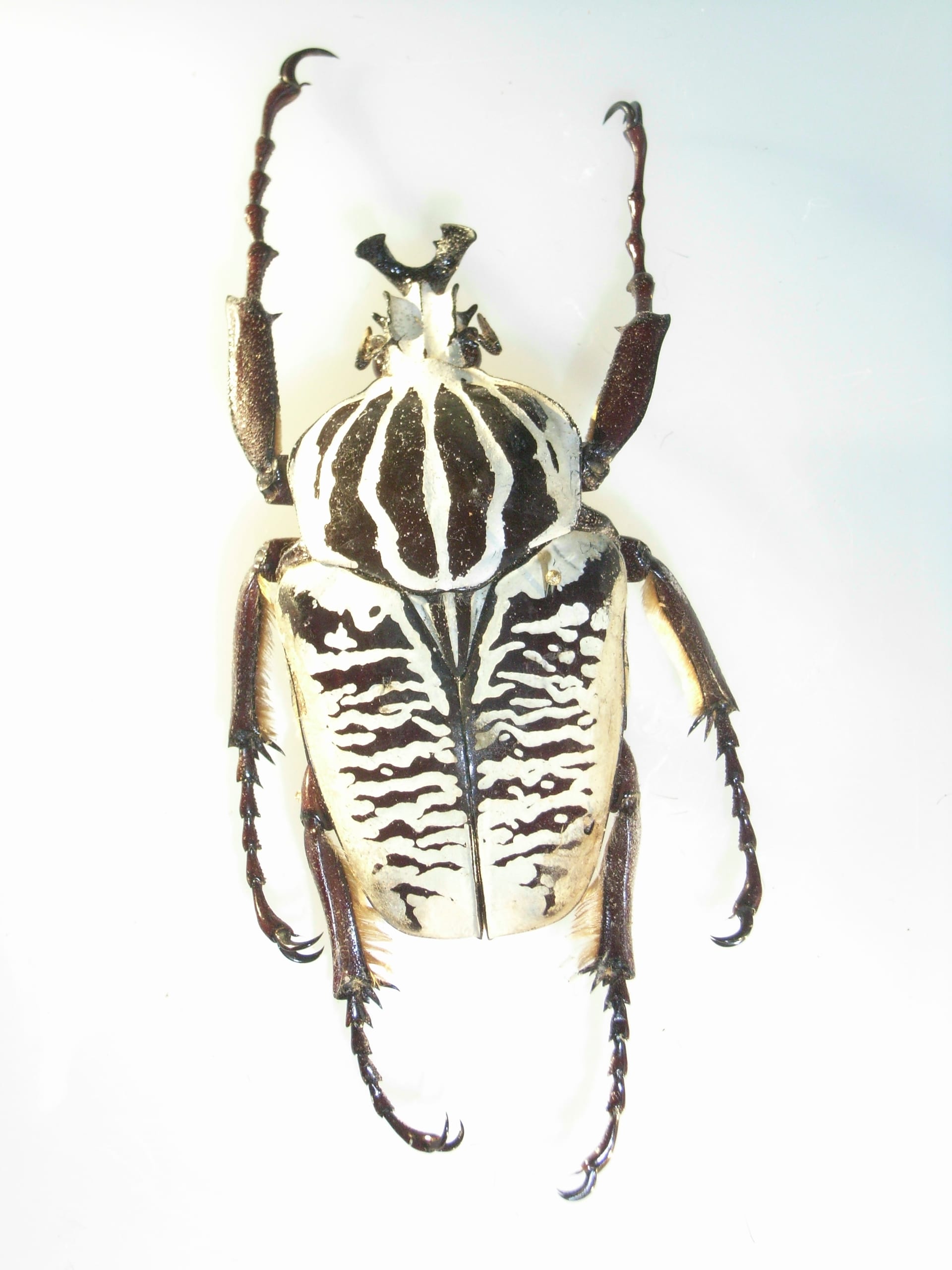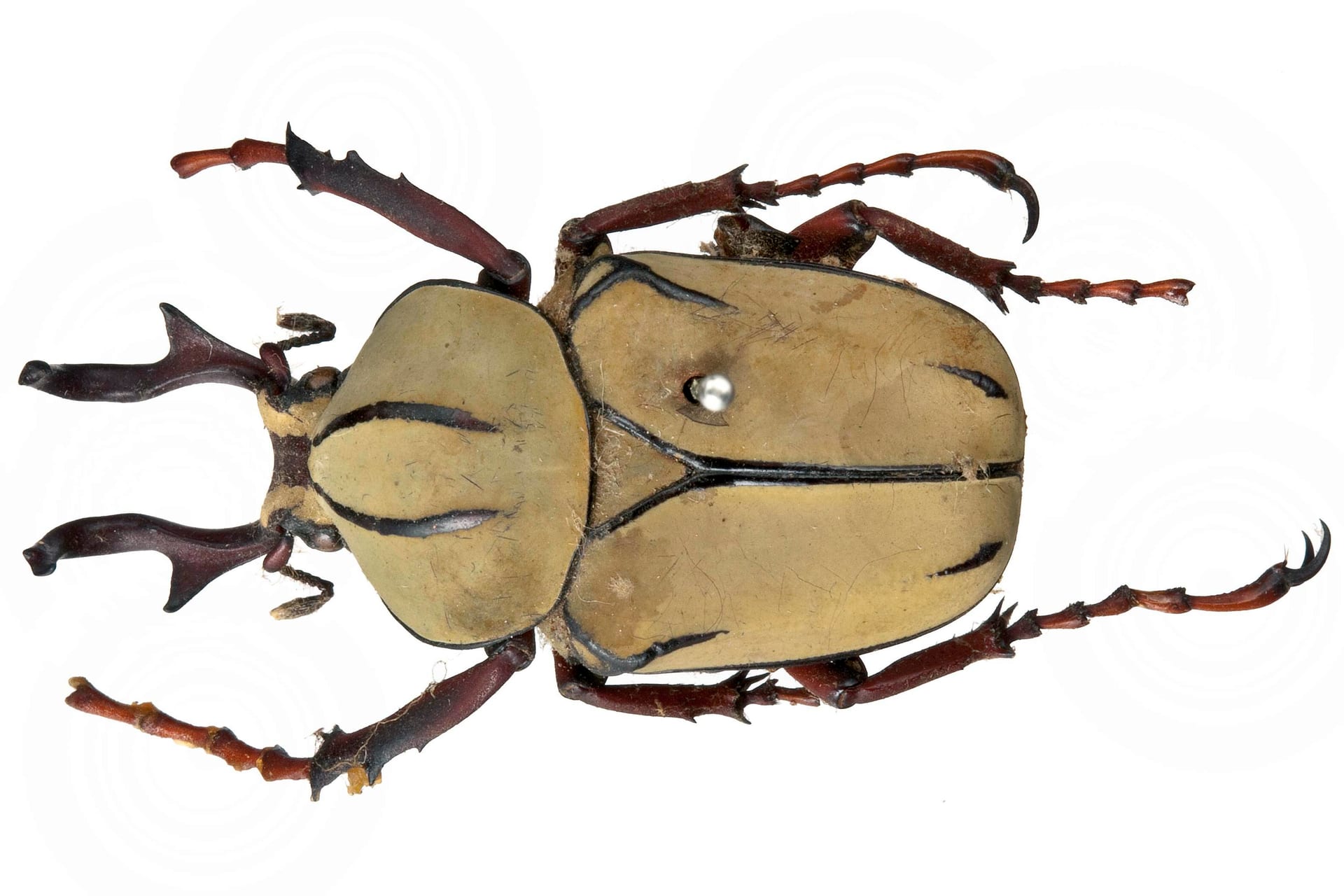
Source: Wikimedia Commons
Wallich's Flower Beetle
IntermediateDicronocephalus wallichi
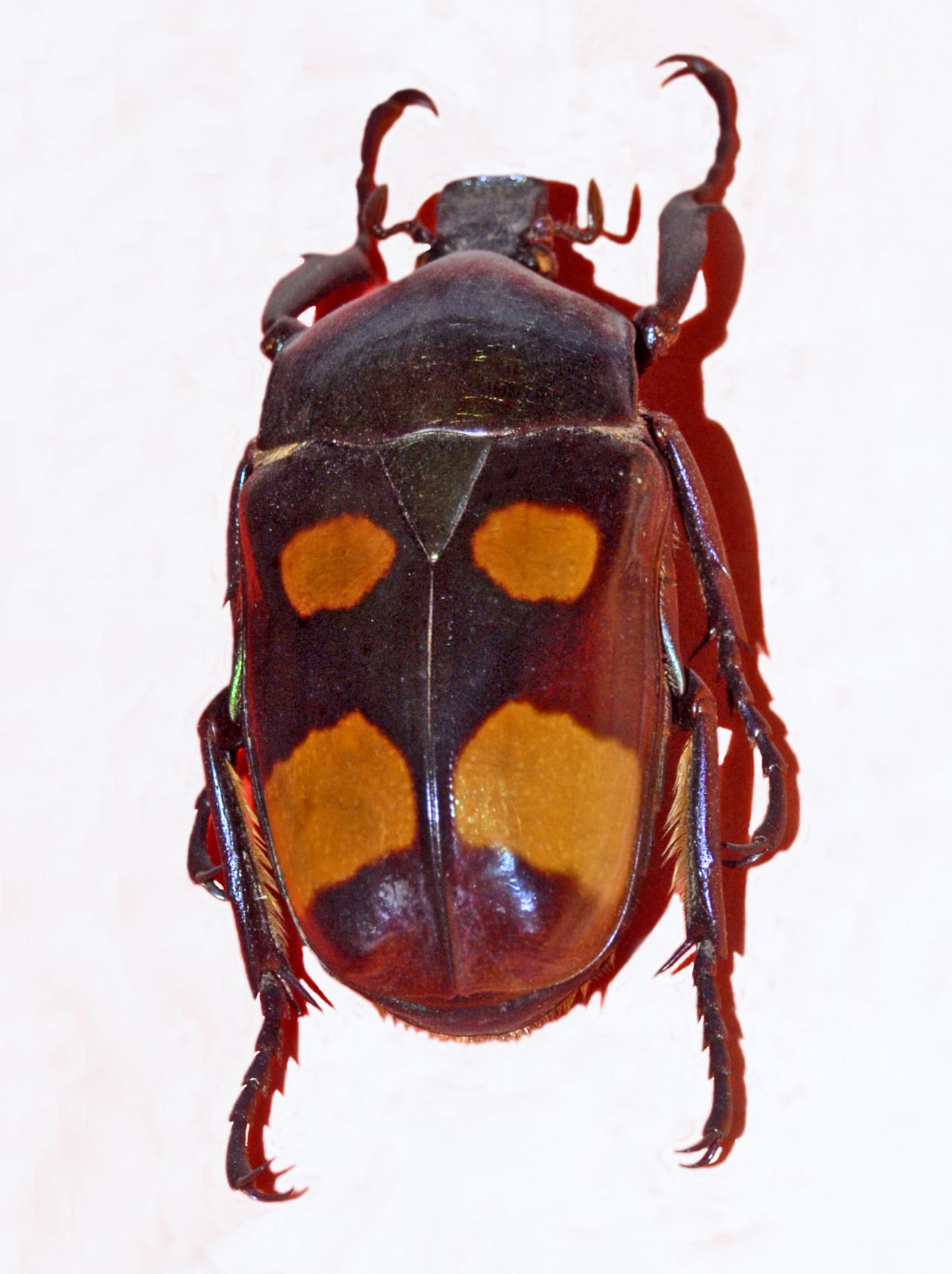
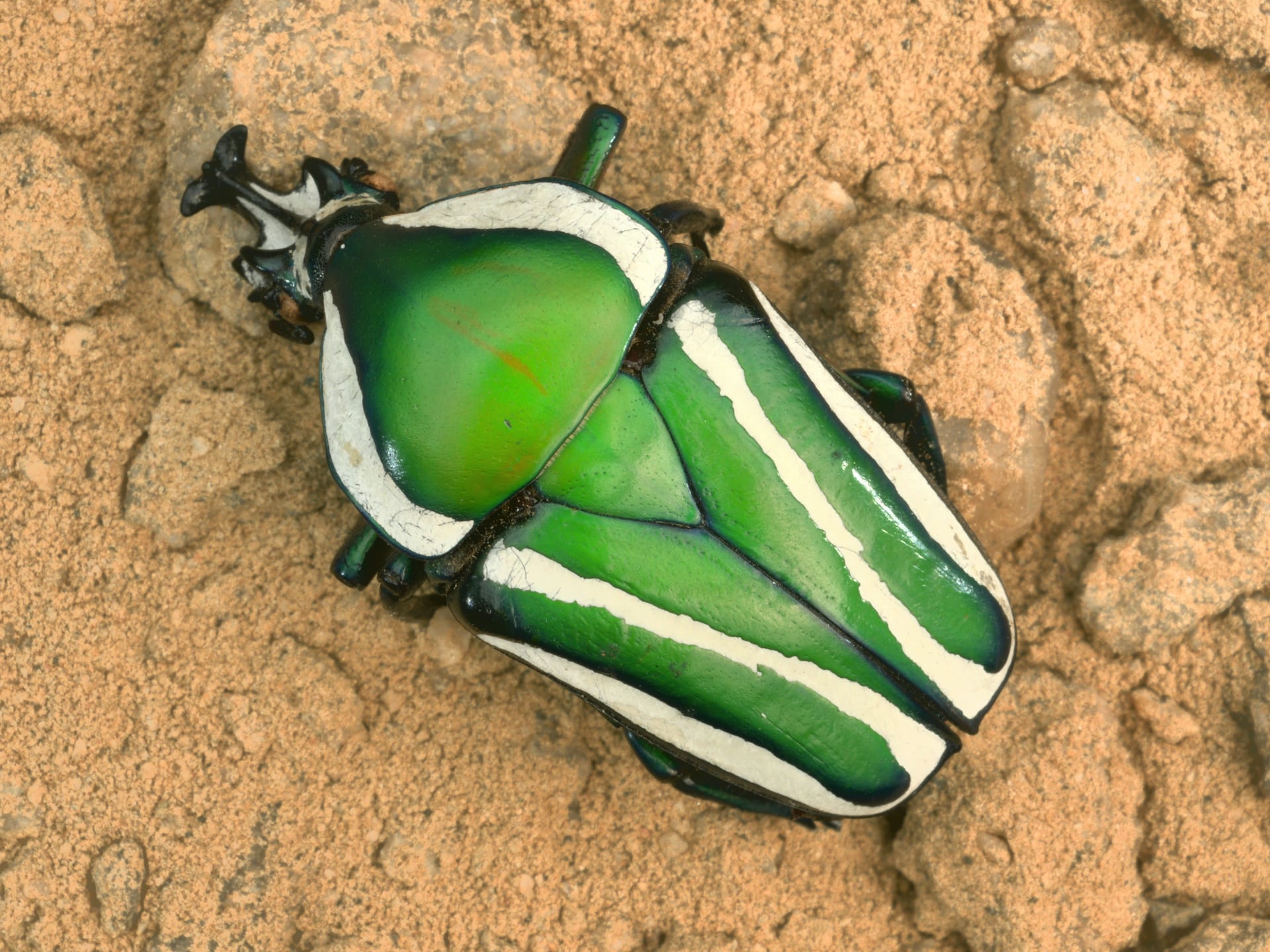
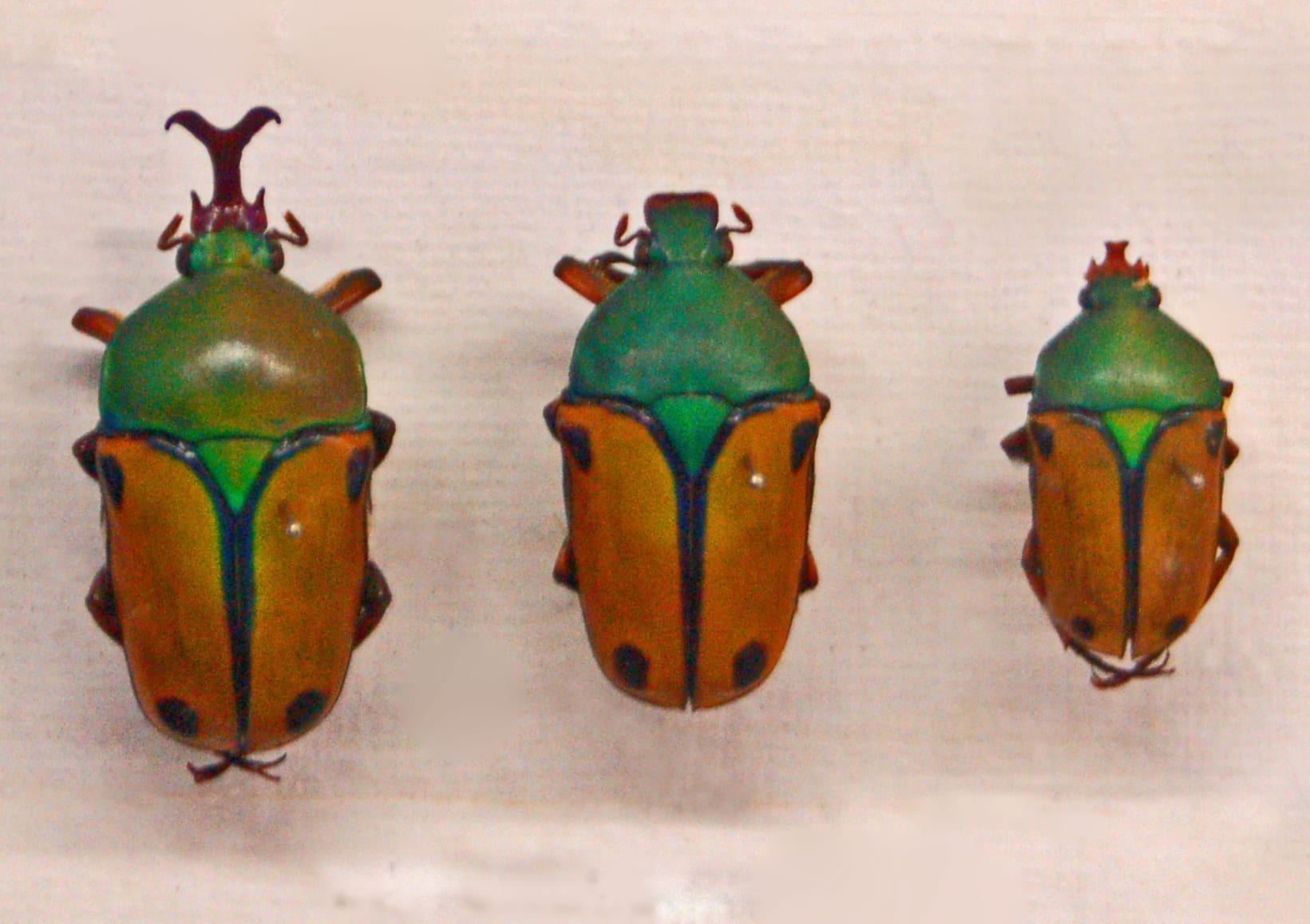
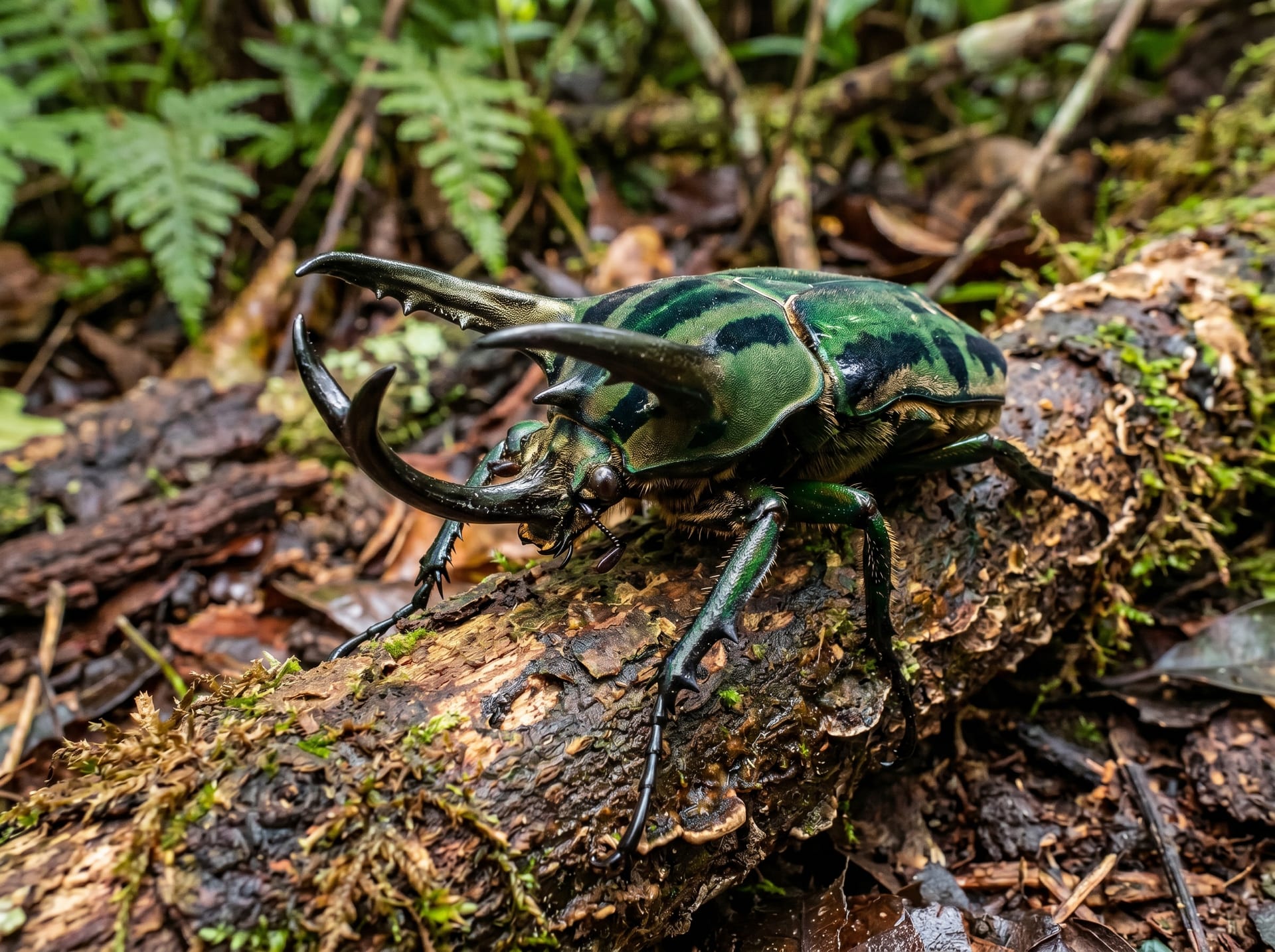
An east and southeast Asian flower beetle whose males carry forked, antler-like projections on the head. The front legs are long, and the Taiwanese subspecies bourgoini is the one in the hobby. It needs fresh leaves to lay in and clay to pupate in.
Difficulty
Intermediate
Temperature
20〜28℃
Lifespan
Adults 3-6 months
Size
20-32mm (range given for the genus)
Humidity
60〜80%
Diet
Adults take beetle jelly and fruit; larvae feed on a leaf and compost mix
About
Dicronocephalus wallichii was described by Hope in 1831. It ranges through China, Vietnam and Thailand, with the subspecies bourgoini endemic to Taiwan, and GBIF records agree: Vietnam 94, Taiwan 68, China 59 and Thailand 48. Members of the genus are not giants like Goliathus but medium-sized beetles of 20-32 mm with notably long front legs. Males carry forked, antler-like projections on the head that females lack. In the breeding report for the Taiwanese subspecies on Ben's Beetle Breeding Pages, females will not lay in ordinary substrate: they drag fresh apple or plum leaves down from the surface, fold them and place a single egg inside each parcel. For pupation a layer of clay beneath the substrate is required, and without it eclosion often fails.
Source: Wikipedia (CC BY-SA 4.0)
Lifespan of the Wallich's Flower Beetle
The Wallich's Flower Beetle lives Adults 3-6 months.
Size of the Wallich's Flower Beetle
The Wallich's Flower Beetle grows to 20-32mm (range given for the genus).
Basic Info
Origin
East and southeast Asia (Vietnam, Taiwan, China, Thailand, northern India, Bhutan, Myanmar)
Lifespan
Adults 3-6 months
Size
20-32mm (range given for the genus)
Temperature
20〜28℃
Care Specifications
SolitaryBreeding: Moderate
Sources: Dicronocephalus wallichi - Wikipedia (EN; range, three subspecies, close relatives) / Dicronocephalus - Wikipedia (EN; genus 20-32 mm, long front legs, antler-like male horns) / Ben's Beetle Breeding Pages - Breeding report for Dicronocephalus wallichi bourgoini (egg parcelling in fresh leaves, clay layer for pupation, larval period, separate larvae at pupation) / GBIF occurrence records for Dicronocephalus wallichi (counts by country)
References & Sources
Edited & verified by: BreederDirect editorial team
The taxonomic, regulatory, and husbandry data on this page are compiled and verified against the authoritative primary sources below.
Primary sources
- Wikipedia
- Ministry of the Environment, Invasive Species Act: "Guidance for Those Importing Live Insects in Scarabaeoidea"
- CITES Appendix (checklist.cites.org)
- Dicronocephalus - Wikipedia (EN; genus 20-32 mm, long front legs, antler-like male horns)
- Ben's Beetle Breeding Pages - Breeding report for Dicronocephalus wallichi bourgoini (egg parcelling in fresh leaves, clay layer for pupation, larval period, separate larvae at pupation)
- GBIF occurrence records for Dicronocephalus wallichi (counts by country)
- GBIF
Taxonomy & Authority
Accepted name: Dicronocephalus wallichi Hope, 1831
Synonyms: Dicronocephalus wallichi Hope, 1831, Dicronocephalus wallichii
Authority databases: GBIF
Nomenclature follows global taxonomic authority databases.
Regulations & Conservation Status
Not CITES-listed
Plant Protection Act: When importing live specimens of Scarabaeoidea (including rhinoceros beetles, stag beetles, flower beetles, etc.), a species identification certificate issued by the exporting country government agency or equivalent must be attached in accordance with the Invasive Species Act (import ports are limited to Narita, Chubu, Kansai, Fukuoka, and Kagoshima airports). This species itself is not a designated invasive species, and import is possible upon submission of the certificate.
Sources: Ministry of the Environment, Invasive Species Act: "Guidance for Those Importing Live Insects in Scarabaeoidea" / CITES Appendix (checklist.cites.org)
Regulations may change. Always verify the latest information with the relevant authorities.
Wallich's Flower Beetle Listings
Loading latest listingsFind listings for this species