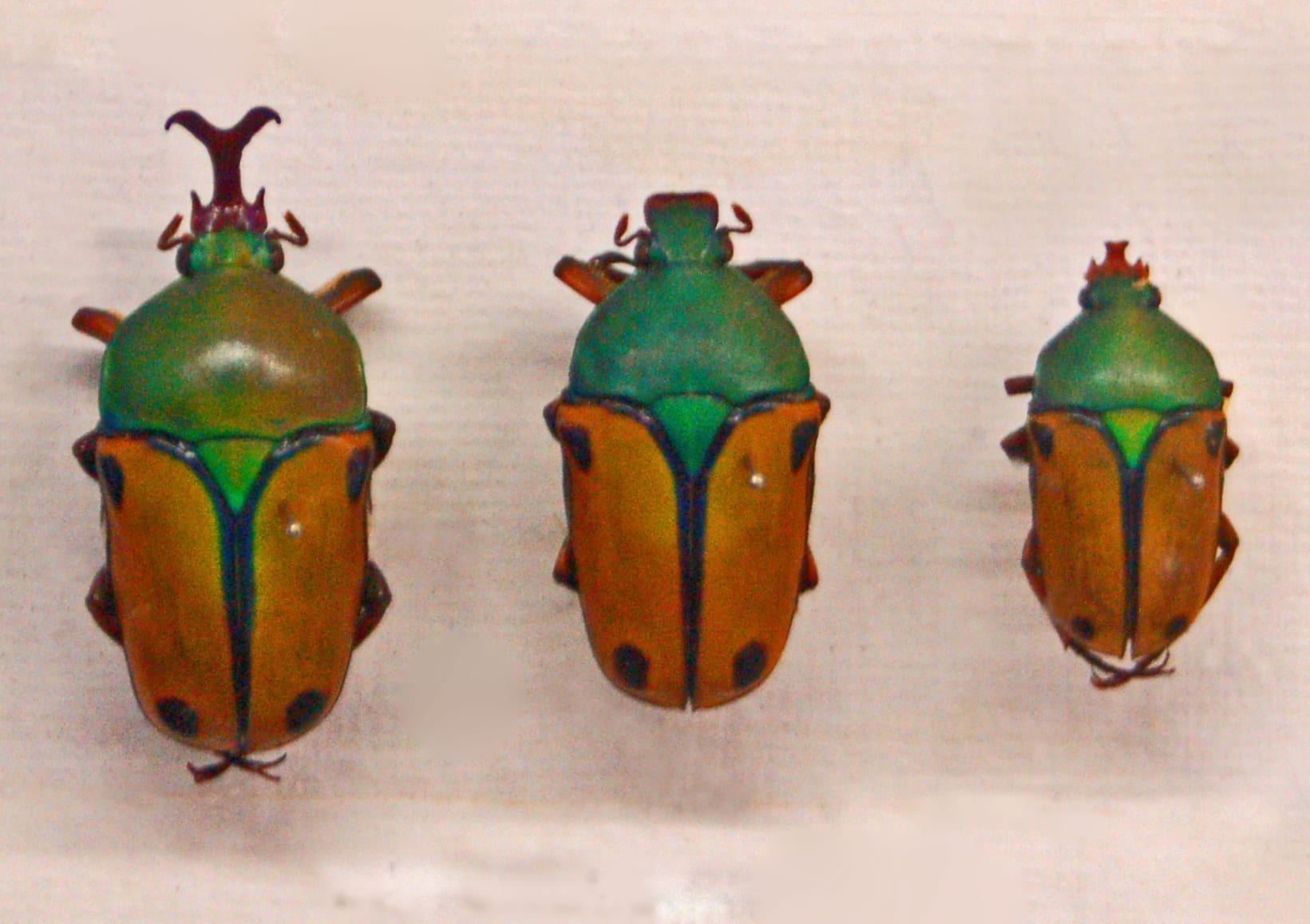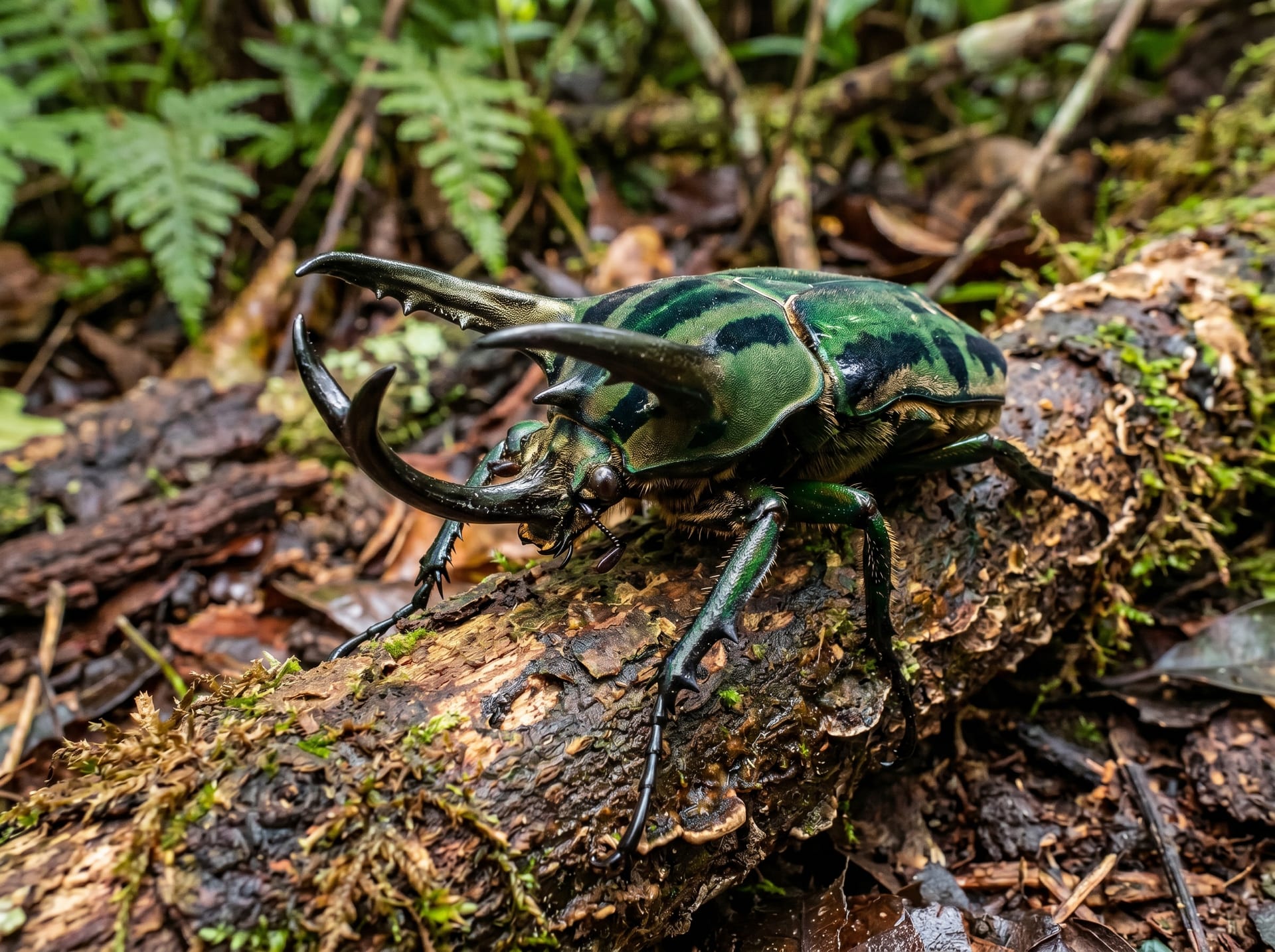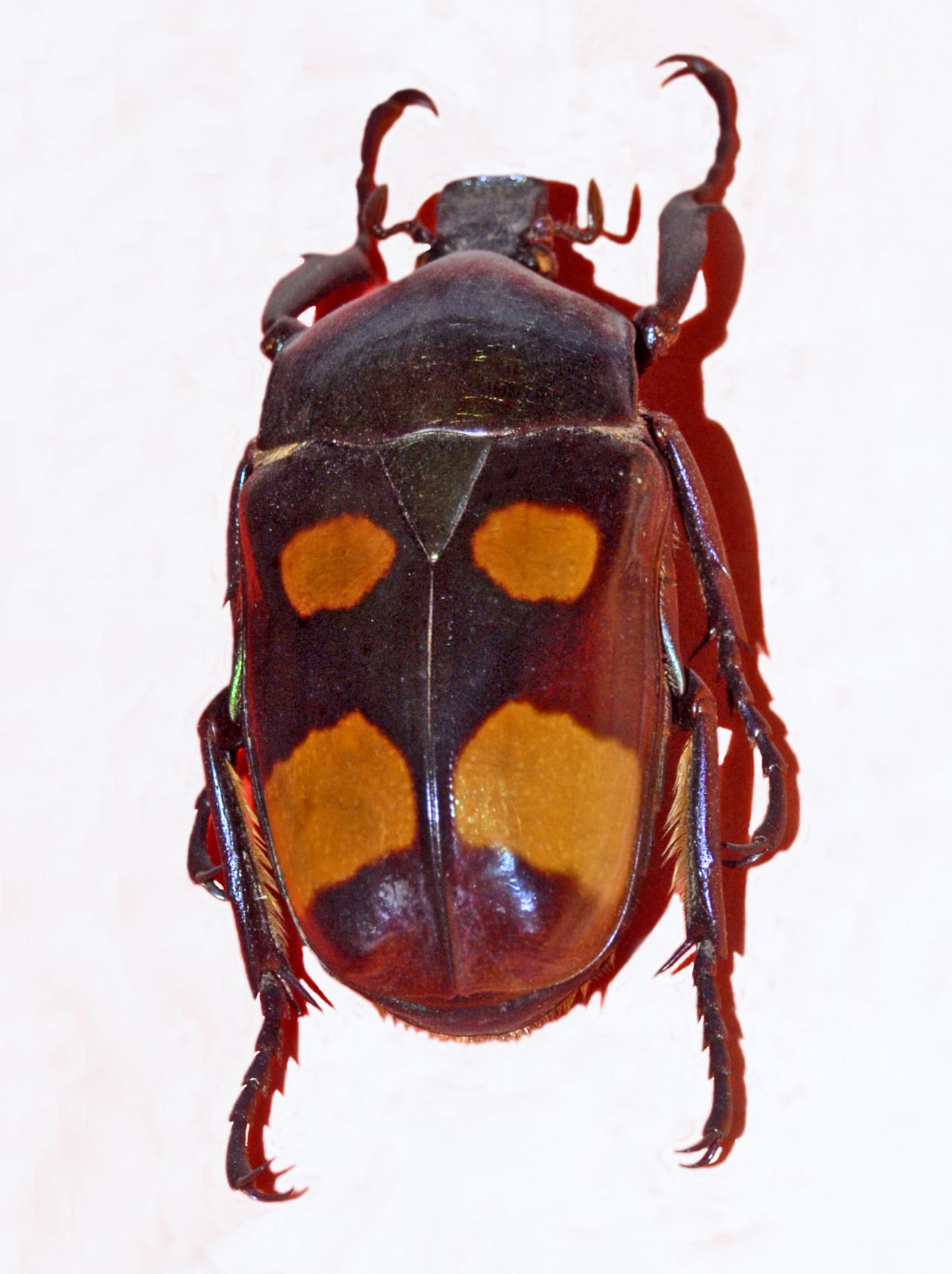
Source: Wikimedia Commons
Rucker's Flower Beetle
IntermediateJumnos ruckeri
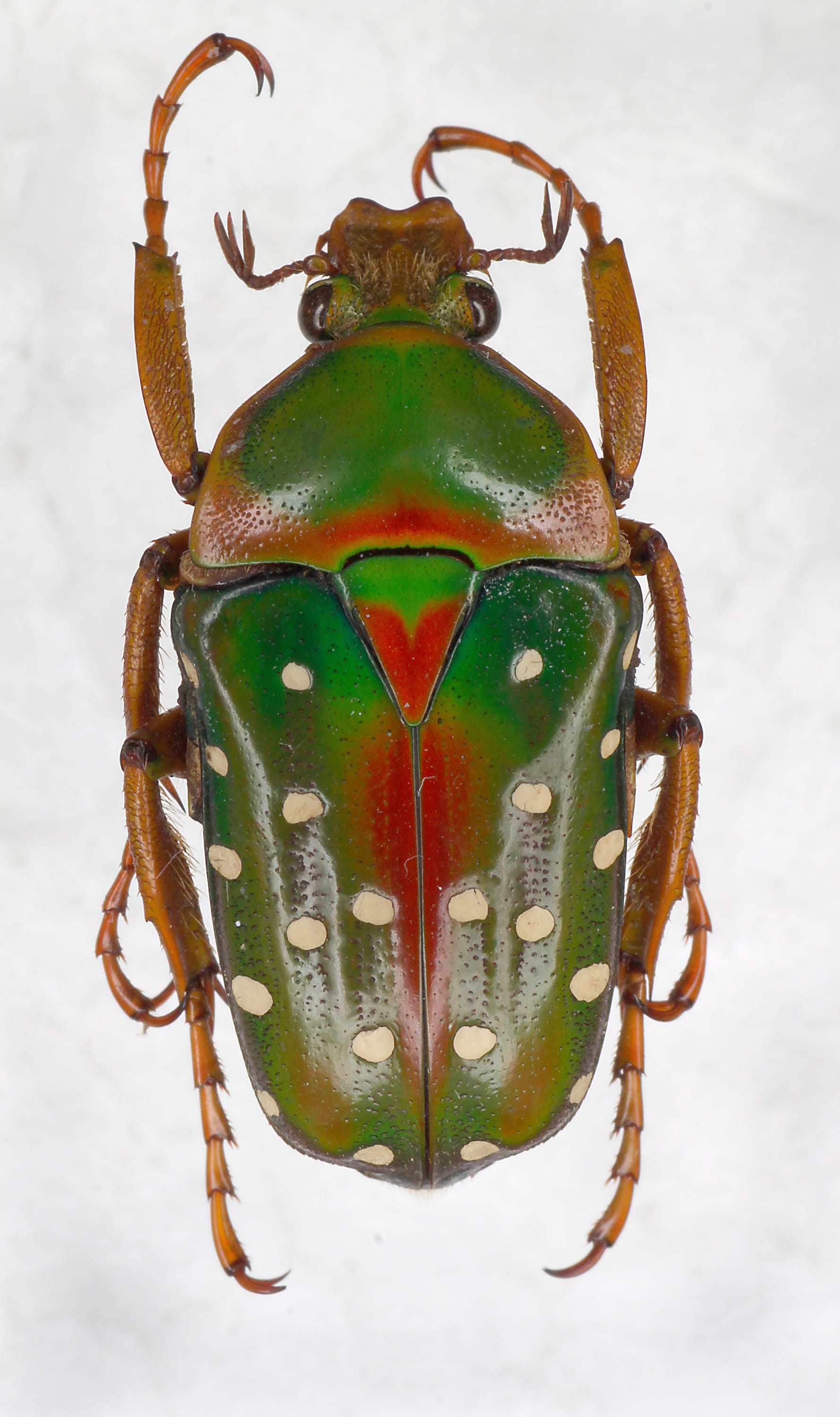
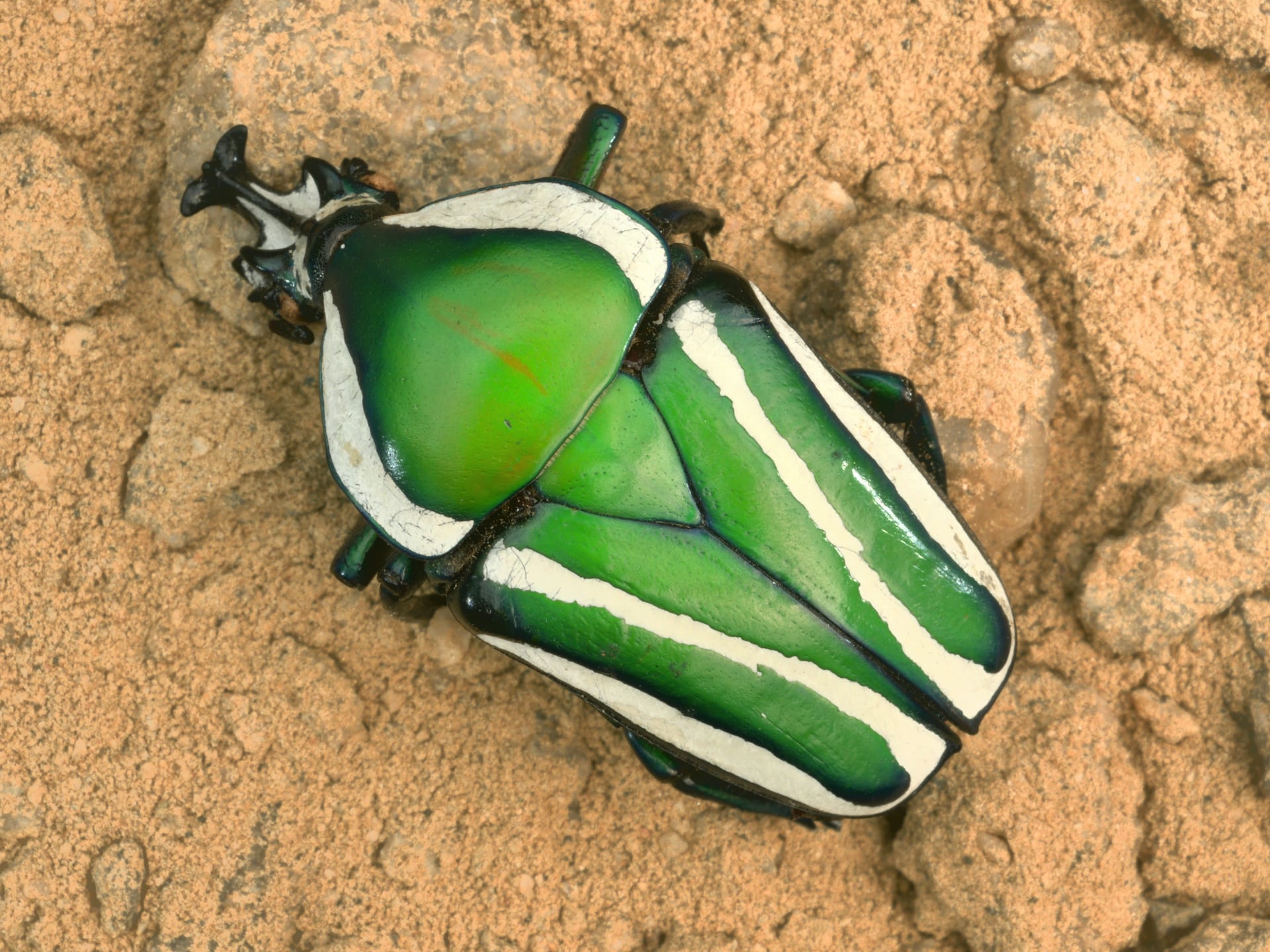
A southeast Asian flower beetle with a steel-blue head and deep shining green elytra marked with white or orange spots and bands. Males have elongated front tarsi, which makes the sexes easy to tell apart.
Difficulty
Intermediate
Temperature
20〜28℃
Lifespan
Adults 3-6 months
Size
25-35mm
Humidity
60〜80%
Diet
Adults take fruit and beetle jelly; larvae feed on rotten wood and leaf litter
About
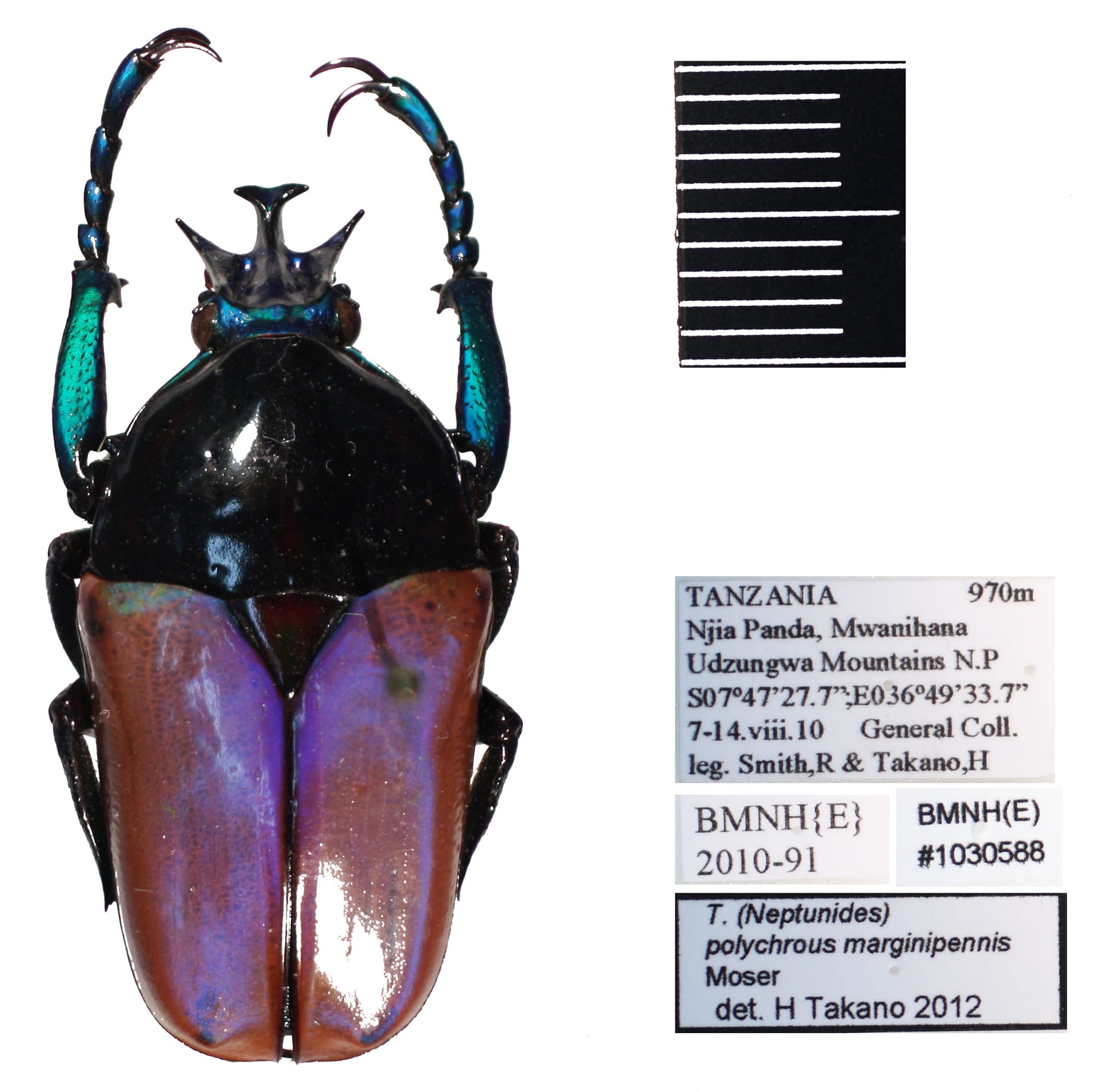
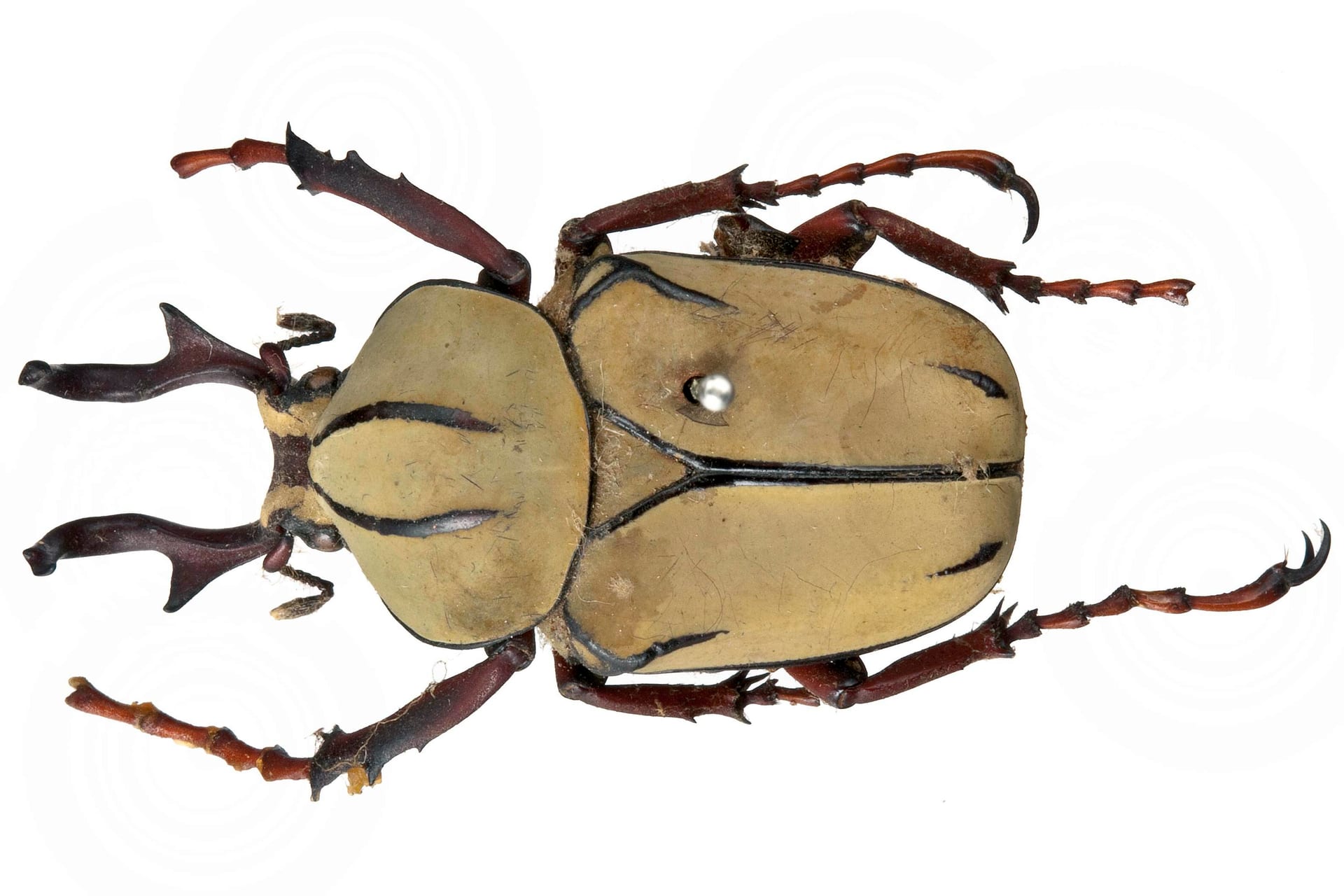
Jumnos ruckeri was described by Saunders in 1839 and measures 25-35 mm. The head is steel blue while the pronotum and elytra are a deep shining green, with two large white or orange spots near the tip of the scutellum and two broad bands of the same colour near the apex of the elytra. The hind wings are black and the legs long and green. Males have longer front tarsi than females, so the sexes can be told apart on sight. GBIF holds most records from Thailand (50), followed by Malaysia (29), India (22) and Vietnam (8), so the range runs from mainland southeast Asia to the southern flank of the Himalaya. Subspecies such as pfaneri and tonkinensis are recognised. Reports on husbandry or captive breeding specific to this species are scarce.
Source: Wikipedia (CC BY-SA 4.0)
Lifespan of the Rucker's Flower Beetle
The Rucker's Flower Beetle lives Adults 3-6 months.
Size of the Rucker's Flower Beetle
The Rucker's Flower Beetle grows to 25-35mm.
Basic Info
Origin
Southeast and South Asia (Thailand, Malaysia, India, Vietnam, Bhutan, southern China, Nepal)
Lifespan
Adults 3-6 months
Size
25-35mm
Temperature
20〜28℃
Care Specifications
References & Sources
Edited & verified by: BreederDirect editorial team
The taxonomic, regulatory, and husbandry data on this page are compiled and verified against the authoritative primary sources below.
Taxonomy & Authority
Accepted name: Jumnos ruckeri Saunders, 1839
Authority databases: GBIF
Nomenclature follows global taxonomic authority databases.
Regulations & Conservation Status
Not CITES-listed
Plant Protection Act: When importing live specimens of Scarabaeoidea (including rhinoceros beetles, stag beetles, flower beetles, etc.), a species identification certificate issued by the exporting country government agency or equivalent must be attached in accordance with the Invasive Species Act (import ports are limited to Narita, Chubu, Kansai, Fukuoka, and Kagoshima airports). This species itself is not a designated invasive species, and import is possible upon submission of the certificate.
Sources: Ministry of the Environment, Invasive Species Act: "Guidance for Those Importing Live Insects in Scarabaeoidea" / CITES Appendix (checklist.cites.org)
Regulations may change. Always verify the latest information with the relevant authorities.
Rucker's Flower Beetle Listings
Loading latest listingsFind listings for this species