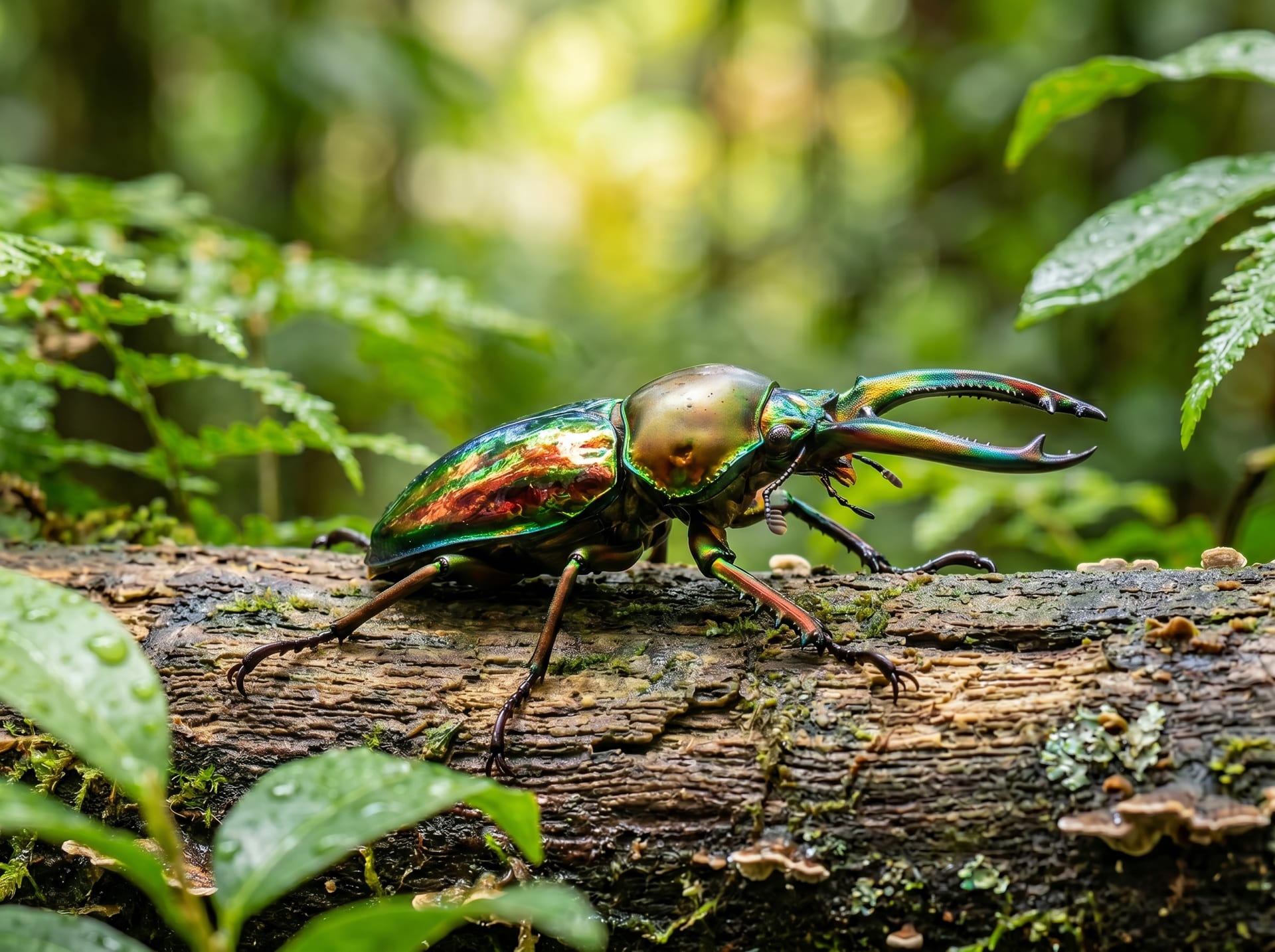
Rainbow Stag Beetle
The world's most beautiful stag beetle from Australia. Iridescent metallic rainbow body is its defining trait. Docile and easy to keep. Larvae thrive on both fungus bottles and substrate.
View Rainbow Stag Beetle encyclopedia →0% commission on your first sales!Register by September 30, 2026 and your first 2 sales are commission-free!
Breeder Wanted!
List on BreederDirect and sell directly to customers nationwide!
6 Transparency Standards You Can Trust
When listing Insects, Breeders disclose the following. We guarantee transparency on growth stage and breeding unit.
- Life Stage Clarity
- Generation Info
- Real Photos
- Breeding Unit
- Country of Origin
- Body Length (mm)
Browse all 26 breeds
No listings match your filters
Adjust your filters, or get notified when new listings arrive.
Getting alerts is free with a member account. When new listings match your saved search, we'll notify you by email and in-app.
Browse other categories
Verified breeders (preview)
Rainbow Stag Beetle key facts
- Care level
- Beginner-friendly
- Lifespan
- Adult 1-2 years / Larva ~8 months
- Size
- 30-70mm
- Temperature
- 20〜26℃
- Diet
- Jelly (adult) / Fungus bottle or fermented substrate (larva)
- Enclosure
- Small-medium case. Add plenty of bark to prevent flipping
- Breeding
- Lays in substrate. Pack fine fermented mat deeply
- Larva Care
- Both fungus bottles and substrate work. Temperature is key to size
- Notes
- Adults take 2-3 months before starting to feed after eclosion
About Rainbow Stag Beetle
The Rainbow Stag Beetle (Phalacrognathus muelleri) is native to the tropical rainforests of Queensland, Australia, and Papua New Guinea, and is celebrated worldwide as one of the most visually spectacular beetles in existence. Its body surface shimmers in an ever-changing array of green, red, gold, and blue depending on the angle of light, giving it a jewel-like brilliance that few insects can match. Adult males typically measure 40–65mm and possess relatively modest mandibles, making them easy to handle. Combined with a calm temperament, this has earned the species devoted fans ranging from complete beginners to experienced breeders. Larvae accept both fungal substrate bottles and fermented mat, lowering the barrier to entry considerably. In Japan, the species became widely available from the late 1990s onward, and captive multi-generational breeding is now well established. The pursuit of color variants and large-size lineages adds a deeper layer of challenge and enjoyment that keeps hobbyists engaged for years.
Featured breeders for Rainbow Stag Beetle
See all Rainbow Stag Beetle breeders (1) →7 things to know before welcoming a Rainbow Stag Beetle
1Ideal Temp: 20–26°C
Rainbow Stag Beetles are sensitive to high temperatures and should be kept below 28°C, especially in summer. Use air conditioning or cooling fans to regulate temperature, and place the enclosure away from direct sunlight. In winter, keeping temperatures above 15°C will allow them to remain active.
2Adults Live 1–2 Years
With proper care, adult Rainbow Stag Beetles can live 1 to 2 years, which is relatively long among stag beetle species. After eclosion, it may take several months before they begin feeding, so patience is key. Breeding pairs should only be introduced after the female has started eating.
3Larvae Thrive in Mat or Mycelium
Larvae can be raised in either mushroom substrate bottles (using Pleurotus or Trametes species) or fermented wood mat, giving keepers flexibility. Mushroom substrate promotes faster growth and potentially larger adults, though it comes at a higher cost. Beginners may find fermented mat a more budget-friendly starting point.
4Gentle with Weak Mandibles
Rainbow Stag Beetles have a gentle temperament and relatively weak mandibles compared to other stag beetles, making them well-suited for handling. However, they may drop legs if startled, so handle them close to a surface until you are familiar with their movements. Avoid housing multiple males together, as fighting can occur.
5Egg-Laying Needs Preparation
Successful egg-laying requires firmly packing fermented mat into the lower half of the enclosure. Unlike some other species, Rainbow Stag Beetles lay eggs directly in mat rather than in wood. Allowing the female to feed fully before breeding attempts significantly improves success rates.
6Feed Adults Insect Jelly
Adults are primarily fed commercially available insect jelly, with high-protein or high-sugar varieties often used to encourage egg production. Fruits such as banana or apple are also suitable, though they soil the enclosure more quickly and require careful management. Replace food every 2 to 3 days to maintain hygiene.
7Wide Color Variation Between Individuals
Individuals vary widely in color, displaying shades of green, red, blue, and purple — even offspring from the same parents can show diverse hues. The iridescent effect also changes depending on lighting angle and humidity, which adds to their visual appeal. Many enthusiasts enjoy selective breeding to emphasize specific color traits, making this a highly collectible species.
Frequently asked questions about Rainbow Stag Beetle
- Q.Is the Rainbow Stag Beetle suitable for beginners?
- A.Yes, it is widely regarded as one of the best species for beginners due to its docile nature and hardy constitution. With basic equipment and attentive temperature management, it can be kept and enjoyed for a long time.
- Q.Can males and females be housed together?
- A.Pairing them together for mating is possible, but long-term cohabitation can stress the female as the male may continuously attempt to mate with her. It is safest to house them together briefly for mating purposes, then separate them before placing the female in the egg-laying setup.
- Q.How many eggs can a female lay?
- A.The number of eggs varies by individual and conditions, but a single breeding setup typically yields around 20–50 eggs. With multiple setups, it is possible to obtain well over 100 larvae in total.
- Q.Can an adult's color change over time?
- A.Newly emerged adults initially appear pale, gradually developing their characteristic metallic sheen over several weeks to months as they begin feeding. The way colors shift depending on the light angle is a natural optical property of the cuticle, not a sign of aging or deterioration.
- Q.Do I need an egg-laying log for breeding?
- A.No, egg-laying logs are not required. Rainbow Stag Beetles primarily lay eggs directly into the mat, so a container packed deeply with well-fermented soft mat is sufficient. Logs can be added if desired, but they are not necessary for successful egg production.
Useful tools for Rainbow Stag Beetle care
Learn more about Rainbow Stag Beetle in the encyclopedia
View Rainbow Stag Beetle encyclopedia entry →
Care difficulty, lifespan, size and diet — all basics covered.
Rainbow Stag Beetle related articles
Rainbow Stag Beetle (Iridescent) Care Guide | Australian Large Stag Beetle Characteristics, Larval Management, and Tips for Maintaining Beautiful Colors
A detailed guide to caring for the Rainbow Stag Beetle (Iridescent), native to Australia. Covers the beautiful coloration characteristics of adults, necessary temperature and humidity management, substrate selection, methods for growing large larvae, and practical tips for long-term care.
Complete Guide to Rainbow Stag Beetle Care and Breeding | Enjoying Beautiful Metallic Colors
A comprehensive guide to caring for and breeding Rainbow Stag Beetles (Phalacrognathus muelleri). From managing jewel-like rainbow-colored adults to larval rearing using fungal substrate and fermented mats, breeding setup, and post-emergence care.
Complete Breeding Guide for Rainbow Stag Beetles | Larval Period Duration, Pairing, and Emergence
The larval period for Rainbow Stag Beetles is approximately 5-8 months for females and 7-12 months for males (varies by temperature). This is a complete breeding guide that explains step-by-step the timing of pairing, how to set up an egg-laying substrate, fungal bottle management, and the process up to emergence.
Popular Stag Beetle Guide | Features of Japanese Stag Beetles, Flat Stag Beetles, and Rainbow Stag Beetles
A guide to popular stag beetles for pets by species. Features characteristics, breeding difficulty, and price ranges of Japanese Stag Beetles, Flat Stag Beetles, Rainbow Stag Beetles, Giraffe Saw Stag Beetles, and more.
More in this category
Can't find the one you're looking for?
Post your wishes for free and breeders with matching animals will contact you with introductions.