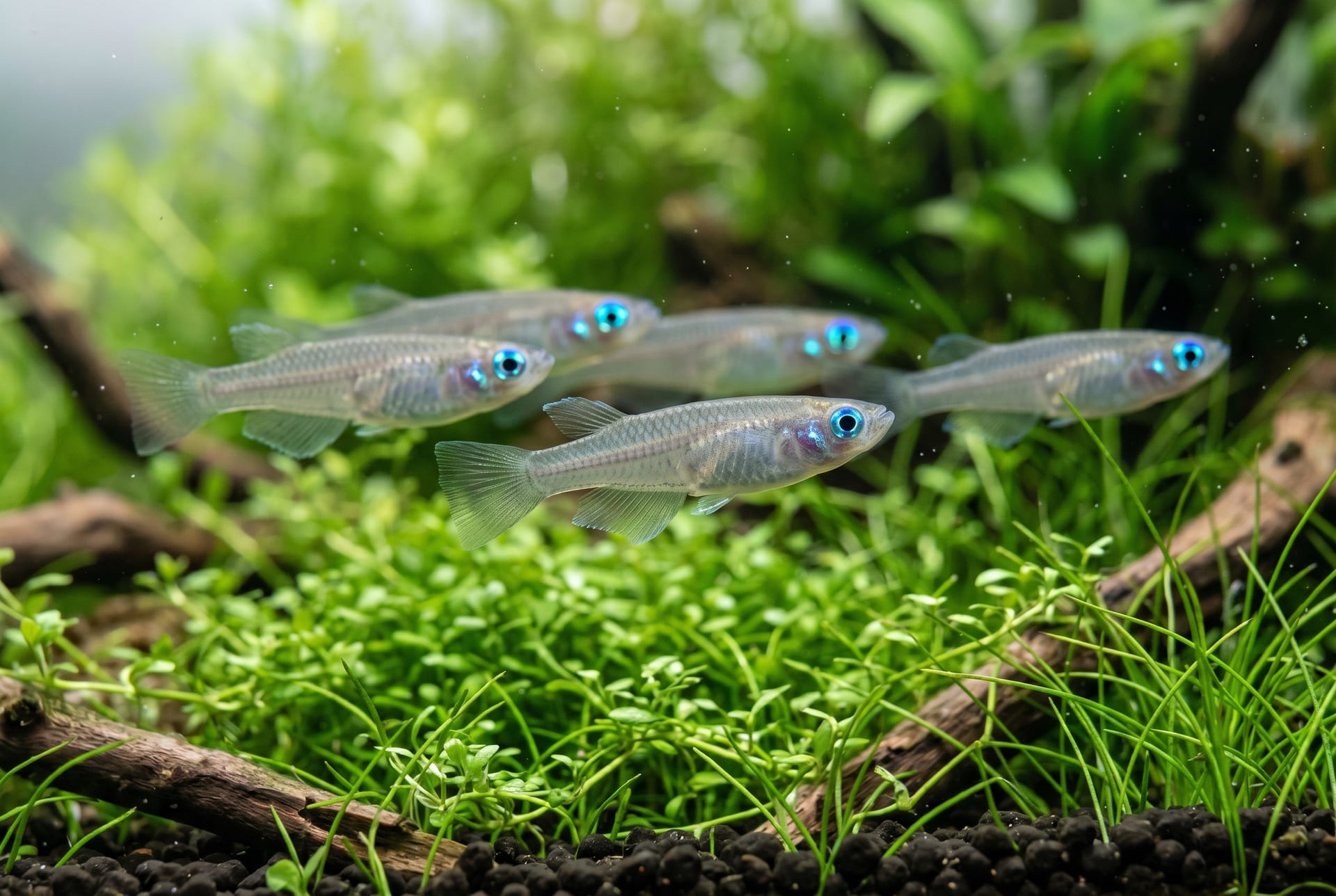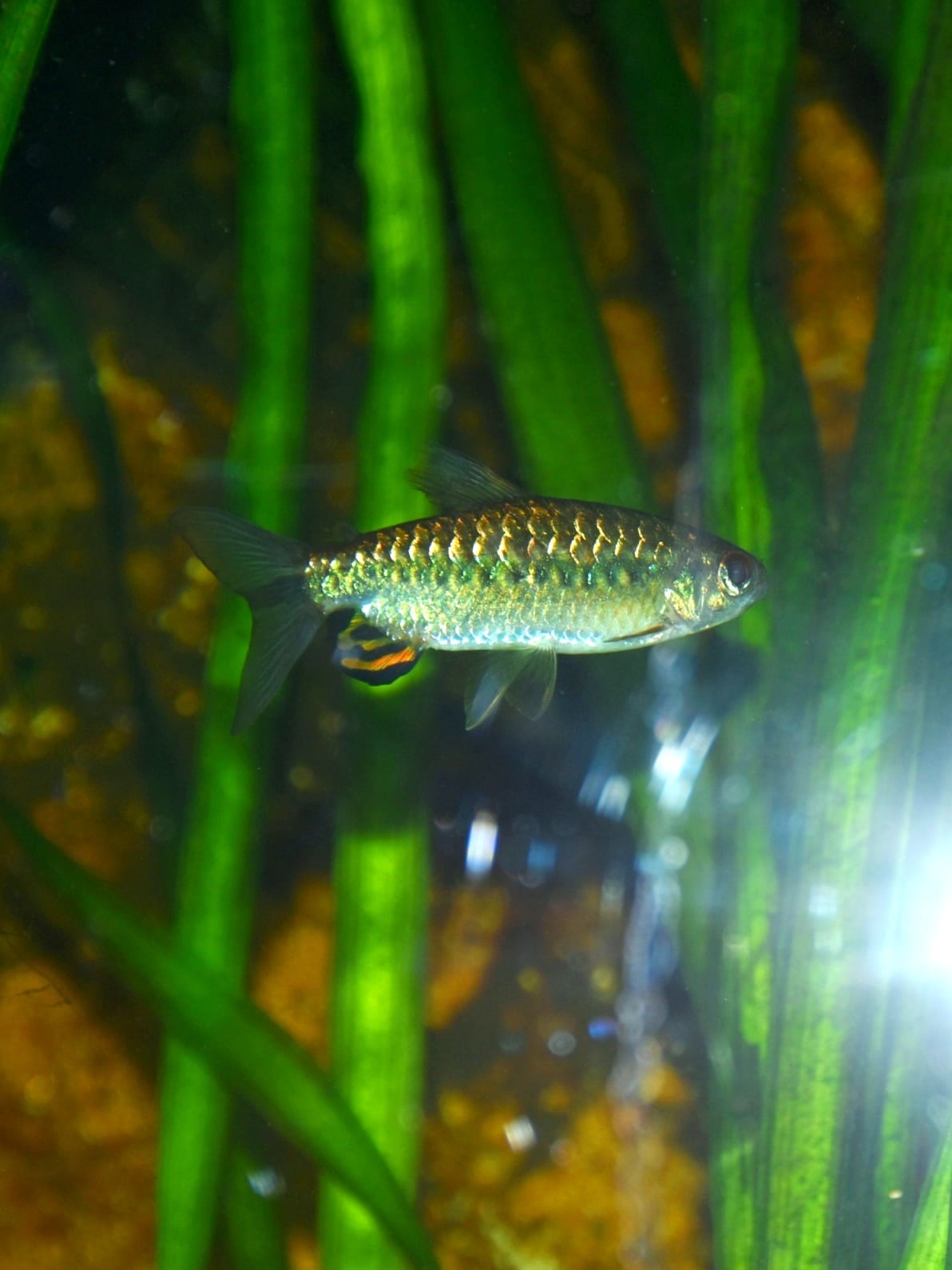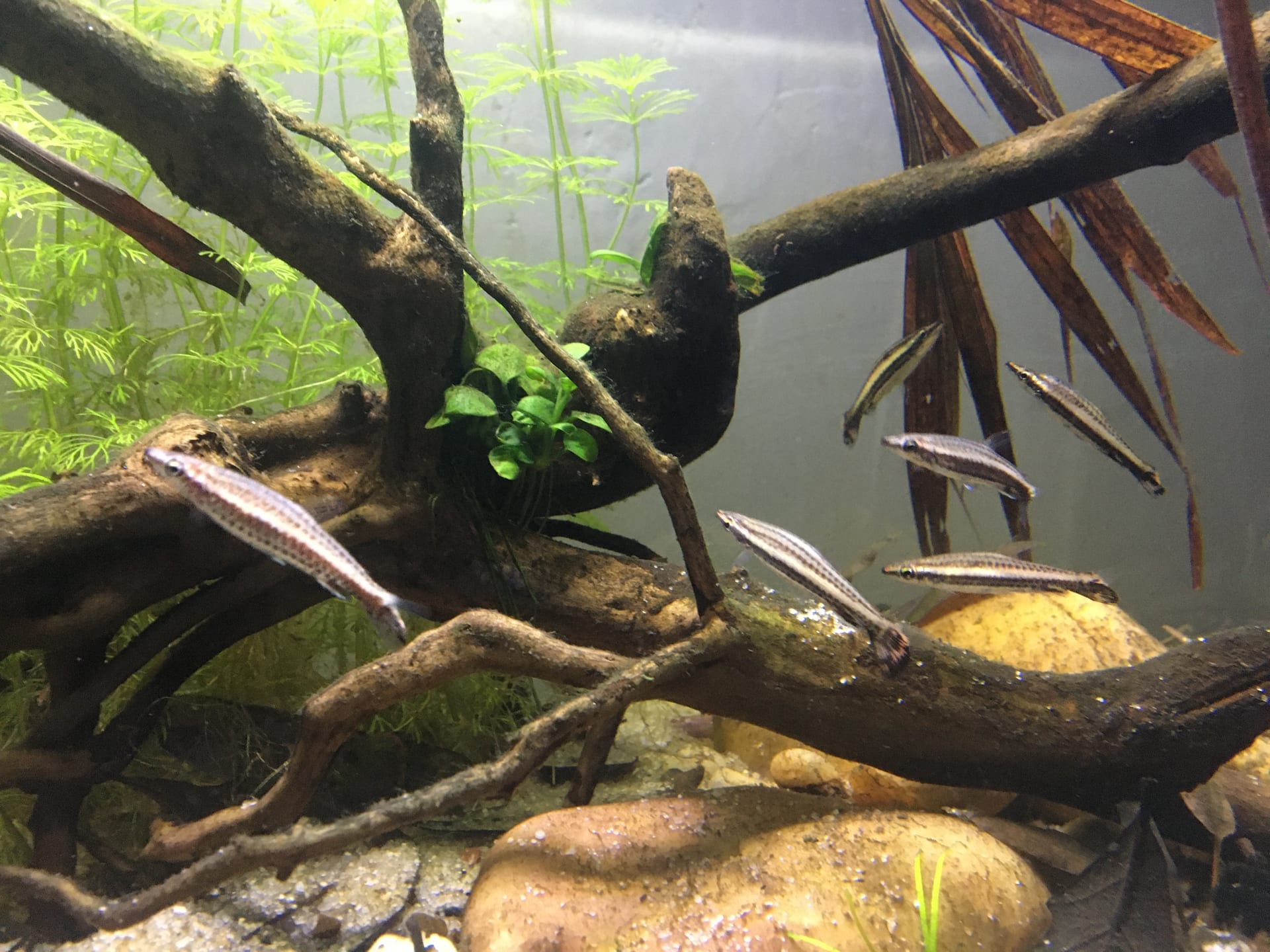
Source: Wikimedia Commons
Hockeystick Pencilfish
IntermediateNannostomus eques
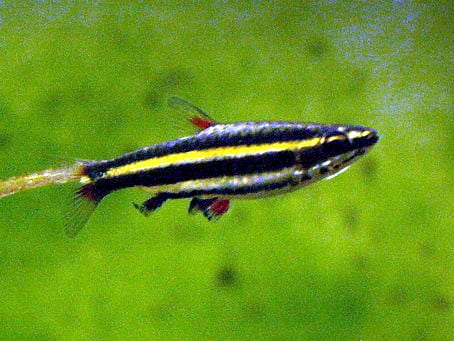
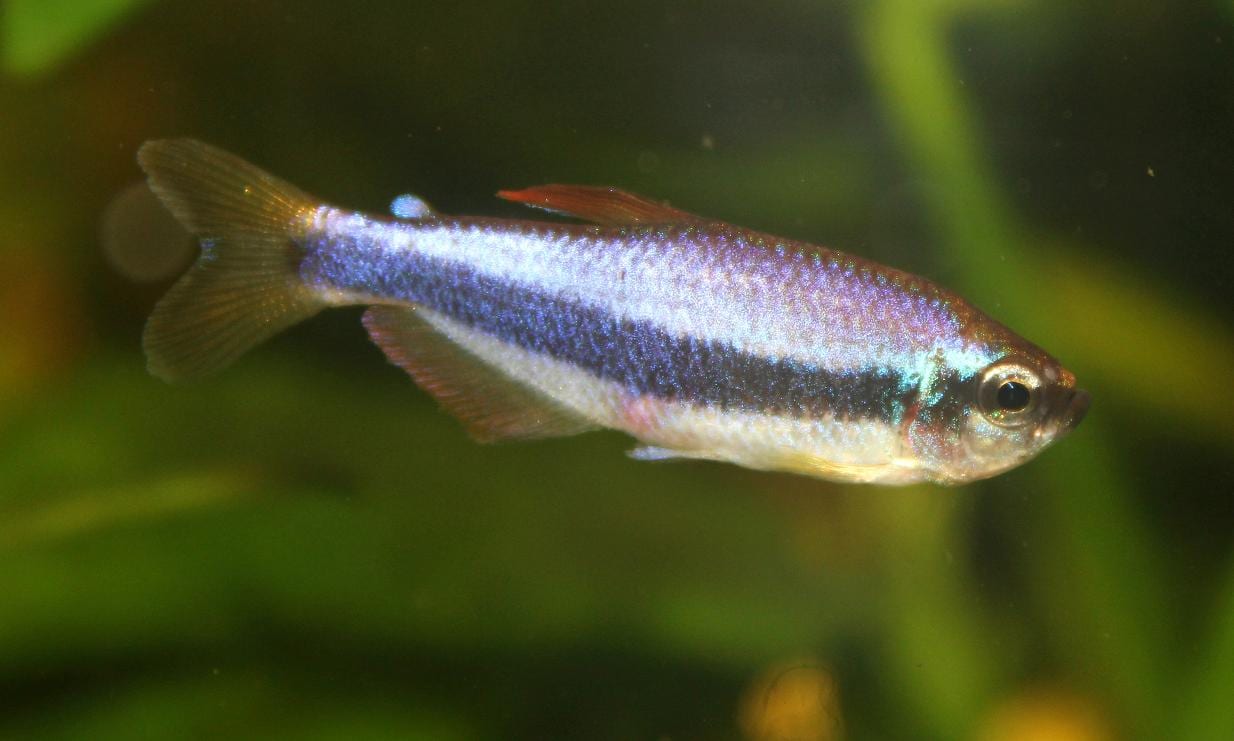
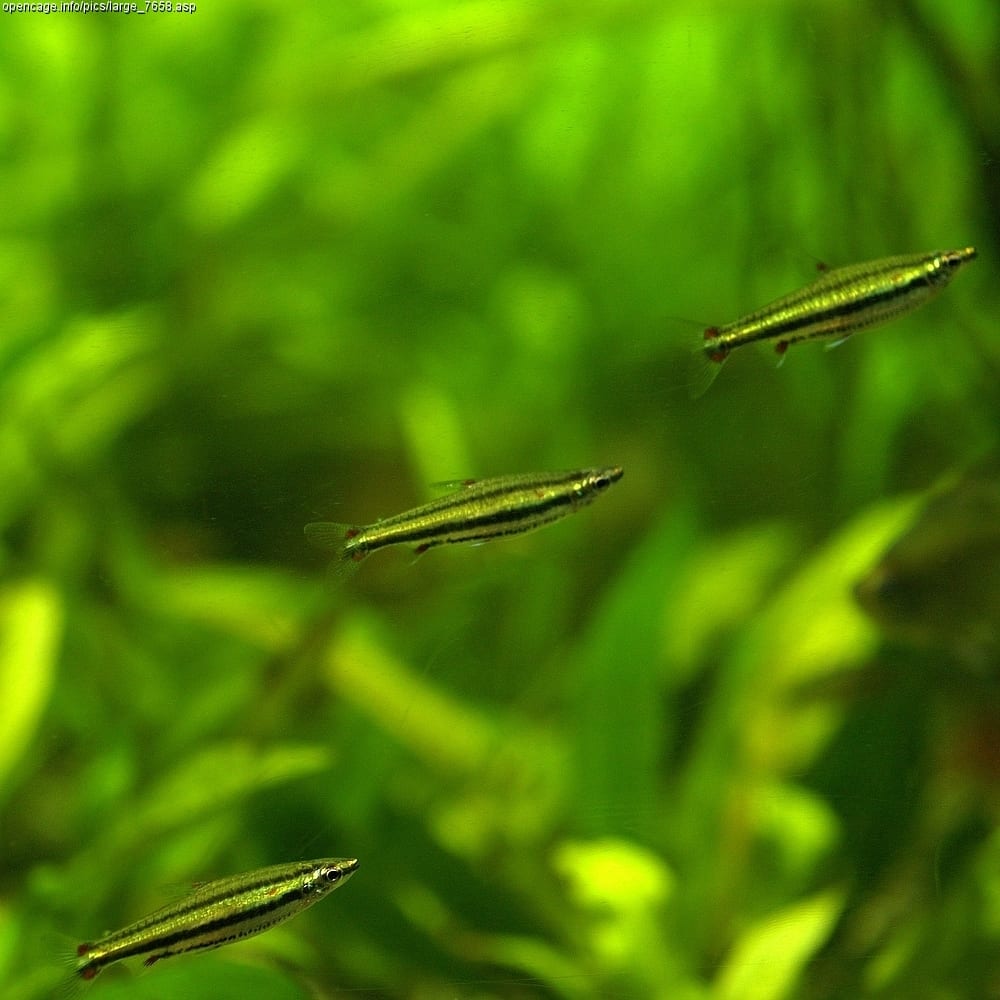
A pencilfish that swims with its snout angled upward, the dark lateral stripe running out into the lower lobe of the tail. Within the genus only this species and N. unifasciatus hold that oblique posture.
Difficulty
Intermediate
Temperature
22〜28℃
Lifespan
3-5 years
Size
About 3.5-5cm
Diet
Fine dried foods, live and frozen brine shrimp, Daphnia
About
Nannostomus eques is a pencilfish of the central and upper Amazon in Brazil, Peru and Colombia. It was described from the Peruvian Amazon above Tabatinga, in Amazonas state, Brazil. FishBase gives 5.0cm TL, pH 5.0-6.0, 5-12 dH and 23-28C, recommending groups of five or more in a tank of 60cm or longer, while Seriously Fish gives 3.5cm SL, 22-28C, pH 4.5-7.5, 1-10 dGH and a base of at least 60 by 30cm. The dark lateral stripe runs out into the lower lobe of the tail, and the fish swims with its snout angled upward, a posture shared within the genus only with N. unifasciatus. It lives in sluggish tributaries, small rivers and swampy zones, and in the lower rio Atabapo in Colombia it was recorded in shallow blackwater, clear, acidic and tea-coloured.
Source: Wikipedia (CC BY-SA 4.0)
Lifespan of the Hockeystick Pencilfish
The Hockeystick Pencilfish lives 3-5 years.
Size of the Hockeystick Pencilfish
The Hockeystick Pencilfish grows to About 3.5-5cm.
Temperature & humidity for the Hockeystick Pencilfish
The ideal temperature for the Hockeystick Pencilfish is 22〜28℃.
Basic Info
Origin
South America (the central and upper Amazon in Brazil, Peru and Colombia)
Lifespan
3-5 years
Care Specifications
- pH
- 4.5–7.5
- Hardness (GH)
- 1–10 dGH
- Water Temp.
- 22–28℃
- Min. Tank
- 54 L
PeacefulGroup
Sources: Seriously Fish / FishBase
References & Sources
Edited & verified by: BreederDirect editorial team
The taxonomic, regulatory, and husbandry data on this page are compiled and verified against the authoritative primary sources below.
Taxonomy & Authority
Regulations & Conservation Status
Not CITES-listedIUCN LC · Least Concern
Sources: CITES Appendices (species not listed) / IUCN Red List
Regulations may change. Always verify the latest information with the relevant authorities.
Hockeystick Pencilfish Listings
Loading latest listingsFind listings for this species