Source: Wikimedia Commons
Altum Angelfish
AdvancedPterophyllum altum
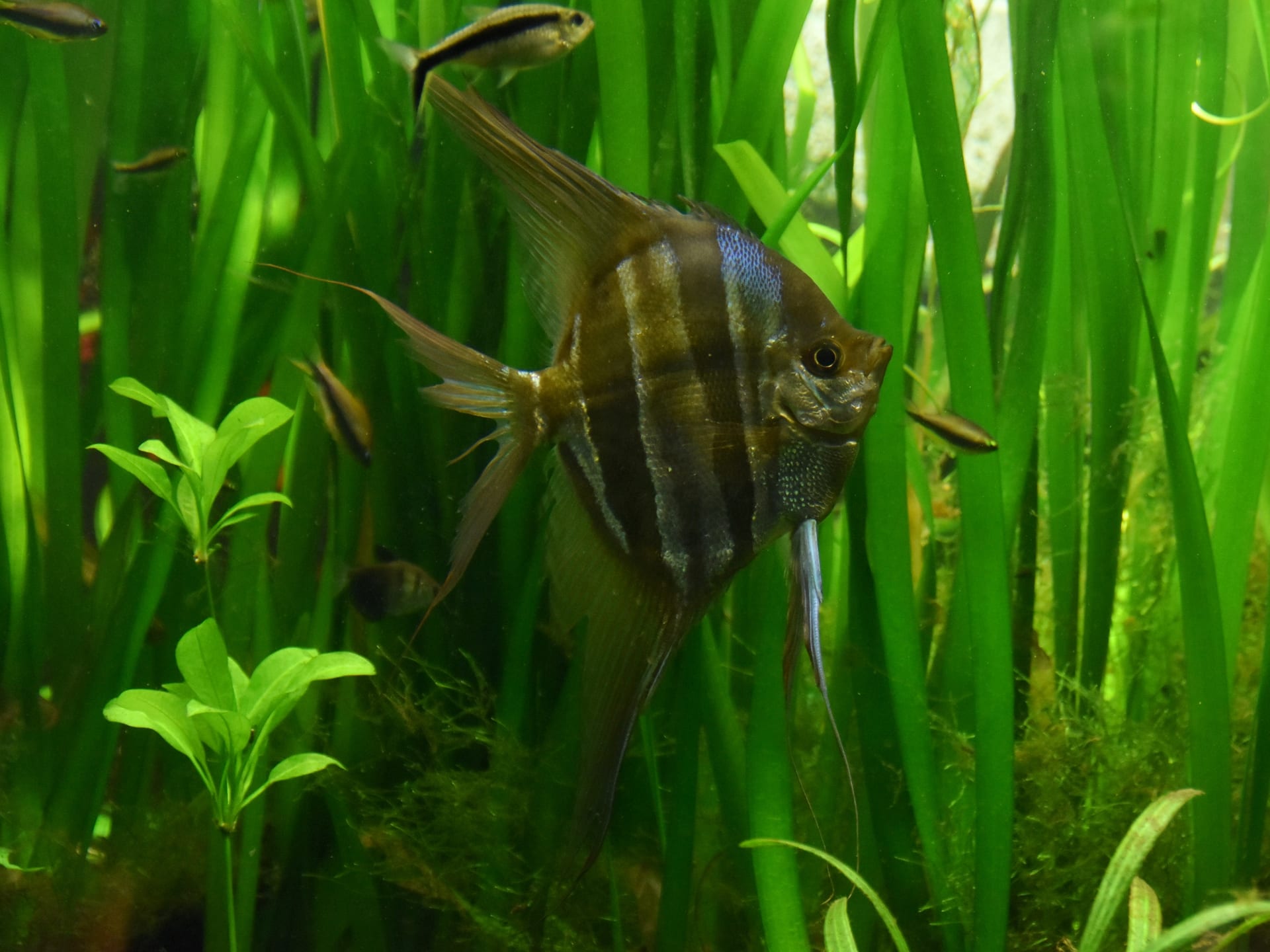
A large angelfish from the upper Orinoco and upper Negro. Its body reaches 20cm in height and the forehead is deeply notched. It demands strongly acidic water with virtually no hardness, making it a species for experienced keepers.
Difficulty
Advanced
Temperature
28〜32℃
Lifespan
8-12 years
Size
About 18cm in length, reaching about 20cm in body height
Diet
Live and frozen foods for wild fish, prepared foods for captive-bred stock
About
Pterophyllum altum comes from tributaries of the upper Orinoco and the upper Negro drainage, growing to about 18cm in length and 20cm in body height. It is far taller-bodied than other angelfish and is told apart by the deep notch above the snout. Water is the hard part: pH 4.8-6.2 and 0-5 dGH, soft water with virtually undetectable hardness, is regarded as mandatory, and the fish usually does poorly in less acidic conditions. It also wants a high 28-32C. Wild-caught fish are difficult feeders needing regular live foods and will sometimes take waste food from other fish, discus being the classic example, while captive-bred stock accepts prepared foods more readily. Anything that fits in its mouth, including small tetras and guppies, is fair game, so tank mates must be peaceful and large. Breeding is very difficult: it needs very acidic soft water, and because parents often eat the spawn, artificial rearing is usual.
Source: Wikipedia (CC BY-SA 4.0)
Lifespan of the Altum Angelfish
The Altum Angelfish lives 8-12 years.
Size of the Altum Angelfish
The Altum Angelfish grows to About 18cm in length, reaching about 20cm in body height.
Temperature & humidity for the Altum Angelfish
The ideal temperature for the Altum Angelfish is 28〜32℃.
Basic Info
Origin
South America: tributaries of the upper Orinoco and the upper Negro drainage of the Amazon basin
Care Specifications
- pH
- 4.8–6.2
- Hardness (GH)
- 0–5 dGH
- Water Temp.
- 28–32℃
Semi-aggressiveBreeding: Very hard
Sources: Seriously Fish: Pterophyllum altum / FishBase: Pterophyllum altum
References & Sources
Edited & verified by: BreederDirect editorial team
The taxonomic, regulatory, and husbandry data on this page are compiled and verified against the authoritative primary sources below.
Taxonomy & Authority
Accepted name: Pterophyllum altum Pellegrin, 1903
Authority databases: FishBase
Nomenclature follows global taxonomic authority databases.
Regulations & Conservation Status
Not CITES-listedIUCN LC · Least Concern
Sources: CITES Appendices (species not listed) / IUCN Red List
Regulations may change. Always verify the latest information with the relevant authorities.
Altum Angelfish Listings
Loading latest listingsFind listings for this species