AI-generated image
Tokay Gecko (Captive Bred)
IntermediateGekko gecko
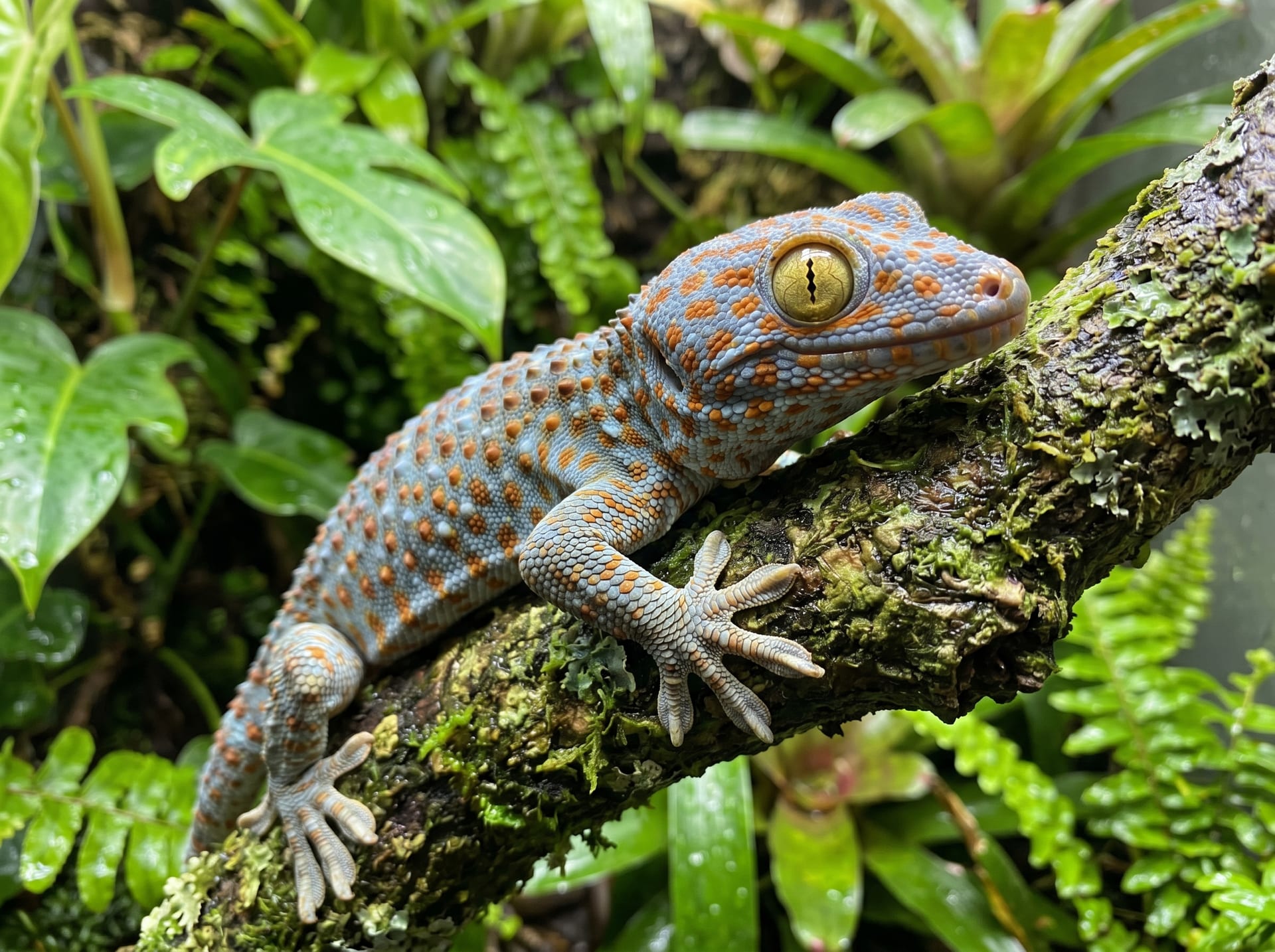
Large gecko with blue-gray body and orange spots. Named for its distinctive 'Tokay!' call. WC specimens are feisty but CB are calmer. Walks on walls and ceilings.
Difficulty
Intermediate
Temperature
25〜32℃
Lifespan
10-20 years
Size
25-35cm
Humidity
60〜80%
Diet
Insects (crickets, dubia, superworms)
About
The tokay gecko (Gekko gecko) is a large gecko distributed widely from South Asia through Southeast Asia. This entry concerns captive-bred (CB) individuals, which carry lower parasite risk and are easier to manage than wild-caught specimens. Adults reach 25–35 cm in total length, with striking coloration of orange and red spots scattered over a blue-grey ground. Its name derives from its loud call, which sounds like 'to-kay, to-kay.' Arboreal and nocturnal, it should be kept in a tall enclosure with climbing branches and hides. It is feisty and bites hard, so handling requires caution. It is insectivorous, taking crickets and dubia roaches. Hardy and not difficult to maintain, it is nonetheless considered suited to intermediate keepers because of its strong temperament.
Lifespan of the Tokay Gecko (Captive Bred)
The Tokay Gecko (Captive Bred) lives 10-20 years.
Size of the Tokay Gecko (Captive Bred)
The Tokay Gecko (Captive Bred) grows to 25-35cm.
Temperature & humidity for the Tokay Gecko (Captive Bred)
The ideal temperature for the Tokay Gecko (Captive Bred) is 25〜32℃. Ideal humidity is 60〜80%.
Basic Info
Origin
Southeast and South Asia (from India through Southeast Asia to southern China)
Lifespan
10-20 years
Size
25-35cm
Morphs (Varieties)
Tokay gecko (Gekko gecko) CB individual. A designer morph market has become established in recent years. Patternless types, Platinum, Candy Dot, and Caramel Albino are recessive; Reduced Pattern and Super Red are co-dominant. Calico and Leucistic are omitted as their inheritance patterns have not been proven.
RecessiveVisual only with two copies; one copy = het (carrier).
PatternlessBlue-headed Green (Powder Blue)Olive PatternlessPlatinumCandy DotCaramel Albino
Incomplete dominant1 copy visual; 2 copies (super form) more pronounced.
Reduced PatternSuper Red
Other
CalicoLeucistic
References & Sources
Edited & verified by: BreederDirect editorial team
The taxonomic, regulatory, and husbandry data on this page are compiled and verified against the authoritative primary sources below.
Taxonomy & Authority
Accepted name: Gekko gecko (Linnaeus, 1758)
Synonyms: Gekko aculeatus Houttuyn, 1782, Gekko annulatus Kuhl, 1820, Gekko guttatus Daudin, 1802, Gekko indicus (Girard, 1858), Gekko perlatus Houttuyn, 1782, Gekko tenuis (Hallowell, 1857)
Authority databases: GBIF · Reptile Database
Nomenclature follows global taxonomic authority databases.
Regulations & Conservation Status
CITES Appendix II
Tokay gecko (Gekko gecko) was listed in Appendix II in 2019 (CoP18). CB (captive-bred) individuals are subject to the same appendix listing.
Sources: CITES Checklist (Gekko gecko Appendix II; CoP18 2019)
Regulations may change. Always verify the latest information with the relevant authorities.
Tokay Gecko (Captive Bred) Listings
Loading latest listingsFind listings for this species