Source: Wikimedia Commons
Spiny Softshell Turtle
IntermediateApalone spinifera
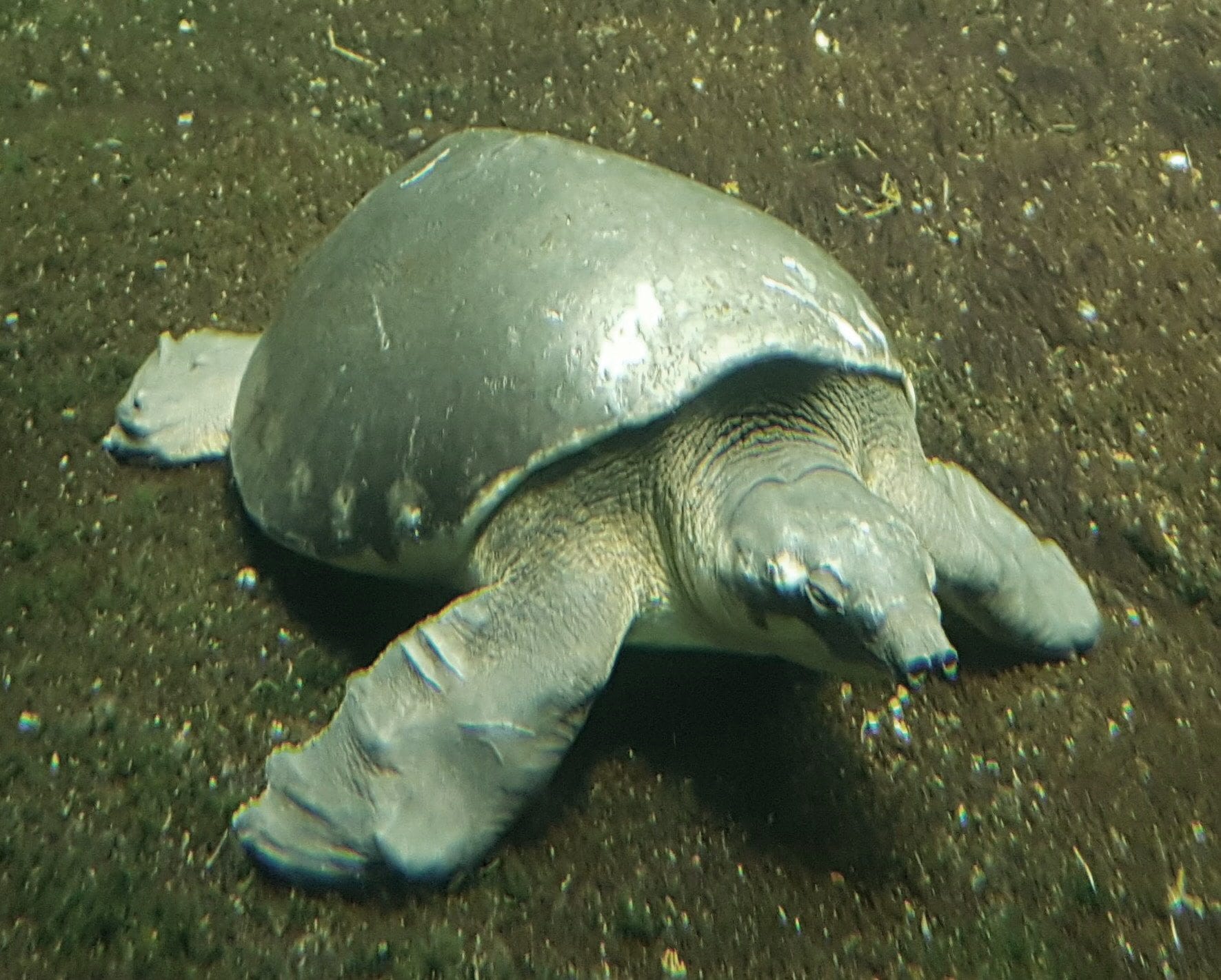
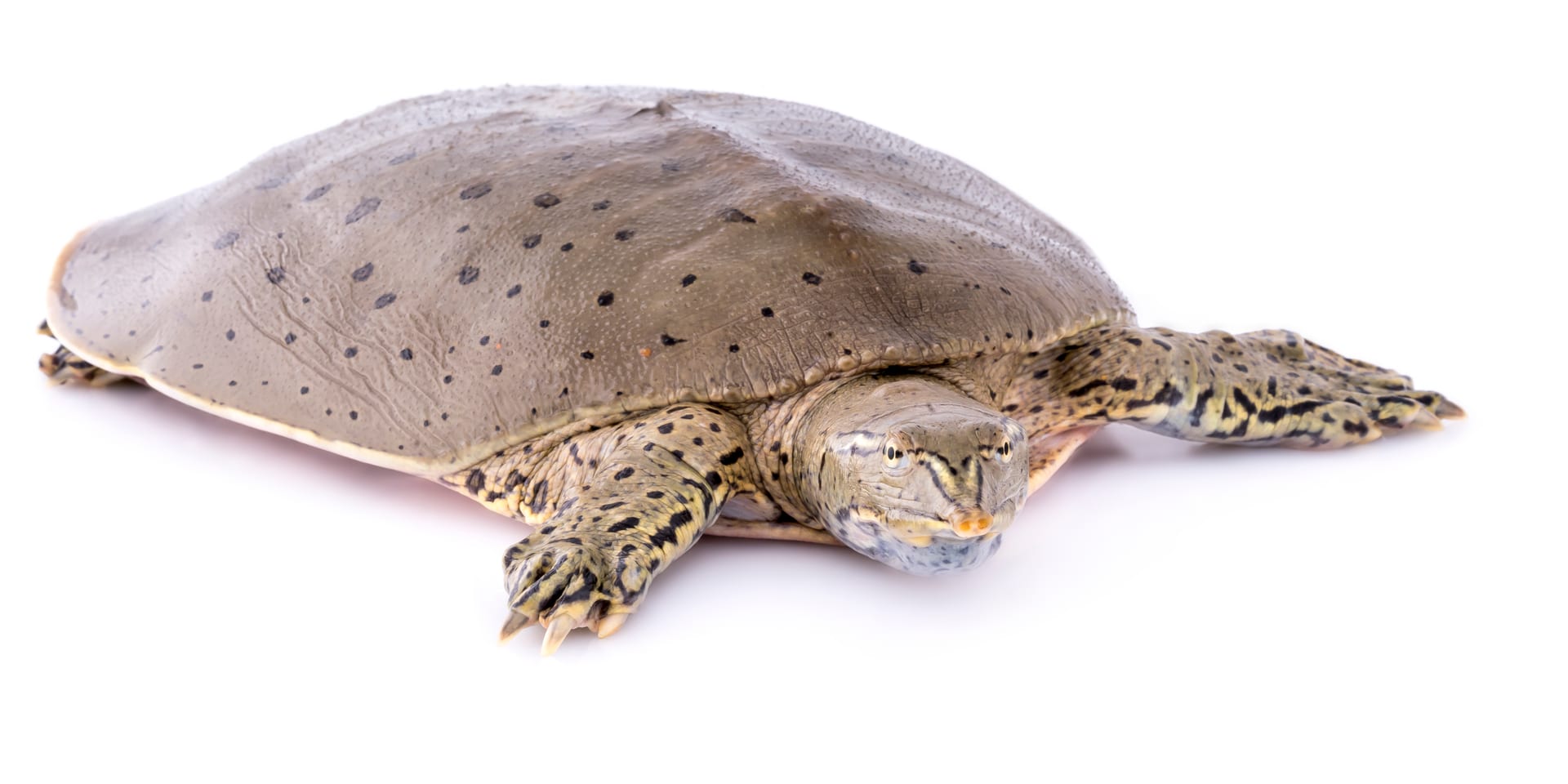
Named for the row of spiny tubercles along the front edge of the carapace. One of the largest softshells in North America, with a carapace to 54 cm. Seven subspecies are recognised, differing in carapace markings and in how strongly the tubercles develop.
Difficulty
Intermediate
Temperature
25〜32℃
Lifespan
Large females may live up to 50 years
Size
Carapace up to 54cm; males 13-24cm
Humidity
40〜70%
Diet
Prepared pellets, small fish, shrimp, earthworms and aquatic insects
About
Apalone spinifera is the type species of the North American softshell genus Apalone and is widely distributed across the continent. Small conical tubercles cover the carapace and become spiny along the front edge, giving the turtle its English and Japanese names. It is large, with a carapace to 54 cm, while males stop at 13-24 cm, so the sexes differ greatly. The nostrils are bean-shaped and open forwards, with a projection on the nasal septum. Seven subspecies are recognised and vary considerably: the eastern spiny softshell has tubercles across the whole carapace and clear markings on the limbs, while the Cuatro Cienegas subspecies reaches only 25 cm and is uniformly dark. It favours flowing rivers with sandbars, burying itself in sand and gravel to ambush passing fish. Females dig nests in sand near the water and lay several clutches each season.
Source: Wikipedia (CC BY-SA 4.0)
Lifespan of the Spiny Softshell Turtle
The Spiny Softshell Turtle lives Large females may live up to 50 years.
Size of the Spiny Softshell Turtle
The Spiny Softshell Turtle grows to Carapace up to 54cm; males 13-24cm.
Basic Info
Origin
The United States and northern Mexico, including the Mississippi and Rio Grande drainages, in rivers of moderate current with extensive sandbars
Lifespan
Large females may live up to 50 years
Size
Carapace up to 54cm; males 13-24cm
Care Specifications
Semi-aggressiveSolitaryBreeding: Moderate
Sources: Reptiles Magazine: American Softshell Turtles / Wikipedia (Japanese): Spiny softshell turtle / Wikipedia (English): Spiny softshell turtle / Reptile Database / AnAge: The Animal Ageing and Longevity Database
References & Sources
Edited & verified by: BreederDirect editorial team
The taxonomic, regulatory, and husbandry data on this page are compiled and verified against the authoritative primary sources below.
Primary sources
- Wikipedia
- CITES Appendices
- Ministry of the Environment: list of invasive alien species
- Order for Enforcement of the Act on Welfare and Management of Animals (designated dangerous animals)
- Reptiles Magazine: American Softshell Turtles
- Wikipedia (Japanese): Spiny softshell turtle
- Wikipedia (English): Spiny softshell turtle
- Reptile Database
- AnAge: The Animal Ageing and Longevity Database
Taxonomy & Authority
Accepted name: Apalone spinifera (Lesueur, 1827)
Synonyms: Trionyx spiniferus Lesueur, 1827, Amyda spinifera (Stejneger, 1944), Apalone spinifera (Meylan, 1987)
Authority databases: Reptile Database
Nomenclature follows global taxonomic authority databases.
Regulations & Conservation Status
CITES Appendix IIIUCN LC · Least Concern
Softshell turtles, Apalone spp., were listed in CITES Appendix II, effective February 23, 2023. Because of Appendix II status, no individual registration certificate under the international rare and endangered species regulation is required. However, the subspecies Apalone spinifera atra was listed in Appendix I effective July 1, 1975, and this subspecies qualifies as an internationally rare and endangered species, requiring an individual registration certificate for transfer or similar transactions. It is not listed as a special animal under the Enforcement Ordinance of the Animal Welfare and Management Act, nor as a specified invasive species.
Sources: CITES Appendices / Ministry of the Environment: list of invasive alien species / Order for Enforcement of the Act on Welfare and Management of Animals (designated dangerous animals)
Regulations may change. Always verify the latest information with the relevant authorities.
Spiny Softshell Turtle Listings
Loading latest listingsFind listings for this species